
This issue zooms in on the latest in Sudan (a torture site was found), and the arrest of the former president of the Philippines---except, plot twist: it's not the global justice win everyone's hyping it up to be. Also, I'm going off in this week's video section because I've had it with copaganda shows and those U.S.-made war retrospectives that act like entire populations just didn't exist. Plus, what happens to children separated from their parents during wars---told through the story of Maryam (aka Hawnaz) from Halabja, why the U.S. has a law about birthright citizenship, how history is written by the haters, and what Kenyan AI images and chapati have in common. And so much more.
A torture site and mass graves have been found near Khartoum, Sudan -- this is the evidence
Warning: I'm going to describe a lot of violence
What happened:
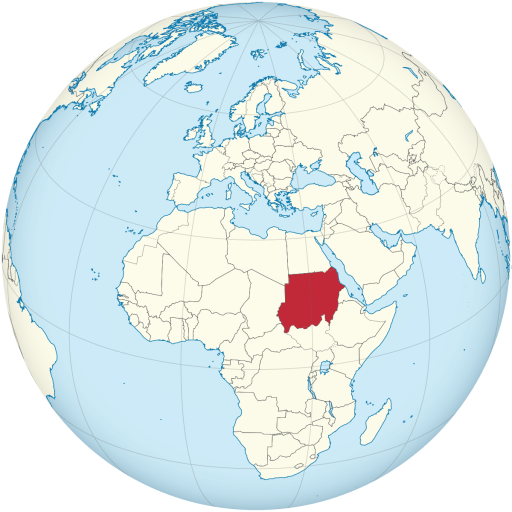
A torture center and mass graves have been found just outside Khartoum, Sudan's capital. Experts say this is the largest burial site discovered so far in the war; each grave at the site is marked with a single concrete block, suggesting that people were buried in a hurry, without names or markers, and some graves likely hold more than one person. The site was run by the Rapid Support Forces (RSF).
Why this matters:
Sudan's war has already killed tens of thousands, created the world's biggest humanitarian crisis, with over 12 million people displaced and 16 million children in need of aid. More than 12 million people---including women, children, and men---are at risk of sexual violence, and 221 cases of child rape were reported in 2024 alone, including babies under one year old.
Tell me more:
Survivors say they were packed into tiny, filthy rooms, so crowded they couldn't even stretch their legs. A corner of the room was used as a toilet. The walls were covered in graffiti begging for help. One message simply said: "Here you will die." Guards used wooden sticks to hit people, and in some cases, they were shot at close range. The ceilings still have bullet holes. Prisoners were given just a small cup of lentil soup per day, nowhere near enough to keep them healthy. Locked in for so long with no space to move and no idea if they'd make it out, many just stopped talking altogether. Survivors also say they were racially insulted and harassed by guards. Some were called part of the "56 state", referring to the year Sudan became independent---basically suggesting they belonged to an old Sudan that the RSF wants to get rid of.
Why were they there?
Many were ordinary civilians, taken for reasons that made no sense. Some tried to stop RSF soldiers from looting their homes. Others were arrested for refusing to hand over their phones. Many were likely targeted because of their ethnicity or suspected loyalty to the other side. Although all the detainees found at the site were civilians, reporters also found Sudanese military ID cards scattered on the floor. Were soldiers secretly held and executed here too? Did RSF take these IDs from captured troops? No one knows for sure yet.
How do we know the RSF was behind the torture and mass grave site?
Here's what the evidence points to:
- Survivor testimonies -- People who escaped from the site have described RSF fighters as their captors. They recounted being tortured, starved, and executed under RSF command.
- The Sudanese army found it -- The site was discovered and inspected by Sudanese army forces, who took control of the area after pushing RSF fighters out. They found RSF gear, weapons, and records that tied them to the place.
- Written records -- Inside the torture chambers, detainees left messages on the walls pleading for mercy. The Guardian also found an A3 notebook listing detainee names in Arabic, some of which were crossed out. (It's unclear what this meant.)
- RSF has done this before -- This isn't a one-time thing. The RSF has a history of torturing, executing, and terrorizing people in other parts of Sudan. Another RSF torture center was found in southern Khartoum, where Egyptians were reportedly among those tortured---some to death.
- They were running a Captagon lab nearby -- Just a few miles from the torture site, Sudanese military intelligence found a massive Captagon drug lab, believed to be run by the RSF. This lines up with their usual tactics of using drugs to keep their fighters going and funding their war.
What now?
People are demanding an investigation into what happened at this torture site, and hopefully, experts will start identifying the bodies buried in the mass graves. Human Rights Watch is urging Sudan's military to let outside investigators in---including the UN---so they can gather evidence of war crimes. However, Sudanese activists and journalists have been risking their lives to expose war crimes and help survivors. Any investigation must center Sudanese-led efforts, not just UN interventions.
But here's the bigger picture: Sudan's war isn't over. The Sudanese military (which, by the way, has also been accused of war crimes) is gaining ground against the RSF. As they retake more areas, people expect to find even more sites like this---more graves, more torture centers.
The former president of the Philippines has been arrested. Thousands are really happy
What happened:
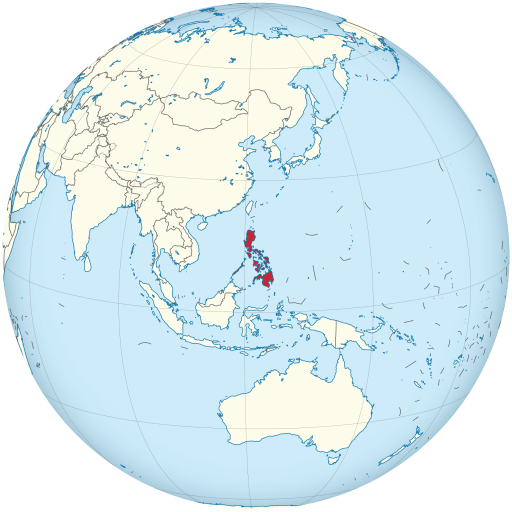
Rodrigo Duterte, former president of the Philippines, just got arrested and shipped off to The Hague, Netherlands to face crimes against humanity charges. The ICC says he ran "death squads" that carried out thousands of extrajudicial killings during his "war on drugs."
Disclaimer:
I will be putting "drug war" or "war on drugs" (as most media I've read doesn't) in " because I think the media must call it what it is: a state-orchestrated campaign of mass killings under the guise of drug enforcement or, more plainly, a war on the poor.
Why this matters:
Duterte's "war on drugs" left anywhere from 6,200 to 30,000+ people dead---depending on who you ask. Victims' families have been demanding accountability for years, and now, for the first time, he's actually in a courtroom answering for it. This also marks a huge moment for the ICC, which often struggles to enforce its rulings (it doesn't have its own police force). The U.S. has sanctioned the ICC, and many countries ignore its rulings---so seeing a major arrest like this actually happen is quite rare. However, this is another reminder that the ICC is not the sole arbiter of justice as the West rarely faces accountability for its own crimes---leaders like George W. Bush, Tony Blair, or even former Philippine colonial rulers have never been in the dock.
Tell me more:
The ICC accuses Duterte of creating and funding "death squads"---first as mayor of Davao, then as president---specifically ordering police and hired hitmen to kill suspected drug users and dealers. His own speeches, government documents, and witness testimony are part of the case against him. He thought he was safe by pulling the Philippines out of the ICC in 2019, but prosecutors argue they still have jurisdiction since the alleged crimes happened before that. The arrest warrant landed in Manila at 3 a.m. and by the afternoon, Duterte was on a plane to face trial in Europe.
Definition of "death squad":
Secret groups that kill people without a trial, usually with the support of the government or police. Instead of arresting suspects and letting the courts decide, these squads act as judge, jury, and executioner, targeting people the government sees as criminals or threats. "Death squads" aren't particular to the Philippines; they have existed in many countries, especially under dictatorships. These groups are...
Please log in or subscribe for free to continue reading this issue.
We could use your help to make this issue better. Take a look at the requests below and consider contributing:
- Submit a piece of artwork for this issue
- Submit a news, academic or other type of link to offer additional context to this issue
- Suggest a related topic or source for future issues
- Fix a typo, grammatical mistake or inaccuracy
Below you'll find some of the sources used for this issue. Only sources that support "media embedding" are included.
-
‘Here you will die’: detainees speak of executions, starvation and beatings at hands of Sudan’s Rapid Support Forces | Global development | The GuardianHaunting accounts of torture in newly found detention centre lead to calls for an investigation into what experts say could be among the worst atrocities of Sudan’s civil war
-
By Major General(police), Dr. Najm Eddin Abdel Rahim
-
Residents allege terror and rape by retreating RSF fighters as the army makes gains in the capital.
-
The Philippines president says he shot dead three men, hours after a spokesman denied the claims.
-
The administration of Philippine President Ferdinand Marcos Jr. initiated some human rights improvements in 2024 but failed to address past and ongoing violations.
-
The document enshrines separation of powers and guarantees women's rights, freedom of expression and media freedom.
-
The government is stepping in to boost support for early-stage ventures.
-
Maximo Napa, 61, says he survived by eating cockroaches, birds and a turtle – and thinking about his mother
-
Wong Kim Ark was born in the U.S. and lived his whole life here. But when he returned from a trip to China in August of 1895, officials wouldn't let him leave his ship. Citing the Chinese Exclusion Act, which denied citizenship to Chinese immigrants, they told him he was not, in fact, a citizen of the United States.Today, the story of Wong Kim Ark, whose epic fight to be recognized as a citizen in his own country led to a Supreme Court decision affirming birthright citizenship for all. This episode originally ran as By Accident of Birth.
Each week, What Happened Last Week curates news and perspectives from Asia, Africa, and the Americas. The newsletter is written by Sham Jaff and focuses on stories that rarely receive sustained attention in Western media.
Read the free edition every week. VIP subscribers receive additional stories, recommendations on what to watch, read and listen, and more.