

Oh, this issue was so fun to write. I was looking into some pretty revolutionary stuff last week, like how do you help people use and store money who have no bank accounts (spoiler: Bitcoin), how do you make sure people in Africa read more African literature without overpaying (spoiler: WhatsApp), how do you work around Google and Amazon hegemony in cloud services in Africa (spoiler: DIY and share resources). Plus, a long explainer with all the needed nuances to the recent calls to disband and disarm the PKK in Turkey (including an interview I had with a Kurdish analyst), what the sudden USAID funding cuts does to people with HIV in South Africa, the prospects of a new political party by Bangladeshi students, Japan's largest wildfire since 1992, a critical look back at the 1995 Beijing Declaration(which called for gender equality), a possible greenwashing project in Uganda by TotalEnergies, and so much more.
PKK's Öcalan calls it quits. Is it really the end of the fight?
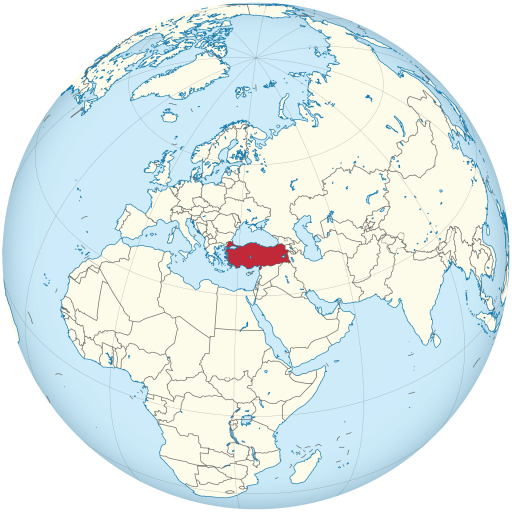
What happened:
Last Thursday, it finally happened: After more than 40 years of war between Turkey and the PKK, Abdullah Öcalan---the group's jailed founder and leader---just told his followers to disband. Days later, the PKK declared a ceasefire. It is not an unconditional disarmament though. "We are open to peace only if democratic politics and legal grounds are made possible in Turkey."
Background:
- What is the PKK? PKK is short for the Kurdistan Workers' Party. It is a Kurdish militant group that has been fighting the Turkish government since 1984. Originally wanted an independent Kurdish state, now pushes for Kurdish rights and autonomy. Turkey, the U.S., and the EU label it a terrorist group, but many Kurds see it as a resistance movement.
Why this matters:
Kurds are one of the largest stateless ethnic groups (~30-40 million people) spread across Turkey, Iraq, Syria, and Iran. Turkey has historically oppressed Kurdish identity (banning Kurdish language, culture, political movements). The PKK launched an armed rebellion for Kurdish independence, later shifting to demands for autonomy and rights. Turkey responded with military force, and the conflict has killed 40,000+ people (mostly PKK fighters). If the PKK actually dissolves, this could end one of the world's longest-running insurgencies. As Meghan Bodette, director of research at the Kurdish Peace Institute, writes on X, "this is an opportunity for the start of a political process, not the end of one."
Tell me more:
"I take full responsibility for this call," Öcalan's statement declared, read aloud at a packed news conference in Istanbul (first in Kurdish, then in Turkish). The 75-year-old leader, who's been imprisoned since 1999, said it was time for the PKK to lay down its weapons and dissolve itself. This is not a hugely surprising move. There's been a lot of buzz already, there have been secret talks that led up to this; rumours that he had been offered better prison conditions and the release of high-profile Kurdish political prisoners. The PKK's Kurdish "cousins" in northeast Syria---who Turkey also considers a threat---aren't part of this. Syrian Kurdish officials quickly clarified a day later: "That's not about us."
I talked to Kurdish analyst Kamal Chomani to get his take on this historic moment:
whlw: How does this impact the Syrian Democratic Forces, short SDF, in Syria? Will this weaken their position?
Chomani: Not at all. If the PKK disarms, the SDF gains autonomy and can fully focus on securing its territories and fighting extremism. The collapse of the 2015 peace talks was largely due to Erdogan's refusal to accept a Kurdish entity in Syria. He called Rojava a "red line," and Öcalan fired back that Rojava was his "red line", too. Now, Turkey must rethink its approach. If peace holds, Ankara may end its attacks on Rojava and even see the SDF as a potential ally. A bigger shift could come if Turkey believes Ahmed al-Sharaa is moving into the Saudi orbit---then backing the SDF could serve Turkish interests.
whlw: What does this mean for Kurdish politics in Iraq, Iran, and Syria?
Chomani: The PKK's influence is vast, so this move will reshape Kurdish movements across the region:
- In Iraq, PKK rivals---especially the Barzani faction---will welcome a disarmed PKK, viewing it as a reduced threat. PKK cadres may return to cities, go to Europe, or relocate within Kurdistan.
- In Syria, the PYD remains Öcalanist and will keep implementing his ideas, especially in ecological and economic policies.
- In Iran, the PJAK (the Iranian branch of the PKK; militant and political group that fights for Kurdish rights in Iran) will continue fighting, but Öcalan's stance could pave the way for a similar peace process if Tehran opens up politically.
whlw: Will Turkey offer real political concessions?
Chomani: It has no other choice. The Kurdish reality can't be ignored anymore. Turkey failed to defeat the PKK militarily, and Kurdish autonomy is a fact in Iraq and Syria. Turkish strategists may now see resolving the Kurdish issue as more beneficial than continuing the conflict.
whlw: Is Turkey actually moving toward a political solution?
Chomani: There are signs. Öcalan was denied visits for four years, but in October 2024, peace talks led to the ban being lifted. The fact that Öcalan could meet a DEM Party delegation, take a photo, and make a public statement is a huge shift given Turkey's previous hostility.
whlw: What's in this for Erdoğan and Bahçeli?
(Recep Tayyip Erdoğan is Turkey's president, in power for 20+ years. Devlet Bahçeli is the leader of the far-right MHP, Erdoğan's political ally. They both used anti-Kurdish rhetoric in the past, so their sudden push for peace raises questions about their motives.)
Chomani: For Erdoğan, this could secure another term. He may amend the constitution and run again. If the process succeeds, even ultranationalists seem open to peace, boosting his popularity. As for Bahçeli, at his age, he likely wants to be remembered as a statesman who helped bring peace, not just a nationalist hardliner. The Erdogan-Bahçeli alliance stands to benefit from Kurdish support.
whlw: Could this strengthen Erdoğan ahead of elections?
Chomani: Yes---but not by consolidating power in an authoritarian way. If peace succeeds, Kurds will be kingmakers in Turkish politics, and Erdogan would likely get their vote. Plus, foreign investment would flood into previously neglected, conflict-ridden Kurdish regions, boosting Turkey's economy.
Some critical voices:
- The status quo is f*cked "Right now, arrests of mayors, imprisonment of reporters and continuing detention of Kurdish politicians are impediments to next step of the group." -- Aliza Marcus on X
- There's so much racism against Kurds still "When veteran politician Ahmet Türk began reading Öcalan's historic call in Kurdish, Sözcü TV (a very well known news channel and newspaper in Turkey; leans Kemalist) muted the sound, dismissing Kurdish as irrelevant." Fréderike Geerdink reflects on how deep-seated racism continues to block any real progress in Turkey.
- Turkey is still bombing Syrian Kurds "The day after Abdullah Ocalan announces that the PKK will dissolve, Turkey bombs Syrian Kurds. The pretext is gone. Turkey can't claim any kind of security threat now. This just destabilizes Syria's transition and makes it harder for NES (Northeast Syria) to get to a deal." -- Meghan Bodette on X
Other voices:
- The terror label will disappear Journalist Sefkan Kobanê says, "With the PKK's dissolution, the 'terror' argument will disappear, and in turn, the state must take steps to stop genocidal attacks." Also, in the same interview, he points out that the PKK is still listed as a terrorist organization internationally. However, he believes this peace process---and the legal steps that should follow---will help legitimize the Kurdish struggle globally.
- It's very complicated Journalist Mohammed A. Salih writes on X that the PKK leadership in Qandil is in line with Öcalan's statement, but also offered some major "buts" like, "we want Öcalan to lead the party congress that formally disbands the organization" (some say this is highly unlikely) and "we want a clearly defined legal framework moving forward", suggesting that there might be expectations of democratic reforms, legal protections, and constitutional amendments. "Would it recognize Kurdish identity in the constitution? Grant official status to the Kurdish language? If so, would it extend to public education? What about some degree of administrative decentralization at the provincial or municipal level?"
It's official: The U.S. is not the world's biggest donor anymore
Refresher:
Back in January, the U.S. [hit the brakes on...
Please log in or subscribe for free to continue reading this issue.
We could use your help to make this issue better. Take a look at the requests below and consider contributing:
- Submit a piece of artwork for this issue
- Submit a news, academic or other type of link to offer additional context to this issue
- Suggest a related topic or source for future issues
- Fix a typo, grammatical mistake or inaccuracy
Below you'll find some of the sources used for this issue. Only sources that support "media embedding" are included.
-
The US is the world's most important donor of development aid, and the repercussions of Donald Trump's recent freeze are being felt from Botswana to Nepal.
-
The Supreme Court on Wednesday temporarily blocked a judge’s order giving the Trump administration a midnight deadline to release billions of dollars in U.S. foreign aid.
-
The head of a HIV foundation in South Africa has warned that US funding cuts could lead to half a million deaths and as many new HIV infections over 10 years.
-
Health groups and non-governmental organizations have expressed surprise and outrage after the Trump administration’s decision to cut 90% of USAID’s foreign aid contracts.
-
Sans jamais en parler publiquement, le président de la République a écrit à son homologue ougandais pour soutenir les projets de forages pétroliers de la multinationale en bordure d’un des plus grand…
-
TotalEnergies' Tilenga Project destroys a Ugandan national park, backed by questionable permits - Africa Uncensored'GreenFakes' is a series of investigations by Mediapart, based on internal documents obtained by Climate Whistleblowers from Biotope, a leading French ecological auditing firm, that shows how various firms used “biodiversity action plans” to give an ecological veneer to the destruction of the environment for financial gain.
-
More than a thousand people have been evacuated near forest of Ofunato in northern region of Iwate
-
Under its policy of "strategic autonomy," India has been expanding its presence in Latin America. Countries in the region have welcomed the push and hope to diversify their own geopolitical partnerships.
-
The federal government is set to secure $2.2 billion in new loans from the World Bank in 2025, spread across six key projects.
-
Gustavo Petro moved his vice president out of her role as Colombia’s equality minister after she said her life was in danger for speaking against corruption.
-
Humans emerged across Africa shortly before 300 thousand years ago (ka)1–3. Although this pan-African evolutionary process implicates diverse environments in the human story, the role of tropical forests remains poorly understood. Here we report a clear association between late Middle Pleistocene material culture and a wet tropical forest in southern Côte d’Ivoire, a region of present-day rainforest. Twinned optically stimulated luminescence and electron spin resonance dating methods constrain the onset of human occupations at Bété I to around 150 ka, linking them with Homo sapiens. Plant wax biomarker, stable isotope, phytolith and pollen analyses of associated sediments all point to a wet forest environment. The results represent the oldest yet known clear association between humans and this habitat type. The secure attribution of stone tool assemblages with the wet forest environment demonstrates that Africa’s forests were not a major ecological barrier for H. sapiens as early as around 150 ka. The identification of tools dated to the time of Homo sapiens associated with microfloral evidence of wet tropical forests indicates that West African forests were occupied by humans much earlier in human evolution than previously thought.
-
Africa has no shortage of celebrated writers – so why is it so hard for African readers to get hold of their books? | Global development | The GuardianAcross the continent books can be expensive and libraries scarce. But growing numbers of tech innovators and independent publishers are working to make African literature available and affordable
-
There’s a calm cool about El Maadi, Cairo. Here, independent stores, family-run restaurants, and art galleries are frequented by stylish young professionals
-
FHMY. Cairo, Egypt. 27 from the suburban neighborhood of Maadi Cairo,Egypt
-
Nigerian cloud startups offer naira payments and local data storage, challenging AWS and Google Cloud dominance.
-
Thieves used a stolen card to buy a winning French lottery ticket worth 500,000 euros (US$523,000). But they vanished before cashing in — and now they’re among France’s most famous fugitives.
Each week, What Happened Last Week curates news and perspectives from Asia, Africa, and the Americas. The newsletter is written by Sham Jaff and focuses on stories that rarely receive sustained attention in Western media.
Read the free edition every week. VIP subscribers receive additional stories, recommendations on what to watch, read and listen, and more.