

Cambodia might actually win the fight against malaria soon, and Argentina's President posted about a brand-new cryptocurrency on his social media account, and it crashed. Plus, it's so very illegal of him to do so. Plus, a DRC and Sudan update, survivors of the 2020 Ngarbuh massacre in Cameroon are still seeking justice, a list of the top 5 African countries with the highest number of people offline in 2025, who's who in Ecuadorian politics, Colombian telenovela but make it political, a first-ever trial for a vaccine against Ebola Sudan, Liberia's less corrupt, Syria's tech sector is launching, a little-known Kurdish uprising, farmers in Thailand against capitalism, hip-hop, but make it diaspora trauma, and so much more.
Cambodia might actually win the fight against malaria soon
What happened:
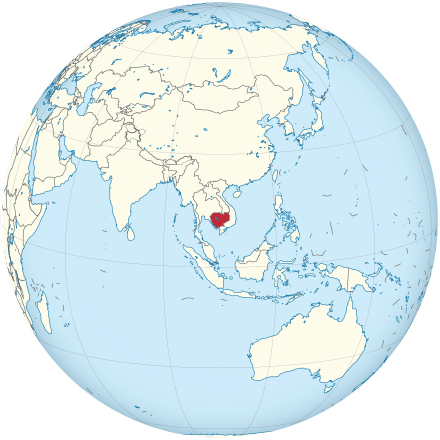
Cambodia is about to eliminate malaria, a mosquito-borne disease that used to kill hundreds of people there every year. From 170,000 cases and 865 deaths in 1997, the country reported only 355 cases in 2024---and zero deaths since 2018. This year, health officials hope to hit zero cases altogether.
Why this matters:
Malaria is far from over. Globally, 263 million people contracted the disease in 2023, with 597,000 deaths. That's one death every 53 seconds, mostly in Africa and Southeast Asia. Reminder: Malaria is a preventable disease.
Tell me more:
If Cambodia succeeds in 2025 and keeps it that way for three more years, it will be certified malaria-free by the World Health Organization (WHO), joining a very exclusive club. Only one other country in continental Asia (China) has pulled this off. So, fingers crossed.
How did Cambodia get here?
The real MVP here is Yeang Chheang, an 87-year-old scientist who has dedicated his life to fighting malaria---even when it could have gotten him killed. Under the Khmer Rouge regime, Chheang secretly treated malaria patients in labor camps (his family got killed there). After the regime's fall, he rebuilt Cambodia's malaria control program from the ground up.
What's been done to eliminate malaria?
Cambodia launched its national action plan in 2011, aiming to end malaria by 2025. The most recent push focused on remote villages in mountainous areas. Suy Se for The Japan Times talked to volunteer Nhoun Niyok, who provides rapid testing, medicine, and mosquito nets in Mondulkiri province as part of the government's campaign. His last recorded case was back in September 2024. "Perhaps, the dream will come true," Nhoun says.
Zoom out:
It's not all good news, unfortunately. Climate change and human migration might make it hard to truly prevent the disease. Even Chheang himself says, it is "absolutely impossible." Plus, Cambodia's malaria program has relied on U.S. funding---and it's unclear how the recent U.S. aid freeze will affect future efforts.
Argentina's President posted about a brand-new cryptocurrency on his social media account, and it crashed. Plus, it's illegal
What happened:
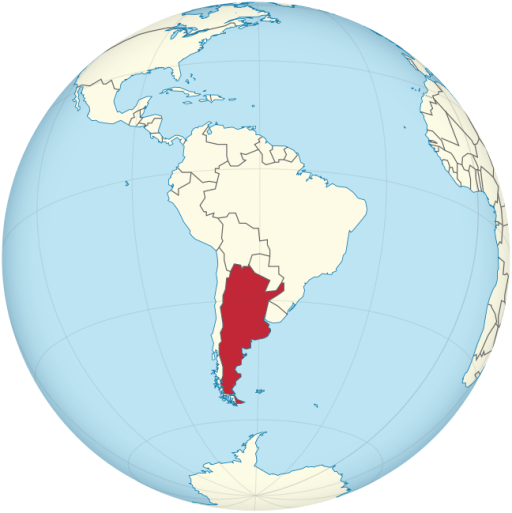
Last week, it was reported that Argentina's inflation rate had dropped to its lowest since 2020. That's a big deal for a country that's been battling skyrocketing prices for years. President Javier Milei's harsh economic measures seem to be working---at least on paper. He cut government spending, slashed subsidies, and for the first time in 14 years, Argentina's budget showed a surplus. (I've often talked about the rising poverty as another aspect of his measures.)
But then... the news shifted. Milei posted about a new cryptocurrency on social media. And chaos followed. People rushed to buy the token because, well, the president made it sound exciting. The value of the token shot up quickly (more than 2,000% in just 40 minutes). But just as fast, Milei deleted the post and said, "Oops, I didn't really know what this was." Boom---price crash. Anyone who bought in late probably lost a lot of money, while those who got in early and sold at the top made a killing. Cue the political firestorm.
Why this matters:
Milei might face serious legal trouble. Promoting a private financial venture as a sitting president is illegal in Argentina---and several opposition lawmakers are calling for an impeachment inquiry. Former president Cristina Fernández de Kirchner even called him a crypto scammer. The markets are nervous. Politicians are furious. Oh, and the impeachment commission? Not currently functioning. Convenient.
Tell me more:
Everyone, and I mean everyone from all parties, is so angry with him. His critics say that without the president's endorsement, the token would have stayed irrelevant. One constitutional lawyer even says Milei's actions could violate multiple criminal laws, including Article 265 of the Penal Code, which forbids public officials from using their position for financial gain. If convicted, Milei could face up to six years in prison. There's also talk that he met with Julian Peh, co-founder of the company that hosted $Libra (lol), raising more questions about how deep this connection goes.
What's next?
Argentina's anti-corruption agency has launched an investigation into Milei and his government. Meanwhile, Buenos Aires governor Axel Kicillof demanded Milei explain who actually benefited from the token scandal. The $Libra story is all over the news---NYT, Bloomberg, El País---and the markets are watching closely. Will this scandal bring Milei down, or will he just ride it out? Hard to tell. It's Monday morning in Europe, keep an eye on your stocks app.
Zoom out:
What happened with $Libra is a classic crypto hype-and-crash story. We've seen this happen in the U.S. This kind of thing has happened before with Trump-themed crypto coins---tokens made by random people trying to profit off Trump's name. The same pattern:
- Big hype = prices go up fast.
- Early investors cash out and make money.
- Latecomers are stuck with a worthless coin after the price collapses.
The New York Times reported that with the Trump coins, late investors lost around US$2 billion in total because they were left holding tokens that...
Please log in or subscribe for free to continue reading this issue.
We could use your help to make this issue better. Take a look at the requests below and consider contributing:
- Submit a piece of artwork for this issue
- Submit a news, academic or other type of link to offer additional context to this issue
- Suggest a related topic or source for future issues
- Fix a typo, grammatical mistake or inaccuracy
Below you'll find some of the sources used for this issue. Only sources that support "media embedding" are included.
-
The hope is for zero cases this year — a remarkable turnaround for a country that was formerly an epicenter of multi-drug resistant strains.
-
Milei deleted his original promotional tweet and revealed that he wasn't aware of its details.
-
Prisoners from Iran’s western Kurdish regions (Rojhelat) in Sulaimani have been on a hunger strike for 9 days, demanding repatriation to Iran for trial.
-
Some people cheered as the fighters entered the city without resistance, two days after taking the airport.
-
Brutal violence has taken hold in Cameroon’s North-West and South-West regions since 2016 as armed separatist groups seek independence for the country’s minority Anglophone regions. Attacks on communities and acts of banditry have become the norm.
-
Business Insider Africa presents the top 5 African countries with the highest number of people offline in 2025 | Business Insider Africa
-
Daniel Noboa and his main challenger Luisa González received near identical percentages of the vote.
-
Domestic displaced farmers still wait for payments under a 2020 agreement
-
Mr Pate highlighted that the decline was expected even before the United States government publicly announced cuts to funding for agencies supporting developing countries
-
South Africa, the motoring hub of Africa, is expected to start producing electric vehicles (EVs) in 2026, a win for renewable energy on the continent.
-
After 30 years of democracy, South Africa is in a deep electricity crisis which can only be solved if the government moves speedily to set up solar and wind plants.
-
It is also the first clinical trial of the vaccine during an outbreak Kampala, Uganda | AGENCIES | In a global first, Uganda’s Ministry of Health, the World Health Organization (WHO) and other partners on Feb.03 launched a first-ever clinical efficacy trial for a vaccine from Ebola from the Sudan species of the virus, and at …
-
MONROVIA – Amid mounting public concerns over corruption and demands for investigations and prosecutions of accused officials, the 2024 Transparency International Corruption Perception Index (CPI) Report has revealed that Liberia has made a slight but notable improvement in its anti-corruption efforts for the first time in seven years.
-
The SYNC 25 conference was organized by a group of Syrian-Americans working in Silicon Valley; they hope to facilitate 25,000 new tech jobs in Syria by 2030.
-
This is the story of a wildly ambitious science experiment to return Keiko to the ocean — while the world watched. A new limited podcast series from Serial Productions and the New York Times.
-
huiying ng-lou's research paper highlights the significance of ecological knowledge practiced by Thai farmers, exploring how agroecology resists capitalist agriculture, sustains farmers’ autonomy and generational wisdom, and fosters resilience and knowledge-sharing within communities.
-
NARCY's new art project, To Be An (Arab) - TBA(A) is an exploration in medium, identity and storytelling. Inspired by many writers and artist around the world
Each week, What Happened Last Week curates news and perspectives from Asia, Africa, and the Americas. The newsletter is written by Sham Jaff and focuses on stories that rarely receive sustained attention in Western media.
Read the free edition every week. VIP subscribers receive additional stories, recommendations on what to watch, read and listen, and more.