

Colombia's border crisis, fighting in northern Syria, and Senegal's French street names. Plus, by the end of this issue, I'll probably convince you to sign up for an Egyptian streaming service, listen to an Algerian-Jewish musician, and swap Joe Rogan for a South African podcast by a Black woman.
Colombia's border crisis: What's going on?
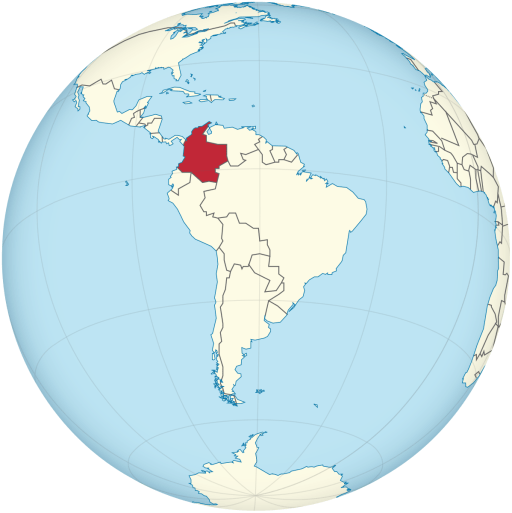
What happened:
Colombia is dealing with a major surge in violence along its border with Venezuela. Over 80 people have been killed in just a few days, and 32,000 people have fled their homes. It's gotten so bad that Colombian President Gustavo Petro declared an emergency in the country's Catatumbo region on Monday.
Why this matters:
For most of his time in office, President Petro has tried to negotiate with armed groups instead of fighting them. His strategy, called "total peace," was all about talks and ceasefires. But that's being seriously tested right now.
Tell me more:
There are two main armed groups involved:
- The National Liberation Army (ELN) -- a Marxist guerrilla group that's been around since the 1960s. They never agreed to the 2016 peace deal that ended most of Colombia's armed conflict. Last week, Petro suspended peace negotiations with the ELN, accusing them of committing war crimes in this latest fighting.
- The 33rd Front -- This group split from the Revolutionary Armed Forces of Colombia (FARC) because they didn't accept the 2016 peace deal.
Both are fighting for territory, political scientist Luis Fernando Trejos told Caracol radio last week.
The Colombian government has sent in security forces and social workers, but tens of thousands of displaced people still don't know when (or if) they can go home. Meanwhile, Petro is under growing pressure to show he can handle security challenges without just relying on peace talks.
Why is this happening now?
Experts have been warning for weeks that violence in Catatumbo (the conflict zone near the border) was getting worse. Petro even admitted on Tuesday that his government "failed" to stop the situation from escalating. Political scientist Jorge Mantilla argued in La Silla Vacía that his peace strategy was too idealistic and lacked a backup plan.
What about Venezuela?
Colombia's neighbor Venezuela plays a big role in all this. The ELN has been able to operate across the border with little interference from Venezuela's government. That makes it harder for Colombia to contain the violence---you can't negotiate peace with one side while the other is hiding across the border.
To make things even more chaotic, Colombia's foreign minister resigned on Monday, likely to prepare for a presidential run in 2026. That's a big deal because Colombia needs strong diplomacy to deal with the ELN and its connections to Venezuela. Petro replaced him with his 30-year-old chief of staff, Laura Sarabia, which raised eyebrows---some doubt she has the experience to handle this crisis.
Btw:
The Americas will have a lot in store this year. In 2025, four countries---Bolivia, Chile, Ecuador, and Honduras---will hold presidential votes. Argentina holds midterms, Canada picks a new leader, and Mexico elects judges in historic nationwide contests. First up? Ecuador on February 9.
Yes, Assad fell last month, but fighting hasn't stopped in Syria
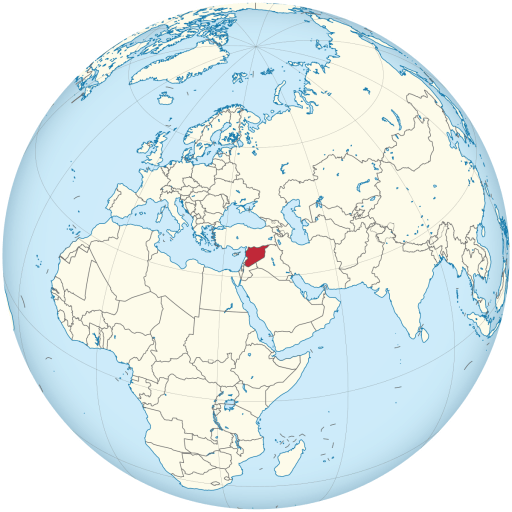
What happened:
You might be surprised to read this, but the fighting in Syria hasn't stopped---especially in northern Syria, where tensions are escalating around the Tishreen Dam. Located 90 km east of Aleppo, the dam is a critical source of water and electricity, but it's now becoming a battleground between Kurdish forces and Turkish-backed armed groups. Since the start of the year, at least 21 civilians have been killed in the clashes, and the situation is only getting worse.
Why this matters:
What's happening at Tishreen Dam will shape the future of northern Syria and Kurdish politics for years to come. Controlling the dam means controlling power---literally and politically. Since 2012, Kurdish forces have controlled large parts of northern Syria, but now, Turkey and its allied armed groups are pushing to take over those areas. With Assad's sudden fall, the old power balance has collapsed, and now it's an open question who will control what. The situation is shifting fast, and the fight over strategic locations---like the Tishreen Dam---is part of a bigger struggle for dominance in post-Assad Syria.
Who's fighting and why?
You remember on December 8, when Bashar al-Assad's regime fell. The next day, SDF lost control of Manbij, a key city, to the Turkish-backed armed group SNA. After retreating, SDF moved towards the Euphrates River, with Tishreen Dam becoming a front line. Now, both sides are fighting for control of the dam.
So, the main groups involved are:
- The Kurds (SDF - Syrian Democratic Forces): A coalition of mostly Kurdish fighters who control parts of northern Syria (Rojava). They've been key allies of the U.S. in the fight against ISIS and want autonomy for Kurdish areas.
- Turkey & Turkish-backed fighters (SNA - Syrian National Army): Turkey sees the SDF as a threat because of its ties to the PKK (a Kurdish group in Turkey that Ankara considers a terrorist organization). Turkey supports the Syrian armed group, the SNA, to push the Kurds out of border areas and expand its influence in Syria.
What's at stake?
- Control over northern Syria: Turkey wants to prevent a strong Kurdish presence near its border, fearing it could inspire Kurdish separatism inside Turkey. The SDF, on the other hand, wants to hold onto these areas to maintain their autonomy.
- The Tishreen Dam: This dam provides electricity and water to much of northern Syria, and is one of the few crossings of the Euphrates River. Whoever controls it controls essential resources for the region.
- Civilians caught in the middle: The area has Kurdish civilians who have been protesting Turkish attacks since January 8. Turkey accuses the SDF of using them as "human shields", while the SDF says Turkey is targeting civilian infrastructure. At least 21 civilians have died, and more than 2,000 people have been injured, according to ANHA, a Kurdish news service closely associated with PYD (Democratic Union Party) and the Autonomous Administration of North and East Syria (AANES). Health workers, journalists, and even ambulances transporting the wounded have been targeted.
- Press freedom: Among the killed were two Kurdish journalists, Nazim Daştan and Cîhan Bilgin, who were hit by a Turkish drone while covering the front lines.
- Wider geopolitics: The U.S. has supported the Kurds, but Turkey is a NATO ally. This makes the conflict part of a bigger, messier international power struggle.
Where's the Syrian government in all this?
Yes, this is all happening on Syrian soil. The country, nonetheless, is in a bit of a limbo state right now, especially in...
Please log in or subscribe for free to continue reading this issue.
We could use your help to make this issue better. Take a look at the requests below and consider contributing:
- Submit a piece of artwork for this issue
- Submit a news, academic or other type of link to offer additional context to this issue
- Suggest a related topic or source for future issues
- Fix a typo, grammatical mistake or inaccuracy
Below you'll find some of the sources used for this issue. Only sources that support "media embedding" are included.
-
Colombian President Gustavo Petro says he will declare an emergency over the guerrilla attacks in the northeast that have killed dozens of people and forced thousands to flee.
-
Según el funcionario, lo primero es que la Fuerza Pública debe recuperar el control territorial de la zona en los próximos días.
-
At least 80 civilians have been killed amid a surge in rebel violence in the Catatumbo region.
-
El ELN tiene un plan B, el gobierno no. Y la voluntad de paz sigue en entredicho con el nuevo paro armado en Chocó, opina Jorge Mantilla, experto en seguridad.
-
En la carta, el ministro también expresó agradecimiento y respeto al presentar su dimisión al cargo, destacando el honor que fue representar a su país y comunidades, especialmente como hijo del Chocó.
-
Luis Gilberto Murillo has turned in his resignation as Colombia's Foreign Minister, presumably to pursue an electoral position, it was reported Monday in Bogotá. According to local media, Murillo might be running for president next year. His successor effective Feb. 1 will be President Gustavo Petro's Friday woman and lawyer Laura Sarabia. Also resigning Monday was Transport Minister María Constanza García.
-
Fierce fighting between Kurdish SDF and Turkey-backed SNA forces continued to range in and around the Tishrin dam, amid the ’Operation Dawn of Freedom’.
-
“We’ve seen this happen before during the conflict in Afrin city, northern Syria (Rojava), and now it’s happening again at Tishreen Dam south of Kobani city, Rojava, where the Syrian Democratic Forces (SDF) are bringing civilians into dangerous situations.”
-
The Malian military administration has renamed 25 streets and public institutions in a bid to shed itself of its French colonial history.
-
Avenue Charles de Gaulle in Niamey is now Avenue Djibo Bakary after the city's first post-independence mayor.
-
In recent months, fervent anti-French sentiment has been on the rise in Burkina Faso and Mali. In February 2023, the Burkinabe army announced the end of the French Sabre Force in the West African country. This came three weeks after the transitional government withdrew from the 2018 defense agreements with France that had previously allowed 400 French troops to be stationed in a cantonment outside of the capital, Ouagadougou.
-
Panic is spreading in Goma in eastern Congo as M23 rebels encircle the city, battling Congo’s army. Many civilians have been wounded in the crossfire.
-
The RSF did not immediately acknowledge the attack in El Fasher, which is over 800 kilometers southwest of Khartoum.
-
Nation adopted a new constitution in a November referendum
-
Cambodia's Cabinet approves draft law toughening penalties for denying Khmer Rouge atrocities | AP NewsCambodia’s Cabinet has approved a draft bill that will toughen penalties for anyone denying atrocities were carried out in the late 1970s under the rule of communist Khmer Rouge, whose brutal policies are blamed for the deaths of 1.7 million people.
-
يعرض الآن على منصة watch it"، مسلسل إقامة جبرية بطولة هنا الزاهد، والتي تقوم بدور فتاة تعانى من متاعب نفسية مما يؤثر على من حولها إلى درجة القتل.
-
Sierra Leone is on the brink of making history. We must not allow the US far right to infiltrate and stop us | Dr Ramatu Bangura | The GuardianReligious extremists from the US are bolstering local opposition by pouring money and messaging into the country under the guise of supporting ‘family values’
-
Read 29 reviews from the world’s largest community for readers. undefined
-
'Milk bucket slipped off my hand': Bihar man files case against Rahul Gandhi for loss of Rs 250 over 'fight against Indian state' remark | India News - Times of IndiaIndia News: NEW DELHI: A man in Bihar lodged a case against Congress leader Rahul Gandhi for causing him to drop a bucket full of milk resulting in a loss of Rs 2.
Each week, What Happened Last Week curates news and perspectives from Asia, Africa, and the Americas. The newsletter is written by Sham Jaff and focuses on stories that rarely receive sustained attention in Western media.
Read the free edition every week. VIP subscribers receive additional stories, recommendations on what to watch, read and listen, and more.