

A Taliban official called out the government's treatment of women and girls, saying it's just nonsense. There's also a recent UN report on Haiti showing over a million people have been forced to flee their homes---three times more than last year. Meanwhile, Ghana's tough anti-LGBTQ+ bill is officially dead for now, though it could come back. Oh, and South Korea's president was arrested last week (duh). The US slapped sanctions on both the head of Sudan's armed forces and the RSF, Cuba's government freed a human rights activist, and Telegram's no longer banned in Venezuela (yes, it was banned). Plus, true-crime stories from the "Global South," insights on what Syria could learn from Iraq's dictatorship experience, Kazakh conscious rap, and more.
A Taliban official just called for an end to the education ban on women and girls
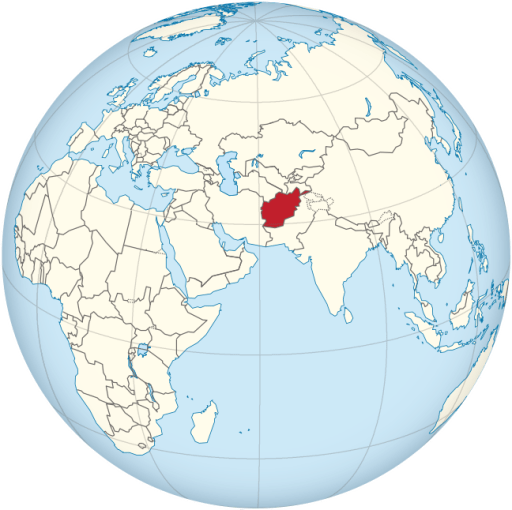
What happened:
In a rare public challenge to Taliban policy, Sher Abbas Stanikzai, a senior Taliban official, is calling on the group's leadership to end the ban on education for women and girls.
Why this matters:
This isn't the first time Stanikzai has spoken about the issue---he's raised concerns before. But this time, he went further, directly calling on Taliban leader Hibatullah Akhundzada to reverse the ban. That's a big deal. Open dissent within Taliban ranks is rare, and his statement signals that not everyone in the group agrees with the crackdown on women's rights.
Tell me more:
Speaking at a religious school event in Khost province, he openly criticized the restrictions, saying there's no religious justification for it and that the Taliban is depriving 20 million people of their rights. Stanikzai is a known figure: He was once the head of the Taliban team in talks that led to the complete withdrawal of foreign troops from Afghanistan.
What's the situation like for women and girls in Afghanistan?
- Girls are banned from education beyond sixth grade.
- Universities are closed to women.
- There are reports that authorities have also stopped medical training for women, though this hasn't been officially confirmed.
- Women can't work in most sectors and can't go out in public without a male guardian.
The UN has made it clear that the Taliban won't gain international recognition as Afghanistan's legitimate government until these bans are lifted. Countries like Russia and India have been building ties with the Taliban, but even they haven't recognized them officially.
Will this change anything?
Probably not in the short term. The Taliban's leadership hasn't shown any willingness to budge on this issue, and previous calls for change have been ignored. But the fact that a high-ranking Taliban figure is openly pushing back suggests that there's internal debate about whether the education bans are sustainable. For now, Afghan women and girls remain locked out of schools, universities, and most jobs---with no clear end in sight.
Good to know:
Last year, a 24-hour satellite channel called Begum TV was launched on International Women's Day by Hamida Aman, an Afghan-Swiss entrepreneur. From a small studio in Paris, Begum TV beams school lessons, health information, and women's rights discussions into homes across Afghanistan, filling the empty spaces left by the Taliban's extensive bans.
The number of internally displaced people in Haiti went up by three in 2024, says UN
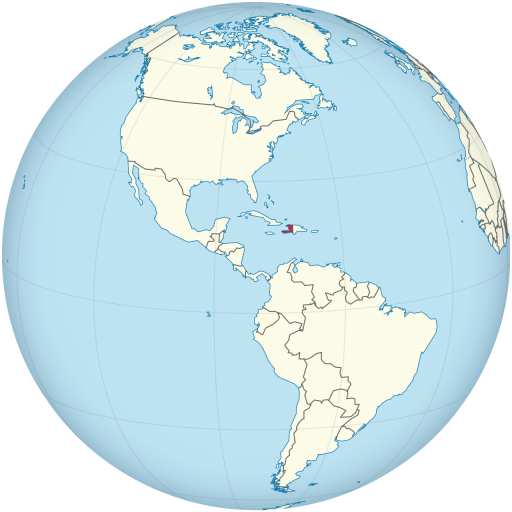
What happened:
Right now, over a million people in Haiti have been forced to flee their homes---three times as many as last year, the United Nation's International Organization for Migration (IOM) warned last week.
Why this matters:
Some 12 million people live in Haiti. Like you and I, they too deserve stability and good health.
Tell me more:
Most of them are escaping the capital Port-au-Prince, where armed groups now control about 85% of the city. The government? Barely holding on. The police? Outmatched and under-resourced. And ordinary people? Rushing for safety, often having to move again and again because no place feels truly secure. Over 5,600 people lost their lives last year as the situation worsened. The healthcare system is basically nonexistent, and food shortages are growing worse. And to make things even worse, 200,000 Haitians were deported back to Haiti last year, adding even more pressure to a country that's already struggling to provide basic services.
Good to know:
If you're not seeing too much Haiti coverage these days, it might have something to do with the fact that the country has become one of the deadliest places in the world for journalists. Seven journalist murders since 2019 remain unsolved, and according to the Committee to Protect Journalists, the country has one of the worst records for press freedom and accountability. Just last month, Marckendy Natoux, a respected reporter in Haiti, was fatally shot on Christmas Eve while covering what was supposed to be the reopening of Haiti's largest public hospital. Johnson "Izo" André, one of Haiti's most powerful armed group leaders, later claimed responsibility for the attack in a video, saying he had not authorized the hospital's reopening. The Haitian police weren't even aware that the event was happening.
Where are people going?
Most are fleeing to rural areas, but those regions weren't exactly prepared to absorb so many displaced families. The UN's migration agency reports that people are trying to survive in makeshift shelters, facing rising health risks, food shortages, and continued uncertainty about what comes next. Plus: Half of those displaced are children, says UNICEF. And that's the scariest part---there's no real plan to fix this. The armed groups aren't losing ground, the government isn't finding solutions, and unless something major shifts, Haiti's displacement crisis is only going to intensify.
How did the country get here?
Haiti has been in crisis since President Jovenel Moïse was assassinated in 2021, and there's been no real recovery. Last year, a UN-backed multinational force, called the Multinational Security Support (MSS), arrived to help stabilize things, but they're underfunded, ill-equipped, and struggling to shift the balance, because, while 10 countries did indeed pledge around 3,100 personnel but so far, very few have actually sent troops. Meanwhile, Haiti's Transitional Presidential Council (TPC)---the group tasked with restoring some sense of order---is stuck in political gridlock. They already ousted one interim prime minister, and elections, which were supposed to be a priority, feel more out of reach than ever.
What now?
Kenya last week sent another 200 police officers to Haiti as part of the MSS. That...
Please log in or subscribe for free to continue reading this issue.
We could use your help to make this issue better. Take a look at the requests below and consider contributing:
- Submit a piece of artwork for this issue
- Submit a news, academic or other type of link to offer additional context to this issue
- Suggest a related topic or source for future issues
- Fix a typo, grammatical mistake or inaccuracy
Below you'll find some of the sources used for this issue. Only sources that support "media embedding" are included.
-
ISLAMABAD (AP) — A senior member of the Taliban-run government in Afghanistan on Tuesday called on Afghanistan's new rulers to reopen schools for girls beyond the sixth grade, saying there is no valid reason in Islam for the ban.
-
Afghanistan's Taliban rulers have banned female students from universities effective immediately. It is the latest edict cracking down on women's rights and freedoms in the country.
-
The U.N. Security Council has expressed “deep concern” at the recent decision by Afghanistan’s Taliban rulers to ban women from medical education.
-
The second of two journalists killed in one of the worst attacks on the press in Haiti has been buried.
-
The new bill includes a three-year prison sentence on anyone who identifies as LGBT.
-
State media in Chad say an attack on the presidential palace left 18 assailants dead and six in custody, with one soldier killed and three wounded.
-
At least 10 people were killed in eastern Congo by extremist rebels linked to the Islamic State group, a local official said Wednesday.
-
Taiwan carried out its first execution in five years late on Thursday, upsetting both rights groups and the European Union which called on the government to maintain its de facto moratorium on the death penalty. Despite Taiwan's reputation as Asia's most liberal democracy, the death penalty remains broadly popular according to opinion polls, though in recent years it has only rarely been carried out and violent crime is relatively low. In September, Taiwan's constitutional court ruled that the death penalty is constitutional but only for the most serious crimes with the most rigorous legal scrutiny, after considering a petition brought by 37 people who were then on death row.
-
A petrol tanker truck overturned, spilling petrol that exploded, officials said. Read more at straitstimes.com.
-
The comprehensive pact will govern relations between the two countries for the next 20 years
-
Africa's top economic power, Nigeria, joins Brics as partner country as bloc's expansion countinues – FirstpostLast year, Brics welcomed Iran, Egypt, Ethiopia, and the United Arab Emirates as new members. Saudi Arabia has also been invited to join. Turkey, Azerbaijan, and Malaysia have formally applied for membership
-
South Korea's impeached president, Yoon Suk Yeol, faces possible imprisonment over his declaration of martial law last month. The formal arrest comes days after he was apprehended.
-
First-ever use of so-called ‘Loop’ technology at an operational gas-processing site, company says
-
The Democratic Alliance (DA) has officially endorsed Cape Town hosting WorldPride in 2028, describing it as a boost for the city’s economy.
-
Telegram has been blocked since Friday, January 10, 2025
-
Populist leader allegedly had a child with a teen girl in 2016, which would constitute statutory rape under Bolivian law
-
The long-awaited ceasefire and hostage release deal between the Israeli government and Hamas will take effect on Sunday, potentially signaling a new chapter in a bloody 15-month conflict that has enflamed the Middle East.
-
Agreement earlier approved by the security cabinet will pause 15-month war in Gaza for an initial six weeks
-
“Wicked’s thoughtful casting underscores its story of social injustice and the fight for equality.”
-
This is immersive true crime, done differently. True Crime Reports by Al Jazeera brings you crime stories from the global south and beyond. Tales of corruption, power, and injustice that often haven’t reached headlines in the West, told by those who were there.
-
RedNote is a foreign-owned app, and experts warn that it could be attacked by the same law that is now banning TikTok.
-
Trump says an announcement will probably come once he takes office on Monday about the app's future in the US.
Each week, What Happened Last Week curates news and perspectives from Asia, Africa, and the Americas. The newsletter is written by Sham Jaff and focuses on stories that rarely receive sustained attention in Western media.
Read the free edition every week. VIP subscribers receive additional stories, recommendations on what to watch, read and listen, and more.