

This issue is about Africa's new stock market that's going live on Friday, and a certain woman named Matilda or Abake from Benin who died yesterday, 85 years ago. A little bit of the future and the past, some balance, you know. I've broken down the stock market details as simply as possible, but if it's still confusing, let me know (gently, please). Plus: There's good news across the board: Lebanon has a president at last, Japan's "smart toilets" are coming to the U.S., someone clapped back at Trump (always fun), and Nigerian slang is making waves in the Oxford English Dictionary. There's more where that came from, so buckle up; it's a good one. ✌️
Africa gets a new stock market this week
What happened:
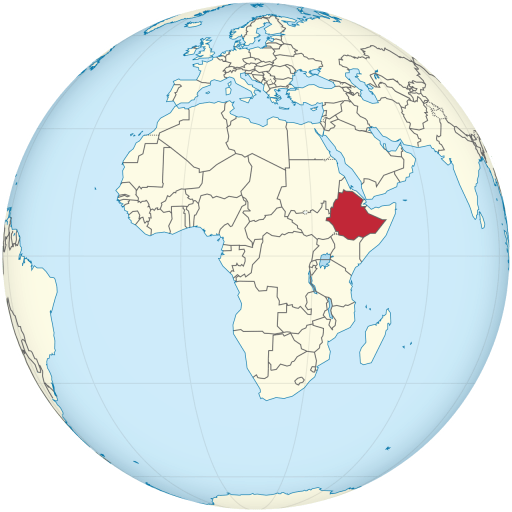
Ethiopia is opening a domestic stock market for the first time in 50 years.
Why this matters:
Ethiopia is trying to move from being a country with a tightly controlled economy to one that's more open and modern. Opening a stock market is a big step in that direction. Politically, it shows they want to build trust with the world and encourage international partnerships. It's a huge move for the country, which has been through a lot---civil war, economic struggles, and political instability, and another huge move for the continent----Ethiopia is one of the largest countries in Africa by population (second only to Nigeria).
Tell me more:
The country's economy has been growing like crazy (around 8% annually for the past decade), but unemployment is high, especially among young people. Prime Minister Abiy Ahmed's government is using this stock market to bring in international money, create jobs, and stabilize the economy. The new stock exchange kicks off this Friday, starting with an Initial Public Offering (IPO) of Ethio Telecom, a big state-owned company. They expect to raise up to 30 billion birr (US$234 million) and plan to list more companies soon.
Did you know?
Ethiopia's last stock market closed in 1974 after the military seized power and abolished share trading.
Why now?
So many changes. For the past 50 years, Ethiopia's government tightly controlled its currency (the birr), deciding its value and how it could be exchanged. This made it hard for businesses and investors to freely trade money or do business with Ethiopia. Recently, the government decided to loosen that control, letting the currency work more like it does in other countries (its value can now adjust based on supply and demand). By doing this, Ethiopia showed global organizations like the World Bank and the International Monetary Fund (IMF) that it's serious about modernizing its economy. In return, these organizations gave Ethiopia US$20 billion to help boost its economy. Plus, since the truce, Ethiopia has been opening up its economy to foreign business, too. Foreign banks can now operate in the country, and Ethiopia is also allowing investments in key industries like coffee, oil seeds, transport, logistics, and retail. These are big moneymakers for the country.
Any challenges ahead?
Investors are excited, but there are some challenges:
- No Brokers or custodians: The stock market isn't fully set up yet to handle trades.
- Debt problems: Ethiopia owes US$1 billion in loans (eurobonds) and is still working on paying it off.
- Currency issues: With low reserves of foreign money, Ethiopia's economy feels fragile, making investors nervous about getting their money back.
What's next?
In five years, Ethiopia aims to list 50 companies on the exchange. Right now, not a lot of global businesses or investors put money into places like Ethiopia because it's risky. But that also means there's a big opportunity to make money if things go well, said James Johnstone, co-head of emerging and frontier markets at Redwheel, which manages US$8 billion in assets. If they can pull it off, this could be a game-changer for the region, opening doors for businesses and reshaping the economy.
The last known survivor of the transatlantic slave trade died exactly 85 years ago
What happened:
January 13 marks 85 years since the death of "Matilda McCrear," the last known survivor of the transatlantic slave trade.
Why this matters:
By 1859, the transatlantic slave trade was illegal in the U.S. (it had been outlawed in 1808). The ship, the Clotilda, secretly smuggled enslaved Africans across the Atlantic to Alabama, making it the last known slave ship to do so. Overall, the numbers are staggering: 12.5 million people were forcibly taken from Africa during the transatlantic slave trade. Of those, 2 million died during the journey across the Atlantic, also known as the Middle Passage.
Good to know:
The "Middle Passage" is called that because it was the middle leg of a trade route that connected Europe, Africa, and the Americas. Here's how it worked: (1) Ships left Europe loaded with stuff like guns, alcohol, and textiles. These were traded in Africa for enslaved people. (2) The ships then carried enslaved people across the Atlantic to places like the U.S., the Caribbean, and South America.This is the Middle Passage. (3) After selling the enslaved people, the ships were loaded with sugar, cotton, and tobacco and headed back to Europe.
Tell me more:
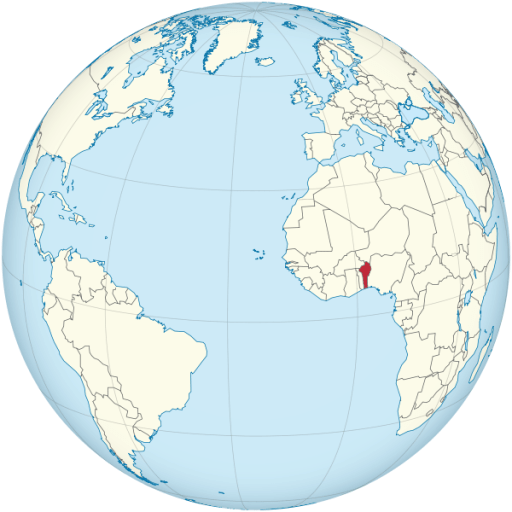
Born Abake, "loved by all" in Yoruba, she was just a toddler when captured and enslaved in 1859 in what is Benin today. Abake/Matilda McCrear survived the "Middle Passage" aboard the Clotilda, the last ship transporting enslaved people to North America.
How was her life like?
George Charles Darley for Al Jazeera traces the life of the woman.
- Abake came from the Tarkar people of West Africa, likely born around 1857. At the age of 2, she was taken along with her mother (later renamed...
Please log in or subscribe for free to continue reading this issue.
We could use your help to make this issue better. Take a look at the requests below and consider contributing:
- Submit a piece of artwork for this issue
- Submit a news, academic or other type of link to offer additional context to this issue
- Suggest a related topic or source for future issues
- Fix a typo, grammatical mistake or inaccuracy
Below you'll find some of the sources used for this issue. Only sources that support "media embedding" are included.
-
Ethiopian lawmakers have passed long-planned legislation to allow foreign banks to operate in the country.
-
Her name at birth was Abake – meaning ‘born to be loved by all’ among the Tarkar people of Western Africa.
-
World: Vietnam’s economic growth has made it a manufacturing hub, but it has caused severe pollution in cities like Hanoi. Despite efforts, the air quality remains a serious concern.
-
The fourth quarter has given us two new African unicorns — privately funded companies valued at more than a billion dollars: Nigeria’s Moniepoint and South Africa’s Tyme.
-
Population has declined by about 160,000 since Israel’s assault on Gaza began, Palestinian statistics agency says.
-
ACCRA, GHANA — The Or Foundation has now confirmed that at least two lives were lost in the devastating fire that broke out at Kantamanto Market. In a statement shared with Apparel Insider, the NGO said 8,890 stalls have been destroyed and over 10,000 people impacted by the disaster. The Foundation’s medical team has attended
-
Russia and Ukraine swapped more than 300 prisoners of war on Monday in an exchange brokered by the United Arab Emirates ahead of New Year's Eve, officials from both countries said.
-
Army chief emerged as consensus candidate after years of stalemate
-
At the ancient Assyrian city of Nimrud in northern Iraq, a temple razed by fire around 612 BCE, has remarkably preserved shrines that were recovered by the Penn Museum and Iraqi archaeologists on a site excavation this year as part of the Penn Nimrud Project, one of several cultural heritage preservation and protection initiatives of Penn’s Iraq Heritage Stabilization Program (IHSP).
-
Dia Al Azzawi is the winner of this year's Great Arab Minds award in literature and arts.
-
The Oxford English Dictionary (OED) has added a new set of Nigerian words to its diction, giving the global community an opportunity
-
-
Uncover the bold year-end scandals exposed in this in-depth investigation revealing hidden truths behind powerful figures and their covert actions.
-
Dive deep into the corruption, power struggles, and political drama within Benjamin Netanyahu's inner circle with never-before-seen police interrogation footage.
-
Listen to American Public Media's Ripple podcast on Apple Podcasts.
-
The design of the gun police say they found on the alleged UnitedHealthcare CEO’s killer—the FMDA or “Free Men Don’t Ask”—was released by a libertarian group.
-
Bad Bunny released his album, 'Debí Tirar Más Fotos,' on January 5, 2025, which has led to his song "DtMF" going viral on TikTok with fans sharing sentimental pictured with their family, friends, and loved ones.
-
The Best for News, Sport, Showbiz, Celebrities
Each week, What Happened Last Week curates news and perspectives from Asia, Africa, and the Americas. The newsletter is written by Sham Jaff and focuses on stories that rarely receive sustained attention in Western media.
Read the free edition every week. VIP subscribers receive additional stories, recommendations on what to watch, read and listen, and more.