

In this issue, I'm taking a closer look at what the fall of the Assad regime could mean for Syria's Kurds. I feel like Kurdish perspectives often get brushed over in these conversations, even though the Kurds have played such a big role in the fight for democracy and autonomy. And while this isn't about ignoring what Assad's fall means for others (there are so many layers to this story), I want to spend some time unpacking what this moment feels like for a community I'm connected to.
Also in this issue: Saudi Arabia's shiny new 2034 World Cup plans come at a massive human cost. Millions of migrant workers from countries like Nepal and Bangladesh will be building the stadiums and transport networks under unsafe, exploitative conditions. Over 13,000 Bangladeshi workers have died in Saudi Arabia since 2008. Meanwhile, Sudan's war continues. Hospitals are being bombed, crowded markets turned into graveyards, and over 12 million people are displaced. In Kenya, protests against gender-based violence (GBV) were met with---you guessed it---violence. The country is battling a "silent epidemic" of GBV, with almost 100 women killed in just three months this year. And in Iran? Things have gone from bad to worse. A new "chastity and hijab" law could see women facing execution for unveiling or "improper dressing." Yep, execution.
To end on something less dystopian, there's also tons of good news. Colombia banned child marriage (after eight failed attempts), Venezuela's Maduro let out 103 political prisoners, Brazil's former defenser minister has been arrested, The Gambia has a new ambitious plan to cut waster by 86%, and Lucia's serving up the last reading list for this year. Think a Kurdish family fighting through the 2008 financial crisis, a Georgian saga full of revolution and chocolate, a Palestinian family navigating the Nakba, and so much more. Books, at least, are still a safe space. Kind of. (Are we perhaps getting over the term "safe space" in 2025?)
What the fall of the Assad regime means for Syria's Kurds
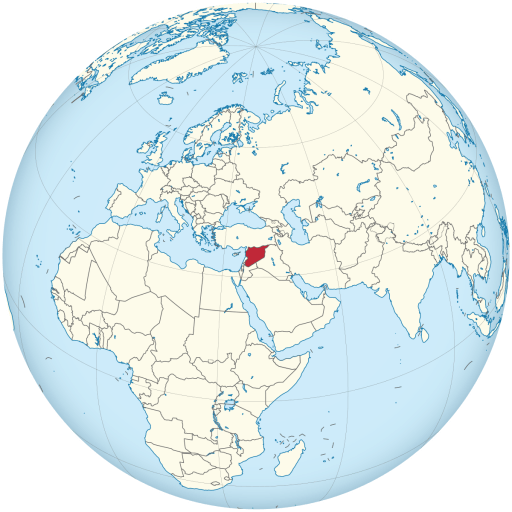
What happened:
The fall of Bashar al-Assad's government on December 8 in Syria is monumental. It's a regime known for its brutal oppression, genocidal campaigns, and the systemic targeting of opponents and minorities. This is a moment that will have massive implications for many people in Syria and the region---Arabs, Kurds, Assyrians, Christians, Armenians, and others.
But because I'm Kurdish, I want to focus on what this moment means for the Kurds. Again, this isn't to deny the pain and experiences of others.
Why this matters:
Assad's regime, built on Baathist ideology---a form of pan-Arab nationalism---collapsed after almost 60 years in power. The Baathist ideology, with its "one Arab nation" rhetoric, justified decades of systematic oppression, including targeting the Kurdish population. Kurds were stripped of their citizenship, denied basic cultural rights, and treated as second-class citizens. For the Kurds in Syria, this is both a moment of relief and uncertainty, as they have built a semi-autonomous region over the past decade, creating a governance system rooted in feminist values, inclusivity, and grassroots democracy.
Refresher:
You have probably heard the terms "Rojava", "AANES" and "SDF" a lot if you've been paying attention to this part of the world. For those who need an explainer: Rojava, which means "West" in Kurdish, refers to the predominantly Kurdish regions in northern and northeastern Syria. The term is shorthand for Western Kurdistan, as Kurds see it as one part of a broader Kurdish homeland that spans across Syria, Iraq, Iran, and Turkey. Rojava became globally recognized after 2012, during the Syrian civil war, when Kurdish forces, led by the People's Protection Units (YPG) and Women's Protection Units (YPJ), took control of these areas after Assad's regime withdrew. Over time, Rojava evolved into a political and social experiment rooted in the ideas of Kurdish leader Abdullah Öcalan, emphasizing democracy, feminism, and ecology. Its key characteristics? Governance is decentralized, with local councils playing a significant role in decision-making, women hold leadership roles across all levels of governance, and gender-based violence is actively combated, and Rojava seeks to protect the rights of Arabs, Assyrians, Armenians, Turkmen, and other minorities in the region. Rojava is often referred to interchangeably with North and East Syria, especially in international discussions. The Autonomous Administration of North and East Syria (AANES) is the official governing body of Rojava, and it is not exclusively Kurdish. It includes representatives from Arab, Assyrian, and Armenian communities, reflecting the diverse population of the region. The administration has implemented progressive policies, such as banning child marriage, promoting women's rights, and establishing local courts to resolve disputes. The military wing of AANES is the Syrian Democratic Forces (SDF), an alliance of Kurdish, Arab, and other militias that played a leading role in defeating ISIS. There's also been allegations of human rights abuses that need to be taken seriously.
Tell me more:
On November 27, a coalition of armed groups led by Hayat Tahrir al-Sham (HTS) and the Syrian National Army (SNA) launched military operations against Assad's former government. This has driven more than 100,000 people into areas governed by the AANES, adding pressure to already overcrowded camps with broken infrastructure, little access to water, healthcare, or food, and no proper shelter as winter sets in. On December 8, the Assad regime fell. Assad's fall hasn't magically stopped the violence in Syria---in fact, Kurdish-led regions are right in the thick of it. While the HTS-led coalition is setting up a transitional government that now controls most of Syria, including Damascus and the coastal region, fighting continues across Deir Ezzor, Manbij, and Kobane, displacing Kurds, Arabs, and other communities. Turkish-backed SNA factions are clashing with the Kurdish-led SDF on the ground, while Turkish airstrikes have killed 12 civilians in Ain Issa, Raqqa, and Deir ez-Zor just this month. For people in these regions, safety feels further away than ever.
How do Syria's Kurds feel about Assad gone?
SDF commander General Mazloum Abdi has called Assad's removal a "historic moment." In fact, many Kurdish people celebrated alongside their Arab neighbors. In cities like Qamishli, Assad statues were toppled, and Kurdish communities also raised opposition flags. Dr. Rosa Burç, a Kurdish sociologist, described the mood as bittersweet: "There's genuine relief and happiness that Assad is no longer in power. The Assad regime systematically oppressed Kurds for decades, but there's also deep uncertainty about what comes next." This uncertainty is tied to how the different actors in Syria right now---including Turkish-backed forces, jihadist militias, and HTS---will respond to demands for Kurdish self-administration.
Is HTS to be trusted?
HTS, an Islamist group, has adopted a "moderate" tone in its public statements. Its leader, Abu Mohammad al-Jolani, talks about building a "multiethnic Syria," (even gave an interview to CNN) but many Kurdish scholars and activists are skeptical. Dr. Rosa Burç puts it bluntly: "This moderate tone is purely strategic. Let's not forget that Jolani was part of ISIS and has openly praised the Taliban's style of governance. HTS is likely trying to gain international legitimacy, but I doubt this rhetoric will translate into genuine respect for Kurdish autonomy or democracy." Kurdish scholar Kamal Chomani is also skeptical, even calling it "self-deception," especially when seeing that Arab media seems to be fixated on the character of Jolani. Chomani writes, "It can be a reflection of desire for order, security & decisiveness, but this is extreme, this involves a subconscious relinquishing of the agency, it's rather an escape from the responsibility to promote democracy." (Kurdish news outlet) Rudaw English yesterday shared that "schools in Damascus reopened Sunday for the first time in 50 years without a dictator, now under Islamist rebel control. Both boys and girls are still allowed to attend, with no Taliban-like restrictions imposed yet."
Do the Kurds in Syria want a "Greater Kurdistan"?
Syrian Kurds aren't generally pushing for a unified Kurdish state that spans Syria, Iraq, Iran, and Turkey. What they want right now is self-determination within the borders of the countries where they already live. In Syria, the administration in Rojava has shown what this could look like. But Turkey, which views any Kurdish political movement as a threat, has consistently tried to undermine these efforts. Dr. Burç writes, "The existential attack on Rojava isn't "simply" a story of territorial loss, it's an attack on a collective archive of resistance, on imaginaries of freedom, on the memory of our beloved we lost on the way, on hopes for a future, for overdue justice & lived practices of democracy."
Can "the West" do anything?
Dr. Burç argues that Western governments, including Germany, often overlook Kurdish contributions in favor of seeing Turkey as a "stabilizing force." She calls on "the West" to recognize the Kurds as independent political actors and support their feminist, inclusive governance model in northern Syria. Other experts agree, like Matt Broomfield, co-founder of Rojava Information Center. Meghan Bodette, director of the Kurdish Peace Institute, says: "It's time for a ceasefire in northeastern Syria, a Turkey-PKK ceasefire regionally, and negotiations...
Please log in or subscribe for free to continue reading this issue.
We could use your help to make this issue better. Take a look at the requests below and consider contributing:
- Submit a piece of artwork for this issue
- Submit a news, academic or other type of link to offer additional context to this issue
- Suggest a related topic or source for future issues
- Fix a typo, grammatical mistake or inaccuracy
Below you'll find some of the sources used for this issue. Only sources that support "media embedding" are included.
-
EBÎR MUHAMEDQamishlo- Women’s organizations in North and East Syria hold awareness-raising seminars and workshops to end child marriage. In 2023, 62 children were tried to be forced into child ma...
-
Syria - Escalation of hostilities, spillover effects in Northeast Syria (DG ECHO Partners, UN OCHA, NES Forum) (ECHO Daily Flash of 04 December 2024) - Syrian Arab Republic | ReliefWebNews and Press Release in English on Syrian Arab Republic about Health, Protection and Human Rights, Epidemic and more; published on 4 Dec 2024 by ECHO
-
Tens of thousands of internally displaced people in overstretched camps and shelters in northeast Syria are not receiving sustained or adequate aid thereby negatively impacting their basic rights.
-
Tens of thousands of civilians seeking safety in Kurdish-controlled northeastern Syria are facing dire conditions due to the lack of adequate shelter, water, food and health care.
-
Abu Mohammad al-Jolani, the militant leader of the main group driving Syria’s armed opposition, speaks exclusively to CNN’s Jomana Karadsheh about the goal of Syria’s rebel coalition, Hayat Tahrir Al-Sham (HTS).
-
In Uprisings Across the Middle East and North Africa, Elites and External Powers Have Appropriated the Peoples’ Democratic Aspirations
-
‘Many migrant workers will die’: the likely human cost of awarding the 2034 World Cup to Saudi Arabia | Saudi Arabia | The GuardianMillions of migrants will build stadiums, transport networks and hotels. But testimonies from Bangladeshis who have worked there suggest abuse is deeply entrenched in the Gulf kingdom
-
The plight of Sudan has been ranked as the world's single biggest humanitarian crisis ever recorded, with millions of civilians bearing the brunt of the brutal civil war, according to a new report.
-
Hundreds gather in Kenya’s capital to rally against gender-based violence.
-
Brazilian police accuse Walter Braga Netto of meddling in investigation into alleged plot to overturn 2022 election.
-
Country closes 137-year legal loophole, becoming one of 12 in Latin America and the Caribbean to entirely ban marriage for minors
-
Ten years ago Ebola tore through Sierra Leone. Can a vaccine drive stop history repeating itself? | Global development | The GuardianMemories of 2014, when the disease ravaged west Africa, are raw, while risk remains high. This week the first ever nationwide prevention programme begins – and doctors hope it will be enough to fend off another disaster
Each week, What Happened Last Week curates news and perspectives from Asia, Africa, and the Americas. The newsletter is written by Sham Jaff and focuses on stories that rarely receive sustained attention in Western media.
Read the free edition every week. VIP subscribers receive additional stories, recommendations on what to watch, read and listen, and more.