

This issue is not about Syria (I mean, that news is all over the media right now) but about Namibia's first female president (who is she and what's her politics like?) and tech stories from Bangladesh (how poor air quality affects gig workers), Kenya (how gig workers find rest) or Bhutan (seven college kids built the country's very first AI startup). Plus, who's Argentina's richest 50 people?, what are India's and Iran's space agencies up to these days, a classic Japanese romcom for some wintery winter days, the #1 Netflix movie in Bangladesh right now, and so much more.
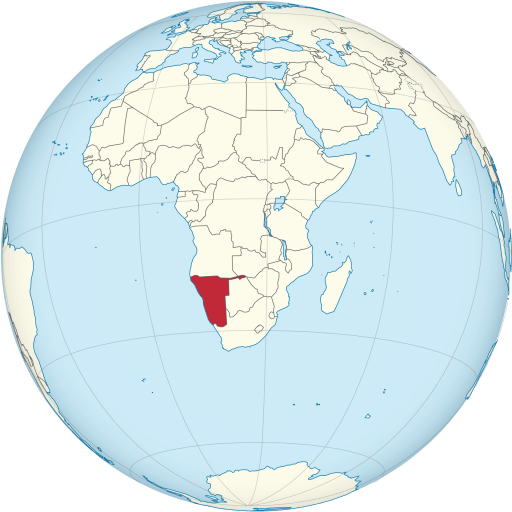
Namibia just got its first female president. What's her politics like?
What happened:
Netumbo Nandi-Ndaitwah just made history as Namibia's first female president. She clinched the top job with 57% of the vote in a tightly contested election.
Why this matters:
This was Namibia's "Kamala Harris moment"---you know, the VP-to-president glow-up. Namibia's still carrying the baggage of white-minority rule, and while the World Bank calls it "upper-middle-income," that label doesn't tell the whole story. It's one of the most unequal countries out there, with a major gap between Black and white communities in wealth and opportunity.
Tell me more:
"The Namibian nation has voted for peace and stability," Nandi-Ndaitwah said after being declared president-elect. The Electoral Commission of Namibia confirmed the results despite delays caused by technical hiccups and ballot shortages. NNN's main challenger, Panduleni Itula of the Independent Patriots for Change party (IPC), pulled in 26% of the vote but isn't happy with the process, calling it "deeply flawed" and heading to court. The IPC is a relatively new political party in Namibia and positions itself as a reformist alternative to SWAPO. It was founded in 2020 by Itula, who himself is a former member of SWAPO. Itula ran as an independent candidate in the 2019 presidential elections.
Namibians also voted for the National Assembly. Nandi-Ndaitwah's party, SWAPO, won 51 of the 96 National Assembly seats. That's a majority, but far from the dominance they've enjoyed for decades. For context: SWAPO used to hold 87% of seats not long ago. IPC grabbed 20 seats, making them the official opposition.
Who is she?
Netumbo Nandi-Ndaitwah---NNN if you're cool---has a political resume that feels straight out of a Netflix biopic. Born in 1952 (she's 72 and a Taurus), she started fighting for Namibia's independence as a teen. At just 14, she joined SWAPO, then a liberation movement going up against apartheid South Africa. Arrested for her activism, she fled the country, eventually earning a degree in international relations in the UK.
When independence came in 1990, NNN returned home and got straight to work. She climbed the ranks in government, taking on roles in foreign affairs, tourism, and child welfare. She also pushed through the Combating of Domestic Violence Act in 2002, shutting down sexism in parliament along the way. Her leadership style? No fluff. "I am an implementer, not a storyteller," she once said.
In her personal life, she's married to Epaphras Denga Ndaitwah, a former defence forces chief, and they have three sons.
What's up with SWAPO?
SWAPO's 30+ years of power is looking shaky. Corruption scandals like the Fishrot case (think bribery in the fishing industry) have rocked the party. But NNN's clean image helped her rally a fractured party and win over voters frustrated by poverty, unemployment, and inequality tied to Namibia's colonial past.
What's next?
The challenges are massive. Namibia is the second-most unequal country in the world, and many Black Namibians still live in poverty. Two-thirds of urban residents live in informal settlements, and farmworkers earn a minimum wage of about 55 cents a day. NNN's to-do list is long. One of her boldest promises: tackling the "red line," a colonial-era border that restricts the movement of agricultural goods, like beef, between Namibia's north and south. With beef exports making up a big chunk of the economy (beef is one of the country's main exports; 42% of it went to the EU in January 2024), this is a high-stakes move. Meanwhile, Namibia is sitting on a green energy goldmine, with plans for wind, solar, and green hydrogen. Oil reserves being tapped by TotalEnergies and Shell could start flowing by 2030. But for now, most Namibians are still waiting to see tangible benefits.
Zoom out:
2024 has been rough on ruling parties across Africa. From Botswana to South Africa, voters are done with corruption and politics-as-usual. While SWAPO held on this time, Namibia's younger, more critical electorate is paying close attention. Don't be surprised if this trend rolls into 2025, writes BBC.
All the tech stories from the "Global South" you may have missed in 2024
What happened:
It's December, which means it's roundup season. Rest of World did one for its best tech stories, and I'm here to share some of my faves with you.
Why this matters:
When "the West" talks about tech, it often skips over how it's shaping lives in the rest of the world. Spoiler: they're using the same tech we are, but in ways we might not even (need to) think about.
Tell me more:
In Indonesia, influencers are the MVPs of politics right now. Former President Joko Widodo hired them to promote the new capital, Nusantara, that is still under construction. That capital has been the talk of the town, with concerns around its connectivity, deforestation, and the displacement it causes/caused. Also, the country is going all in on electric vehicles.
In Bangladesh, during the student-led uprising this year (that actually toppled the government), internet access became a fundamental right. The country's tech industry lost about US$300 million because of the blackout. Reporter Faisal Mahmud also did a story on how poor air quality affects gig workers in Dhaka, one of the most polluted cities in the world.
In Argentina, Worldcoin, Sam...
Please log in or subscribe for free to continue reading this issue.
We could use your help to make this issue better. Take a look at the requests below and consider contributing:
- Submit a piece of artwork for this issue
- Submit a news, academic or other type of link to offer additional context to this issue
- Suggest a related topic or source for future issues
- Fix a typo, grammatical mistake or inaccuracy
Below you'll find some of the sources used for this issue. Only sources that support "media embedding" are included.
-
Meanwhile, the country's next president says removal will happen gradually but has already begun
-
Voters across Africa are punishing ruling parties over the state of the economy.
-
Rest of World contributors from Dhaka to Buenos Aires share their highlights, low points, and key takeaways from covering technology in 2024.
-
As Indonesia’s capital changes from Jakarta to Nusantara in 2024, the country’s president is tasking influencers to hype the new capital city on social media.
-
Battery-pack builders chase maximum range, despite safety risks.
-
Bangladesh had a five-day internet shutdown followed by the country’s prime minister, Sheikh Hasina, being ousted. Its tech companies found ways to work without the internet.
-
From toxic skies to health hazards: we measured air quality for riders in Lahore, New Delhi, and Dhaka. The results were devastating.
-
Worldcoin is booming in Argentina as Buenos Aires sees a poverty rate of 45%. A network of intermediaries has emerged to recruit new customers.
-
The shift from PROMETEA to generative AI speeds up rulings but sparks concerns about privacy risks and ethical challenges in Argentina’s justice system.
-
Rest of World asked over 100 gig workers across 10 cities how they take a break between tasks.
-
As protests roiled Kenya in June, the walkie-talkie app Zello was downloaded more than 40,000 times on the country’s Google Play store.
-
Xiaohongshu, often compared to Instagram, turns obscure sites across Southeast Asia into must-see attractions.
-
Private dealerships in Uruguay sell Teslas imported from Asia to Latin America.
-
Similarweb is an AI-powered digital data company providing real-time market intelligence, competitive insights, and consumer trends to accelerate business growth.
-
NoMindBhutan services prominent clients like the Bhutan National Bank and Drukair - Royal Bhutan Airlines.
-
President says situation ‘under control’ but episode marks new low for underfunded system in ‘critical’ condition.
-
There are concerns Capt Ibrahim Traoré is trying to cling to power by stalling the return to civilian rule.
-
Medical experts have been sent to southwestern Congo after a mystery disease killed dozens of people over two weeks, authorities said.
-
Chinese women have taken it upon themselves to prove that the length of sanitary pads often fall short of what is advertised.
-
Although the ruling party candidate has conceded, no official results have been declared.
-
An appeal court confirmed the death sentence for property mogul Truong My Lan on Tuesday, stating there were no valid reasons for reducing her sentence. - VnExpress International
-
Nine countries take part in INTERPOL operation targeting chemicals and explosives
-
A selection of stories that caught our eye over the last seven days in Argentina.
-
Iran says it sent into space its heaviest-ever payload using a domestically developed rocket. Tehran's advancing aerospace capabilities have raised concerns in the West.
-
Everything you need to know about BBC Women's Footballer of the Year Barbra Banda.
-
Proba-3 es una misi�n espacial innovadora compuesta por dos sat�lites: Coronagraph y Occulter. Estos sat�lites trabajar�n en perfecta sincronizaci�n para estudiar uno de los...
-
Nakayama had a solo Christmas show scheduled in Osaka on Friday, but had canceled the show in the morning, citing health reasons.
Each week, What Happened Last Week curates news and perspectives from Asia, Africa, and the Americas. The newsletter is written by Sham Jaff and focuses on stories that rarely receive sustained attention in Western media.
Read the free edition every week. VIP subscribers receive additional stories, recommendations on what to watch, read and listen, and more.