

This issue is asking a blasphemous question, "Does the G20 even matter?" and goes deep into Somaliland politics (they have a new president). Other than that, a march for trans rights in Pakistan, Brazil's former president is finally indicted, researchers discovered a whole lotta stuff like the earliest known alphabetic writing in Syria and the youngest planet ever (just 3 million years old, lol). Plus, deep fakes in Indian politics, why leisure is a political (feminist) act, especially in South and Southeast Asia, a new coming-of-age dramedy about a gay love story starring Palestinian-Punjabi Bilal Hasna, and a dog that can sniff out really, really old humans. And so much more.
The G20 have a new plan to end world hunger, again
What happened:
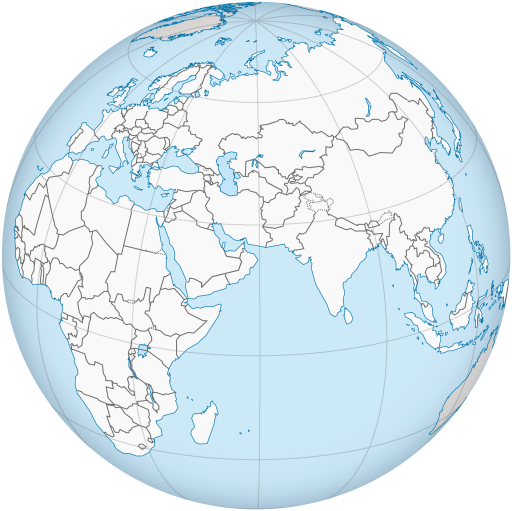
The G20 summit just wrapped up on November 18--19 in Rio de Janeiro, Brazil. The hot topics? Poverty, wars, and sustainable development. The big headline: the launch of a "Global Alliance against Hunger and Poverty."
Refresher:
The G20 started in 1999 to tackle global economic headaches. It's mostly big players like the US, China, and Germany, plus some key regional stars like South Africa and Indonesia. Until last year, it was 19 countries + the EU, but now the African Union is in the mix. Leadership changes every year, and this year's host was Brazil. Next year, South Africa takes the wheel.
Why this matters:
Global hunger is rising again after years of progress. A recent report warned that if current trends continue, 582 million people could be living in hunger by 2030---the same number as 2015. This Alliance aims to change that trajectory, but can it deliver? TBD.
Tell me more:
The Alliance isn't about building a massive fund. Instead, it's more of a matchmaker, linking countries with donors and resources to tackle issues like malnutrition, clean water, school meals, family farming, and early childhood care. Brazilian President Lula da Silva says 81 countries and international organizations are already on board.
Do these summits even matter?
Fair question. Critics often roast G20 summits as all vibes, no substance. But while some resolutions, according to some, evaporate faster than gas fumes (looking at you, billionaire tax promises), it's not all fluff. For example:
- In 2008, G20 measures worth US$4 trillion helped stabilize the global financial system during the financial crisis.
- In 2020, the G20 rolled out a Debt Suspension Initiative, letting low-income countries hit pause on debt payments during the pandemic. Mixed reviews, but still something.
Bottom line: These summits can drive global change---if the big talk translates into local action.
Btw, the African Union just became a permanent G20 member. Before this, South Africa was the only African country at the table. Now, the AU represents 55 countries, 1.4 billion people, and a fifth of the planet's landmass. This matters because Africa's barely a blip in global emissions but bears the brunt of climate change, hunger, and pollution. With a seat at the G20 table, Africa can push for fair trade, debt relief, and climate action. Plus, its massive renewable energy potential makes it a key player in the green transition. UN spokesperson Stéphane Dujarric summed it up: "When global institutions were created, much of Africa was still colonized. This is a step toward fixing that imbalance."
Fun fact:
Even with the AU joining, it's still the G20, not the G21. (Unlike the G7, which briefly became G8 when Russia joined---then went back after Russia was booted.)
What's next?
South Africa takes over as G20 president in 2025, hosting the summit and steering the agenda. It's a prime opportunity to put African priorities---like food security, debt relief, and sustainability---front and center. While Africa's influence on the global stage is still growing, this could be a megaphone moment.
Somaliland has a new president
What happened:
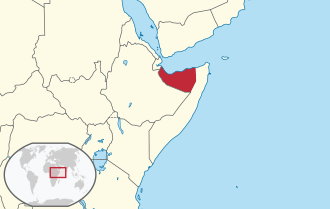
Abdirahman Mohamed Abdullahi is the new president of Somaliland.
Why this matters:
Somaliland has not been officially internationally recognized as its own country. However, they declared independence from Somalia back in 1999 and have been doing their own thing since. Elections? Free and fair. Power transfers? Drama-free. They even have their own currency. Basically, democracy works here, and it's pretty chill (no offense, Somalia). But here's the kicker: because no one officially recognizes Somaliland as a country, its six million people have passport problems and zero access to international banking. The winner of this election might actually, once and for all, change the country's relationship status with the international community.
Fun fact:
Like other unrecognized states such as Taiwan, Somaliland doesn't fly a flag at the United Nations in New York. This is how their flag looks like.
Tell me more:
This election finally happened after a two-year delay (apparently, they ran out of money, among other things). Abdullahi, also known as Irro, from the Waddani Party, crushed it with 64% of the vote, leaving President Muse Bihi Abdi (Kulmiye Party) in the dust with 35%. The economy's in rough shape (youth unemployment is at a jaw-dropping 70%), and international recognition is still the ultimate prize. Both candidates made big promises, but Waddani's playing it smart, pledging to give marginalized regions a voice. Meanwhile, Bihi's administration got called out for, well, not doing that.
Btw:
If Somaliland could vote in the U.S., they'd probably pick Trump. Not because they're fans, but because some big-shot U.S. Africa policy folks from Trump's first term have been vocal about recognizing Somaliland. Go figure.
Zoom out:
Somaliland is the reason why Somalia and Ethiopia aren't getting along right now. In January, they told Ethiopia, "Hey, you can lease our land for a naval base (19kms of it) and use our Berbera port for trade." Ethiopia said, "Deal," offering stakes in Ethiopian Airlines and a maybe on recognition. Somalia? Not amused. They threw a diplomatic tantrum, expelled ambassadors, and even started flirting with Egypt (Ethiopia's nemesis). But relax---experts say there's no war coming. Somalia and Ethiopia have bigger problems, like fighting al-Shabaab in southern Somalia.
what else happened
Syria / Israel:
Thirty-six people were killed and more than 50 others are injured in Israeli airstrikes in Palmyra. (Reuters)
Sudan:
A year and a half of war has triggered a relentless countdown towards a total collapse in Sudan, as more than 20 million suffer from raging violence, deepening hunger, and forced displacement, Norwegian Refugee Council (NRC) Secretary General Jan Egeland said at the end of a...
Please log in or subscribe for free to continue reading this issue.
We could use your help to make this issue better. Take a look at the requests below and consider contributing:
- Submit a piece of artwork for this issue
- Submit a news, academic or other type of link to offer additional context to this issue
- Suggest a related topic or source for future issues
- Fix a typo, grammatical mistake or inaccuracy
Below you'll find some of the sources used for this issue. Only sources that support "media embedding" are included.
-
Eventbrite - aidóni presents Expanding the Lens: Stories from the Global Majority - Tuesday, 3 December 2024 - Find event and ticket information.
-
The UN welcomed the adoption on Saturday of the G20 New Delhi Leaders’ Declaration, describing it as an example of effective leadership at a time of great divisions in the world.
-
The opposition’s win in Somaliland’s election could help the breakaway state cement its place as a democratic state in a volatile region.
-
Whichever way the ongoing armed conflict ends, the loser will be Somaliland president Muse Bihi Abdi.
-
The presidential and parliamentary elections in Somaliland are taking place on Wednesday. What scenarios are possible — and can the delicate balance of interests in the Horn of Africa be preserved as a result?
-
Al-Shabaab has grown rich and retained influence over much of Somalia.
-
-
South African police have cut off food supplies to illegal miners holed up in an abandoned gold mine. Relatives are calling on the government to show leniency. Illegal mining is widespread due to a lack of work in official mines. Dianne Hawker reports from Stilfontein.
-
A human rights report says hundreds of people in Belarus who have shown solidarity with Ukraine have been arrested in a sweeping crackdown under authoritarian President Alexander Lukashenko.
-
Jimmy Lai: Hong Kong hears from jailed media tycoon Jimmy Lai for the first time in four years at his trial | CNNJimmy Lai, the pugnacious Hong Kong media tycoon whose now shuttered tabloid Apple Daily was a regular thorn in Beijing’s side, took the stand Wednesday in his own defense for the first time in a high stakes national security trial that could send him to prison for life.
-
Haiti police, civilians kill 28 gang members, say authorities
-
The NGO said its staff had been threatened with rape and death by Haitian police, forcing it to shut down some of the few functioning healthcare centers in the capital.
-
Count stokes tensions in Iraqi Kurdistan, with fears that reduced numbers will lessen Kurdish clout in sectarian system.
-
In the wee hours Sunday at the United Nations climate talks, countries from around the world reached an agreement on how rich countries can cough up the funds to support poor countries in the face of climate change.
-
Brazil’s Federal Police have formally accused former President Jair Bolsonaro and 36 other people of attempting a coup to keep him in office after his electoral defeat in the 2022 elections.
-
Transgender Rights and Fight for Recognition in Pakistan: The Significance of Sindh Moorat March - Observer DiplomatTransgender rights in Pakistan have been a long-standing issue, with the Khwaja Sira community often facing systemic discrimination, violence, and marginalization. Despite legal progress, such as the 2018 Transgender Persons (Protection of Rights) Act, transgender individuals continue to struggle for basic human rights, including access to healthcare, education, employment, and protection from hate crimes. Movements
-
Ahoo Daryaei was released from a psychiatric ward into the care of her family, Iranian authorities say.
-
Al Hassan was convicted in June of war crimes during the 2012-13 period, when Ansar al-Din ruled Timbuktu.
-
KUWAIT CITY, KUWAIT—According to the Arab Times, a team of Kuwaiti and Polish archaeologists have […]
-
Using drones and Google Earth imagery, archaeologists have discovered a 4,000-year-old network of earthen canals in what’s now Belize.
-
Access to leisure has always been gendered. How are women championing spaces of recreation for themselves across South and Southeast Asian cities?
-
Al Jazeera's podcast The Take followed people affected by the Turkey-Syria earthquakes through their journeys of grief, displacement and recovery
-
After the Earthquake: Impacts of the Natural Disaster Within War-Torn AANES Territories – Rojava Information CenterThe earthquake that hit the regions of southern Turkey and north-west Syria in the early morning of February 6th 2023 with a magnitude of 7.8 was the strongest in the region since 1939. The epicenter was the city of Pazarcık, Turkey. While the affected area was mainly southern Turkey and north-west Syria, the earthquake was [...]
-
Actor Bilal Hasna on his latest role as a non-binary British-Palestinian drag queen in the brilliant Layla
-
Archeologists are enlisting the help of a “barkeologist” named Abby to identify unmarked graves in Virginia.
Each week, What Happened Last Week curates news and perspectives from Asia, Africa, and the Americas. The newsletter is written by Sham Jaff and focuses on stories that rarely receive sustained attention in Western media.
Read the free edition every week. VIP subscribers receive additional stories, recommendations on what to watch, read and listen, and more.