

This issue took a bit longer because, honestly, I had to wrap my head around Mexico's latest energy reforms and who they actually impact. Plus, I got really caught up in Mozambican politics---fascinating stuff---and totally lost track of time. Between my 9-5, drafting another newsletter, and prepping for today's Sembra Media workshop (where I'll be talking about this newsletter, by the way), I was wiped out. No excuses though---I'm back with a solid lineup: a lot of good news (trust me, we need it), Latin Grammy nominations to explore, Nigerian archives, my favorite musical instrument, and, of course, a truly wild comment from a certain Japanese misogynist. And so much more!

This week's issue was supported by this newsletter's very first intern: Lucia Baumann.
"Having lived in both Brazil and Japan, I often find myself missing the news from those parts of the world. That's how I fell in love with this newsletter. I've worked at local magazines and radio broadcast in Leipzig, as well as ZEIT ONLINE and dpa (German Press Agency). My academic background is in cultural studies and history, where I researched how societies commemorate their past, using literature, film and audio material. Currently rehabilitating my Portuguese and studying colonial history in Lisbon."
(Photo credits: Elias Schulz)
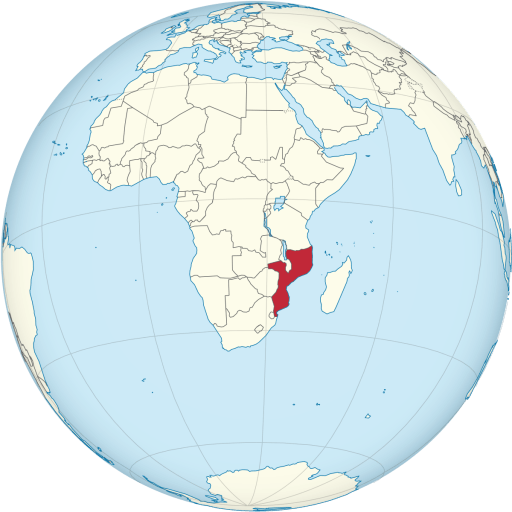
Mozambique is waiting to find out who is its new president
What happened:
Okay, buckle up. We've got a lot of ground to cover. So, Mozambique went to the polls on October 9 to elect the president, the 250 members of the national parliament and the members of ten provincial parliaments (the country is divided into ten provinces; if you know at least one U.S. state, learn one Mozambican one, too -- you've heard this name before: Gaza). On October 24, the electoral commission announced the results: Daniel Chapo, from Mozambique's ruling FRELIMO party, won the presidency with 70.6% of the vote. His opponent, Venâncio Mondlane, pulled in 20.3%. Since then, things have been anything but quiet---at least 18 people have died in protests because a lot of people, opposition parties and observers from the European Union believe, 'oh they for sure cheated.' Some local groups say the death toll is more than 50. Plus, for weeks now, people have struggled to get online as internet access has been limited. Amidst all this, two famous people from the opposition have been murdered, adding fuel to the fire. The government response? Force.
Why this matters:
Around 34 million people live in Mozambique. Adriano Nuvunga, director of Mozambique's Centre for Democracy and Human Rights, said the country had never seen such large demonstrations. Mozambique is one of the poorest and most underdeveloped countries in the world, ranking low in GDP per capita, human development, measures of inequality and average life expectancy.
Good to know:
Yes, Mozambique became independent of Portugal in 1975. Until 1990, it was a one-party socialist state, with the Soviet Union being its most important fanboy. In 1994, Mozambique then held its very first multiparty elections and has since become a relatively stable presidential republic; aside from the ISIS stuff in the north, which I will get to in a bit. GDP-wise, the country still has got a long way to go though.
Tell me more:
Mondlane is now in hiding, but/and has called for more protests, saying the people need to "break free from these 50-year shackles." The ruling party says, 'he's trying to incite a coup'. Some say this whole post-election-drama wasn't all too surprising. See, this is not the first time. There were allegations of vote-rigging, electoral fraud and violent protests during last year's local elections, too. FRELIMO then won 64 of 65 municipalities. (Oof, this synopsis took me a bit.)
Btw:
Things are so heated that, in one city, protesters actually toppled a statue of current President Filipe Nyusi. They even went as far as cutting off its head. He has pledged to step down.
Who were the candidates?
Two Capricorns. Basically, there were more, but I'm giving you the two main ones.
- Daniel Chapo: Born January 6, 1977, Chapo has a background in law. He's also worked as a journalist, and has been a longtime member of the ruling FRELIMO party. FRELIMO is a huge deal in Mozambique. Founded in 1962, the party led the armed struggle against Portuguese colonial rule, which eventually led to the Mozambique's independence in 1975 (after some 400 years). Today, there are talks that FRELIMO is a bit corrupt ('a bit' is an understatement; they're responsible for one of the biggest corruption scandals in Africa. The country ended up with US$2 billion in "hidden debt".) Chapo is a married Christian man and has four children.
- Venâncio Mondlane: Born January 17, 1974, Mondlane has a background in forest engineering. He's known to be quite knowledgeable on all things money; you'll see him on TV and elsewhere a lot as a commentator. He's run as an independent with support from the newly formed PODESA party, positioning himself as the fresh face for Mozambique's youth who want change (he turned 50 this year, I'm not age-shaming, but the median age there is at 16.4 years).
What's Mozambique dealing with at the moment?
The country's 34 million people really care about:
- The violence in the north: The Cabo Delgado province in the north (oh, look, another Mozambican province) has been anything but a safe place for many since 2017. The country has been fighting against an armed group close to ISIS that has been carrying out attacks on communities there, including beheadings and other killings. Some 1.3 million people were forced to flee their homes. Around 600,000 people have since returned home, many to shattered communities where houses, markets, churches, schools and health centers have been destroyed, the United Nations refugee agency said earlier this year.
- Corruption and poverty: Many people in Mozambique are unemployment, hunger is a major issue there because there's been a serious drought (El Niño stopped the rain from falling). According to the United Nations World Food Program, 1.3 million people in Mozambique are facing severe food shortages as a result of the drought.
What now?
PODEMOS and Mondlane really want the Constitutional Council to validate the election results and the Council is currently considering the appeal. Today, Mondlane, from somewhere outside of Africa, is supposed to announce some next steps for the people who are out on the streets in support of him. The president of PODEMOS, Albino Forquilha, also said that "the demonstrations will continue until the electoral truth is restored". In any case, whoever the winner, the presidency comes with a lot of problems. Borges Nhamire, a researcher at the Institute for Security Studies, said, "The president to be elected will find a very difficult situation because he is in transition during a period of war, and every transition that takes place during a period of war is very difficult," said Nhamire. To be continued.
Zoom out:
The political crisis has also implications for neighboring countries. For example, South Africa closed its border with Mozambique for a few days and opened it again. The Southern African...
Please log in or subscribe for free to continue reading this issue.
We could use your help to make this issue better. Take a look at the requests below and consider contributing:
- Submit a piece of artwork for this issue
- Submit a news, academic or other type of link to offer additional context to this issue
- Suggest a related topic or source for future issues
- Fix a typo, grammatical mistake or inaccuracy
Below you'll find some of the sources used for this issue. Only sources that support "media embedding" are included.
-
The United Nations’ refugee chief has raised a new alert over 780,000 displaced people in Mozambique.
-
Em mais um direto na sua página oficial do Facebook, Venâncio Mondlane disse hoje que a terceira fase das manifestações "foi um sucesso" e que os detalhes da quarta e última etapa serão conhecidos na segunda-feira.
-
Acórdão do Conselho Constitucional deu provimento aos recursos interpostos pelos partidos PODEMOS, RENAMO e PAHUMO, relacionados com o contencioso eleitoral. PODEMOS pede a sua anulação.
-
A África do Sul reabriu este sábado (09.11) a fronteira com Moçambique, depois de a ter encerrado na quarta-feira (06.11) devido à escalada dos protestos no país vizinho, anunciaram as autoridades sul-africanas.
-
La titular del Ejecutivo expuso que con la nueva reforma energética se revierte la de 2013 con la que Pemex y CFE dejaron de ser empresas públicas para convertirse en empresas productivas del Estado como una forma de "privatización".
-
Durante su conferencia de prensa mañanera, la presidenta firma los decretos de las reformas constitucionales en materia energética y también en materia ferroviaria
-
Why Sheinbaum’s latest reform may bring uncertainty and challenges for the private sector.
-
The measure de-privatizes two large Mexican companies, one dedicated to the extraction and commercialization of oil, and the other dedicated to providing electricity and internet to Mexicans.
-
-
Dozens of people have been detained over the past week during the protests.
-
Military regime considering move after capital punishment abolished in west African country in 2018
-
President Erdogan announced that Turkey has officially severed relations with Israel, according to reports in Turkish media.
-
The ruling prevents the country’s first Indigenous president from contesting elections scheduled in August 2025.
-
Prabowo hails stronger ties after meeting with Xi Jinping for second time this year
-
Vote in Somaliland comes amid regional tensions and hopes for international recognition after 30 years of self-rule.
-
As representatives from nearly 200 countries arrived in Azerbaijan for the U.N. climate conference, they bring with them a level of scrutiny the hosts aren’t accustomed to — and don’t often tolerate.
-
Shigeru Ishiba was formally reelected as Japan's prime minister on Monday after a rare runoff vote in parliament that his ruling coalition no longer controls, setting the stage for a minority government that may push him to yield more to an emboldened opposition bloc.
-
Jubbaland suspends cooperation with federal government, citing constitutional violations - Hiiraan OnlineKismayo (HOL) — Jubbaland Regional State administration suspended cooperation with the federal government, citing federal non-compliance with Somalia's constitution and disrespecting Jubbaland's autonomy.
-
(Reuters) -Hundreds of people on Monday set out on a nine-day march to New Zealand's capital of Wellington in protest over legislation that would reinterpret a treaty at the heart of race relations in the Pacific country.
-
Entrepreneur Alix Didier Fils-Aimé replaces Garry Conille as country rocked by worsening gang violence
-
Abdel Rahman Juma Barkalla is accused of leading a campaign marred by sexual and ethnically motivated violence.
-
Employers are currently required to provide one day off a week, but loopholes mean some employees can work up to 48 days in a row.
-
Sea likely existed in northern lowlands over 3.5 billion years ago
-
A Nigerian court freed 119 people including minors on Tuesday, after the authorities dropped charges against them arising from deadly protests in August against economic hardship.
-
A U.S. jury has awarded $42 million to three former detainees of Iraq’s notorious Abu Ghraib prison, holding a Virginia-based military contractor responsible for contributing to their torture and mistreatment two decades ago.
-
Top UN court confirms jurisdiction to hear the two countries’ mutual discrimination claims over Nagorno-Karabakh.
-
Despite the lowest levels of deforestation in nearly a decade, critics say President Da Silva’s administration has failed to deliver on its climate promises.
-
We're digitally archiving old Nigerian newspapers to make history accessible to everyone.
-
We look back on global and Arabic crossovers in music, highlighting our favorite collaborations.
-
Japan's noted writer and Conservative Party leader Naoki Hyakuta has apologised after his comments on women and the falling birthrate in the country sparked criticism. He said that to boost the nation's birth rate, women should be banned from marriage after the age of 25 and from removing their uterus post the age of 30
Each week, What Happened Last Week curates news and perspectives from Asia, Africa, and the Americas. The newsletter is written by Sham Jaff and focuses on stories that rarely receive sustained attention in Western media.
Read the free edition every week. VIP subscribers receive additional stories, recommendations on what to watch, read and listen, and more.