

This week's issue is all about Western Sahara and the latest COP16 drama. The absolutely fantastic news coming out of Western Sahara was off my radar last month, but I decided to cover it anyway because, hey, it's good news, and we could all use that. As for COP16---the huge conservation conference in Colombia---everyone's been talking about it, but I wanted to add my take, especially on some details I felt were missing from the big headlines. On top of that, I watched a perfect documentary last week (yes, I actually mean perfect) about the 26 artifacts that France finally returned to Benin. Plus, a few more wins: Idris Elba is heading to Africa to work on projects outside the colonial lens, China's first-ever female space engineer is now in space, and---drumroll---this newsletter is getting its first intern! Welcome, Lucia Baumann!
Lucia is joining my one-woman team, so we're officially a two-woman powerhouse for the next three months. She's brought Chinese standup comedy, Sudanese football and a Cuban legend with her. And so much more!
"It is no longer legal for European countries to fish and farm in Western Sahara," says the European Court of Justice
What happened:
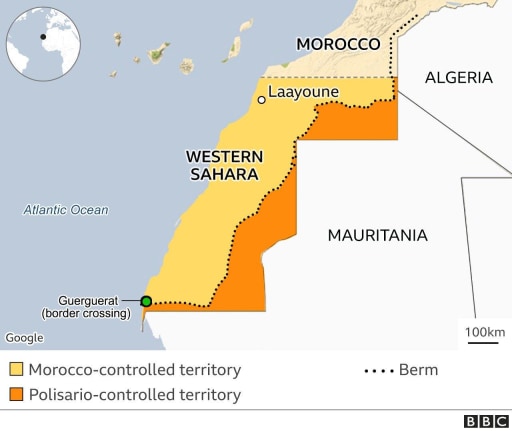
On October 4, the European Court of Justice (ECJ) ruled that all deals between the EU and Morocco from 2019---which allowed European countries to fish and farm in Western Sahara---are invalid. Why? The court found that the people of Western Sahara, the Sahrawis, didn't consent to these deals, which violates their right to self-determination (basically, their right to have a say in what happens on their own land). The court also ordered that products from Western Sahara need to be labeled as such, instead of being misleadingly labeled as "Moroccan." The ECJ rulings are binding.
Refresher:
Western Sahara's status has been murky for decades. Morocco says it's theirs, while the Polisario Front, a pro-independence group, calls it "Africa's last colony." It's a massive desert area, about the size of Britain, and rich in resources. The UN brokered a ceasefire in 1991, aiming for a referendum to settle whether Western Sahara should be independent or stay with Morocco. But here's the catch: no one can agree on who should get to vote. Last week, the UN Security Council actually renewed its mission (MINURSO) to keep the peace in Western Sahara and ideally get a referendum going someday. Algeria, Russia, and Mozambique are critical of the mission, saying it isn't bringing the region any closer to a real solution. By the way, the African Union recognizes Western Sahara as an independent state, which makes it the only international organization to do so.
Why this matters:
This isn't just about fishing rights or labeling---it's a major test of Europe's commitment to human rights and international law, the almost-impunity of Moroccan settler colonialism and the future of Sahrawi self-determination.
Tell me more:
The court called out the EU for only consulting those living in Western Sahara at the moment, many of whom aren't the original Sahrawis. In fact, since Morocco controls most of the region, Moroccans who've moved in now outnumber the Sahrawis. The UN considers Western Sahara a "non-self-governing territory," meaning only the Sahrawis should have a say in its future. That's a big oversight on the EU's part.
What's Polisario saying?
For Polisario, this is a victory. Their rep to the UN, Oubi Bouchraya, called it "a big victory for the people of Western Sahara" and a clear message to countries like France and Spain, which have often supported Morocco. In Polisario's eyes, this ruling confirms that Western Sahara and Morocco are separate. Other Sahrawi voices agree, like the NGO Sahrawis Against The Plunder. Sahrawis in refugee camps were even spotted celebrating this news.
And Morocco?
Not surprisingly, Morocco isn't thrilled. The Moroccan Foreign Ministry slammed the court's decision, calling it biased and riddled with "legal errors." They argue that Morocco has the right to "legal certainty" in its agreements with the EU. For Morocco, anything that doesn't respect its "territorial integrity" (a polite way of saying "our claim over Western Sahara") is off the table.
Where does the EU stand on this?
The EU's judiciary (the ECJ) is taking a stand for Western Saharan self-determination. However, the Commission and the Council have a history of prioritizing their relationship with Morocco over principles of international law when it comes to Western Sahara. Morocco has a history of using its leverage, like managing migration flows to the EU, to push its agenda. The European Commission is trying to juggle this tricky balance: they'll "analyze the ruling," but they're still very keen on keeping Morocco as a close partner. Countries like France (recently signing deals worth about US$10 billion with Morocco) and Spain openly recognize Morocco's control over Western Sahara---no doubt to keep Morocco happy and the diplomatic waters calm. The EU has a year to rework its agreements before the ruling fully takes effect. The plan? Probably to reshape these deals in a way that keeps trade flowing without clashing with the court's decision.
What now?
There's a lot at stake. The decision will hurt EU fishermen, who'll lose access to both Western Sahara and Moroccan waters. Morocco could also lose around €40 million in EU funds annually, which supports its fishing industry---much of it in Western Sahara. And without special tariffs, Moroccan businesses will face a hit on Western Sahara-grown exports, like tomatoes and melons, which will become pricier and less competitive in Europe.
Meanwhile, the Sahrawis face real struggles. Many live in refugee camps in Algeria and have been in political limbo for 50 years. UNRIC reports alarming rates of food insecurity, unemployment, and malnutrition among Sahrawi refugees. More than half of Sahrawi children and many women suffer from anemia, and many are dealing with serious nutritional deficiencies and health issues. And the longer this stalemate drags on, the greater the risk that Sahrawis lose their culture and identity.
The world's biggest conference on biodiversity just ended. What's new?
What happened:
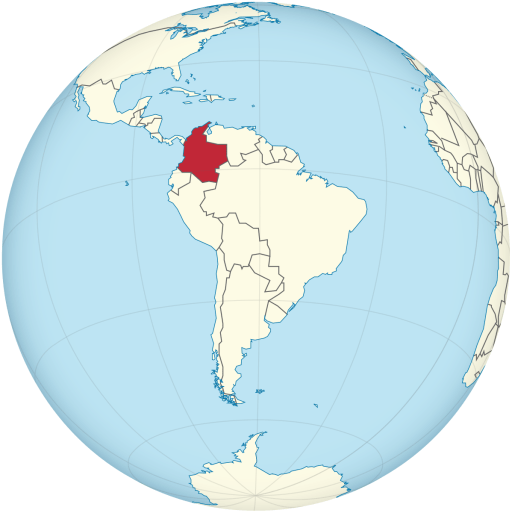
Colombia just hosted the latest UN Biodiversity Conference (COP16) in Cali, themed Peace with Nature. This was supposed to be a check-up on the big Montreal agreement in 2022, the Kunming-Montreal Global Biodiversity Framework (GBF), where nearly 200 countries committed to saving the planet's ecosystems and slowing species extinction by 2030. Spoiler alert: we're still miles from those goals.
Why this matters:
Climate change conferences grab headlines, but the world's biggest conference on biodiversity? Not so much. Yet, losing entire species and ecosystems can have devastating impacts, just like climate change. Colombia, a biodiversity hot spot, also happens to be the most dangerous country for environmental activists, with the highest number of activist deaths worldwide. So yeah, the stakes are pretty high.
Refresher: What's the GBF again?
In December 2022 in Montreal, after an all-night session, delegates approved this ambitious plan to protect ecosystems, species, and genetic diversity globally. The plan includes 23 targets---everything from cutting plastic waste to reducing extinction rates and restoring ecosystems. Critics, however, said it felt more like wishful thinking. Jörg-Andreas Krüger from NABU (a German conservation group) called it "too vague" and argued that without clear timelines, funding, and accountability, this framework lacks the punch needed to truly tackle biodiversity loss. COP16 in Cali was meant to be the first big progress check. But only a handful of countries had submitted their national action plans in time for COP16. So, not a great start.
Tell me more:
The last two weeks in Cali were a battle over three hot topics: enforcing the GBF, finding money for it (in 2022, they said US$200 billion per year must be made available for biodiversity by 2030), and splitting profits with countries where companies are sourcing genetic materials (like plant genomes used in pharmaceuticals)....
Please log in or subscribe for free to continue reading this issue.
We could use your help to make this issue better. Take a look at the requests below and consider contributing:
- Submit a piece of artwork for this issue
- Submit a news, academic or other type of link to offer additional context to this issue
- Suggest a related topic or source for future issues
- Fix a typo, grammatical mistake or inaccuracy
Below you'll find some of the sources used for this issue. Only sources that support "media embedding" are included.
-
The EU institutions’ consultations with the people of the Western Sahara were insufficient to establish their consent to deals which concerned them, the court said.
-
Russian Ambassador Vasily Nebenzya expressed reservations, adding that the resolution “does not reflect a real situation on the ground” and is unlikely to foster a mutually acceptable resolution, noting that Russia’s recommendations to address stagnant peace efforts were also ignored.
-
EU fishing and farming deals with Morocco failed to include Western Sahara's consent, top court says | AP NewsThe European Union’s top court says fisheries and agriculture agreements reached between the bloc and Morocco five years ago failed to include consultations with the people of Western Sahara.
-
Still free to choose: What Polisario’s legal win means for EU ties with Morocco and Western Sahara – European Council on Foreign RelationsThe CJEU has blocked the EU’s inclusion of Western Sahara in its trade and fishery agreements with Morocco. The bloc should now open talks with Polisario to reach a compromise trade deal and support UN-led peace efforts
-
Paris's change of heart on the question of sovereignty over Western Sahara has angered Algeria.
-
-
Tomatoes hit French supermarket shelves, then French supermarket car parks as farmers protest Moroccoan tomato imports, according to Reuters.
-
COP16 on biodiversity: In Cali, countries will have to turn promises to halt nature's destruction into actionThe 16th World Biodiversity Conference opens on October 21 in Colombia, with the central issue being the implementation of the 2022 agreement, which aims to halt the loss of species and ecosystems by 2030.
-
Die diesjährige Artenschutzkonferenz betont erstmals indigene und afro-kolumbianische Perspektiven. Die »blaue Zone« für politische Verhandlungen und hochrangige Delegationen bleibt trotzdem exklusiv.
-
The Goldman Environmental Prize is excited to attend COP16, the 2024 United Nations Convention on Biological Diversity, in Cali, Colombia, this fall.
-
Die UN-Artenschutzkonferenz endete ohne einen Finanzbeschluss. Mangels Quorum musste das Treffen von Delegierten aus 196 Staaten abgebrochen werden.
-
Die Artenvielfalt und die Populationen von wild lebenden Tieren sind massiv unter Druck. Daher wurden vor zwei Jahren neue globale Schutzziele vereinbart. Nun geht es um die Umsetzung und die Finanzierung.
-
Deutschland importiert nach dem Wegfall der russischen Kohleexporteure mehr Kohle aus Kolumbien. Doch Menschenrechtsgruppen warnen: An der Kohle klebe Blut.
-
Four of them collapsed in court due to exhaustion before they could enter a plea.
-
Amnesty International calls on authorities to release student, who reportedly had a violent confrontation with Basij paramilitaries
-
Police accused of killing at least 11 unarmed bystanders since 24 October, amid claims poll was rigged
-
Eight of 11 justices on Mexico’s Supreme Court have resigned and declined to participate in an election for the court scheduled for June, the court said on Wednesday.
-
Fewer than 60 villagers live in Ichinono - where people have attempted to address dreaded feelings of loneliness by stitching together a new population of puppets.
-
Nihat Ekmez had displayed the victory sign during a family visit, to which the visitors responded in kind. The prison administration had deemed this act “PKK propaganda.”
-
The actor plans to relocate to help make African films that are not framed by colonialism but ‘own those stories of our tradition, of our culture, of our languages’
-
At COP16, Germany handed over three pieces of Kogui ritual artefacts that had been in the Ethnological Museum in Berlin for more than a century.
-
The BBC’s Laura Bicker sees the Shenzhou 19 spacecraft take off in a record year of space exploration.
-
Govt secures over $26 million to build houses for disaster-affected families
-
Civil war has been devastating for Sudan and its people but the national football team is enjoying unprecedented results. Qualification for the 2025 African Cup of Nations and the 2026 World Cup is a possibility.
-
The distinguished musician was 91 years old.
Each week, What Happened Last Week curates news and perspectives from Asia, Africa, and the Americas. The newsletter is written by Sham Jaff and focuses on stories that rarely receive sustained attention in Western media.
Read the free edition every week. VIP subscribers receive additional stories, recommendations on what to watch, read and listen, and more.