

This issue is looking at the latest Mpox outbreak and the age-old debate around equal access to vaccines (spoiler alert: it's very unequal) as well as the safety of journalists in the Kurdistan Region of Iraq, Myanmar, Mexico and Gaza. Several journalists have lost their lives last week, and I want you to know some of their names. Plus, African women's football, a sci-fi drama in South London, an investigative podcast series about one of the most high-profile war-crimes prosecutions in U.S. history and a documentary on the history of the Sudanese women's movement, and so much more.
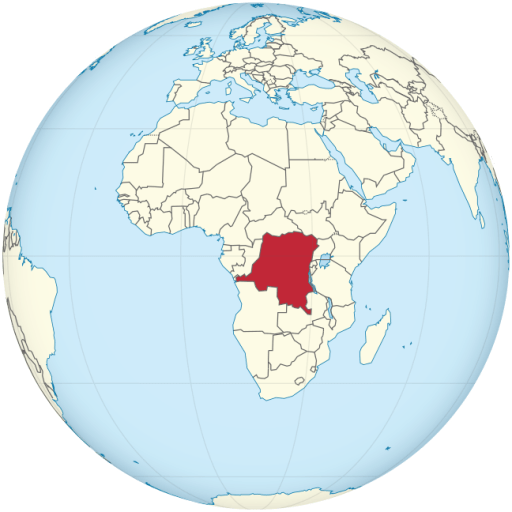
The latest Mpox outbreak in the DRC is a reminder that not everyone in the world has equal access to vaccines
What happened:
There's a new strain of the Mpox virus making rounds (because, you know, viruses love to "upgrade"). It's called Clade 1b, and it's mostly spreading in the Democratic Republic of Congo (DRC), but it's also popped up in Burundi, Kenya, Rwanda, Thailand, and Sweden. We don't know much about how deadly it is yet, but people do die from it. This year alone, over 450 people have died from Mpox in the DRC. The World Health Organization (WHO) estimates there are around 14,000 cases in Africa this year---a massive 160% jump from last year. Last week, WHO and the Africa CDC declared this outbreak a public health emergency of international concern. The other strain -- Clade 2, far milder, caused a global public health emergency in 2022 -- is still around in many countries.
Why this matters:
These declarations matter. Karl Minges, Ph.D. MPH, a public health expert at the University of New Haven, told PEOPLE that WHO issues these kinds of alerts to push for faster vaccine access in low-income countries. Because, vaccine equity is still not a reality; vaccine equity means ensuring that everyone in the world has equal access to vaccines.
Tell me more:
Mpox is most common in the tropical rainforests of West and Central Africa, with thousands of cases each year. It spreads through close contact---like during sex, skin-to-skin contact, or even just talking or breathing near someone. Mpox causes flu-like symptoms and skin lesions, and while it's usually mild, it can be dangerous for young kids, people with weak immune systems, and pregnant people in places with limited medical resources. But don't worry---outbreaks can be controlled. Mpox isn't as contagious as something like COVID or measles, and it can be stopped.
How?
Raising awareness, tracking close contacts, and vaccinating people can help stop the spread. The issue is that vaccines aren't widely available for those who need them most, especially in Africa. But there's some good news---millions of doses are expected to arrive in the DRC soon, according to the BBC's Flora Drury. Unfortunately, places like Burundi are still waiting. BBC's Mercy Juma reported from Bujumbura, Burundi, where she found that many people didn't even know about Mpox, and those who did had no idea it was spreading in their country.
Why don't we know how deadly it is?
Carissa Wong for The Scientist talked to some experts who said that limited access to healthcare in some areas means only the worst cases of Mpox are being reported, which skews the fatality rates higher. Misdiagnosis is also an issue, with some cases being mistaken for measles or chickenpox. When people do die from Mpox, it's often due to complications like sepsis or lung damage from the virus. Paul Adepoju from The Lancet also highlighted the huge testing challenge, especially in the DRC, where less than 30% of cases might even get tested. The lack of testing and surveillance is making it hard to see the full picture of the outbreak.
What mpox treatments are there?
Well, it depends on where you are. In the DRC and nearby countries at the heart of the outbreak, there aren't many specific treatments for Mpox. Doctors mostly focus on easing symptoms---think paracetamol for fevers and headaches, and cleaning skin lesions to prevent infections. In the UK and US, though, doctors have more options, like the antiviral drug tecovirimat for severe cases, and even treatments involving antibodies against smallpox, reports Wong in The Scientist.
Dive deeper:
Anne Jung wrote some insightful commentary on global health inequality and the latest Mpox outbreak for Medico International. She pointed out that while the word "international" in the WHO's alert should mean global action, the reality is different. Not much is being done. During the COVID-19 pandemic, countries like Germany were against releasing vaccine patents, which hurt global efforts. Plus, there just aren't enough vaccine doses because production slowed down after the 2022 outbreak ended. Mpox remains one of those "neglected diseases" that mostly affects the global South, so it doesn't get much attention from profit-driven pharma companies.
Recommended read:
Stephanie Nolen from The New York Times also criticizes the WHO for slowing down the process of prequalification unnecessarily. "Critics question why the W.H.O. did not act sooner to approve an mpox vaccine, since the virus has never stopped circulating in Congo."
What if I'm traveling to an affected area?
If you're heading somewhere with known Mpox outbreaks, the most important thing is to get vaccinated -- if you can. Heavy on theif.
Zoom out:
Mpox is not the only disease outbreak in the DRC at the moment. And the people who are severely affected by this are those forcefully displaced. "Congo currently has outbreaks of measles and cholera, as well as a severe malaria problem that threatens small children. Hundreds of thousands of people live in camps because they have been displaced by ongoing armed conflicts," writes Nolen in The New York Times.
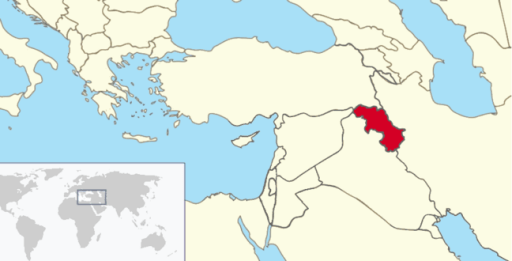
A suspected Turkish drone strike killed two journalists in the Kurdistan Region of Iraq -- "becoming one of the most dangerous zones for journalists"
What happened:
On August 23, a suspected Turkish drone strike hit a car carrying journalists in the Kurdistan Region of Iraq (KRI). This attack killed two journalists, Gülistan Tara and Hêro Bahadîn, and left several others injured. The team was on their way to film a documentary when the strike occurred, according to reports from Rudaw, the Committee to Protect Journalists and Medya News.
Why this matters:
There's a big issue here---people are saying there's an alarming "get-away-with-it" attitude when it comes to violence against journalists in the region. And let's not forget, journalists...
Please log in or subscribe for free to continue reading this issue.
We could use your help to make this issue better. Take a look at the requests below and consider contributing:
- Submit a piece of artwork for this issue
- Submit a news, academic or other type of link to offer additional context to this issue
- Suggest a related topic or source for future issues
- Fix a typo, grammatical mistake or inaccuracy
Below you'll find some of the sources used for this issue. Only sources that support "media embedding" are included.
-
The European man flew into Thailand from an unnamed African country last week, officials say.
-
PEOPLE spoke with Karl Minges, Ph.D. MPH, associate professor of public health at the University of New Haven, about the mpox virus and how it is spreading now.
-
Cases are rising in Burundi as the virus moves from neighbouring Democratic Republic of Congo.
-
When the fever, pains and pus-filled lesions of an mpox infection strike, how dangerous is it and how can it be treated?
-
A suspected Turkish drone strike on Friday targeted a vehicle in Sulaimani’s Said Sadiq district, reportedly leaving several casualties.
-
2 journalists killed, 1 injured in drone strike in Iraqi Kurdistan - Committee to Protect JournalistsSulaymaniyah, August 23, 2024—A suspected Turkish drone strike killed two journalists and injured another in the Said Sadiq district of Sulaymaniyah province on Friday. “We are deeply saddened by the tragic August 23 drone strike that killed two journalists and injured a third in Iraqi Kurdistan,” said Yeganeh Rezaian, CPJ’s interim MENA program coordinator, in Washington, D.C. “Turkish authorities should swiftly...
-
-
ERBIL, Kurdistan Region - The Iraqi National Security Council on Thursday banned the Kurdistan Workers’ Party (PKK) from operating in the country, following a top security meeting with a Turkish delegation in Baghdad. Both sides discussed measures to be taken against the group which Baghdad...
-
Journalists gathered in Sulaimani’s Azadi Park on Saturday to protest a suspected Turkish drone strike that killed two colleagues the day before.
-
Dicle Fırat Gazeteciler Derneği (DFG) ve Mezopotamya Kadın Gazeteciler Derneği (MKG), Türkiye’nin saldırısında Hêro Bahadîn ve Gülistan Tara’nın öldürülmesiyle ilgili cezasızlıkla mücadele çağrısı yaptı.
-
UPDATE: Çira TV reporter Murad Mirza died on July 11 of injuries sustained in the drone strike. He was buried on July 12 in the Girê Gewir Cemetery, according to his outlet. Sulaymaniyah, Iraq, July 10, 2024—The Committee to Protect Journalists calls on Turkish and Iraqi authorities to investigate after a suspected Turkish strike injured two Iraqi...
-
Bangkok, August 23, 2024—The Committee to Protect Journalists calls on Myanmar authorities to immediately and credibly investigate Wednesday’s killing of journalists Win Htut Oo and Htet Myat Thu in a military raid on a home in southern Mon State. “The killing of journalists Win Htut Oo and Htet Myat Thu is an atrocity against the...
-
Mexican journalist Ariel Grajales shot multiple times at Chiapas home - Committee to Protect JournalistsMexico City, August 22, 2024 – The Committee to Protect Journalists calls on Mexican authorities to immediately and comprehensively investigate the shooting of Ariel Grajales Rodas and take measures to ensure his and his family���s safety. Grajales, editor of news website Villaflores.com.mx, was shot multiple times by unidentified gunmen who broke into his residence in...
-
As of December 12, 2025, CPJ’s preliminary investigations showed at least 249 journalists and media workers were among the more than tens of thousands killed in Gaza, Yemen, Lebanon, Israel, and Iran since the Israel-Gaza war began, making it the deadliest period for journalists since CPJ began gathering data in 1992. To date, CPJ has...
-
Gaza’s Health Ministry says over 40,000 Palestinians have been killed in the 10-month-old Israel-Hamas war.
-
Update: As of December 31, 2023, at least 77 journalists and media workers were killed; 70 of them Palestinian. More journalists have been killed in the first 10 weeks of the Israel-Gaza war than have ever been killed in a single country over an entire year, according to CPJ data. By December 20, 2023, at...
-
New law grants Taliban morality police fresh powers to censor Afghan media - Committee to Protect JournalistsNew York, August 23, 2024— The Committee to Protect Journalists is deeply concerned about a new law, to be enforced by the Taliban’s morality police, which bans journalists from publishing or broadcasting content that they believe violates Sharia law or insults Muslims. “The Law for the Propagation of Virtue and the Prevention of Vice grants...
-
Somali police confirmed that 10 people, including seven security force officers, two civilians and a suicide bomber, died when a car bomb exploded at a
-
Several deaths reported as floods caused by torrential rains sweep India’s northeast and neighbouring Bangladesh’s east.
-
Two Russians, six Myanmar nationals and two Thais confirmed dead at worst-hit site in Karon
-
Canadian company Lucara digs up ‘extraordinary’ 2,492-carat stone from Karowe diamond mine
-
Venezuela’s Supreme Court has backed President Nicolas Maduro’s claims that he won last month’s election and said voting tallies published online showing he lost by a landslide were forged.
-
Day after Putin's visit, Azerbaijan applies to join Russia and China in the BRICS alliance | AP NewsAzerbaijan has formally applied to join the BRICS group of developing economies, a day after Russian leader Vladimir Putin’s visit to the oil-rich South Caucasus country to shore up regional ties and secure Moscow’s under-pressure trade routes.
-
Mexico convicts 11 cartel gunmen in killings of 122 bus passengers near US border over 2 years | AP NewsMexican prosecutors have finally won convictions against 11 drug cartel gunmen for the massacre of 122 people who were pulled off passing buses and forced to fight each other to the death with sledgehammers.
-
The students were on their way to a convention in Benue State when they were kidnapped by gunmen.
-
Select success stories obscure the intentional underdevelopment of women’s football in Africa.
-
The New Yorker investigative podcast In the Dark, hosted by Madeleine Baran, examines the killings of twenty-four civilians in Haditha, Iraq, and asks why no one was held accountable for the crime.
-
The New Arab Meets: Sara Suliman to discuss her award-winning film ’Heroic Bodies,’ focusing on Sudanese women’s fight for political and body liberation.
-
Scientists still trying to work out why some people live beyond 100, but agree it is best to avoid taking advice from centenarians themselves
Each week, What Happened Last Week curates news and perspectives from Asia, Africa, and the Americas. The newsletter is written by Sham Jaff and focuses on stories that rarely receive sustained attention in Western media.
Read the free edition every week. VIP subscribers receive additional stories, recommendations on what to watch, read and listen, and more.