

This issue is taking you to Brazil and Thailand. In the former, they announced that they've been making some progress on the whole forest-cutting-business that heats up our entire planet, and in the latter, the country's highest court is fighting for power because it fears that democracy has gotten too much into people's heads (and they might be right). Plus, I'm introducing you to some badass female rappers from the Arab world, a very hot take on yoga and Modi's relationship (it's toxic), and the African continent's top scientists and researchers in the field of AI. Plus, so much more!
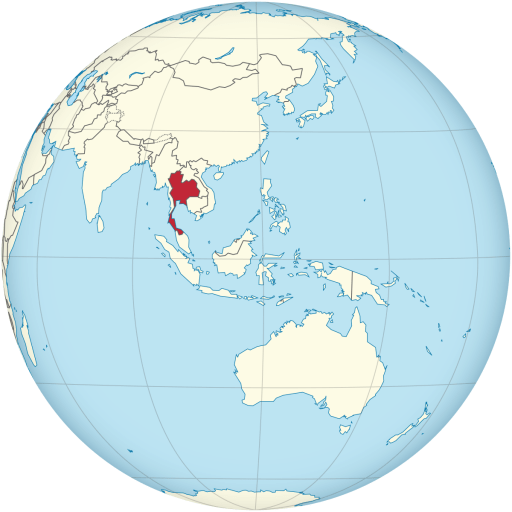
Thailand's highest court dissolved the country's most popular political party
What happened:
So, here's the scoop. On Wednesday, Thailand's Constitutional Court decided to dissolve the Move Forward Party (MFP) and slapped a 10-year political ban on 11 of its leaders, including former leader Pita Limjaroenrat. Why? Because they proposed tweaking the lèse-majesté law, which is a big no-no in Thailand since it criminalizes any critique of the monarchy. This move has sparked a lot of backlash from Thai democratic activists and even got foreign governments talking.
Why this matters:
The MFP isn't just any party---they actually won the most seats and votes in last year's election. But this court ruling is seen as yet another attempt by conservative forces to keep a tight grip on power. In Thailand, the courts, especially the Constitutional Court, are often seen as tools for the royalist establishment to shut down any real political competition. This latest action fits into a pattern of using the judiciary to protect the status quo.
Tell me more:
MFP, which had topped the polls, couldn't form a government because the Senate---appointed by the military---refused to back Pita for prime minister. The party's stance on reforming the lèse-majesté law has been a major sticking point, with senators arguing that it threatens the monarchy. However, the MFP isn't going down without a fight. The MFP (most likely) saw this coming and had a backup plan, and launched a new party two days later, called the People's Party, aiming for a win in the 2027 election. The new party's logo and vibe are very similar to the MFP, keeping the reformist spirit alive. They've even got a new leadership team, and they're already gaining support online with hashtags (#พรรคประชาชน) trending on X. Their mission? According to Bloomberg, Natthaphong Ruengpanyawut, 37, a former IT executive and two-time MP who was named the party's leader, said "to create a government of change in 2027." The People's Party is sticking to its guns on pushing for reforms, including amending the lèse-majesté law to stop it from being used as a political weapon. They're all about putting the power in the hands of the people, as their slogan suggests: "by the people, for the people, building a Thailand where the highest power belongs to the people."
Fun fact:
The MFP teamed up with a tiny party, Thinkakhao Chaovilai, which didn't have any elected reps. They basically rebranded it as the People's Party, and now all 143 of the MFP's elected lawmakers are jumping ship to the new party. This is how they were able to do this -- new party, who dis? -- so quickly.
Did you know?
This has happened before, writes Jintamas Saksornchai for AP. MFP's predecessor, the Future Forward Party, was also dissolved in 2020, which led to a wave of youth-led protests.
Btw, as the political observer Ken Mathis Lohatepanont noted on X, the name "People's Party" isn't just any name; it's got some serious historical baggage. It's the same name that was used by the group that led the 1932 revolution, which ended nearly 700 years of absolute monarchy in Thailand. This connection isn't lost on anyone, and it's already stirring up controversy.
What now?
Recent polls suggest the MFP---or its new incarnation---still has strong support. In fact, more people might be rallying behind them now. The June numbers showed that the MFP was the top choice for nearly half of the respondents, with Pita being the favorite for prime minister. Even after the court's ruling, there's optimism that the new party could come out on top in the next general election. As one MP put it, "In 2027, the whole country will be orange."
Deforestation rates in the Amazon have almost halved
What happened:
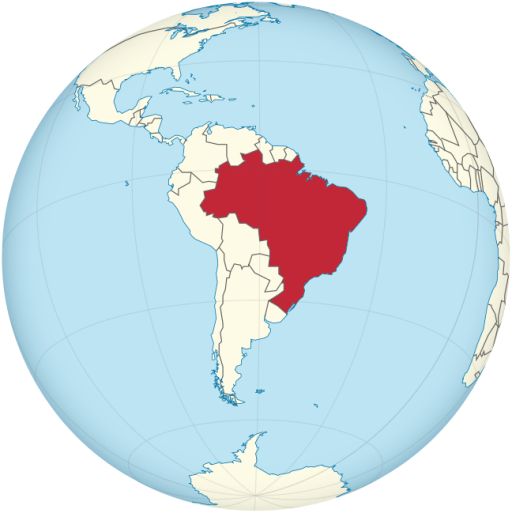
Big news from Brazil: Deforestation in the Amazon rainforest has slowed down by almost half compared to last year, according to some fresh satellite data from the government, reports Fabiano Maisonnave for AP.
Why this matters:
Brazil's a heavy hitter in the greenhouse gas game, ranking fifth globally. And nearly half of its emissions come from chopping down trees in the Amazon.
Refresher:
About two-thirds of the Amazon sits in Brazil, making it the biggest rainforest on the planet---seriously, it's twice the size of India. This place is like the Earth's air filter, soaking up tons of carbon dioxide and keeping global warming in check. Plus, it's got about 20% of the world's fresh water and a mind-blowing variety of life, with over 16,000 tree species and who knows how many other species we haven't even discovered yet. If you (still) need Gisele Bündchen and one of Brazil's top climate scientists, Dr. Antonio Nobre, to explain why deforestation in the Amazon s*cks, come over here.
Tell me more:
The Amazon lost 4,300 square kilometers of forest from August 2023 to July 2024---that's about the size of Rhode Island. But here's the "good news" part of it: that's a 46% decrease from the previous year. Still (yes, this bit is an emotional rollercoaster), July 2024 saw a 33% spike in tree-cutting, partly because of an ongoing strike by environmental workers. The strike, a drought, and local elections all played a role, according to Vice Minister Joao Capobianco. And, most importantly, even though deforestation rates have been slashed, the Amazon is still losing more than 5,000 square kilometers every year---that's three times the size of Greater London. Another good-news-in-an-overall-bad-situation:Deforestation in the Cerrado (a vast tropical savanna, covering around 21%...
Please log in or subscribe for free to continue reading this issue.
We could use your help to make this issue better. Take a look at the requests below and consider contributing:
- Submit a piece of artwork for this issue
- Submit a news, academic or other type of link to offer additional context to this issue
- Suggest a related topic or source for future issues
- Fix a typo, grammatical mistake or inaccuracy
Below you'll find some of the sources used for this issue. Only sources that support "media embedding" are included.
-
Friday launch of new party follows court-ordered dissolution, but with no ‘cobras’ this time
-
Thai court dissolves progressive Move Forward Party, which won election but was blocked from power | AP NewsA court in Thailand has ordered the dissolution of the progressive Move Forward Party, which won national elections in 2023, saying it violated the constitution by proposing an amendment of a law against defaming the country’s royal family.
-
Join Gisele Bundchen when she meets with one of Brazil’s top climate scientists to discuss the complexity of the Amazon rainforest and its connection to Earth’s atmosphere.
-
While data showed an uptick in deforestation for July 2024, it fell by nearly 46% in the last 12 months when compared to the same period a year earlier.
-
Closely-watched numbers for annual deforestation in the Brazilian Amazon show the total area of forest loss is down somewhat from last year, but that was a 15-year high.
-
To reduce deforestation and boost biodiversity to help address climate change, returning lands to Indigenous communities is crucial and effective.
-
Site on the International Day of the World's Indigenous Peoples. Here you will find information and related links.
-
Reductions in deforestation and poverty from decentralized forest management in Nepal | Nature SustainabilitySince the 1980’s, decentralized forest management has been promoted as a way to enhance sustainable forest use and reduce rural poverty. Rural communities manage increasing amounts of the world’s forests, yet rigorous evidence using large-N data on whether community-based forest management (CFM) can jointly reduce both deforestation and poverty remains scarce. We estimate the impacts of CFM using a large longitudinal dataset that integrates national census-based poverty measures with high-resolution forest cover change data, and near-complete information on Nepal’s >18,000 community forests. We compare changes in forest cover and poverty from 2000–2012 for subdistricts with or without CFM arrangements, but that are otherwise similar in terms of socioeconomic and biophysical baseline measures. Our results indicate that CFM has, on average, contributed to significant net reductions in both poverty and deforestation across Nepal, and that CFM increases the likelihood of win–win outcomes. We also find that the estimated reduced deforestation impacts of community forests are lower where baseline poverty levels are high, and greater where community forests are larger and have existed longer. These results indicate that greater benefits may result from longer-term investments and larger areas committed to CFM, but that community forests established in poorer areas may require additional support to minimize tradeoffs between socioeconomic and environmental outcomes. Rural communities manage much of the world’s forests, but the effects on both landscapes and people are still unclear. This study estimates the impacts of such community-based forest management in Nepal from 2000–2012 and finds significant net reductions in both deforestation and poverty.
-
Search for survivors under way after landslide at Kampala landfill engulfs people, animals and homes.
-
Informação sobre vítimas foi confirmada pela Prefeitura de Vinhedo. Aeronave turboélice seguia de Cascavel (PR) para Guarulhos (SP).
-
The YouTube video-hosting site and app have stopped being accessible across Russia, thousands of Internet users in the country said online on August 8.
-
Japan killed its first fin whale in years. It was caught off Iwate Prefecture by a whaling company called Kyodo Senpaku and weighed 55 tons
-
Abir Moussi is a prominent opponent of President Kais Saied, who is seeking reelection on October 6. Moussi has been detained before and has accused Saied of ruling outside the law.
-
An Iranian court had convicted a man of stabbing to death a Revolutionary Guards (IRGC) officer during protests in 2022. Iran has executed 10 people for violence against security personnel during demonstrations.
-
ERBIL, Kurdistan Region - The Kurdistan Region Presidency on Friday condemned hate speech from some social media users after a Yazidi commander’s remark about Prophet Mohammed drew the ire of Muslims.“In recent days, there has been an increasing reaction on social media platforms to...
-
The U.S. has handed over its last military base in Niger — one of two crucial hubs for American counterterrorism operations in the country — to local authorities.
-
Rwanda has sights set on landing F1 race ahead of talks
-
Women’s rugby player Ariana Ramsey’s videos showcasing her appointments have gone viral, and now many others are making good use of the medical services offered in Paris.
Each week, What Happened Last Week curates news and perspectives from Asia, Africa, and the Americas. The newsletter is written by Sham Jaff and focuses on stories that rarely receive sustained attention in Western media.
Read the free edition every week. VIP subscribers receive additional stories, recommendations on what to watch, read and listen, and more.