

So, this issue took me a day longer than usual because I got totally engrossed in a book to make sure I nailed the story. This issue might feel a bit more intense since I'm diving into some heavy topics. I'm asking you to listen to the stories of survivors from two events: the genocide of the Yazidis in Shingal/Sinjar in Iraq in 2014, and the massacre of the Ndebele people in Zimbabwe during the 1980s. Both communities are still dealing with the aftermath, and I made sure to really focus on the survivors' stories to give you a fuller picture.
I know one newsletter is just a tiny drop in a vast ocean (of knowledge), but I hope that by curating these links and sharing what I've learned, we can connect more deeply with these tough anniversaries and topics.
On a lighter note, I've got some cool stuff to share too: a Nigerian legend, a new Kurdish horror movie, African space agencies' acronyms, and much more.
10 years after the Shingal genocide: How are the Yazidis doing today?
What happened:
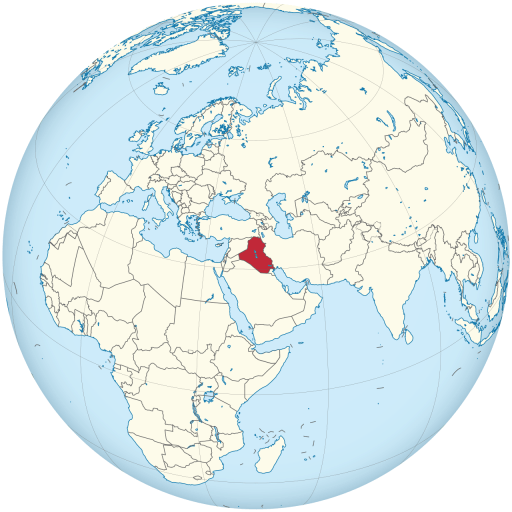
Since 2014, Yazidis come together on August 3 to remember the genocide ISIS committed against them in Shingal/Sinjar, Iraq. They honor those who died, those still missing, and support affected families. They also raise awareness about the survivors' ongoing struggles and ask the international community for support.
Why this matters:
Even after ten years, Yazidis face big challenges. At least 2,700 Yazidis are still missing, according to the United Nations.
Refresher:
In 2014, ISIS took control of a large part of Iraq and Syria, including the Shingal region in northern Iraq, where many Yazidis lived. They killed over 10,000 Yazidis and kidnapped 6,000. The UN called this a genocide. ISIS saw Yazidis as "infidels" (fake news, obviously) and committed terrible acts, including murder, forced conversions, enslavement, forced labor, torture, and rape.
Has anyone ever held been accountable for these crimes?
There have been some legal actions. Germany has prosecuted eight ISIS members, including three for genocide. The Netherlands and Sweden are planning trials. In Iraq, as The New York Times reported, a court sentenced one of Abu Bakr al-Baghdadi's wives to death for crimes against Yazidis. However, a report by FYF, Yazda, and the Sinjar Academy says more needs to be done. The US and UK haven't charged anyone specifically for crimes against Yazidis. There is also criticism that Kurdish forces didn't do enough to protect Yazidis during the genocide.
How are survivors doing today?
Luckily, a lot of survivors have turned to media in many different countries to tell their stories.
- For example, SBS Kurdish talked to Khalid Taalo. 19 of his family members were captured by ISIS in 2014. Until now, 12 of them have been back by buying them back and seven are still missing. Listen to the episode here; it's in Kurdish.
- BBC World Service's Sarah Ehrlich talked to witness Mirza Dinnayi, who organized a rescue mission to save dozens of people. Listen to the story in this episode of the Witness History podcast.
- Abid Shamdeen, co-founder of Nadia's Initiative, talked to the Conflict, Power & Persuasion podcast of the Canadian International Institute of Applied Negotiation. He talks about the history of violence, that August 3 isn't really an isolated event (Yazidis have faced many violent campaigns against them by different actors in history), why they're (Nadia and the initiative) focusing on collecting evidence and accountability, and so on. The conversation lasts more than an hour; if you have the StepUp app, let's connect there, start the episode and get walking.
Did you know:
The largest Yazidi community outside of Iraq lives in Germany? In the United States, as I learned on this episode of the Nebraska Public Media News podcast, they mostly live in Lincoln, Nebraska.
Where to go now from here?
There are many suggestions for moving forward. One idea is to set up an international tribunal to prosecute ISIS crimes, using evidence collected by civil society organizations and UNITAD, a UN investigation team. This tribunal should also look into individuals and organizations that supported ISIS.
There's also the issue of Yazidi safety. Around 157,000 internally displaced people (IDPs), many of them Yazidis, live in camps in the Kurdistan Region, reports Rudaw. The Iraqi government wants to close these camps, but the Yazidi community and the US government are concerned about security (there are different armed groups there) and lack of reconstruction in Shingal, the Yazidi home region.
Victims of the Gukurahundi massacre in Zimbabwe are still searching for justice and compensation
What happened:
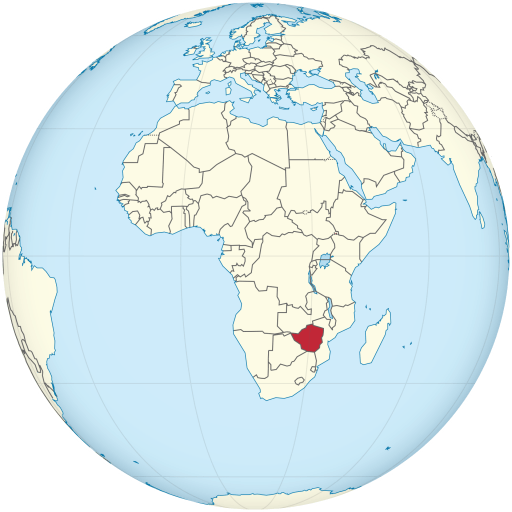
Speaking of justice, a few thousand kilometers to the south, survivors of another massacre are still waiting for justice and an opportunity to tell their story. 40 years ago, between 1983 and 1987, an army unit within the Zimbabwe military killed more than 20,000 people (this is according to the Catholic Commission for Justice and Peace in Zimbabwe; there are no exact figures on hand, however; some also say 80,000) in Gukurahundi. Recently, the government of Zimbabwe announced that it will soon hold public hearings around the Gukurahundi killings, SABC reported. President Emmerson Mnangagwa wants to promote "healing, peace and unity."
Why this matters:
A lot of people bear the scars of the Gukurahundi massacre today. This is the first time a Zimbabwean government has taken what seems like concrete steps to address the 1980s mass killings in Matabeleland and Midlands regions, writes Nizbert Moyo in The NewsDay.
Did you know:
"Gukurahundi" loosely translates from the Shona language (one of the main languages spoken in Zimbabwe, alongside English and Ndebele) to mean "the early rain that washes away the chaff"?
Tell me more:
In a podcast episode of DW AfricaLink, Zenzele Ndebele, founder of Cite ZW, tells Josey Mahachi about how the national conversation around the Gukurahundi killings has taken place so far. Ndebele says that it took some time for the massacre to be discussed publicly in the country. Only in 1998, then-president Robert Mugabe (who ruled the country for more than 29 years) described that time as "a moment of madness" (he knew exactly what had happened, according to an old dossier found by Botswana-based INK Centre for Investigative Journalism in collab with some Zimbabwean reporters) and that the victims should be compensated (this has never happened). And then it became a topic again in 2017, when now-president Emmerson Mnangagwa came into office (as a result of a coup d'état) and members of civil society were able to bring it back on the national agenda.
Were these killings a genocide or a massacre?
There is heated debate about whether these...
Please log in or subscribe for free to continue reading this issue.
We could use your help to make this issue better. Take a look at the requests below and consider contributing:
- Submit a piece of artwork for this issue
- Submit a news, academic or other type of link to offer additional context to this issue
- Suggest a related topic or source for future issues
- Fix a typo, grammatical mistake or inaccuracy
Below you'll find some of the sources used for this issue. Only sources that support "media embedding" are included.
-
WASHINGTON DC - As the United Nations-led investigation into crimes committed by the Islamic State (ISIS) in Iraq comes to an end, the United States said the world must ensure the work continues in order to bring justice to the victims a decade after the genocide began.“The work of UNITAD...
-
Information, Publicity and Broadcasting Services permanent secretary Ndavaningi Mangwana said the role of chiefs as community leaders was already in the law and the Constitution.
-
In the past, HZT wrote a policy brief on the protection of victims and witnesses.
-
Four decades after a series of mass killings by a notorious Zimbabwean army unit, survivors are still waiting for justice. President Emmerson Mnangagwa, has launched a program to promote "healing, peace and unity." But survivors of the Gukurahundi massacre are skeptical. Josey Mahachi talks to Zenzele Ndebele, founder of Cite ZW, and DW correspondent Maxwell Suuk in Ghana.
-
How They Did It: Digging up Zimbabwe’s Gukurahundi Massacre Dossier – Global Investigative Journalism NetworkEarlier this year, Botswana’s INK Centre for Investigative Journalism tracked down a dossier which detailed the heinous crimes of Gukurahundi -- a series of massacres of civilians carried out by the Zimbabwe National Army in the 1980s -- which had been kept under lock and key for decades. It was the first time the names of the deceased and blow-by-blow accounts of how the executions were carried out were made available to the public. INK's Ntibinyane Ntibinyane writes for GIJN on how they did it.
-
What was the Gukurahundi? A discussion of the history of the killings and Robert Mugabe's responsibility.
-
President Mnangagwa launched initiative to foster healing over 1980s killings, but survivor communities are sceptical.
-
By Thandekile Moyo The International Day in Support of Victims of Torture was June 26. Unfortunately, Zimbabwe remains one of a handful of countries in the world which has not ratified the UN Convention against Torture and Other Cruel, Inhuman or Degrading Treatment or Punishment. In recent days, Obert Gutu, recently appointed spokesperson of the […]
-
Sheikh Hasina has flown to India on a military helicopter as protesters in Bangladesh have stormed her official residence. It follows the death of almost 300 people during weeks-long protests.
-
Curfews were ordered across several northern states on Friday after clashes erupted the previous day.
-
The bombing comes on the eve of the planned nationwide protest, which the government has repeatedly said could be hijacked by hoodlums.
-
Mogadishu (HOL) — Suspected al-Shabaab militants launched a deadly attack on the popular Liido Beach in Mogadishu on Friday evening, killing and injuring multiple people. The attack began with a suicide bomber detonating an explosive vest at the Beach View restaurant, followed by gunmen storming the premises, according to local authorities and eyewitnesses.
-
Storm has hit China with deadly rain and mudslides, devastating homes, roads and crops.
-
Wayanad landslides: 296 dead, volunteers temporarily halt search op | Kerala Wayanad Landslides | Mundakkai Chooralmala | Wayanad Landslide Latest NewsAdverse weather conditions due to incessant rain pose challenges in the area..Wayanad Landslide , Mundakkai, Chooralmala, Army, Death toll, Kerala Wayanad Landslides , Wayanad Landslide Death , Kerala Landslide News , Kerala Landslide , Kerala Landslide 2024 , Landslide in Kerala , Kerala Heavy Rainfall , Kerala Floods , Wayanad Landslide News , Wayanad News , Wayanad Chooralmala , Mundakkai , Mundakkai Wayanad , Chooralmala Landslide , Wayanad Disastser , Wayanad Landslide Latest News , Wayanad Landslide Death Toll , Mundakkai Meppadi Wayanad , Wayanad Rain News
-
A Ukrainian official claimed last month that Kyiv provided militants with intelligence before the attack on Malian troops and Russian Wagner group mercenaries.
-
Kyrgyz government spokesman Nazirbek Borubaev said on July 30 that 94 percent of the 972-kilometer Kyrgyz-Tajik border had been agreed upon by officials from the two Central Asian nations.
-
US Homeland Security halts immigration permits from 4 countries amid concern about sponsorship fraud | AP NewsThe Biden administration has temporarily suspended permits for Cubans, Haitians, Nicaraguans and Venezuelans to enter the United States and stay up to two years amid concerns about fraud by their financial sponsors.
-
Ethiopia and the United Arab Emirates (UAE) have launched the "5 Million Ethiopian Coders" initiative.
-
Half of a Yellow Sun: Directed by Biyi Bandele. With Chiwetel Ejiofor, Thandiwe Newton, Anika Noni Rose, Joseph Mawle. Sisters Olanna and Kainene return home to 1960s Nigeria, where they soon diverge on different paths. As civil war breaks out, political events loom larger than their differences as they join the fight to establish an independent republic.
-
Lionheart: Directed by Genevieve Nnaji. With Genevieve Nnaji, Nkem Owoh, Pete Edochie, Onyeka Onwenu. Running a company can be challenging, especially for a female in a male-dominated industry. Looking to prove her worth, Adaeze steps up to the challenge when health issues force her father to take a step back.
-
He allegedly began attacking the victim with a piece of wood without warning. Read more at straitstimes.com.
Each week, What Happened Last Week curates news and perspectives from Asia, Africa, and the Americas. The newsletter is written by Sham Jaff and focuses on stories that rarely receive sustained attention in Western media.
Read the free edition every week. VIP subscribers receive additional stories, recommendations on what to watch, read and listen, and more.