

In this issue, I'm taking us to Bangladesh and Rwanda. In Bangladesh, we're looking at the recent anti-quota student protests, where at least 131 people have died. In Rwanda, we're looking at one specific man, Paul Kagame, who's just won re-election, scoring over 99% of the vote. Also: an alternative Jazz album to complement your cooking sessions, Islam through a feminist and non-cis-hetero lens and a Malayalam-Tamil movie that made me wish I knew those two languages, and one of Syria's hottest talents right now. Plus, so much more!
Oops, Bangladesh's students did it again: Bye bye, quota system
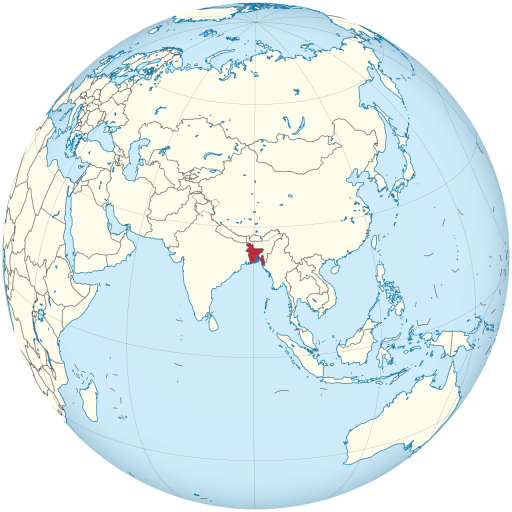
What happened:
Last month, Bangladesh's High Court brought back a controversial quota system for government jobs, and it didn't go down well. Tens of thousands of (mostly) students, especially in Dhaka, hit the streets in protest, and things got really intense, with clashes leading to at least 131 people losing their lives, writes Krutika Pathi for AP. But just yesterday, the court decided to dial it back again and cut the veterans' quota down to 5%. Now, 93% of jobs will be based on merit, and the last 2% will go to ethnic minorities and people with disabilities.
Why this matters:
This isn't the first time, as anti-quota protests have flared up many times over the past two decades. The most recent one was in 2018 -- students protested again, the government scrapped the quotas again. This quota system for public-sector jobs, they believe, favor certain groups (like the one Prime Minister Sheikh Hasina is from; her Awami League party led the country's independence movement), including the children and grandchildren of veterans who fought in Bangladesh's 1971 war of independence against Pakistan. Altogether, these quotas made up 56% of all government jobs. With the Supreme Court's new orders, Bangladesh will now reserve only 7% of those posts, write Anupreeta Das and Saif Hasnat for The New York Times. This change will open up many more civil service jobs to university students, who had been calling for a merit-based system.
Tell me more:
In the past few decades, Bangladesh's economy has done pretty well, lifting millions out of poverty, mainly because of its strong garment-export industry. But then the coronavirus pandemic hit, and people around the world started buying fewer clothes, plus money sent home from the diaspora dropped. At the same time, everyone had to deal with higher food and fuel prices. Inflation is still high at 10%, and the pace of creating new jobs has slowed down. By 2022, the youth unemployment rate was at 16.1%, which is about three times higher than the overall rate. Public-sector jobs are super desirable because they're stable, prestigious, and come with awesome benefits. But they're really tough to get. Every year, around 4,000 government jobs open up, and over 300,000 students go after them. Plus, there's also other factors that contribute to general anger, like corruption. Last year, Bangladesh was ranked No. 149 out of 180 countries on an annual corruption index released by global nonprofit Transparency International.
Did you know?
Sheikh Mujibur Rahman, the founding leader of the country and father of the current prime minister set up the quota system back in 1972. The idea was to make sure that the thousands of men and women who fought in the war of independence from Pakistan would be taken care of.
What now?
Student leaders now want an apology from Prime Minister Sheikh Hasina, who defended the veterans' quota and whose party officials called the protesters "anti-nationals" and "razakars." (that's a huge no-no; a derogatory term for those who supported Pakistan during Bangladesh's independence war.) "We demanded rights, but we got called 'razakar,'" students chanted for days on the streets of Dhaka. "Of course, the quota reform alone is not sufficient now," said Asif Nazrul, a law professor at Dhaka University, to Al Jazeera. "So many students and common people have died in this violent protest, which was definitely instigated by the government at first. Someone has to take responsibility for this tragedy."
Plus, there's also a chance that these protests might get even bigger. These clashes come at an interesting time. In January, Prime Minister Hasina won a fourth consecutive term in the elections that were boycotted by opposition parties, with some opposition members even jailed before the polls. Protesters have called Hasina, who has been in power since 2009, an "autocrat." The last two elections (2019 and 2024) were also plagued by vote rigging, irregularities, and, as I mentioned, opposition boycotts. Rezaul Karim Rony, a journalist and editor of the monthly magazine Joban, told Al Jazeera that most protesters in his area of Dhaka were non-students. "The protest is no longer confined to students, as general people have joined them spontaneously. There is pent-up anger among common people under Sheikh Hasina's autocratic regime, and they are using these student-led protests as a platform to express their dissatisfaction." Protesters have attacked many establishments across the nation, including important government buildings, Dhaka's metro rail, and even a prison in Narsingdi. Several ruling party offices and leaders' houses were also targeted. So... to be continued, I guess.
...
Please log in or subscribe for free to continue reading this issue.
We could use your help to make this issue better. Take a look at the requests below and consider contributing:
- Submit a piece of artwork for this issue
- Submit a news, academic or other type of link to offer additional context to this issue
- Suggest a related topic or source for future issues
- Fix a typo, grammatical mistake or inaccuracy
Below you'll find some of the sources used for this issue. Only sources that support "media embedding" are included.
-
What began as peaceful protests by students in Bangladesh against a quota system for government jobs eventually turned into an uprising that forced Prime Minister Sheikh Hasina to resign and flee the country by helicopter.
-
The top court scales back – but does not abolish – a contentious quota system that led to deadly protests.
-
See the Freedom in the World 2023 score and learn about democracy and freedom in Rwanda.
-
Kagame takes more than 99 percent of the vote, according to electoral authorities.
-
Paul Kagame wins with more than 99% of the vote, showing Rwanda's lack of democracy, his critics say.
-
At least 15 people have died after a bridge partially collapsed in China’s Shaanxi province with rescue efforts remaining underway as of Sunday evening, according to Chinese state broadcaster CCTV.
-
En un acto que subraya aún más la represión ejercida sobre la República de Annobón, el régimen de Guinea Ecuatorial ha suspendido la cobertura telefónica e internet en la isla, dejando a sus habitantes completamente aislados del resto del mundo.
-
Six people, including a policeman, are killed and 28 injured in a rare shooting near a Shia mosque.
-
WSJ reporter Evan Gershkovich convicted of espionage by Russian court in case denounced by US as a sham | CNN BusinessEvan Gershkovich, the first American journalist to be arrested on espionage charges in Russia since the Cold War, has been found guilty of spying and sentenced to 16 years in prison by a Russian court, in a case that the US government, his newspaper and supporters have denounced as a sham.
-
Dưới thời Tổng Bí thư Nguyễn Phú Trọng, Việt Nam có đường lối ngoại giao khéo léo, có nền kinh tế tăng trưởng tốt, nhưng kém bao dung với tiếng nói bất đồng, nhiều xung đột xã hội, bộ máy quan liêu trì trệ, pháp quyền đi xuống nhường chỗ cho quyền lực cá nhân.
-
Operation Sweetness: Paraguay finds 4 tons of cocaine stashed in sugar in its biggest drug bust yet | AP NewsAuthorities in Paraguay have announced the largest cocaine seizure in the country’s history as officials were surprised to find more than 4 tons of the drug stashed inside a shipment of sugar bound for Belgium.
-
International court of justice says it should leave ‘as rapidly as possible’ and make full reparations for ‘wrongful acts’
-
Sudan broke off relations with Iran in 2016 after Saudi Arabia’s embassy in Tehran was attacked.
-
The birthplace of the 'Arab Spring' has become, under Saied's presidency, the scene of an authoritarian toughening, raising fears of a return to dictatorial practices.
-
South Korea’s top court has ruled that same-sex couples are eligible to receive the same health insurance benefits as heterosexual couples, a landmark verdict hailed by human rights groups.
Each week, What Happened Last Week curates news and perspectives from Asia, Africa, and the Americas. The newsletter is written by Sham Jaff and focuses on stories that rarely receive sustained attention in Western media.
Read the free edition every week. VIP subscribers receive additional stories, recommendations on what to watch, read and listen, and more.