

In this issue, I'm concerned about care, or the lack of it, for so many people in Peru and in Pakistan. Last week, the Peruvian Congress decided that some crimes do have an expiration date (the president still needs to sign it off), likely putting an end to many trials, and Pakistan has begun deporting vulnerable Afghan refugees (even those who have been there for decades). There's some good news, like Japan finally admitted that their forced sterilization law was unconstitutional (it went on for decades!) and scientists found the world's oldest art in a random cave in Indonesia. You'll also learn about how an Islamic festival became part of Trinidadian culture, what happened to Zambia's football team in 1993 and why it's still traumatizing for a lot of Zambians, and what Chinese asylum seekers in the U.S. are going through to get there. And so much more!
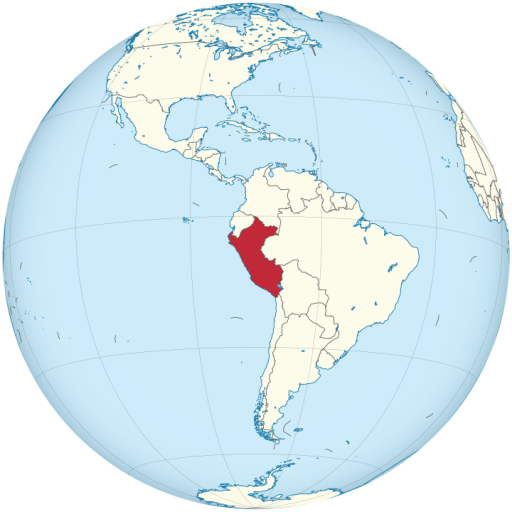
Peru is about to stop prosecuting crimes committed before 2002
What happened:
AP reports that the Peruvian Congress voted 15--12 to pass a law that puts a time limit on prosecuting crimes against humanity committed before July 2002.
Why this matters:
Human rights groups are worried that this new law will stop ongoing investigations into serious abuses committed before 2002. This law could affect 550 victims and 600 cases, putting an end to many trials. Despite some notable prosecutions, there are ongoing concerns about impunity. Some perpetrators have avoided justice due to legal loopholes, political interference, or insufficient evidence. This planned statute of limitations could further hinder and undermine justice for victims.
Did you know?
During the fighting between security forces and the Maoist Shining Path rebel group from 1980 to 2000, an estimated 70,000 people killed. Most victims were Indigenous people. The Shining Path was found to be responsible for about 54% of the deaths and disappearances reported to the commission.
Tell me more:
The right-wing populist Fuerza Popular (FP) party, led by Keiko Fujimori, pushed for this law. She's the daughter of former President Alberto Fujimori, who was released from prison last year after serving 16 years for human rights abuses during the 1990s. Some say this law could directly help Alberto Fujimori, who faces other charges for the murder of six people in 1992. Reuters writes that FP lawmakers argue the bill aims to help about 800 military personnel being investigated for crimes against humanity. They believe many of these elderly military and police officers are unjustly imprisoned or prosecuted.
Good to know:
There's been prosecutions on "both sides" (it's not really a 'both sides' kind of conflict, but this is a relatively short newsletter and our beloved Internet can help you make sense of what really went down). Earlier this year, AP reported that Vladimiro Montesinos, a former Peruvian intelligence chief and close aide of Fujimori, was sentenced to nearly 20 years in prison for his role in a 1992 massacre. Key leaders of the Shining Path, including its founder Abimael Guzmán, writes BBC News, have also been captured and tried. Guzmán was sentenced to life imprisonment in 2006 for terrorism and related charges.
What now?
The Inter-American Court of Human Rights has asked Peru to block this law, but President Dina Boluarte's government quickly rejected this request, calling it interference. The law needs the president's signature to take effect, and Boluarte is expected to sign it soon.
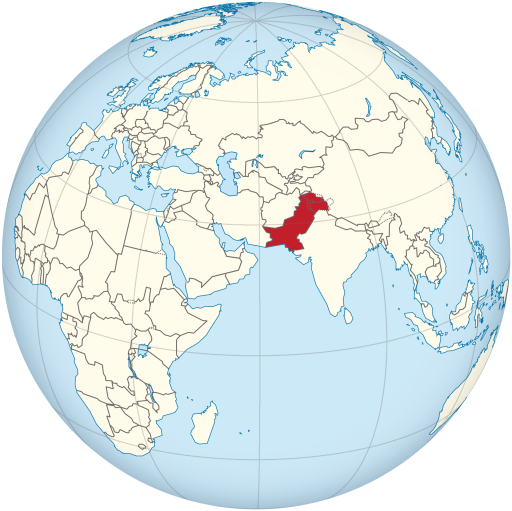
Pakistan is deporting more than 800,000 Afghan refugees
What happened:
Al Jazeera reports that Pakistan is about to kick off the second round of a very controversial plan: they're sending undocumented Afghan refugees back home.
Refresher:
Back in late 2023, Pakistan decided it didn't want Afghans around. This wasn't just a one-time thing, either; the new government kept the ball rolling after February's elections. Last November, they already forced about 541,000 to leave. Things quieted down a bit, but from May to June this year, the numbers doubled to about 10,000 people per week. Last month, Afghanistan's Ministry of Refugees and Repatriation reported the return of approximately 115,000 migrants from Pakistan and Iran. Now, Pakistan is gearing up for phase two of their "repatriation" effort.
Why this matters:
Amnesty International and other human rights groups are really worried. They say sending refugees back to Afghanistan could put them at serious risk. This goes against international laws, like the principle of non-refoulement, which means you can't force refugees to go back to a place where they might face persecution or harm.
- Good to know: Pakistan isn't part of the 1951 UN convention that protects refugees' rights. They also don't have domestic laws or procedures to protect refugees or determine their status.
Tell me more:
In total, Pakistani authorities plan to expel more than 800,000 Afghans. If these folks don't go on their own, they could be arrested and deported. According to a report on Reliefweb.int, most of these refugees don't have proper documents: 91% are undocumented, with many being seniors, widowed women, or people with chronic illnesses. Al Jazeera's Kamal Hyder reported from the Khazana refugee camp in Peshawar, where about 1,300 Afghan families live. The refugees are begging for more time so they can leave with some dignity. Hyder mentioned that their homes are being raided at night and that they're leaving in miserable conditions. Many young adults are returning to a country they barely know, having grown up in Pakistan.
- Details: nd quotes two Afghan refugees in Pakistan. Take Abdul, for instance. His dad fled to Pakistan decades ago, and now Abdul, at 23, with a baby in tow, is hastily packing up to leave. He feels more Pakistani than Afghan, but has no choice. Then there's Assadullah, who left Afghanistan in 1979 and had to leave Pakistan after 44 years. He's facing harassment and non-acceptance of valid papers. He says that, even though prospects in Afghanistan look grim, it's better than the treatment they're getting in Pakistan.
Why is Pakistan doing this?
Before all this started, Pakistan said it had nearly 4.4 million Afghan refugees, with 1.73...
Please log in or subscribe for free to continue reading this issue.
We could use your help to make this issue better. Take a look at the requests below and consider contributing:
- Submit a piece of artwork for this issue
- Submit a news, academic or other type of link to offer additional context to this issue
- Suggest a related topic or source for future issues
- Fix a typo, grammatical mistake or inaccuracy
Below you'll find some of the sources used for this issue. Only sources that support "media embedding" are included.
-
Peru's Congress approves statute of limitations for crimes against humanity committed before 2002 | AP NewsThe Peruvian Congress has approved a law establishing a statute of limitations for crimes against humanity committed before 2002, a decision that human rights organizations have warned could encourage impunity and thwart investigations into serious abuses.
-
Vladimiro Montesinos, the controversial intelligence chief of former Peruvian President Alberto Fujimori, has been sentenced to 19 years and eight months in prison for the 1992 massacre of six farmers in the town of Pativilca.
-
Guzmán led the Maoist rebel group which in the 1980s almost brought the Peruvian state to its knees.
-
More than 800,000 Afghans are likely to be expelled in the second phase of the controversial plan.
-
Analysis in English on Pakistan and 1 other country about Food and Nutrition and Health; published on 14 Jun 2024 by IRC
-
More than 800,000 Afghans are likely to be expelled in the second phase of the controversial plan.
-
Kein Haus, keinen Job: So geht es vielen Afghanen, die nach Jahren im Exil in Pakistan das Land verlassen müssen. Unter Druck der Regierung sind Tausende nach Afghanistan zurückgekehrt – und stehen vor dem Nichts.
-
Since the Taliban's seizure of Afghanistan in 2021, relations have grown tense over the disputed border and other issues.
-
The fulfilment of TTP’s demand would indirectly help the Afghan Taliban achieve its expansionist position on the Afghanistan-Pakistan border.
-
May 10, 2007 -- Pakistan says it has erected the first section of a security fence on the Afghan border.
-
Palestinians and the UN criticise the move, which comes at a time of fraught tensions in the region.
-
Mraihi joins a growing list of President Saied’s political opponents who are in jail or facing prosecution.
-
Faced with the ongoing security crisis in the east, the DRC’s army has become increasingly dysfunctional with soldiers inadequately equipped and morale low.
-
TOKYO -- Japan's health ministry said on Friday that Kobayashi Pharmaceutical had informed the ministry of 76 more deaths, which could be linked to it
-
At present, 2,800 villages are under water and 42,476.18 hectares of crop areas have been damaged across Assam, the Assam State Disaster Management Authority said.
-
Crowd accidents, particularly at religious mass gatherings in developing countries, are becoming a more common cause of premature death worldwide.
-
Three suspects, all minors themselves, have been arrested following the incident.
-
The expected expansion of the club of Eurasian countries is part of another push from Beijing and Moscow to use the regional security bloc as a counterweight to promote alternatives to the Western institutions that make up the U.S.-led world order.
-
Japan's government has successfully phased out the use of outdated floppy disks from all its systems, marking a significant step towards modernizing bureaucracy.
-
Peltier, 79, had made a case for parole based on several factors, including his age, nonviolent record in prison and declining health.
-
The leader of the opposition Belarusian Popular Front, Ryhor Kastusyou, who was serving a lengthy prison term, has been released after the country's authoritarian ruler signed a law on a mass amnesty to coincide with the 80th anniversary of the liberation of Belarus from Nazi Germany.
-
Same-sex sexual activity is illegal in Cameroon, punishable by fines and possible prison time.
-
Top court rules old eugenic law unconstitutional, orders redress | The Asahi Shimbun: Breaking News, Japan News and AnalysisIn a landmark victory for aging plaintiffs, the Supreme Court on July 3 again ruled that the former Eugenic Protection Law was “unconstitutional” and ordered the central government to compensate those forcibly sterilized under the law.
-
All six World Major Marathons have now added an option for nonbinary competitiors.
-
Uvalde school mass shooting: Pete Arredondo, Adrian Gonzales indicted in 1st-ever criminal charges over failed response to 2022 | CNNA grand jury has indicted two former Uvalde school police officers in the botched law enforcement response to the 2022 mass shooting at Robb Elementary school that left 19 children and two teachers dead, two Texas state government sources with knowledge of the indictment told CNN Thursday.
-
Dignity is perhaps the most appreciable and astonishing quality emanating from Jamie Diaz’s artwork. This is no small feat, given that the artist&#—a trans woman&#—has been confined to a men’s…
-
Find your next director! Explore our roster of experienced feature film and television directors. You can also contact us for a curated list of filmmakers to consider for your project or event. Equitable hiring made easy.
-
A photographer has been disqualified from a picture competition after his real photograph won in the AI image category.
Each week, What Happened Last Week curates news and perspectives from Asia, Africa, and the Americas. The newsletter is written by Sham Jaff and focuses on stories that rarely receive sustained attention in Western media.
Read the free edition every week. VIP subscribers receive additional stories, recommendations on what to watch, read and listen, and more.