

In this issue, I'm keeping my promise to dive deeper into what's happening in Sudan and the DRC. Last week, with the help of journalist Ridal Carel Tchoukuegno, we shone a spotlight on the DRC. Now, it's Sudan's turn. How could I not? A recent UN report says about 10 million people are displaced. In the second deep dive, I try to break down Argentina's economy and take a look at President Milei's bold plans to tackle one of the world's highest inflation rates. Are they working? And who's bearing the brunt of these changes? This issue also brings you stories about Ethiopia's indigenous peoples in the Omo Valley, the delicious world of Chilean street food, a jazz fest in Cairo, and Egypt's version of the Lamar/Drake rap battle. Plus, I dig into what Sky TV has to do with Rishi Sunak. And so much more.
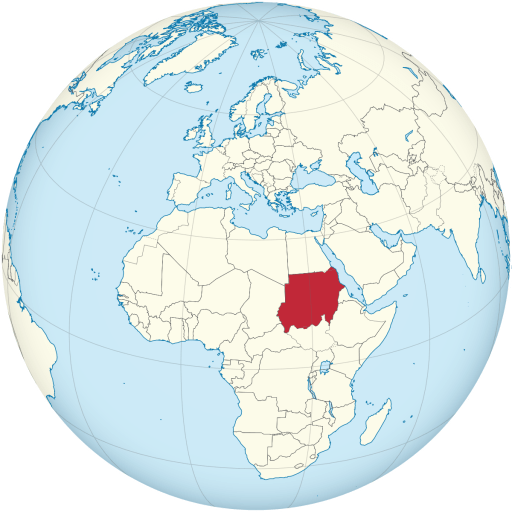
The world's biggest displacement crisis is taking place in Sudan right now, affecting some 10 million people
What happened:
The International Organization for Migration (IOM) reports that close to 10 million people in Sudan have been forced to leave their homes because of the ongoing war. That includes about one-third of the people living in the capital, Khartoum.
Why this matters:
In just over a year, the war has killed tens of thousands of people, with some estimates saying up to 150,000. Aid groups warn that millions more could die as the situation gets worse. This is the world's biggest displacement crisis right now. More than 2 million have crossed borders into neighboring countries, mainly to Chad, South Sudan, and Egypt.
Tell me more:
IOM's weekly stats show 9.9 million internally displaced people in Sudan. That's 2.8 million displaced before April 2023 and 7.1 million since. More than half are women, and over a quarter are kids under five. IOM's Director General Amy Pope said, "Imagine a city the size of London being displaced. That's what it's like, but with the constant threat of crossfire, famine, disease, and brutal ethnic and gender-based violence." The UN says 18 million people in Sudan are severely hungry, including 3.6 million malnourished children. Both sides in the conflict are blocking aid, making it hard to declare a famine officially.
Refresher: What's happening in Sudan?
Different groups in Sudan are fighting for power, mainly the Rapid Support Forces (RSF) and the Sudanese military (SAF). Both sides are accused of war crimes like targeting civilians, shelling residential areas, and blocking aid. There are also reports of widespread sexual violence. Need more details? Here's a longer explainer.
What's the current situation with the fighting?
The fighting in Sudan, especially in the city of el-Fasher, is very intense. Sudan's army just stopped a big attack by RSF on the city of el-Fasher in North Darfur. This happened right after the UN told the RSF to end their siege of the city. The army says they caused huge losses for the RSF, including killing a top RSF commander, Ali Yagoub Gibril. The RSF hasn't responded yet. In el-Fasher alone, at least 226 people have been killed and over 1,400 injured because of the ongoing fighting. Doctors are struggling to help the wounded due to continuous air raids and shelling. Plus, there are worries that the Darfur region might face another genocide at the hands of the RSF.
What now?
The UN is calling for an immediate ceasefire and unrestricted aid access. The US announced $315 million in emergency aid for Sudan and warned that millions could die from hunger if things don't improve. As Damilola Banjo writes for PassBlue, Sudan's government has also accused the UAE and Chad of making the conflict worse by supplying weapons to the RSF and wants the UN to extend sanctions to these countries for violating arms embargoes.
Argentina's economy has just changed its relationship status to "It's complicated."
What happened:
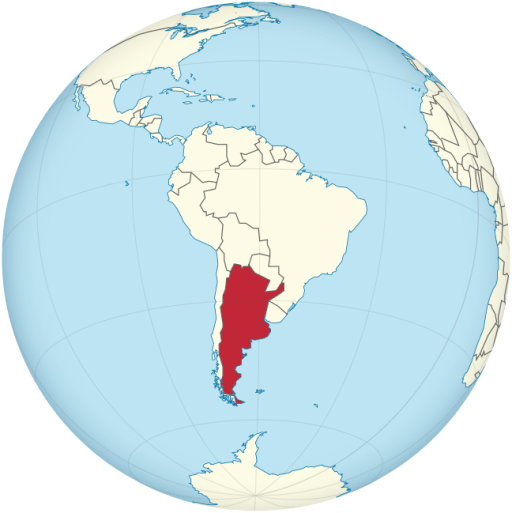
Last month, inflation in Argentina dropped below five percent for the first time in more than two years. This means that the prices of goods and services didn't rise as quickly as they have been.
Why this matters:
This decrease in inflation is good news for President Javier Milei. Just last week, he also managed to get a major reform bill passed in the Senate by a very tight vote. This bill includes big changes to the economy, which he hopes will help fix some of Argentina's financial problems.
Tell me more:
Specifically, prices increased by 4.2 percent in May, which is a big improvement compared to April when they went up by 8.8 percent.However, even though inflation slowed down in May, prices have still gone up a lot this year---by 71.9 percent in just the first five months. Over the past year, prices have increased by a whopping 276.4 percent. So, while May's numbers are better, there's still a lot of work to be done to get inflation under control.
What's the government doing about it?
The country's new president is on it. When President Milei took office in December, he devalued Argentina's currency, the peso, cut public spending, reduced the number of government workers, stopped new public projects, and removed subsidies (financial help) for things like fuel and transport. The result? In April, for the first time since 2008, Argentina had more money coming in than going out. Plus, the government has renewed part of its currency swap agreement with China, and the International Monetary Fund...
Please log in or subscribe for free to continue reading this issue.
We could use your help to make this issue better. Take a look at the requests below and consider contributing:
- Submit a piece of artwork for this issue
- Submit a news, academic or other type of link to offer additional context to this issue
- Suggest a related topic or source for future issues
- Fix a typo, grammatical mistake or inaccuracy
Below you'll find some of the sources used for this issue. Only sources that support "media embedding" are included.
-
Peacemaking efforts and attempts at ceasefire have all collapsed since fighting broke out in Khartoum last year.
-
The war has created the worst humanitarian situation in the world with an estimated 756,000 people going hungry.
-
Darfur, a region in western Sudan, has a tragic history marked by ethnic violence and humanitarian crises. In the early 2000s, the region experienced a brutal conflict that resulted in the deaths of hundreds of thousands of people and displaced millions. Today, there are alarming signs that Darfur may be heading towards another genocide.
-
Monthly inflation drops below five percent for the first time in more than two years, decelerating for the fifth consecutive month.
-
Javier Milei has been Argentina's president for half a year - how has it gone?
-
At this point, six months into office, Milei knows he needs to get something out of Congress, no matter exactly what that “something” is. Progress, not perfection.
-
Rest of World News: Suspected Islamist rebels, linked to ADF, kill over 20 in Mayikengo village, North Kivu, Congo. Death toll between 20-30. Administrator Alain Kiwewa,
-
Congo's president says a boat carrying more than 270 passengers has capsized on a river near Congo’s capital of Kinshasa, leaving more than 80 dead.
-
The number of fire outbreaks so far this year is 10 times that in the same period in 2023.
-
Philippines files new legal submission before the UN, asserting its own entitlements while challenging Beijing’s claim.
-
President Xiomara Castro says new measures are in response to public complaints about rising violence.
-
Armenia's prime minister declared his intention on Wednesday to pull out of a Russian-led security alliance of six ex-Soviet states.
-
Russian peacekeepers on Wednesday completed their withdrawal from the Nagorno-Karabakh region, which Baku recaptured last year from Armenian separatists, officials in Baku said.
-
Armenia signed the Artemis Accords regarding safe and responsible space exploration June 12, the tenth country to do so this year.
-
The UN adds Israel and Hamas for the first time to its list of offenders for violating children’s rights.
-
The PM says he sacrificed "lots of things" as a child as his parents prioritised their education.
Each week, What Happened Last Week curates news and perspectives from Asia, Africa, and the Americas. The newsletter is written by Sham Jaff and focuses on stories that rarely receive sustained attention in Western media.
Read the free edition every week. VIP subscribers receive additional stories, recommendations on what to watch, read and listen, and more.