

In this issue, I'm joined by journalist Ridal Carel Tchoukuegno. We focus on the new government appointees in the DRC, who they are and what sort of challenges the country is facing. Also, there has been a gruesome eyewitness account of an incident that happened last week in a village in Rakhine State in Myanmar. Myanmar soldiers are being accused of some pretty disturbing stuff there. Plus, two short documentaries that follow young people in Cambodia and their fight to protect the country's nature and a tea lady and mother of four in Sudan's Omdurman amidst the civil war. Plus, an Amazon tribe that recently got introduced to the internet and what they have taken as lessons so far. And so much more.
The DRC has a new government. Here's the Who's Who
What happened:
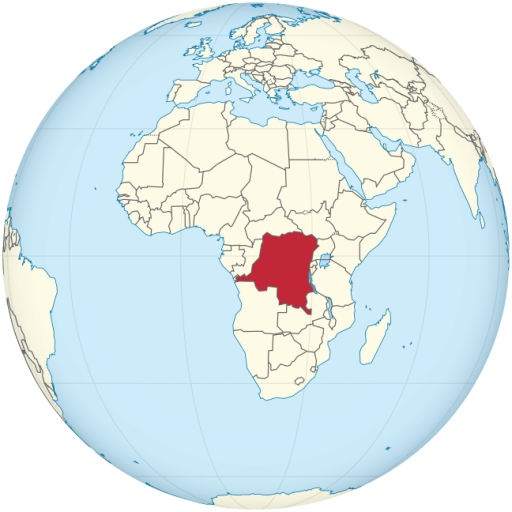
Last week, the Democratic Republic of Congo (DRC) finally set up a new government, five months after President Félix Tshisekedi was re-elected in December. I talked to journalist Ridal Carel Tchoukuegno for insights into this development. Carel reports on geopolitics and society and culture from an intercultural perspective (mostly in German), follows political and cultural developments from/on the African continent, has a podcast and is very active on TikTok.
Why this matters:
It matters that you know The Who's Who of DRC politics. The country is a huge country, some 99 million people live there, and it has incredibly rich in minerals like gold and diamonds, which are vital to global supply chains, including those for electronics and electric vehicles. Control over these resources is highly contested, leading to ongoing conflicts. Over 7 million people are displaced due to said conflicts, making it one of the world's worst humanitarian crises. The new government has a monumental task in addressing this situation and providing relief to millions living in dire conditions.
Tell me more, Carel
This five months long delay was because the different political parties in the ruling coalition couldn't agree on who should be in the government. Some of them have close year-long ties to president Thisekedi.
- Judith Suminwa Tuluka as Prime Minister:
She's the first female prime minister of Congo, taking office amid escalating violence in the east. Suminwa worked in Goma during her time as a national expert for the UN agency's humanitarian coordination unit (UNDP). She's also expected to push for gender equality and inclusivity in politics. - Guy Kabombo Muadiamvita as Defense Minister: This is crucial because of a recent attempted coup. Human Rights Watch has urged the new government to fairly prosecute those involved rather than cracking down on rights.
- Jacquemain Shabani as Interior Minister: Formerly Tshisekedi's electoral campaign director, Shabani will oversee political and electoral matters.
- Constant Mutamba as Justice Minister: Leader of an opposition platform during the last elections, Mutamba's appointment is seen as a move toward reconciliation.
- Kizito Kapinga Mulume as Minister of Mines: With extensive experience in the oil, energy, and construction sectors, Mulume faces challenges like illegal mining and boosting revenue from mineral resources. The country's mineral wealth is estimated to stand at US$24 trillion.
Carel's analysis: "Except for the Justice Minister, everybody else seems to have close ties with Tshisekedi. Interesting."
Who is Félix Tshisekedi?
President Tshisekedi aims to transform the DRC into "the Germany of Africa" but has faced criticism for not effectively using the country's vast mineral wealth to improve living conditions. Born into a political family, his father, Etienne Tshisekedi, was a popular politician and founder of the Union for Democracy and Social Progress (UDPS). Despite challenges, recent surveys show that many Congolese are optimistic about their future under Tshisekedi's leadership. There were a few milestones achieved during Tshisekedi's first mandate: free primary education, the state budget was raised, no violence in rather chaotic elections, and this time around no opponent was excluded from the ballot.
What now?
The new government faces major challenges, including ending the violence in the east, ensuring that the country's mineral wealth benefits the poor, and addressing human rights concerns. The violence in the east is a particular challenge. Just last week, at least 38 people were killed in Beni.
Good to know:
Press freedom in the DRC is fragile. Four journalists have been detained this year, and the country ranks 123rd out of 180 in press freedom. Journalists face dangers like arrests, threats, and violence, particularly when covering sensitive topics like corruption and mining.
Looking for Congolese journalistic and analytic voices?
Carel recommends following accounts like that of:
- Maud-Salomé Ekila (@ekilaaa on Instagram)
- Focus Congo e.V. (@focuscongo on Instagram)
- Kabale Musaveli (@kambalem on Instagram)
- Radio Okapi (website)
At least 50 people have been killed in Myanmar
What happened:
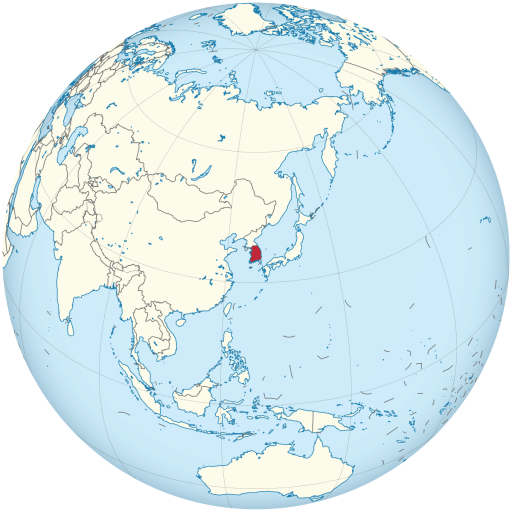
So, there's some really disturbing news coming out of Myanmar. Soldiers there have been accused of doing horrific things in a village in Rakhine State. Eyewitnesses told the BBC that just last week, soldiers tortured and killed a lot of villagers in Byai Phyu while searching for supporters of the Arakan Army (AA), a group fighting the military for control of the area. The military government, called the junta, denies these accusations, but if true, it would be one of the worst acts in Myanmar's three-year civil war.
Warning: The eyewitness accounts may be challenging to stomach.
Why this matters:
As the military...
Please log in or subscribe for free to continue reading this issue.
We could use your help to make this issue better. Take a look at the requests below and consider contributing:
- Submit a piece of artwork for this issue
- Submit a news, academic or other type of link to offer additional context to this issue
- Suggest a related topic or source for future issues
- Fix a typo, grammatical mistake or inaccuracy
Below you'll find some of the sources used for this issue. Only sources that support "media embedding" are included.
-
Five-month delay since election featured an attempted coup as conflict rages in mineral-rich east.
-
Sondage - Tshisekedi II : des Congolais plutôt optimistes ? Entre espoir et impatience | Ebuteli | Ebuteli - Institut congolais de recherche sur la politique, la gouvernance et la violenceMalgré l’aggravation du conflit dans l’est du pays et une situation socio-économique précaire, ce nouveau sondage montre...
-
Reporters sans frontières assure la promotion et la défense de la liberté d'informer et d'être informé partout dans le monde. L'organisation, basée à Paris, compte des bureaux à l'international (Berlin, Bruxelles, Genève, Madrid, Stockholm, Tripoli, Tunis, Vienne et Washington DC) et plus de 150 correspondants répartis sur les cinq continents.
-
Witnesses tell the BBC the Myanmar army tortured and killed dozens of men in a village in Rakhine State.
-
Attack in Khartoum’s sister city of Omdurman comes as UN says internal displacement across Sudan is nearing 10 million.
-
The killing of Yolanda Sanchez comes just hours after a historic landslide victory for Mexico's first woman president.
-
A 59-year-old Russian cosmonaut has become the first person to spend 1,000 days in space. Russian space agency Roscosmos said Wednesday that Oleg Kononenko achieved the cumulative space time record having made five journeys to the International Space Station dating back to 2008.
-
This will make him only the second Indian to hold the post for three consecutive terms.
-
Victims as far afield as Singapore, Peru and the United Arab Emirates fell prey to their online scams.
-
Plus, other sustainable boutique brands leading the way on sustainability
-
The 13th edition of the Carmignac Photojournalism Award (Prix Carmignac du photojournalisme) will focus on Ghana and the ecological and social challenges the country faces. E-WASTE IN GHANA: Tracing Transboundary Flows LAUREATES : A COLLABORATIVE REPORTAGE BY ANAS AREMEYAW ANAS, MUNTAKA CHASANT AND BÉNÉDICTE KURZEN
-
On Becoming a Guinea Fowl: Directed by Rungano Nyoni. With Susan Chardy, Elizabeth Chisela, Roy Chisha, Blessings Bhamjee. On an empty road in the middle of the night, Shula stumbles across the body of her uncle. As funeral proceedings begin around them, she and her cousins bring to light the buried secrets of their middle-class Zambian family.
-
Knuckle City: Directed by Jahmil X.T. Qubeka. With Bongile Mantsai, Thembekile Komani, Patrick Ndlovu, Faniswa Yisa. An aging, womanizing professional boxer and his career-criminal brother take one last shot at success and get more than they've bargained for.
-
Isoken: Directed by Jade Osiberu. With Dakore Akande, Joseph Benjamin, Marc Rhys, Funke Akindele. A successful 34-year-old Nigerian woman faces family pressure to marry a suitable Nigerian man, but unexpectedly falls for a Caucasian, challenging cultural norms and expectations. It explores the relationship's impact on family bonds.
-
Cassava Republic Press’s Global Black Women’s Non-Fiction Manuscript Prize is dedicated to exceptional works of non-fiction by Black women.
Each week, What Happened Last Week curates news and perspectives from Asia, Africa, and the Americas. The newsletter is written by Sham Jaff and focuses on stories that rarely receive sustained attention in Western media.
Read the free edition every week. VIP subscribers receive additional stories, recommendations on what to watch, read and listen, and more.