
In this issue, I'm looking at the election results in India, the world's most populous country, its major parties, and what is at stake, plus the tensions between North and South Korea over literal trash balloons. I'm also talking about some major music and film festivals that took place last week in Addis Ababa, in London and in Arusha, a podcast episode about that critically looks at books, movies and art from and about Kashmir in the last 20 years, my Ethio-jazz favorites in this newsletter's very own Spotify playlist, yoga in Pakistan, an online review in Nigeria that's putting someone in prison for it, and so much more.
India's 2024 election results are underway -- Here what's at stake
What happened:
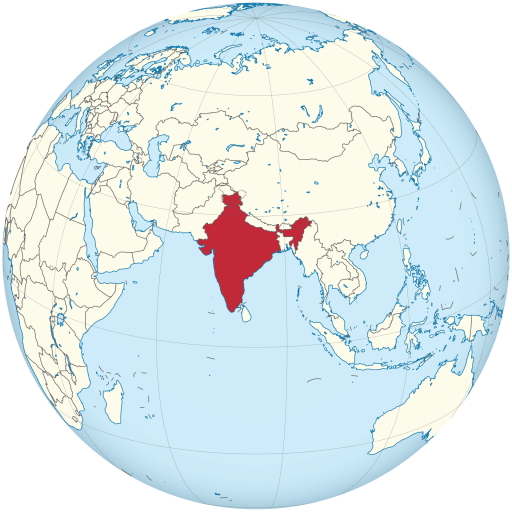
The 2024 elections were held to elect new members of India's parliament (called the Lok Sabha), and vote counting is underway. Voters are choosing 543 members for the lower house of Parliament for a five-year term.
Why this matters:
This year's Lok Sabha election was the second-longest since India's first election in 1951-52. Nearly 970 million people were eligible to vote in India's general elections. Also, some polls view this election as a test for the country's democratic values, as some of these values "have eroded during Modi's 10-year-rule," writes AP.
Tell me more:
Some 642 million people voted in the election, with an average 66% turnout across the seven phases, according to official data. The election pitted Prime Minister Narendra Modi, a Hindu nationalist, against a broad alliance of opposition parties that were struggling to play catch up. It was essentially a big contest between two major alliances:
- The National Democratic Alliance (NDA) -- Led by the Bharatiya Janata Party (BJP) of Prime Minister Narendra Modi. They have been in power since 2014. Major parties are, next to BJP, also Shiv Sena, JD(U) and Akali Dal.
- The Indian National Democratic Inclusive Alliance (INDIA) -- This was a new alliance formed by several opposition parties to take on the BJP. The major parties involved are Congress, DMK, TMC, NCP, Shiv Sena (UBT faction), JD(S), RJD, SP, JMM and AAP.
It is a high-stakes election. If the NDA wins again, it would mean Modi getting a rare third consecutive term as PM. But if INDIA does well, it could mean a major change in government.
Did you know?
For the first time, more than 17 million registered voters chose to vote from home.
Good to know:
The percentage of Muslims in India has gone up (from 11 to 14 percent), but the percentage of Muslim members in Parliament has come down (from 9 to 5 percent) from what it was decades ago. Muslims in Indian politics? Pretty much underrepresented.
What now?
Today (June 4), the vote counting begins, and early trends show the NDA crossing the majority mark needed to form government again. However, INDIA also appeared to be putting up a strong fight, especially in some key states. Both sides claim leads in different regions as the counting is going on through the day. Right now, the NDA seems headed for another victory, though the margins are/remain close in many places. At least one big surprise, though: India's most populous state, Uttar Pradesh, is showing surprising early leads for the opposition, despite being previously controlled by Modi's party.
Fun fact:
Omar Abdullah, a prominent politician from Jammu and Kashmir, already conceded defeat and congratulated his opponent, Sheikh Abdul Rashid, a former legislator, who is currently in jail. Despite being jailed, Rashid was leading against Abdullah by a huge margin of over 125,000 votes in Baramulla. 'Well, that's democracy for you,' Abdullah kinda tweeted.
Dive deeper:
India's got the most people on WhatsApp and YouTube subscriptions than anywhere else on this planet. But here's the thing -- researchers who keep an eye on fake news and hate speech in India say the big tech companies like Google, Facebook, WhatsApp and Instagram have dropped the ball big time. After years of failing to properly enforce their own rules, the tech firms are using one-size-fits-all approaches that don't account for how diverse India is -- languages, religions, regions, cultures and all.
Zoom out:
This, of course, has deep implications for all of Southasia -- and not just because India is the region's largest country. Himalhas kept an independent Southasian eye on Modi's India even as so much of the media in India itself has amplified authoritarianism, communalism and nationalist chauvinism. Read their "Modi's India from the Edges" series.
One giant step back in the relationship between North and South Korea
What happened:
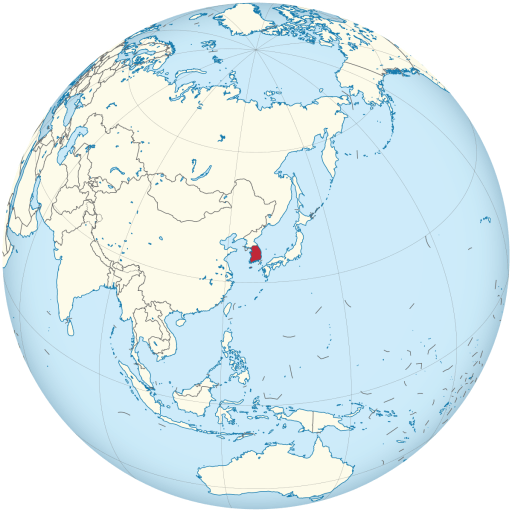
Things are getting heated again between the two Koreas. As of this week, South Korea is pulling the plug on an agreement they had with North Korea back in 2018. The two countries are now further away from signing an official peace treaty to formally end the Korean War.
Why this matters:
The Korean War was a big deal. Here's a refresher: The war resulted in millions of dead, missing, abducted, and refugee civilians in both Koreas. The official statistics? One million civilians died in South Korea and some 600,000 in North Korea.
Tell me more:
See, North Korea has been up to some shady stuff lately, like sending hundreds (!) balloons filled with trash and other nasty things over to the South. The balloons carried cigarette butts,...
Please log in or subscribe for free to continue reading this issue.
We could use your help to make this issue better. Take a look at the requests below and consider contributing:
- Submit a piece of artwork for this issue
- Submit a news, academic or other type of link to offer additional context to this issue
- Suggest a related topic or source for future issues
- Fix a typo, grammatical mistake or inaccuracy
Below you'll find some of the sources used for this issue. Only sources that support "media embedding" are included.
-
The world’s largest election could also be one of its most consequential. India's general election pits avowed Hindu nationalist Prime Minister Narendra Modi against a broad opposition alliance that is struggling to play catch up.
-
NEW DELHI (AP) — Vijay Lakshmi, 85, stood beaming at the entrance of her house as she welcomed a team dispatched by the Election Commission of India.
-
Vote counting is still underway in India’s 2024 Lok Sabha election. Prime Minister Narendra Modi’s Bharatiya Janata Party and its National Democratic Alliance has yet to secure the 272 seats needed for a parliamentary majority, but the prime minister has declared “a very big win.”
-
Vote counting is still underway in India’s 2024 Lok Sabha election. Prime Minister Narendra Modi’s Bharatiya Janata Party and its National Democratic Alliance has yet to secure the 272 seats needed for a parliamentary majority, but the prime minister has declared “a very big win.”
-
Vote counting is still underway in India’s 2024 Lok Sabha election. Prime Minister Narendra Modi’s Bharatiya Janata Party and its National Democratic Alliance has yet to secure the 272 seats needed for a parliamentary majority, but the prime minister has declared “a very big win.”
-
Vote counting is still underway in India’s 2024 Lok Sabha election. Prime Minister Narendra Modi’s Bharatiya Janata Party and its National Democratic Alliance has yet to secure the 272 seats needed for a parliamentary majority, but the prime minister has declared “a very big win.”
-
Vote counting is still underway in India’s 2024 Lok Sabha election. Prime Minister Narendra Modi’s Bharatiya Janata Party and its National Democratic Alliance has yet to secure the 272 seats needed for a parliamentary majority, but the prime minister has declared “a very big win.”
-
Read CNN’s Fast Facts about the Korean War. Although hostilities ceased in 1953, there has been no formal end to the war.
-
Two people acquitted in landmark national security trial targeting democracy activists and politicians.
-
The Middle Eastern country accounts for 74% of executions, whose number is the highest for eight years.
-
La próxima mandataria contará con mayoría calificada en el Congreso con 380 diputados y 88 senadores, y con 24 gubernaturas; va por su plan C para reformar al Poder Judicial
-
Esther Lungu and her daughter are accused of owning properties suspected to be proceeds of crime.
-
The firebrand, Holocaust-questioning politician's return comes at a time of heightened tensions between Iran and the West over Tehran's rapidly advancing nuclear program, its arming of Russia in its war on Ukraine and its wide-reaching crackdowns on dissent.
-
Kazakh President Qasym-Zhomart Toqaev said on June 3 that his country has taken the Taliban off of its terrorist list.
-
The world is awash in dirty money — and criminals who are constantly finding new ways to hide their loot in real estate, art, securities, cryptocurrencies and old fashioned bank accounts. Policing the latest tricks in digital transfers and offshore shell companies falls to financial regulators in each country, but there’s also an obscure international group that’s exerting a growing influence.
-
Billions of dollars of gold is smuggled out of Africa every year, with the vast majority exported to the United Arab Emirates for processing, according to a report by SwissAid.
-
Labor organizers shut down power grid, disrupt airlines
-
Chinese and Russian state media mirrored Trump’s talking points on the trial.
-
Ethiopian percussionist Mulatu Astatke — widely recognized as the father of Ethio-Jazz — wants the sub-genre he helped kickstart nearly 60 years ago to have a more prominent role on the world stage.
-
Haider: Directed by Vishal Bhardwaj. With Shahid Kapoor, Tabu, Shraddha Kapoor, Kay Kay Menon. A young man returns to Kashmir after his father's disappearance to confront his uncle, whom he suspects of playing a role in his father's fate.
-
Bui Tuan Lam's video was widely seen to be mocking a senior government minister.
Each week, What Happened Last Week curates news and perspectives from Asia, Africa, and the Americas. The newsletter is written by Sham Jaff and focuses on stories that rarely receive sustained attention in Western media.
Read the free edition every week. VIP subscribers receive additional stories, recommendations on what to watch, read and listen, and more.