
In this issue, I'm taking you to the insides of South African politics (they're talking about introducing universal healthcare! USA, did you hear me?) and to France's 17.000 km-away-colony, no, territory in the South Pacific, New Caledonia/Kanaky (it's a fight for two different things, either nickel for EV batteries or the self-determination of the Kanak people). Plus, two movie-like escapes by two individuals who (I'm sure) we will watch movies about in the coming years, a Palestinian photographer in Berlin, an Oscar-nominated short doc about Taiwan's 'identity crisis', plenty of good news from all over, and so much more.
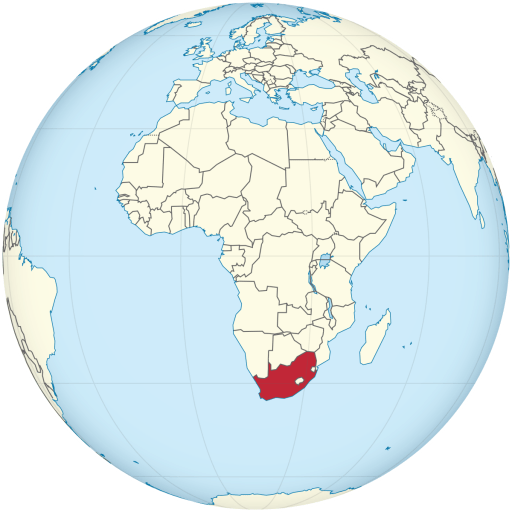
South Africa is talking about universal healthcare
What happened:
South Africa's President Cyril Ramaphosa just approved a big change in healthcare.
Why this matters:
This is the most significant since apartheid ended 30 years ago. As of today, only about 14% of South Africans can afford private healthcare, while the rest depend on the overburdened public system.
Tell me more:
President Ramaphosa has signed a law that will set up universal healthcare. It's called the National Health Insurance (NHI) scheme. While it means healthcare for everyone, the main opposition party isn't happy. They think it'll be too costly and could lead to corruption. Unlike in some places like the UK, once this NHI covers certain health services, you won't be able to use private health insurance for them anymore. This is a big deal because it changes how everyone in South Africa will get medical care. The government says this will make healthcare better and cheaper, but not everyone agrees.
Why now?
President Ramaphosa believes the NHI will help fight poverty by making healthcare more affordable, so families can spend their money on other essential needs. He's pushing this as a major promise to voters, especially with elections coming up. He wants to end what he sees as healthcare inequality --- great healthcare for the rich and poor healthcare for the poor.
- Good to know: On May 29, nearly 28 million South African registered voters have the chance to elect representatives to the national and provincial parliaments. It will be the country's seventh democratic general election.
How will NHI be paid for?
The money for the NHI will come from taxes, and from higher earners and workers paying into the fund. Exactly how much everyone will have to pay isn't clear yet.
So what happens next?
The opposition party, the Democratic Alliance, plans to fight this law in court. They support universal healthcare but think the NHI plan will ruin both private and public health sectors. Plus, some analysts say the NHI just won't work, like Investec Healthcare Equity Analyst Letlotlo Lenake. "Having 5 million taxpayers financing the healthcare needs of 60 million people does not make any sense," he said to Investec Focus Podcast 'No Ordinary Wednesday'. The government and its critics are likely to end up in a big legal battle over this. And, even if the Constitutional Court gives the green light, this isn't going to stand tall on Day One -- not least because the government will first have to come up with the money to finance it.
France wants to change who can vote in local elections in New Caledonia/Kanaky
What happened:
In New Caledonia/Kanaky, a French territory in the Pacific (yes, 17.000 km away), there's been a lot of unrest and protests for a week now. At least five people have died as a result. The protests began because of a new law about who can vote in local elections.
Why this matters:
"#NewCaledonia is usually invisible in the international media, except for tourism ads promoting "a little bit of France in the South Pacific'", writes Nic Mclellan, correspondent for Islands Business Magazine. New Caledonia/Kanaky has been French territory since colonization in the late 1800s. Centuries on, the island's politics is about whether they should stay with France, gain more autonomy, or become fully independent. For Kanaky, this is about a self-determination struggle against French colonialism. For France, this unrest is significant as New Caledonia/Kanaky is a key producer of nickel, vital for electric vehicle batteries.
Tell me more:
The French government says the new voting laws are about maintaining democracy, but the indigenous Kanak people see it as a threat to their voting influence, given they make up about 40% of the population.
- Dig deeper: Radio New Zealand (RNZ) dedicated an entire Saturday Morning with Nic Mclellan with enough time to start unpacking the many complex drivers of conflict. Listen here. On Twitter, Nic also shared that 'The Pacific' program on ABC News in Australia has captured striking images of the destruction in Nouméa (capital), with the voices of shocked residents, business owners and protestors. Watch here.
What now?
France has sent over 600 police officers to restore order, declared a state of emergency, and even banned TikTok in the region due to security concerns. Even with a curfew from 6 PM to 6 AM, the situation is still tense, and the local mayor says things are not getting better. The violence has resulted in several deaths and injuries, and it's causing a lot of damage and fear among the people.
- Good to know: There are some Azerbaijani flags at the protests in New Caledonia/Kanaky. France has therefore accused Azerbaijan of interfering by supporting local independence movements and spreading false information. Why might Azerbaijan do this? Well, France formally supports their 'arch enemy' Armenia. Azerbaijan has denied the allegations. Beware: This is...
Please log in or subscribe for free to continue reading this issue.
We could use your help to make this issue better. Take a look at the requests below and consider contributing:
- Submit a piece of artwork for this issue
- Submit a news, academic or other type of link to offer additional context to this issue
- Suggest a related topic or source for future issues
- Fix a typo, grammatical mistake or inaccuracy
Below you'll find some of the sources used for this issue. Only sources that support "media embedding" are included.
-
President Ramaphosa approves a law that seeks to provide universal health care for all - but not everyone is happy.
-
Police have used tear gas and stun grenades on rioters at an airport near Nouméa as the unrest and rioting in New Caledonia goes into its sixth day. Five people, including two police officers, have died and hundreds of people are injured amid clashes between authorities and pro-independence protesters. They were sparked by anger at a proposed new law that would allow French residents who have lived in New Caledonia for more than 10 years to vote - which some say will weaken the indigenous Kanak vote. Correspondent for Islands Business Magazine, Nic Maclennan, who has been covering this story for decades, explains the back-story.
-
France has accused Azerbaijan of meddling in its Pacific territory, New Caledonia, by supporting independence movements and spreading disinformation, amid broader geopolitical tensions.
-
-
PFAS chemicals present in air, rain, atmosphere and water in basin, which holds nearly 95% of US freshwater
-
Flash floods from heavy seasonal rains in the province of Ghor in western Afghanistan have killed at least 50 people, a Taliban official said.
-
After 20 years in power Lee Hsien Loong has stepped down, marking the end of a political era for the tiny island nation.
-
Case of Ousman Sonko, former Gambian Minister of Interior, convicted in Switzerland for crimes against humanity committed under ex-dictator Yahya Jammeh.
-
‘Exhausting and extremely dangerous’: Mohammad Rasoulof on his escape from Iran | Cannes 2024 | The GuardianExclusive: The director of The Seed of the Sacred Fig details how he discarded electronic devices and fled over the mountains on foot after authorities sentenced him to eight years in prison and flogging
-
Foreign Minister Hossein Amir-Abdollahian is also confirmed to have died in Sunday's crash in north-western Iran.
-
There was more business than usual and some bemused regulars after El Califa de León was rewarded for its ‘exceptional’ offering
-
The Swedish government has said it will return 39 pieces of Benin artefacts in its museum to Oba of Benin, Ewuare II.
-
The Webb Space Telescope has discovered the earliest known merger of black holes. Scientists reported Thursday that these two gigantic and distant black holes and their galaxies consolidated just 740 million years after the universe-forming Big Bang.
-
Astronomers have discovered an Earth-size planet orbiting a red dwarf star, making just the second planetary system seen around one of these tiny, cool, dim, but common, stars.
-
View sonnenalleepodcast’s Linktree to discover and stream music from top platforms like Spotify here. Your next favorite track is just a click away!
-
As K-pop's global popularity has increased, so has the use of samples from pop music history. A decade ago, the idea of sampling a Western pop song felt pretty rare, but there have been a number of recent hits built upon hooks from decades past. aespa's pre-release Supernova samples Afrika Bambaataa's 1982 classic Planet Rock,…
-
aespa are releasing their first full album in Armageddon on May 27, but before that, they've release
-
EU, UN reschedule launch of anti-human trafficking project in Cambodia after questions about venue | AP NewsThe European Union and United Nations abruptly rescheduled the launch of an anti-human trafficking program this week after being confronted with questions on the choice of venue: a Phnom Penh hotel owned by a Cambodian tycoon who has another property that has been used by human traffickers.
Each week, What Happened Last Week curates news and perspectives from Asia, Africa, and the Americas. The newsletter is written by Sham Jaff and focuses on stories that rarely receive sustained attention in Western media.
Read the free edition every week. VIP subscribers receive additional stories, recommendations on what to watch, read and listen, and more.