

In this issue, I'm losing patience with Portugal's President, who keeps apologizing for slavery but won't do anything concrete, and I'm reading a damning report by a think tank in Sweden which says, 'everybody is buying weapons nowadays". I also want us to talk about disability in Afghanistan (did you know that the country has one of the largest populations per capita of persons with disabilities in the world?) and how it is impacting access to education there, the wetlands of Kerala that are disappearing, a Pakistani book on grief that is also about politics, a new documentary about the Havana Syndrome (we have new evidence!), and why Da Vinci might be feeling embarrassed today if he were alive. Plus, a bunch of good news from Malawi, Japan, Mexico, and many more.
Portugal keeps apologizing for slavery and other colonial-era crimes. 'It's all talk, no walk', say critics
What happened:
Portugal's President, Marcelo Rebelo de Sousa, dropped a bombshell when he said that Portugal needs to "pay the costs" of slavery and other colonial-era crimes. This sparked a buzz: Is Portugal actually ready to have this tough conversation?
Why this matters:
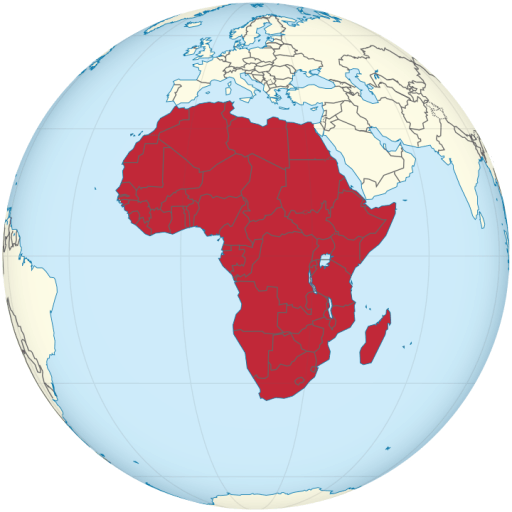
Portugal has deep roots in the slave trade, deeper than any other European country. Over 400 years, they shipped nearly 6 million Africans across the Atlantic. Those who survived were enslaved and put to work in the Americas, mostly Brazil, making money for Portuguese institutions. There's been a push to address this, but it's been a rocky road for Portugal.
Tell me more:
President Rebelo de Sousa also said that Portugal "takes full responsibility" for the wrongs of the past and that those crimes, including colonial massacres, had "costs". "We have to pay the costs," he said. "Are there actions that were not punished and those responsible were not arrested? Are there goods that were looted and not returned? Let's see how we can repair this." He's not new to this talk; he suggested an apology for the transatlantic slave trade just last year.
Okay. So, what's his plan?
That's the million-dollar question. There aren't any specific plans or a solid apology yet. Notably, he seems to bring this up more to international crowds. Paula Cardoso, who runs Afrolink, thinks the real issue is at home, where schools still paint Portugal as a benign colonizer, ignoring the harsh realities.
Wait... he doesn't mean it?
It seems like there's a lot of talk but not enough action. According to Cardoso, Portugal isn't even discussing or accepting its history properly. She argues for real reparations and addressing the ongoing racism that stems from that era. She points out that Portugal doesn't even gather data on ethnicity, which complicates addressing these issues.
How is the rest of Europe handling this?
In total, between the 15th and 19th centuries, at least 12.5 million Africans were kidnapped into slavery and forcibly transported long distances by mainly European ships and merchants. There's a growing awareness for this debate on accountability and reparations. However, the wider European response to slavery and colonialism is a mixed bag. The recent UN push has added weight to the debate on reparations. For example, the Netherlands apologized for its role in slavery in December 2022 (before, they were only 'deeply regretful') but decided against direct compensation, choosing instead to fund educational and social initiatives (some €200 million; if you're struggling with how much that actually is, well, Kylie Jenner once partied on a superyacht worth that much). The Dutch government is now facing legal claims from individuals following its official apology for slavery. Meanwhile, Germany has faced criticism for not including certain ethnic minorities in its reparation talks (they want to pay Namibia up to €1.3 billion over 30 years). It's clear that Europe is still grappling with how to properly address these historical wrongs.
For the first time in 60 years, government military spending increased in all five geographical regions, says report
What happened:
Global military spending just hit a record US$2440 billion, seeing the biggest increase in over a decade, says a new report by the Stockholm International Peace Research Institute (SIPRI).
Why this matters:
On a very basic level: More money on arms could mean less for things like schools and hospitals, impacting us all.
Tell me more:
We're talking a 6.8% rise in spending from 2022 to 2023, the steepest climb since 2009. Every part of the world increased their military budgets, a first in 60 years of records by SIPRI. Nan Tian from SIPRI thinks this massive spending could accidentally spark conflicts. "The unprecedented rise in military spending is a direct response to the global deterioration in peace and security. States are prioritizing military strength, but they risk an action-reaction spiral in the increasingly volatile geopolitical and security landscape." In other words, everybody's looking for or at least anticipating trouble.
Who are the largest spenders?
The US (37%) and China (12%) are leading the pack, making up about half of the world's total military spending. The US is dropping more cash on tech and new weapons to stay ahead, especially thinking about future conflicts with other big military nations. Meanwhile, China isn't far behind and continues to push its military budget up, although the biggest growth periods were in the 1990s and between 2003 and 2014. Russia, India, Saudi Arabia and the UK take second place. Russia's spending has shot up with its ongoing war in Ukraine. India is focusing on building its military gear domestically amidst regional tensions. Saudi Arabia, riding the wave of high oil prices, is also ramping up its military budget, so does Israel due to its war in...
Please log in or subscribe for free to continue reading this issue.
We could use your help to make this issue better. Take a look at the requests below and consider contributing:
- Submit a piece of artwork for this issue
- Submit a news, academic or other type of link to offer additional context to this issue
- Suggest a related topic or source for future issues
- Fix a typo, grammatical mistake or inaccuracy
Below you'll find some of the sources used for this issue. Only sources that support "media embedding" are included.
-
Hi, I'm Sham, your personal news curator. I have been writing this newsletter since 2014. I don't know when you joined this cool group chat, but I want to make sure you and I are on the same page. This helps me create the newsletter you deserve. So, here are a few questions. Your help is much appreciated!
-
Dutch Prime Minister Mark Rutte formally apologized on behalf of the Dutch State for the country’s involvement in enslaving people during the colonial era. Additionally, King Willem-Alexander will take part in the ceremony in Amsterdam next year marking the 150th anniversary commemoration of the end of slavery.
-
Billionaire makeup mogul Kylie Jenner cruised through the Mediterranean on $1.2 million-per-week Tranquility in August. Now, the vessel is for sale.
-
The Dutch government, which has long resisted calls for reparations over its role in the slave trade, is now facing legal claims from individuals following its official apology for slavery, according to documents obtained by RTL Nieuws under the Open Government Act.
-
The decision to give back the Namibian jewellery coincides with last year's recognition of the German Empire's genocide in the early 20th century.
-
For the first time, government military spending increased in all five geographical regions, Sipri thinktank finds
-
The Doorstep: Haiti on the Precipice of Change, with Emmanuela Douyon & Jean Eddy Saint Paul | Carnegie Council for Ethics in International AffairsPoliticé's Emmanuala Douyon and Brooklyn College's Jean Eddy Saint Paul join "Doorstep" co-hosts Nick Gvosdev and Tatiana Serafin to discuss lessons learned from Haiti's interconnected history with the U.S. and how these ideas could help the country out of its current political crisis. As the region's first Black republic and with a growing population of U.S. citizens living there, what does Haiti's future look like? How can the U.S. more effectively engage its near neighbors in the Caribbean?
-
Twenty Guatemalan prison guards are to stand trial accused of smuggling minors into jails to be sexually abused by imprisoned gang members, authorities said Friday.
-
Total deaths reach 76 and more than 130,000 displaced as weeks of flooding also affects east African neighbours
-
‘Transitional council’ takes oath of office after prime minister formally resigns as gang violence continues to rock capital
-
1-54 in New York, African art’s growth, Dakar’s delay, NBA Africa’s startup bet, Sudan artists love Nairobi
-
News on Japan, Business News, Opinion, Sports, Entertainment and More article expired
-
Afghans face many barriers to accessing education, from lack of schools to poverty or family and social biases. However, disability is one of the worst as it can prevent Afghan youth from overcoming even the most simple barriers.
-
-
Photo Essay | Silent SOS: Images of wetland birds are testament to human development gone wrong - FrontlineWetland and mangrove birds now forage among plastic waste in urban areas because their natural habitats are all but gone. These raw images are yet another testament to human development gone wrong. Text and photographs by Prasoon Kiran.
-
The Malabar Journal, India's only theme-based bilingual web portal, is committed to a new media culture focusing on well-researched texts, visual narratives, and podcasts. The TMJ, based in Kerala, strives to create a digital media ecosystem that engages with the dreams, hopes, contradictions, and agonies of Malayalees in Kerala and outside the state. A team of well-experienced professionals runs the show at the TMJ. Having immense faith in the capacity of a discernible audience for quality information and knowledge, we promise not to add on to the already unbearable clutter in the media landscape. We have no hesitation in rejecting the condescending narratives peddled as radical imaginaries in the realm of culture, politics, resistance, innovations, and disappointments that adorns the contemporary media landscape in Kerala and elsewhere. We also have no hesitation in stating that TMJ stands for a focus shift in the key determinants that shape the content selection and dissemination of the existing media platforms.
-
Book Club: With main character Nazia, dead, readers put the puzzle pieces of her life together through the perspectives of her loved ones.
-
Taha Kehar’s recent novel, which unfolds over a protracted party on a single night, revolves around six estranged friends, family members and a “mystery guest”. In order to fulfill the final reques…
-
The world’s most disappointing masterpiece: why does the Mona Lisa leave so many people underwhelmed? | Mona Lisa | The GuardianOnline, Leonardo da Vinci’s famous painting is the subject of thousands of negative reviews – on display at the Louvre, it is deluged with visitors. Is the problem the artwork or the stressful experience of seeing it?
Each week, What Happened Last Week curates news and perspectives from Asia, Africa, and the Americas. The newsletter is written by Sham Jaff and focuses on stories that rarely receive sustained attention in Western media.
Read the free edition every week. VIP subscribers receive additional stories, recommendations on what to watch, read and listen, and more.