
In this issue, I'm sharing my excitement for the South African elections on May 29 and give you a bit of a Who's Who so you too can join the ride. I also want to bring to your attention a preventable tragedy that happened ten years ago in South Korea, where a ferry flipped over and 304 people died. Hardly anyone has been held accountable since. I'm looking at the victims' families fight for justice today and how activism in the country has changed since. And last but not least, I read a report by a UK organization that links H&M and Zara to illegal deforestation and corruption in Brazil. Plus, some new Somali TV shows about unexpected-for-the-Western-gaze topics such as women's empowerment or how-best-to-inherit-wealth, a form of really minimalist dance theater from Japan that you could also learn if you're in Berlin, London or New York City, a deep dive into one of the most recognizable voices of Egypt, Umm Kulthum, Salsa records from Curaçao and why African runners slowed down to let a Chinese competitor win at the Beijing Half Marathon. And so much more.
This year's elections in South Africa are a bit of nail-biter. Here's a beginner's guide
What happened:
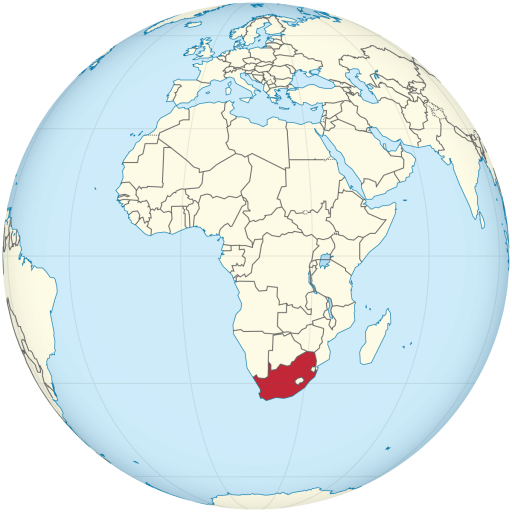
South Africa's got a big election coming up on May 29, and it's a bit of a curveball this year. It's the seventh one since they ditched apartheid and started voting freely 30 years ago. This time around, the buzz is that the African National Congress, or ANC for short---the party that's been running the show since Nelson Mandela was president---might actually get less than half the votes.
Why this matters:
It's been 30 years since South Africa started voting democratically, but life is still tough for many Black South Africans who can't make ends meet. Inequality and unemployment are through the roof, basic services like water and electricity are hit or miss, racial gaps are still wide, and political corruption has left a lot of people really disappointed with how democracy is playing out. Despite being one of the most stable and developed places in Africa, and kind of the gateway to the continent for other countries, the economy is in a real rough spot. People are worried this election could stir up some serious trouble.
Tell me more:
Now, the ANC is feeling the heat more than ever. They've always had the upper hand in past elections, but now they're scrambling because they might lose their solid majority in Parliament. A big reason for this shake-up? Jacob Zuma, the former president who had to step down a few years ago because of a bunch of corruption scandals. He's back with a new party and seems like he's out for some payback against his old buddies in the ANC. This has really kicked the ANC into gear to fix things and clean up their act.
Speaking of Zuma, he's been a big deal in South Africa for ages. He became deputy leader of the ANC in 1997 and was appointed South Africa's deputy president in 1999.
How does South Africa vote?
People vote for a party, not a person. The votes get counted up, and that decides how many seats each party gets in the big 400-seat National Assembly. Then, those folks pick the president. The party or coalition that bags more than half the seats gets to choose the leader. But here's a new twist: for the first time ever, folks can run for Parliament without being tied to a party. They passed a new law to let independents shake things up. If these independents get enough votes, they'll take seats away from the parties.
Who is running, and who is likely to win?
Right now, it's President Cyril Ramaphosa from the ANC, and he'll likely keep his job if the ANC gets over half the votes. But, as I mentioned, the ANC's been dropping in the polls, though, so it's all up in the air. They might have to buddy up with other parties to stay in power, which means they'll have to compromise on some stuff. Then there's Zuma's, who's running with his new party, the uMkhonto we Sizwe Party. They're actually doing pretty well. Meanwhile, the main opposition, the Democratic Alliance, has teamed up with 11 other parties, ready to take over if the ANC falters. We should know who wins about three days after everyone votes.
10 years ago, a ferry flipped over in South Korea and 304 people died. Their families are still pushing for change today
What happened:
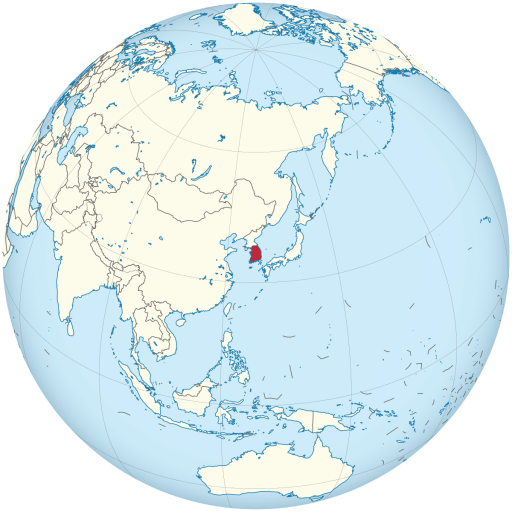
Back on April 16, 2014, the MV Sewol ferry flipped over off the coast of Korea. Out of 476 folks on board, 304 died---including 250 high school students.
Why this matters:
The disaster was one of the deadliest maritime accidents in South Korean history and had profound impacts on the nation, both socially and politically. According to experts and the victims' families, the accident was "utterly preventable" and highlighted the sloppy safety measures from the ferry company and a botched response by the Coast Guard and government. Even years later, hardly anyone's been held responsible---just one low-ranking Coast Guard member. The victims' families have since been at the forefront, pushing for justice and change.
Did you know?
In a short-answer poll taken by Hankyoreh newspaper in December 2014, the Sewol disaster was voted almost as significant as the Korean War. This incident really shook the nation to its core.
Tell me more:
So, picture this: it's early in the morning, and the Sewol is set to leave port in Incheon. They're delayed because it's super foggy, but then they get the green light and off they go---except they were the only ship to leave that night. Now, on board, there are 443 people, including 250 high school kids excited about their field trip to Jeju Island. But then, everything goes wrong. The ferry was overloaded because someone decided to tweak it so it could carry more cargo. Then, during the journey, the ferry took a sharp turn, things went sideways, and panic ensued. What did the crew do? They bailed, leaving everyone else behind being told to stay put, which was terrible advice. Meanwhile, the rescue efforts were a mess; they just weren't quick or effective enough.
What happened then?
Since the disaster, the victims' families have been really pushing for change. They want a full investigation and for someone to be held accountable. They've been pushing for stricter safety laws and better emergency responses to make sure this never happens again. They've also set up memorials and educational programs to keep the memory of the disaster alive and teach future generations. And politically? This disaster even played a part in the impeachment of President Park Geun-hye. The families pointed out her government's failures as part of wider issues with corruption and incompetence. When a big scandal popped up involving President Park Geun-hye in 2016, it led to some of the biggest protests since the 1980s, fueled by the ongoing anger and activism from the Sewol families.
What now?
Ten years on, after two governments and three different investigative bodies, the families and...
Please log in or subscribe for free to continue reading this issue.
We could use your help to make this issue better. Take a look at the requests below and consider contributing:
- Submit a piece of artwork for this issue
- Submit a news, academic or other type of link to offer additional context to this issue
- Suggest a related topic or source for future issues
- Fix a typo, grammatical mistake or inaccuracy
Below you'll find some of the sources used for this issue. Only sources that support "media embedding" are included.
-
Hi, I'm Sham, your personal news curator. I have been writing this newsletter since 2014. I don't know when you joined this cool group chat, but I want to make sure you and I are on the same page. This helps me create the newsletter you deserve. So, here are a few questions. Your help is much appreciated!
-
JOHANNESBURG (AP) — South African President Jacob Zuma resigned on Wednesday in a televised address to the nation, ending a turbulent tenure marred by corruption scandals that sapped the popularity of the ruling African National Congress and hurt one of Africa's biggest economies.
-
South African ex-President Jacob Zuma has denounced the ANC and pledged to vote for a new party | AP NewsFormer South African President Jacob Zuma has denounced the governing African National Congress party and announced that he will vote for a newly-formed political formation in the country’s general election next year.
-
1945년 광복 이후 가장 중요한 사건으로 20·30·40대는 ‘세월호 참사’를 꼽고 있는 것으로 나타났다. 50·60대는 ‘한국전쟁’을 가장 중요한 사건으로 인식하고 있었다. 가 광복 70년을 맞아 실시한 특별 여론조사에서 ‘광복 이후 일어난 가장
-
An interim report says the 16 April sinking of South Korea ferry Sewol was partly due to government negligence and corruption.
-
The captain of the first coastguard ship sent to rescue passengers from the Sewol ferry has been sentenced to four years in jail for negligence.
-
The BBC explains the corruption scandal that has rocked South Korea and toppled its president.
-
"I'm so grateful to the people who have stood by us for 10 years, and I can't express my gratitude in words.“ Standing in front of the Sewol Ferry Memorial Space in Seoul on March 16th, Jung Sung-w...
-
Ex-police officers in South Korea first to be convicted over deadly Halloween crowd crush that killed 159 | The StandardA South Korean court has convicted three former police officers of destroying internal files and other evidence in an attempted cover-up after a Halloween crowd crush that killed nearly 160 people.
-
MENSING & HILDEBRANDT - EU Agrochemical Companies Are Selling Poison to Kenya’s Farmers - The ElephantBig agrochemical companies are creating markets in developing countries for products that are no longer allowed for sale in Germany, mainly because of their harmful effects on health and the environment.
-
This new festival reintroduces Butoh to a UK audience – bringing together world-class Butoh performers and Butoh-inspired artists, for a series of once-in-a-lifetime performances never before seen in the UK. Rebellious Bodies Festival Facebook / Rebellious Bodies Festival Instagram / Rebellious Bodies Festival Website If you have any access requirements, please contact our box […]
-
2022 Calendar of Butoh dance classes both in-person and online–Vangeline Theater/New York Butoh InstituteCalendar of upcoming butoh dance classes and workshops hosted by Vangeline Theater/ New York Butoh Institute. Take a butoh class online or in-person; We offer movement and dance classes for actors, dancers, and adult beginners.
-
Umm Kulthum: Directed by Michal Goldman. With Tawfik Badawi, Virginia Danielson, Amal Fahmy, Umm Kulthum. She had the musicality of Ella Fitzgerald, the public presence of Eleanor Roosevelt, and the audience of Elvis Presley. Her name was Umm Kulthum, and she became a powerful symbol, first of the aspirations of her country, Egypt, and then of the entire Arab world. Born a peasant at the turn of the century, she became a woman of great wealth and power, confidant of presidents and kings, and above all, President Gamal Abd al-Nasser's unofficial ambassador in the region. Four million people were on the streets of Cairo for her funeral in 1975. To this day, her cassettes outsell every other Arabic female vocalist. Narrated by Omar Sharif, Umm Kulthum, A Voice Like Egypt is the first documentary to bring Umm Kulthum to an American audience. The film puts her life in the context of the epic story of 20th century Egypt as it shook off colonialism and confronted modernity. The camera explores her astonishing connection with her audience, taking us into her village in the Nile Delta, and into the cafes, markets, and streets of Cairo where she lived and worked. From the Nobel laureate Naguib Mahfouz to a 12-year-old girl in an outdoor restaurant, people speak about the role Umm Kulthum's music has played in their lives, and sing their favorite songs for the camera.
-
The top four finishers of the Beijing Half Marathon have been stripped of their medals after an investigation found three African runners deliberately slowed down near the finish line to let a Chinese runner win, according to organizers.
-
Wishing a wonderfully chaotic queer spring to all cicadas!
Each week, What Happened Last Week curates news and perspectives from Asia, Africa, and the Americas. The newsletter is written by Sham Jaff and focuses on stories that rarely receive sustained attention in Western media.
Read the free edition every week. VIP subscribers receive additional stories, recommendations on what to watch, read and listen, and more.