
In this issue, I'm switching gears. I got excited about Turkey's local election results the week before (basically, President Erdoğan's party lost) and wanted to understand what happened, so I reached out to Rosa Burç, a Kurdish political sociologist and asked her all of my 'dumb questions' for you. (Reminder: there truly are no dumb questions.) Plus, I dive deep into a new Nikkei Asia report that looks into meth business in Myanmar and how it is funding the civil war there. Other than that, expect a read about Kashmiri fisherwomen and how they deal with patriarchy, a Palestinian woman's quest to take her dead mother's ashes back to her homeland, a true-crime podcast about Brazil's worst environmental crisis ever, a movie about a 250-year-old Chilean dictator, and a reminder about (never) throwing money on the ground in Nigeria, etc.
Turkey's local elections are a "turning point" -- exclusive interview w/ Rosa Burç
What happened:
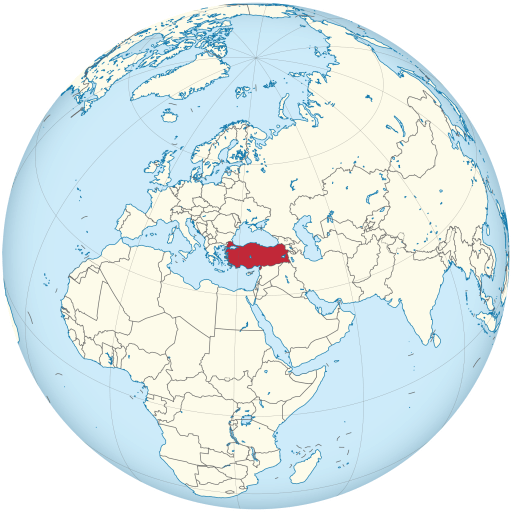
Last weekend's local elections in Turkey really shook things up, hitting President Recep Tayyip Erdoğan and his AKP party harder than they've felt in over two decades. The opposition, led by the Republican People's Party (CHP), nailed a big win, taking 36 out of 81 provinces. It's a huge deal, especially in big cities like Ankara and Istanbul, not to mention other spots that have been under AKP control for ages. With everything going on---like the economy taking a hit and prices going up---this win is a big sign that things are changing. Plus, it's given a serious boost to Ekrem Imamoğlu, the mayor of Istanbul. He's now being talked about as the guy who might take on Erdoğan in the next presidential race.
Exclusive interview:
To understand what happened, I talked to Kurdish political sociologist Rosa Burç about what this election means and what sort of political developments Turkey is going through. Is Erdoğan's time over? How strong is the opposition in Turkey and what do they want? And: Where do the Kurds stand?
Why does this matter?
Burç: The election is a turning point. Over two decades, the AKP has centralized power, influencing elections and creating a climate of fear. The 2015 elections were a pivotal moment when, after a loss, the government intensified repression, particularly in Kurdish regions. The recent victories indicate that the opposition has learned from experiences, developing effective strategies against the AKP's authoritarian grip, despite ongoing election fraud and political pressure.
Why was the opposition successful this year?
Burç: This year's success stems from grassroots mobilization and a rejection of divisive politics. Previously, the CHP failed to secure a broader base due to its avoidance of Kurdish issues and alliances. The recent shift towards inclusive, democratic discourse, and the strategic cooperation between Kurdish-led political party DEM and the CHP, especially in major cities, played a crucial role. This approach contrasted with past strategies that at best marginalized but more often even demonized Kurdish and progressive voices, demonstrating a growing recognition of the need for a united opposition and advocacy for equal citizenship.
Why is the Kurdish perspective so important?
Burç: The Kurdish perspective is vital for understanding Turkey's political dynamics. The Kurdish political movement has been central to challenging the centralist state and AKP's rule, particularly highlighted by their role in the Gezi Park protests and subsequent elections in 2015. Ignoring this perspective overlooks a significant portion of the opposition's strength and the potential for a more inclusive and democratic Turkey. The situation in Van, where the government's attempt to override the election results sparked significant backlash, underscores the importance of cross-community solidarity in the opposition.
Abdullah Zeydan on Friday officially received the mandate to take up his role as mayor of Van, days after his electoral win was temporarily nullified. How big is this news?
Burç: The election suspension in Van is a profound illustration of the AKP's strategy to maintain power through divisive and authoritarian tactics. Despite the Kurdish DEM party's victory, the government tried to withdraw legal eligibility of the successful candidate last minute and appointed the second candidate in the list, which happened to be the AKP. The politics of appointing trustees to Kurdish-run municipalities has been a blatant disregard for democratic processes and the will of the Kurdish population for many years, and was yet again repeated this time. This action is not just a local issue but a symbol of the broader struggles for democracy, accountability and justice within Turkey.
The Kurdish community saw this as a continuation of the government's efforts to undermine their political and social gains. For years, the Kurdish political movement has faced severe repression, and this event in Van was a stark reminder of their ongoing struggle for recognition and rights.
However, what was particularly noteworthy this time was the response from the Turkish opposition, especially the CHP and other democratic segments. Their swift condemnation of the AKP's actions in Van and their solidarity with the Kurdish community marked a significant shift. This solidarity is a critical development in Turkish politics, showing a growing understanding that the fight for democracy in Turkey is intertwined with respecting and supporting the rights and aspirations of the Kurdish population.
The situation in Van, therefore, became a catalyst for a reflection of the past mistakes and lessons learned. It challenged the opposition to not only advocate for democracy in principle but to actively defend it in practice, even when this means something uncomfortable: to face their own active or passive support in the politics of repression against Kurds. This incident has the potential to reshape the dynamics of opposition politics in Turkey, fostering a more inclusive and united front against the authoritarian rule of the government.
Why is it crucial to follow Turkish or Kurdish journalists' perspectives on these elections?
Burç: Turkish and Kurdish journalists provide insights that are often overlooked by international media, which tend to simplify Turkey's political complexities into binaries.
For example, I believe German media completely missed the mark in providing a nuanced and accurate depiction of Turkey's political dynamics. First, there was this long feature of Hakkari in the German media, which failed to capture the essence of this place's political sociology, including the history of activism and the democratic aspirations of its people.
Second, the response to Erdoğan's allegedly "calm" and "softer" election night speech was another missed opportunity for critical analysis. The coverage in German media often didn't fully grapple with the underlying threats and implications of Erdoğan's words, especially regarding the Kurdish population and the broader democratic landscape in Turkey. The consequence of such coverage is not just a misinformed audience, but also a diminished capacity for international solidarity with Turkey's democratic movements. Local journalists capture the nuances of Turkey's political landscape, offering a deeper understanding of grassroots movements, opposition strategies, and the broader democratic discourse. Their coverage is essential for comprehending the transformative politics in Turkey, beyond the dominant narratives that often marginalize critical voices and issues.
Dig deeper:
If you want to learn more about Turkey, read Burç's recent paper from 2022, another one in the same year, with co-author Delal Aydin, or this one from 2018. She's generously provided me with PDFs, so if you're having trouble accessing them, just mail me. If you're looking to interview local journalists, Burç recommends reading and translating voices of as people like Ali Duran Topuz and İrfan Aktan.
About Rosa Burç
Rosa Burç is a political sociologist, who works as a research associate at the German Centre for Integration and Migration Research (DeZIM) as part of...
Please log in or subscribe for free to continue reading this issue.
We could use your help to make this issue better. Take a look at the requests below and consider contributing:
- Submit a piece of artwork for this issue
- Submit a news, academic or other type of link to offer additional context to this issue
- Suggest a related topic or source for future issues
- Fix a typo, grammatical mistake or inaccuracy
Below you'll find some of the sources used for this issue. Only sources that support "media embedding" are included.
-
The CHP won the municipalities of 36 of 81 provinces, Anadolu said, making inroads into many strongholds of Erdogan’s party.
-
Abdullah Zeydan on Friday officially received the mandate to take up his role as mayor of Van, days after his electoral win was temporarily nullified.
-
Residents of Sailulak, a quiet village in northeastern India that lies close to the border with Myanmar, found two things out of the ordinary in the s
-
Learn more about the health effects of the stimulant drug methamphetamine.
-
An absence of policing, increased narcotics production, widespread trauma among youths and Myanmar's economic collapse have created a perfect storm for rampant drugs trade and use.
-
In low, pharmaceutical-grade doses, methamphetamine may actually repair and protect the brain in certain circumstances. But stigma against the drug could be harming patients and holding back research.
-
BANGKOK -- Thai Prime Minister Srettha Thavisin says his country should take the lead role in engaging with the Myanmar military regime to resolve its
-
Psychoactive drug kush has prompted a wave of deaths, mental health issues and the digging up of graves.
-
Blast struck in conflict-stricken Daraa province, where dozens of incidents have claimed about 100 lives this year
-
Uganda’s Constitutional Court on April 3, 2024 upheld the abusive and radical provisions of the 2023 Anti-Homosexuality Act, Human Rights Watch said today. The ruling further entrenches discrimination against lesbian, gay, bisexual and transgender (LGBT) people, and makes them prone to more violence.
-
Police stormed the Mexican embassy in Quito to arrest former Ecuadorian Vice-President Jorge Glas.
-
Nosiviwe Mapisa-Nqakula's arrest is seen as another blow to the ruling ANC party ahead of next month’s elections
-
CSIS intelligence report suggests growing number of countries targeting country’s large diaspora populations
-
An AI tool called Mia found missed breast cancer symptoms in the scans of 11 women during an NHS test.
-
The procedure was hailed as a historic step as doctors tackle a widespread organ donor shortage.
-
Benedicto Lucas García, 91, allegedly ordered the murder of over 1,200 indigenous Ixil Maya people.
-
Rwandan President Paul Kagame has blamed the inaction of the international community for allowing the 1994 genocide to happen as Rwanda commemorated 30 years since an estimated 800,000 people were killed by government-backed extremists.
-
They fought two wars over it and are nuclear armed - but what's at the root of the dispute?
-
Director Carol Mansour's latest documentary, Aida Returns, follows the ashes on a posthumous trip to native soil
-
This is a sometimes painful, sometimes humorous, often absurd story of multiple journeys: the journey of loss as the director’s mother Aida struggled with Alzheimer’s disease finding solace in her repeated “returning” to the Yafa of her youth; the journey of losing a parent; and the ultimate return journey to Yafa where Aida would finally find rest.
-
The socialite is accused of throwing money at a film premiere in Lagos, which is technically an offence.
Each week, What Happened Last Week curates news and perspectives from Asia, Africa, and the Americas. The newsletter is written by Sham Jaff and focuses on stories that rarely receive sustained attention in Western media.
Read the free edition every week. VIP subscribers receive additional stories, recommendations on what to watch, read and listen, and more.