

This issue is updating your knowledge on Indonesian history (the country's defense minister will likely become the next president, and he's a pretty controversial figure), Kiswahili literature (and why it's important to celebrate it), plus the LGBTQ+ rights situation in the Caribbeans (not a very gay-friendly place to visit). Plus, an anti-Sisi song that was released six years ago and still rings true today, feminism in the Tunisian hiphop scene, a South Korean rap band full of grandmas, a Zimbabwean writer's brilliant reading recommendations if you're interested in the people's perspective on migration, and a cheeky Delhi police Instagram post. Plus, so much more.
Who are the winners of the Safal-Cornell Kiswahili Prize for African Literature 2023?
What happened:
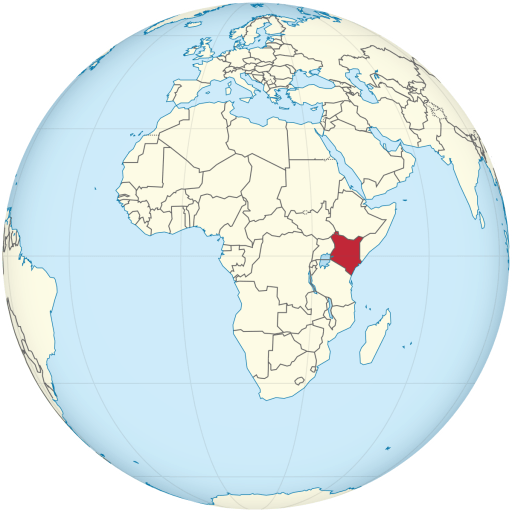
The winners of the Safal-Cornell Kiswahili Prize for African Literature were announced last Friday in Nairobi, Kenya. The prize, founded in 2014, celebrates poetry and prose written in the Kiswahili language.
Why this matters:
"Celebrating African languages like Kiswahili contributes to African liberation," writes Kenyan writer Njuki Githethwa. The prize, and reporting on it, challenges this long-held view that English and other colonial languages are somehow more important.
Tell me more:
Tanzanian writers stole the show, with four of them taking home top honors in both fiction and poetry categories. Philipo Oyaro's "Dunia Duara" (The Earth is Round) snagged the top fiction prize, while Fatuma Salim's "Changa la Moto" (Sand in the Eyes) clinched the top poetry prize. The runners-up didn't leave empty-handed, each receiving US$2,500. This year marked a significant milestone as it was the first time a woman won in the poetry category. In addition to the prizes, winning entries will also be considered for publication by Mkuki na Nyota Publishers in Tanzania, while the winning poetry will be translated to English and published by the Africa Poetry Book Fund.
Why should we de-center English? So many people speak it.
True, many people speak it. However, "the importance of English, French, and other imperial languages has been postured since colonialism, taken to signify literary excellence and recognition. Such postures ignore the fact that even English, at some point in history, was a marginalized language. There was the old English that was largely spoken by peasants in the British Isles in the 14th-15th century. Despite its marginalized beginnings, English continued to develop and grow to be a language of global power and influence. It is also easy to forget that major literary works, such as those by Leo Tolstoy, Franz Kafka, Gabriel García Márquez, Haruki Murakami, and Ngugi wa Thiong'o, among others, are later translations into English from other languages," writes Njuki Githethwa. Plus, I hope one day AI makes it easily accessible for you to read this newsletter in the language you grew up with.
What now?
Looking ahead, there's a call to reconsider the framework that places European language prizes above those honoring African languages. The goal is to foster a more inclusive and equitable literary landscape, where African literature in African languages can rightfully take its place in the global literary conversation.
Who is Prabowo Subianto, the likely-next-president of Indonesia?
What happened:
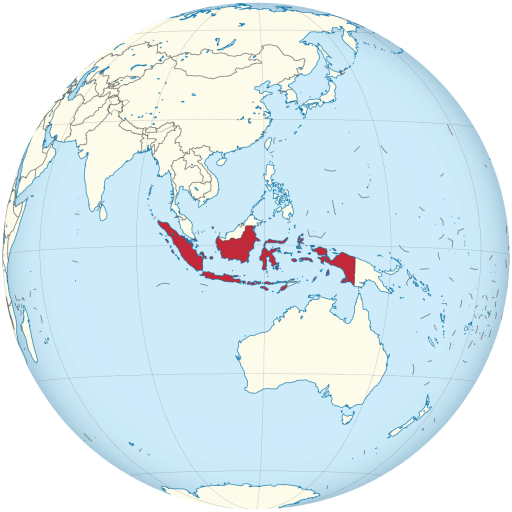
Prabowo Subianto, Indonesia's current defense minister, is likely to become president after winning the recent elections.
Why this matters:
Indonesia is a heavyweight on the global stage, being the world's fourth most populous country with around 274 million residents.
Tell me more:
Prabowo Subianto is a known figure; he was a general during Indonesia's dictatorship that ended in 1998. The current (very popular) president Joko Widodo is particularly fond of him and bypassed age restrictions to install his son as Prabowo's running mate (essentially endorsed him); some are concerned and say that this was harmful to the country's democratic institutions. Experts like Alexander R Arifianto from Nanyang Technological University, Singapore, believe Prabowo's presidency won't stray far from Jokowi's playbook, plus keeping Indonesia's non-aligned foreign policy stance between China and the United States unchanged. But there's a bit of worry among activists that under Prabowo's rule, holding folks accountable for past wrongs might get even trickier, with human rights possibly taking a back seat. The Conversation summarized the views of nine academics on seven other crucial issues that are casting a shadow over Prabowo's potential victory.
What "past wrongs"?
Prabowo, once married to the former president Suharto's daughter, held a high-ranking position in the army's special forces for quite a while; the same special forces that kidnapped and tortured 22 political activists in 1998. Prabowo was dismissed from the army after evidence showed he had ordered the kidnappings. He has always denied, however, that he was involved in the disappearances and has never faced charges, although some of his subordinates were convicted. Additionally, he faced a ban from entering the U.S. Moreover, Prabowo has faced accusations of human rights violations in regions like Papua and Timor-Leste, with one notable incident being a massacre in 1983 where hundreds, mainly men, were killed in the Timorese village of Kraras. He has refuted these claims as well. Muhammad Isnur, who heads the Legal Aid Institute Foundation of Indonesia (YLBHI), expressed concern that Prabowo's election could bring added pain to the families of those who vanished in 1998, still seeking answers. "The result is as we predicted. But we are still disappointed," he said.
What do the kidnapped students' families say?
"Mr. Prabowo, if you are going to be the president, please resolve the enforced disappearance cases so that we, the victims' families, can have peace," Paian Siahaan, 77, told The Associated Press. His son, Munandar Siahaan, was one of the activists who were assaulted by soldiers as Suharto's authoritarian rule collapsed. Munandar Siahaan and 12 others remain missing.
Btw, it's worth noting (and this is not marginal), according to the Jakarta Post, at least 23 poll workers passed away...
Please log in or subscribe for free to continue reading this issue.
We could use your help to make this issue better. Take a look at the requests below and consider contributing:
- Submit a piece of artwork for this issue
- Submit a news, academic or other type of link to offer additional context to this issue
- Suggest a related topic or source for future issues
- Fix a typo, grammatical mistake or inaccuracy
Below you'll find some of the sources used for this issue. Only sources that support "media embedding" are included.
-
Recognizing and appreciating creative writers in Kiswahili de-centers the use of imperial and borrowed languages in African literatures.
-
Can an African language literature prize be inherently Pan-African?
-
Prabowo cements victory in final quick count results - Politics - The Jakarta Post
-
The biggest country in Southeast Asia, finds itself on the frontlines of the intensifying competition between China and the United States.
-
Prabowo Subianto and Gibran Rakabuming Raka look set to win the presidential election. What are the crucial issues to watch, based on their campaign promises?
-
Prabowo 'ordered by Soeharto to kidnap activists' - National - The Jakarta Post
-
Families of Indonesian activists tortured by soldiers 25 years ago shocked at general's election win | AP NewsFamilies of Indonesian activists who were kidnapped and tortured by the military 25 years ago have expressed shock over the apparent presidential victory of Prabowo Subianto, whom they blame for the atrocities.
-
Over 20 poll workers die of exhaustion, says KPU - Politics - The Jakarta Post
-
This report covers seven countries: Antigua and Barbuda, Barbados, Dominica, Grenada, Saint Kitts and Nevis, Saint Lucia, and Saint Vincent and the Grenadines. All seven countries have versions of buggery and gross indecency laws, relics of British colonialism, that prohibit same-sex conduct between consenting persons. The laws have broad latitude, are vaguely worded, and serve to legitimize discrimination and hostility toward LGBT people.
-
Several Caribbean nations have struck down laws criminalizing same-sex relations in recent years. Courts in Belize in 2016 and Trinidad and Tobago in 2018 found such laws unconstitutional. Last year, a Caribbean court also declared some provisions of Antigua and Barbuda’s “Sexual Offences Act” unconstitutional. Since the ruling, St. Kitts & Nevis and Barbados struck down similar laws that often sought long prison sentences. But discrimination against LGBTQ people persists across the conservative and mostly Christian Caribbean. Some religious leaders oppose the abolition of anti-gay laws, invoking God in their arguments. Human rights groups say same-sex consensual intimacy is still criminalized in six Caribbean countries.
-
Our roundup of the most gay friendly places in the Caribbean and how safe they are as a vacation destination for LGBTQ travelers
-
A major cholera outbreak has killed more than 400 people and infected more than 10,000 in Zambia. Authorities ordered schools across the southern African country to remain shut after the end-of-year holidays.
-
Protestors took the streets in Senegal’s capital Saturday to keep the pressure on President Mack Sall to hold elections quickly.
-
The Kenya Wildlife Service (KWS) has addressed allegations that Olobor, a lion that belongs to the ‘Black Rock Pride’ was killed in Maasai Mara Reserve by pastoralists.
-
South Africa is set to deploy a contingent of 2,900 soldiers to the Democratic Republic of Congo to aid in the fights against armed rebel groups in the east.
-
Chinese migrants are the fastest growing group crossing from Mexico into U.S. at southern border - CBS NewsA growing number of Chinese nationals, trying to escape repressive politics and a bleak economy, are headed to the U.S. They're turning to a gap at the southern border with Mexico as a way to get in.
-
January 13 celebrated as national paid holiday in recognition of community's rich heritage
-
As part of VICE's Next 50 series, VICE News spoke to Tunisia's most prolific female rapper on hip-hop, migration and race in a time of rising authoritarianism in the country.
Each week, What Happened Last Week curates news and perspectives from Asia, Africa, and the Americas. The newsletter is written by Sham Jaff and focuses on stories that rarely receive sustained attention in Western media.
Read the free edition every week. VIP subscribers receive additional stories, recommendations on what to watch, read and listen, and more.