

This issue walks you through Senegalese politics (the recent oil and gas discoveries might have something to do with the recent election crisis there) and the aftermath of the deadly fires in central and northern Chile that killed 131 people (who's to blame and where to go from here). Plus, two peace processes in Colombia and Thailand (yes, even during these warmongering times), giant tortoises in Madagascar, a critical reading of Frantz Fanon, a Netflix recommendation about gentrification (the irony, I know), a former political prisoner who's earned his Bachelor's degree while in prison, a mini-doc about three blind women going bowling and why the Egyptian president was referred to as The Mexican long before U.S. President Joe Biden did.
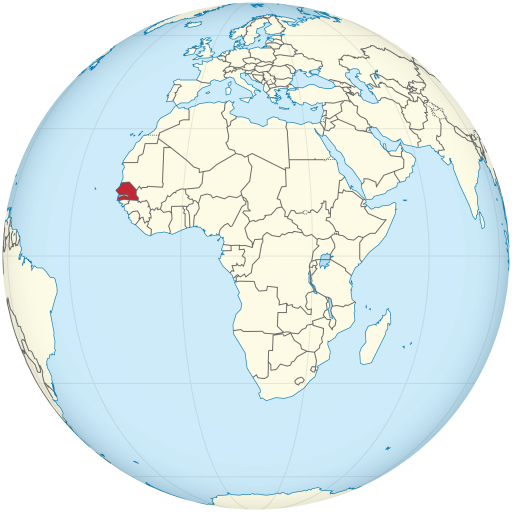
Senegal's postponed its presidential elections, and hell broke loose
What happened:
Senegal was all set for presidential elections on February 25, but plot twist -- President Macky Sall hit the pause button, shifting it to December 15. This move didn't sit well with many, sparking protests across the country; some of which have turned violent, with one student killed in Saint-Louis. So far, the police has arrested at least 150 people.
Why this matters:
Senegal has a reputation of being one of Africa's most stable democracies, where leaders change without any fuss and there's never been a military takeover. Now, people are worried this good record might be in jeopardy.
Tell me more:
The decision to delay the election happened in Dakar, the capital city. Sall's party is part of a coalition, which has a tiny lead in the government, and as such managed to make this delay official. This means Sall gets to stay president longer than expected.
- Btw, the fact that Macky Sall was not able to seek a third term in office entirely, is due to the successful organizing of Senegalese youth, says Mamadou Diouf, professor at Columbia University, in this interview with Democracy Now.
But why delay the election?
Sall argues the delay is due to eligibility issues with some candidates, casting doubt on the Constitutional Council's transparency, especially regarding Karim Wade of PDS. Wade, son of ex-President Abdoulaye Wade, faced disqualification over dual citizenship. Some have called it a manufactured crisis that Sall has leaned into for a few more months in power. They say Sall might be anxious that his chosen successor --- current prime minister Amadou Ba --- would have lost the vote this month; therefore, losing his power altogether.
All of this for only a few extra months in power?!
Critics suggest Sall's maneuver is less about legality and more about clinging to power. Journalists Kiri Rupiah and Papa Ismaila Dieng from The Continent in the issue suggest we all follow the money. "Sall's action has a lot to do with the fact that Senegal is on the verge of becoming an oil and gas giant." Senegal's found a bunch of it in recent years, and it's going to make a lot of money. Whoever's in charge gets to decide what to do with that money. That's why there were a crazy number of people, 79 to be exact, wanting to be president. This has led to speculation that Sall is buying time to ensure a favorable successor, potentially securing his influence over Senegal's budding energy wealth.
What's the reaction been like so far?
Most opposition parties called it a "constitutional coup," except for one, PDS. Important religious figures are speaking up because they're worried this could shake things up in a bad way. Meanwhile, more folks are hitting the streets in protest, and the government's trying to keep things under control by cutting off internet access and putting restrictions on motorcycles during the day. "We are in a situation of total uncertainty," Alioune Tine, a human-rights activist in Senegal, told The Economist. "This jump into the unknown can have unexpected consequences---like the army taking power."
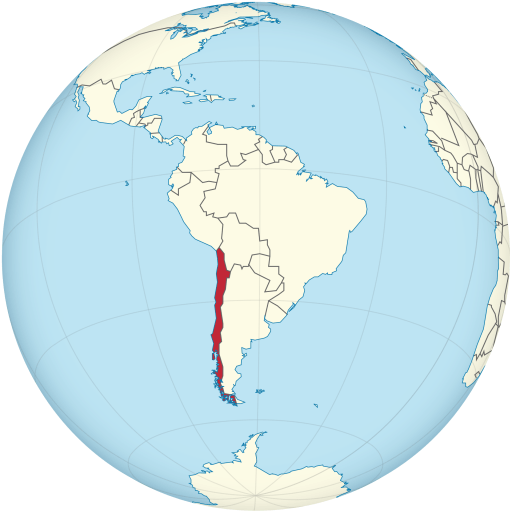
Fires in Chile killed 131 people and a former president died in a helicopter crash
What happened:
Forest fires across central and northern Chile on February 2 and 3 killed 131 people and left thousands homeless.
Why this matters:
It's the worst natural disaster the country has seen since a big earthquake and tsunami in 2010.
Tell me more:
President Boric declared a state of emergency by February 4 as cities like Viña del Mar and Valparaiso got hit hard, with the fires jumping from the forests right into people's backyards. La Tercera's Joaquin Barrientos has a visual of what went down. Boric also called for a couple of days of national mourning.
- Silver lining: The Botanical Garden of Viña del Mar reported the survival of the toromiro, a tree extinct in the wild.
So, why'd it happen?
Blame it on El Niño and our increasingly hot planet. Chile's been extra dry for a while, setting the stage for disaster. Plus, Santiago was hitting near record temps right before the fires broke out, turning the situation from bad to worse.
Details:
Research in the journal Nature is telling us that Chile's wildfire game has changed big time in the last decade, with 1.7 million hectares burned -- that's triple the size of Bali.
Why were there so many victims?
Viña del Mar...
Please log in or subscribe for free to continue reading this issue.
We could use your help to make this issue better. Take a look at the requests below and consider contributing:
- Submit a piece of artwork for this issue
- Submit a news, academic or other type of link to offer additional context to this issue
- Suggest a related topic or source for future issues
- Fix a typo, grammatical mistake or inaccuracy
Below you'll find some of the sources used for this issue. Only sources that support "media embedding" are included.
-
The vote, originally scheduled to take place on February 25, was delayed after a dispute over the candidate list.
-
Volunteers in central Chile are trying to remove charred metal, broken glass and other debris in neighborhoods destroyed by forest fires that have killed at least 123 people in densely populated areas over the past three days.
-
Fotos: efectos de las llamas durante (y después) de los incendios en la Región de Valparaíso - La TerceraSegún información entregada por el Servicio Nacional de Prevención y Respuesta ante Desastres (Senapred), más de 6.000 viviendas sufrieron daños de diverso tipo durante el desastre. El último registro entregado por el Servicio Médico Legal (SML) cifra los fallecidos en 131 personas.
-
Esta es la realidad del toromiro en Chile, el árbol “extinto” que sobrevivió al incendio del Jardín Botánico - La TerceraEl Jardín Botánico de Viña del Mar es uno de los principales refugios de toromiro en el mundo, y sorprendentemente, es de las pocas especies que sobrevivieron al desolador incendio forestal que afectó a este espacio. Este árbol endémico de Rapa Nui está declarado extinto en la naturaleza, y por años ha sido prácticamente imposible reintroducirlo a la isla.
-
The devastating wildfires tearing across large parts of Chile are believed to be the country’s deadliest on record, according to the United Nations disaster agency, as firefighters struggle to contain more than 160 blazes after days of burning.
-
La efectividad del Sistema de Alertas SAE y la existencia o no de un plan de evacuación efectivo se cuentan entre las razones que explican porqué 131 personas perdieron la vida en otro incendio incontrolable en la Región de Valparaíso.
-
Con reconocimiento a Piñera, Boric anuncia activación del Fondo Nacional de Reconstrucción para Región de Valparaíso - La TerceraEl Jefe de Estado c Sobre el fondo creado en la primera administración del fallecido exmandatario dijo que “ha sido un mecanismo importante para poder canalizar e incentivar ayudas y apoyos del mundo privado cada vez que emergencias de estas características sacuden a nuestra patria”.
-
Bono de Recuperación: Boric anuncia que este viernes se inicia el pago para las familias afectadas por incendios - La TerceraEl Mandatario, que este jueves se encuentra desplegado en la Región de Valparaíso, detalló que mañana 910 familias van a recibir el pago en Quilpué, 943 en Viña del Mar y 77 en Villa Alemana.
-
Carnero murió en el hospital básico de Naranjal, luego de ser atacada a tiros en el barrio Corona 2, cerca del parque ecológico.
-
The incident happened in Bakara, Mogadishu’s largest market, on Tuesday.
-
Daily news and opinion for professional cartoonists since 2005.
-
Persian and English accounts belonging to Iran's supreme leader were disabled on Thursday afternoon
-
The decision aims to enable easier access for visitors, including those from the UK, China, Russia, Germany, Australia, Canada, and others with a broad objective of improving tourism in the country.
-
The items from the museum’s collections were personally handed over to Otumfuo Osei Tutu II, the Asante king, in Ghana on Feb. 5.
-
Sixty years after the death of the revolutionary Frantz Fanon and the publication of his masterpiece, The Wretched of the Earth, Algeria is undergoing another revolution. In the first of a two-part blogpost, Hamza Hamouchene provides a brief historical account of Fanon’s anti-colonial thought, his critique of the postcolonial ruling elites and the new popular movement (Hirak) engulfing Algeria.
-
This article will examine Frantz Fanon's involvement in the Algerian liberation struggle and the impact that this experience had on him, as reflected in his book Les damnés de la terre [The Wretched of the Earth] (1961). Above all, the aim is to
-
Although he was a spokesperson for the Algerian National Liberation Front, Frantz Fanon’s ideas often came at odds with that movement’s political demands.
-
The Defend Boyle Heights coalition, our allies, and the online Barrio Troll Squad loudly tell Vida Hollywood producers and their artists...
-
Biden mixes up presidents of Mexico and Egypt in speech defending memory – video | Joe Biden | The GuardianThe comment came as he was making remarks on a special counsel report concerning his handling of classified documents, and that referred to his memory as 'poor', which he denied in an angry rebuttal.
-
Each week, What Happened Last Week curates news and perspectives from Asia, Africa, and the Americas. The newsletter is written by Sham Jaff and focuses on stories that rarely receive sustained attention in Western media.
Read the free edition every week. VIP subscribers receive additional stories, recommendations on what to watch, read and listen, and more.