

This issue takes you to Mexico's high and lower murder rate and what that means for the upcoming presidential elections and Uganda's first-ever trial of a former leader from the Lord's Resistance Army (remember the Christian extremist organization/cult around Joseph Kony?). Plus, a good deal of good news like dusty ice on Mars, a pissed-off wannabe-imperialist China about Taiwan's elections, the latest African country that's free of malaria, 89 new species of plants and fungi, a better life for black rhinos in Kenya, fewer smokers worldwide, and so many more. By the end of this issue, you'll also know more about African architecture, Asia's most eligible (former) bachelor and an infamous plane crash in the Andes.
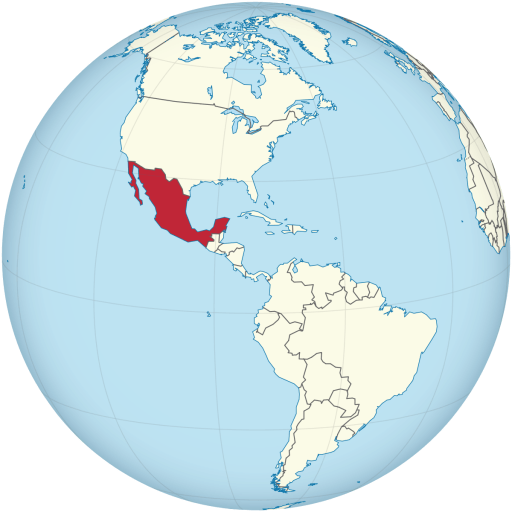
Mexico's murder rate dropped, but it's still super high
What happened:
Last year, there were more than 30,000 homicides in Mexico, which averages out to about 82 per day. "2023 saw the lowest murder rate since 2016, making it the least violent year of President López Obrador's administration," according to Security Minister Rosa Icela Rodríguez.
Why this matters:
Despite these improvements, President López Obrador's term is still on track to be the most violent on record, with over 170,000 homicides since he took office in December 2018, writes Hector De Mauleon in a 2023 opinion piece for El Universal. With the next presidential election coming up this summer, how to handle crime and safety is a major topic.
Tell me more:
In 2018, the daily homicide average was 101, and compared to 2022, there's been a 10.8% drop in homicides. But these 2023 numbers might get revised. Nearly half of last year's homicides were in just six states, with Guanajuato leading due to conflicts between major criminal groups. Meanwhile, other states like Baja California Sur and Yucatán reported much lower numbers. Interestingly, Mexico City is doing better than most, ranking 16th in violence, and its murder rate is now similar to some U.S. cities.
Oh. Maybe there's something to learn from Mexico City.
Perhaps. 'We now know that President Obrador's approach isn't working,' says columnist Demetrio Sodi in El Economista. So, Mexico City's relatively low murder rate might play a big role in the upcoming presidential election and influence future crime-fighting strategies. Claudia Sheinbaum, who's been successful in reducing crime in Mexico City, wants to take her strategies nationwide. Sheinbaum is one of two women (the other being Xóchitl Gálvez) who are running for president this year, but "Mexican feminists are skeptical, if not outright pessimistic," that a woman leader will do much to solve skyrocketing violence, particularly femicides, journalist Barbara Gonzalez wrote for Refinery29. Then there's the worrying trend of political candidates being assassinated, which Senator Claudia Ruiz Massieu wrote about in El Universal. This violence is happening across party lines, mostly in drug-trafficking areas, raising fears about democracy in Mexico.
Do murder rates tell the whole story anyway?
Experts like Elena Azaola and Rodrigo Peña have doubts. They think just looking at murder rates misses other important parts of crime. Plus, there's a problem with how crime data is collected in Mexico. Different government groups report different numbers of homicides, and sometimes they're way off from each other. This makes it hard to really understand what's going on with violence in the country. And there's another issue: over 110,000 people have gone missing in Mexico, which adds to the confusion and concern.
Zoom out:
The rise in violence has led to a surge in people fleeing to the U.S. Pew Research Center reported last year that encounters with migrants at the U.S.-Mexico border remain high, showing the far-reaching impact of this violence.
A leader from the LRA is finally put on trial in Uganda
What happened:
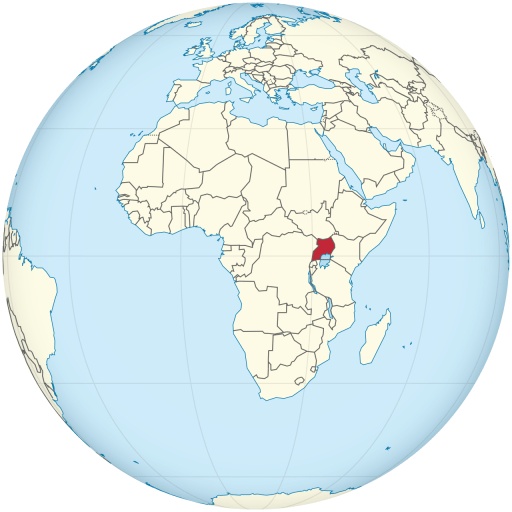
There's a big trial happening in Uganda. A man named Thomas Kwoyelo, who used to be a child soldier and later become a leader of a Christian extremist organization, Lord's Resistance Army (LRA), is in court. He is facing more than 70 serious charges, such as murder, rape, and forcing children to become soldiers.
Why this matters:
This is the first time a leader from the LRA is being tried in a Ugandan court. It's a big moment for Uganda's legal system, and for bringing justice to the victims for the crimes committed by the LRA.
Tell me more:
The trial is being held in Gulu, at the International Crimes Division of the High Court. This court is Uganda's version of the International Criminal Court in The Hague. Kwoyelo has pleaded not guilty, and his trial has been a long time coming -- 14 years, to be exact. He has been detained since. Analysts say his case is incredibly complex. Gulu, where the trial is taking place, is in northern Uganda, the same region that suffered heavily under the LRA.
Give me some background on the LRA
Joseph Kony started the LRA back in 1987. He claimed he was fighting for a "multi-party democracy" based on the Bible's Ten Commandments and radical Acholi nationalism. But others argue the LRA was more of a cult centered around Kony himself, without any real political agenda. The group is infamous for its horrendous human rights abuses -- think murder, abduction, mutilation, child sex slavery, and recruiting kids as soldiers. They initially operated in northern Uganda before moving into the Democratic Republic of Congo and the Central African Republic. Kwoyelo was captured in 2009. The LRA isn't very active these days, but Kony is still wanted by the ICC.
What are the chances Kwoyelo gets maximum life sentence?
As for Kwoyelo's trial, it's hard to say if he'll get the maximum life sentence. There's precedent for a more lenient sentence, like in the case of another LRA leader who got 25 years due to being kidnapped as a child. Kwoyelo also claims he was kidnapped by the LRA when young. Many ex-LRA members have been...
Please log in or subscribe for free to continue reading this issue.
We could use your help to make this issue better. Take a look at the requests below and consider contributing:
- Submit a piece of artwork for this issue
- Submit a news, academic or other type of link to offer additional context to this issue
- Suggest a related topic or source for future issues
- Fix a typo, grammatical mistake or inaccuracy
Below you'll find some of the sources used for this issue. Only sources that support "media embedding" are included.
-
Homicides in Mexico were down nearly 11% compared to 2022, preliminary data suggests, with an average of 81 per day.
-
Los números son la radiografía de una realidad que le pisa el cuello a millones de mexicanos, y peor aún,de un fracaso que no se quiere ver.
-
La frase de “abrazos, no balazos” fue sólo eso, una frase para hacer un contraste con la “declaración de guerra” del presidente Calderón, que desató la violencia y los homicidios dolosos que pasaron, de 8,000 anuales al principio de su sexenio a más de 27,000 al final, cifra que continuó creciendo durante...
-
Two women, Claudia Sheinbaum and Xóchitl Gálvez, are the frontrunners in Mexico's presidential election. But feminists there aren't convinced either candidate would improve gender equality.
-
-
Growing number of missing people prompts questions about homicide statistics
-
El presidente asegura que en un mes estará listo el padrón, pues se requiere actualizar los casos. Especialistas consultados temen que se manipulen las cifras con propósitos electorales
-
The monthly number of U.S. Border Patrol encounters with migrants crossing from Mexico has plummeted in 2024 from 2023's record high.
-
Former child soldier Thomas Kwoyelo faces more than 70 charges, including murder and rape.
-
Former choirboy from Uganda leads a militia with an unparalleled reputation for brutality who pillage, rape and mutilate
-
Two school teachers are also thought to have died when a vessel ferrying the group to a picnic capsized.
-
The nation’s economy is projected to hit 8% this year, after 2023 marked its first economic expansion in the last decade aside from a pandemic comeback.
-
Bhutanese voters have elected Tshering Tobgay to become Prime Minister for a second time after his party won nearly two-thirds of seats, the election commission said in results released on January 10.
-
The Mars Express orbiter has detected enough water ice buried beneath the Red Planet's equator to cover the entire planet in a shallow ocean if melted.
-
The result in Taiwan’s presidential and parliamentary election will chart the trajectory of relations with China over the next four years.
-
The World Health Organization (WHO) has certified Cabo Verde as a malaria-free country, marking a significant achievement in global health. With this announcement, Cabo Verde joins the ranks of 43 countries and 1 territory that WHO has awarded this certification.
-
Kew’s scientists and international partners share their 10 favourite new species named to science in 2023.
-
Paul Mackenzie and 94 others charged over deaths of followers whose bodies have been exhumed from the Shakahola forest.
-
Just one in five people across the globe is still lighting up or otherwise consuming tobacco, the UN's health agency says. But some countries are still seeing a rise in tobacco use.
-
Ghanaian-Scottish architect and educator Lesley Lokko receives the Royal Gold Medal for Architecture.
-
Ghanaian-Scottish architect and educator Lesley Lokko receives the Royal Gold Medal for Architecture.
-
At the intersection of utopia and pragmatism Kéré Architecture designs and builds contemporary architecture that feeds the imagination with an afro-futurist vision.
-
The Hidden Economics of Remarkable Women, a podcast about women creating change through economic empowerment.
-
The World Health Organization (WHO) is building a better future for people everywhere. Health lays the foundation for vibrant and productive communities, stronger economies, safer nations and a better world. Our work touches lives around the world every day – often in invisible ways. As the lead health authority within the United Nations (UN) system, we help ensure the safety of the air we breathe, the food we eat, the water we drink and the medicines and vaccines that treat and protect us. The Organization aims to provide every child, woman and man with the best chance to lead a healthier, longer life.
-
J.A. Bayona’s Andes flight disaster epic one of Netflix’s biggest non-English movies ever after just 11 days on the U.S. streaming giant.
-
Prince Abdul Mateen waves at well-wishers from an open-top Rolls Royce as he weds Yang Mulia Anisha Rosnah.
Each week, What Happened Last Week curates news and perspectives from Asia, Africa, and the Americas. The newsletter is written by Sham Jaff and focuses on stories that rarely receive sustained attention in Western media.
Read the free edition every week. VIP subscribers receive additional stories, recommendations on what to watch, read and listen, and more.