

This issue takes you to India (huge Supreme Court ruling that should have been on all our front pages in the West but wasn't) and the Comoros islands (Africa's first election of the year took place; do you know anything about this group of islands?) in detail. But buckle up, we're going worldwide to Morocco (now lead the United Nations Human Rights Council; some people are lmfao-ing), the Amazon (we found a hidden city there and this might change our idea about what is culture and civilization) and the Singapore Art Week. We'll also be watching African and Asian football tournaments, a new Netflix documentary on one of the most significant financial scandals of our time and some news on "aliens" in Peru, plus so much more.
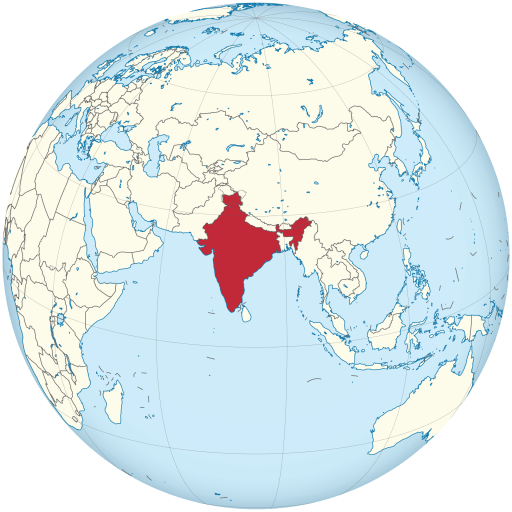
India's Supreme Court cancelled the release of the 2002 riots rapists -- "a win for justice"
What happened:
India's Supreme Court made a major ruling: the 11 men convicted of crimes during the 2002 Gujarat riots, and released in 2022, must return to prison by the end of January 2024.
Why this matters:
This ruling is a huge deal. It's not often that the Supreme Court changes its own past decisions. Indira Jaising, a lawyer involved in the case, said it's a landmark in the journey for justice. This decision could restore people's faith in the judicial system, which had been criticized for leaning towards government views in important cases.
What happened during the 2002 Gujarat Riots?
Gujarat is a state in India, where some 70 million people live. Following a train fire that killed 60 Hindu pilgrims in 2002, intense riots broke out. Hindu groups, in anger, targeted Muslims, blaming them for the fire. Over 2,000 people lost their lives, mostly Muslims. During these riots, a pregnant Muslim woman, Bilkis Bano, and her family were viciously attacked by 11 men, leading to the loss of 14 family members, including her 3-year-old child. At that time, Narendra Modi, now India's Prime Minister, was in charge of Gujarat, and some people think he didn't do enough to stop the violence.
What happened to the attackers?
Fast-forward to 2008, the attackers were given life sentences. But in a controversial twist and thanks a to a review committee in Gujarat state (filled with members from the current ruling party; that of Narendra Modi's), they got out in 2022 because of good behavior and time served. They were even celebrated by a right-wing Hindu group with sweets and flowers upon release. This decision caused a huge uproar in India. Bilkis Bano herself and many activists, politicians, and journalists filed petitions against this ruling by the end of the same year.
And Bilkis Bano?
Despite being pressured to stay quiet, Bano stood up as a symbol of resistance and justice. Her fight for justice became an inspiration for others affected by the 2002 violence. In 2019, she received a significant compensation, a house, and a government job from India's top court. She plans to use this to help other women survivors and educate their children. She also hopes her daughter becomes a lawyer to fight for women's rights.
What now?
Bano said the order to put these offenders back in jail brought her "tears of relief." Her uncle, Abdul Razzak Mansuri, spoke to Al Jazeera, saying this ruling is a step toward justice. In the words of Bengaluru-based lawyer Yashaswini Basu, "Justice delayed but prevailed." Zoya Hasan, a professor, wrote that this case is more than just about Bano. It's about addressing state violence and communal issues. The fight continues to ensure other governments don't make similar decisions like Gujarat's. Plus, justice has not been really served as Bilkis Bano is one of the 1,958 Muslim women survivors of the targeted violence in Gujarat in 2002.
Africa's first election of the year took place in the Comoros islands
What happened:
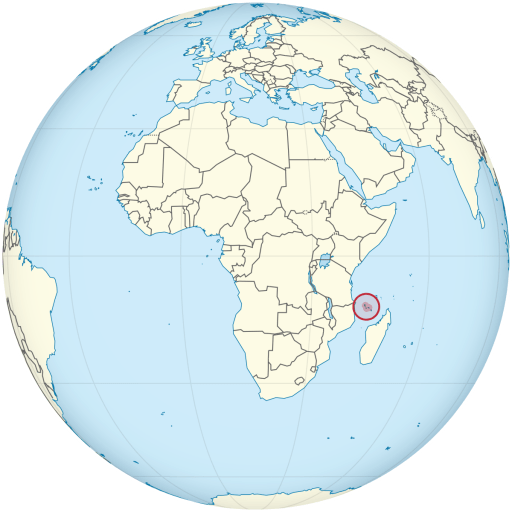
Comoros voted in a presidential election on the weekend, during which nearly 340,000 voters were expected to cast their ballots. Voters were also choosing governors in the polls. Yesterday, on Tuesday, it was announced that Comoros' current president, Azali Assoumani, won 62.97 percent of the vote, and that only 16.3 percent of the country's electorate turned out, according to the official results.
Basics:
Comoros is a tiny island nation in Southeastern Africa, right in the Indian Ocean, near Mozambique. They've got three main islands -- Anjouan, Grande Comore, and Moheli -- and a few smaller ones. Moroni's their biggest city. Most folks there follow Sunni Islam, which is also the official religion. They became independent of France back in 1975 and are part of big groups like the Arab League and the African Union. It's one of Africa's smallest countries, with 888,378 (2023 est.) people living there.
Why this matters:
This was Africa's first election of the year.
Tell me more:
Comoros' current president, Azali Assoumani, has been in charge for eight years; this is his third term and he will rule until 2029. There were five other candidates running against him. There was a lot of buzz around this election, with some opposition leaders accusing the election commission of playing favorites; some complaints about ballot stuffing and early closing times at polling stations, too. "This is a strong moment for our country, which is doing everything in its power to consolidate democracy," the re-elected leader told a gathering of supporters. In a country that has seen more than 20 coups and attempted coups since independence from France in 1975, Assoumani sees this moment as "political maturity". The country's highest court has yet to validate the results.
Who's Azali Assoumani?
Assoumani is quite a character. He first got into power through a military coup in 1999. Since then, he's won three elections and has been leading the African Union for the past...
Please log in or subscribe for free to continue reading this issue.
We could use your help to make this issue better. Take a look at the requests below and consider contributing:
- Submit a piece of artwork for this issue
- Submit a news, academic or other type of link to offer additional context to this issue
- Suggest a related topic or source for future issues
- Fix a typo, grammatical mistake or inaccuracy
Below you'll find some of the sources used for this issue. Only sources that support "media embedding" are included.
-
The Supreme Court on Monday quashed the order of premature release granted by the State of Gujarat in August 2022 to 11 men sentenced to life imprisonment for the gang rape of Bilkis Bano and murder of her family during the 2002 riots. The court held that the convicts were tried and sentenced in Maharashtra. It was Maharashtra, and not Gujarat, which had to consider and remit their sentence.
-
Bilkis Bano case Live Updates: The Supreme Court is expected to deliver a verdict today on the Bilkis Bano case, which involves petitions challenging the remission granted to 11 convicts.
-
Over two decades ago, humanity was shamed by the gruesome gang rape of Bilkis Bano and the merciless murder of 14 members of her family during the Godhra riots of 2002.
-
The Wire: The Wire News India, Latest News,News from India, Politics, External Affairs, Science, Economics, Gender and Culture
-
On a crisp January day in 2024, the gavel fell on a momentous decision. With poetic authority, Justice B.V. Nagarathna penned a compelling 251-page judgment that echoed through the hallowed halls of justice. In a dramatic turn of events, eleven convicts in the Bilkis Bano gang rape case were called to return to their prison…
-
Comoros President Seeks Third Term To Extend Eight Year Rule
-
Former president, who had already spent four years in prison before facing a trial, is a rival to the country’s leader.
-
Azali Assoumani, 65, will face five competitors in Sunday’s election.
-
Azali Assoumani, 65, will face five competitors in Sunday’s election.
-
"I've told them that they cannot participate in burials, and I also told them that they cannot have funerals at their homes. I also told the general public not to attend funerals anymore. To avoid those funerals, especially if someone has died from cholera because they are risking their lives..."
-
Narges Mohammadi is serving multiple sentences and has been in jail almost continuously since 2010.
-
ERBIL, Kurdistan Region - Iran’s Islamic Revolutionary Guard Corps (IRGC) early Tuesday claimed responsibility for a massive ballistic missile attack on the Kurdistan Region’s capital of Erbil that killed at least four civilians, claiming to have hit “spy headquarters” of...
-
A small boat carrying dozens of people overturned just off the French coast south of Calais.
-
Our annual report analyzes every major intentional internet shutdown in 2024 and reveals that they cost the world economy $7.69 billion.
-
Migration activists in Tunisia are sounding the alarm about mass expulsions and arbitrary arrests. The Tunisian Forum for Economic and Social Rights says it has received numerous reports of deportations and expulsions to Libya and Algeria as well as mass arrests near Sfax, Tunisia's second largest c
-
GENEVA, Jan 10 (Reuters) – Morocco won a vote on Wednesday to lead the United Nations Human Rights Council after a heated showdown with South Africa, which said Rabat’s human rights record made it unfit to preside over the body. The Moroccan candidate, Ambassador Omar Zniber, received 30 votes, and his South African opponent, Ambassador Mxolisi Nkosi, […]
-
Niger, Senegal, and Rwanda will be among the world’s highest growth economies in 2024, the World Bank said in its report on global economic prospects released this week.
-
The city was built 2,500 years ago but may have been abandoned after a volcanic eruption.
-
If you want to see more economic opportunities across the world, you need to encourage the growth of a stable middle class, developing skills locally.
-
Singapore Art Week is an annual celebration of visual arts which takes place in the month of January. The nine-day celebration offers artists, collectives, organisations and other art intermediaries a visible platform for showcasing a range of quality visual arts projects, discussions, and exhibitio * * * * * ns to a local and international audience.
-
Pulse Sports ranks the top 10 most handsome footballers at AFCON 2023.
-
A self-describe "UFOlogist" brought the desiccated figures in front of the Mexican congress last September, claiming they had been recovered near Peru's ancient Nazca Lines and dated over 700 years old.
Each week, What Happened Last Week curates news and perspectives from Asia, Africa, and the Americas. The newsletter is written by Sham Jaff and focuses on stories that rarely receive sustained attention in Western media.
Read the free edition every week. VIP subscribers receive additional stories, recommendations on what to watch, read and listen, and more.