

This issue takes you to El Salvador (murders fell 70%?!?!) and Cuba (It's official: Spain f*cking lied about the end of the slave trade, like everyone else). Plus, the first Pakistani rap song, Ugandan birdwatchers, lowest turnout ever in Bangladeshi elections, Stella McCartney perfume bottles and African designers, Kashmiri female rappers, and an AI-generated politician in Mexico, so much more.
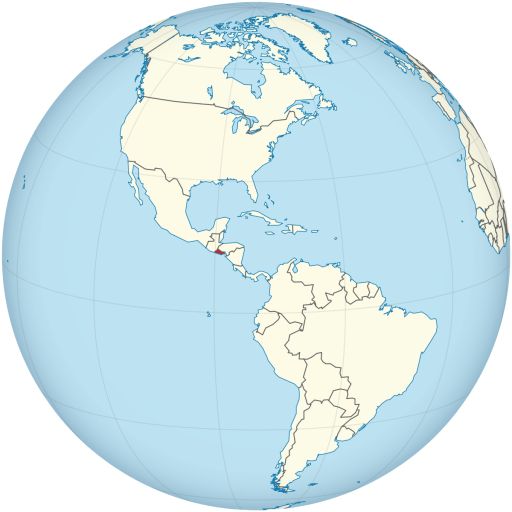
El Salvador says murders fell 70% in 2023
What happened:
In El Salvador, the number of murders dropped by almost 70% in 2023. This decrease is linked to the government's strict actions against crime gangs.
Why this matters:
Now, the murder rate is just 2.4 out of every 100,000 people. That's super low, especially compared to other places in the Americas. Only Canada's doing better. Some 6 million people live in this Central American country.
Tell me more:
So, the Justice and Security Minister, Gustavo Villatoro, said there were 154 murders last year. That's way down from 495 the year before. To give you an idea, back in 2021 and 2020, they had over 1,000 murders each year, and in 2019 it was over 2,000. People seem to like President Nayib Bukele's hard-line approach to dealing with gangs. But, this approach isn't exactly gentle -- we're talking about fast arrests and locking people up without much legal help.
Is this good news?
It's great that murders are down, but it's not all good news. There are some serious worries about human rights. Reports of torture and deaths while in police custody are pretty alarming. Since they declared a state of emergency in early 2022, which was all about getting tough on gangs, the police have arrested about 75,000 suspected gang members. But here's the thing -- human rights groups the Central American University's (UCA) Observatory of Human Rights says that there's been a lot of abuses, like over 5,000 cases, and around 190 deaths linked to this crackdown. Some folks are even saying the government's not telling the whole story about how many violent deaths there really are. Plus, they want to hold mass trials for those imprisoned. However, the government says if they find people they arrested who aren't actually linked to gangs, they'll let them go. Already, about 6,000 people have been released.
Zoom out:
In response to a recent surge in violence, Ecuador's new President Daniel Noboa announced recently that his country would build two maximum-security prisons inspired by El Salvador's CECOT, the biggest jail in the Americas.
Tell me more about politics in El Salvador
It all revolves around Nayib Bukele, the country's president. He's young, a crypto fanboy, pretty charismatic, veeeery popular and "increasingly authoritarian," says Carlos Dada, editor of the news organization El Faro. And... that's poses a whole lot of problems for many, specifically journalists. "El Faro was the first Salvadoran media outlet born in democracy," Dada noted in a speech in September at Columbia University, where he accepted an award from the International Press Institute. "Now democracy is almost completely gone, and yet, thanks to an innovative, modern, and greased propaganda machine, Mr. Bukele is the Latin American president with the highest popular support, which raises a paradox: the communities we serve don't support us." Bukele isn't also particularly migration-friendly. Recently, El Salvador started charging a huge fee -- we're talking about US$1,130 -- to travellers from India or African countries, even if they're just stopping over. This move came right after Bukele had a chat with a U.S. official. Bukele is seeking a second five-year term in the Feb. 4 election.
Fun fact:
Bukele once commissioned a massive Trump painting. The artist? Francisco Antonio López Benavides.
Transatlantic slavery continued for years after 1867, historian finds
What happened:
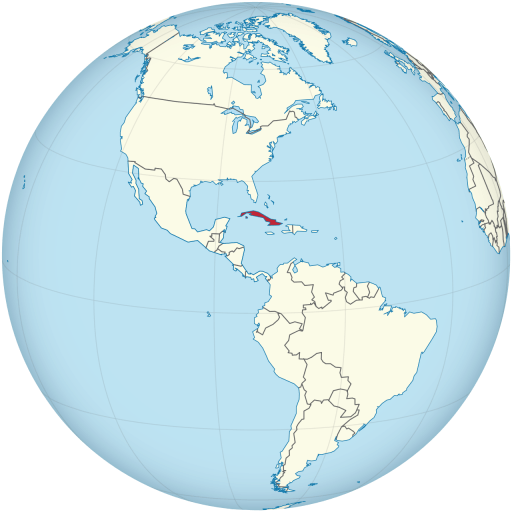
Spain announced the end of the slave trade in 1867, but historian Hannah Durkin discovered (for the English-speaking world) that this wasn't entirely true. Slave ships continued to arrive in Cuba until at least 1872.
Why this matters:
Now we (in the English-speaking world) know that the slave trade in Spain continued for years after it was supposedly abolished.
Tell me more:
Durkin found evidence of two ships arriving in 1872. One had about 200 people, and the other, possibly an American ship, had 630 people. She also came across some reports from explorer Sir Henry Morton Stanley. He had visited Benin in 1873 and reported on the slave trade in Ouidah, a significant African slave port (in fact, the second-biggest on the continent). According to Durkin, about two million people, or one in six of all enslaved people sent to the Americas, came from there.
Why now?
Durkin hit the jackpot with some old newspapers that just got digitized. They further backed up similar findings by "Cuban historians", as The Guardian mysteriously writes. They, too, found out that the slave trade...
Please log in or subscribe for free to continue reading this issue.
We could use your help to make this issue better. Take a look at the requests below and consider contributing:
- Submit a piece of artwork for this issue
- Submit a news, academic or other type of link to offer additional context to this issue
- Suggest a related topic or source for future issues
- Fix a typo, grammatical mistake or inaccuracy
Below you'll find some of the sources used for this issue. Only sources that support "media embedding" are included.
-
A new report describes what goes on within the Central American nation's prisons, which now hold 2 percent of the adult population.
-
Up to 900 defendants could be prosecuted at the same time as a result of the new measure.
-
The International Press Institute (IPI) is today publishing the speech given by Salvadorian journalist Carlos Dada, founder of El Faro, as he accepted the World Press Freedom Hero award at IPI’s World Congress 2022 at Columbia University in New York on 9 September 2022. Thank you, board members of the International Press Institute and the International Media Support, for this […]
-
El Salvador is now charging all African citizens who want to transit through its airports $1,300 per person.
-
Evidence found by Hannah Durkin includes ships landing in Cuba in 1872, and people held in Benin in 1873
-
In 1860, 108 African slaves arrived in the US aboard the Clotilda. This gripping account tells their story. By Pratinav Anil
-
African savanna raptors show evidence of widespread population collapse and a growing dependence on protected areas | Nature Ecology & EvolutionThe conversion of natural habitats to farmland is a major cause of biodiversity loss and poses the greatest extinction risk to birds worldwide. Tropical raptors are of particular concern, being relatively slow-breeding apex predators and scavengers, whose disappearance can trigger extensive cascading effects. Many of Africa’s raptors are at considerable risk from habitat conversion, prey-base depletion and persecution, driven principally by human population expansion. Here we describe multiregional trends among 42 African raptor species, 88% of which have declined over a ca. 20–40-yr period, with 69% exceeding the International Union for Conservation of Nature criteria classifying species at risk of extinction. Large raptors had experienced significantly steeper declines than smaller species, and this disparity was more pronounced on unprotected land. Declines were greater in West Africa than elsewhere, and more than twice as severe outside of protected areas (PAs) than within. Worryingly, species suffering the steepest declines had become significantly more dependent on PAs, demonstrating the importance of expanding conservation areas to cover 30% of land by 2030—a key target agreed at the UN Convention on Biological Diversity COP15. Our findings also highlight the significance of a recent African-led proposal to strengthen PA management—initiatives considered fundamental to safeguarding global biodiversity, ecosystem functioning and climate resilience. A compilation of survey data from pre- and post-2000 for 42 raptor species across parts of West, Central, East and southern Africa shows 88% of species in population decline and reveals trends across regions, protected areas and species size.
-
The death toll from a major quake in western Japan has reached 100, even as rescue workers fought aftershocks to pull people from the rubble.
-
The Islamic State group says it carried out Wednesday's attack in southern Iran that killed 84 people.
-
Findings provide crucial information on the evolution of practices in shaping physical appearances
-
Uganda is no longer a beneficiary of the African Growth and Opportunity Act (Agoa), after the United States struck the country off at the end of December.
-
The Palais de Lomé, Togo's first major art park, has transformed a colonial structure into 'an African community project.'
Each week, What Happened Last Week curates news and perspectives from Asia, Africa, and the Americas. The newsletter is written by Sham Jaff and focuses on stories that rarely receive sustained attention in Western media.
Read the free edition every week. VIP subscribers receive additional stories, recommendations on what to watch, read and listen, and more.