
This is the last regular issue of 2023. I'm sending you a special issue on Christmas Day, full of best-of recommendations for movies, TV series, podcasts, music and books. Stay tuned :)
This issue takes you to Somalia (so many probably-ultimately-good news!), Chile (and another draft constitution) and India (oh Kashmir...). Plus, a Nigerian thriller that won at the Sundance Film Festival this year, one of the most viral Kenyan songs ever, a Russian man who flew to the U.S. without a plane ticket and a passport, a new-to-the-Western-world organ/body part that we didn't know about until five years ago, anti-Muslim hate speech in India and how to fight it, and so much more.
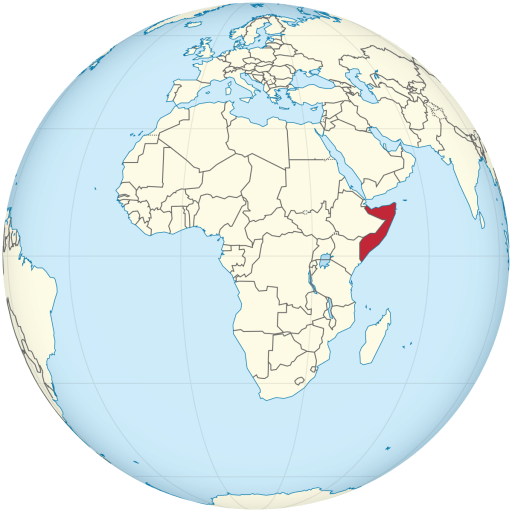
Somalia's going through a lot of exciting changes in the last month alone
What happened:
Somalia's recent history has been challenging, with issues like famine, climate-related issues such as flooding and internal conflict (remember al-Shabab?). But over the past month alone (!), there have been some pretty huge changes in the East African country.
Why this matters:
Some 17 million people live in Somalia.
Tell me more:
There's three major news.
First, Somalia has become the 8th member of the East African Community (EAC), joining forces with Burundi, Kenya, Rwanda, South Sudan, Tanzania, DRC, and Uganda. This is big news! Think of the EAC like the EU, but in East Africa and more of a trade bloc than a political union; its mission has been to foster economic growth by, among other things, eliminating customs duties among member states. It established a common market in 2010. With Somalia on board, the EAC's market just got bigger (more than 300 million people), and there's hope that Djibouti and Eritrea might join too. The EAC has big plans for the future, like using the same type of money in all countries and even governing together in some ways.
- Fun fact: Daud Aweis, the Somali Minister of Information and Culture, spoke Swahili at the EAC conference and kicked up a storm.
Second, the United Nations Security Council finally lifted the entire 30-year-old ban on arms deliveries to Somalia. Abukar Dahir Osman, Somalia's Permanent Representative to the UN said that this means Somalia can now buy heavier weapons to strengthen its security against al-Shabaab, a militant group that's been challenging the government since 2006. President Hassan Sheikh Mohamud has set a goal: kick out al Shabaab within a year, especially as African Union peacekeepers are set to leave by December 2024.
- Go deeper: BBC's Africa in Focus podcast talks about this at length, "Why lift it now?" and "Why impose it in the first place?". Listen here.
And last but not least, there's the debt relief. Somalia has made a deal with the International Monetary Fund and the World Bank to reduce its debt by US$4.5 billion. This deal is part of a special program called the Heavily Indebted Poor Countries (HIPC) initiative. It's designed to help very poor countries by reducing their debt. Thanks to this, Somalia's debt will go from being 64% of its entire economy's value (GDP) in 2018 to less than 6% by the end of 2023. President Mohamud said that this debt relief is the result of almost ten years of hard work by different governments in Somalia. The U.S. Treasury Department plans to cancel all the debt Somalia owes them and encourages other countries to do the same. Now, Somalia can use more of its money for important things like building infrastructure (like roads) and creating jobs. "We are very pleased with the debt relief, because our currency is almost destroyed, as Somalia has not officially issued banknotes for about 32 years" says Abdulkadir Mohamed Roble, a market vendor in central Mogadishu. "The real work begins," writes the president in The Guardian.
What now?
Despite these positive steps, Somalia still has problems. al-Shabab is not defeated and the country's government doesn't collect much money in taxes, writes The Economist. Also, most of its money goes to security, leaving less for things like schools and hospitals. Some in Somalia, like Hilaal Institute, a security think-tank in Mogadishu, suggested the weapons embargo was being lifted prematurely. Somaliland, the breakaway region that self-declared independence more than 32 years ago, suggests that there are more checks and reminds everyone of the reason why there was a ban in the first place. 'Remember, 200,000 people were killed during the Somali civil war and that had a lot to do with irregular flow of weapons and no accountability on usage.'
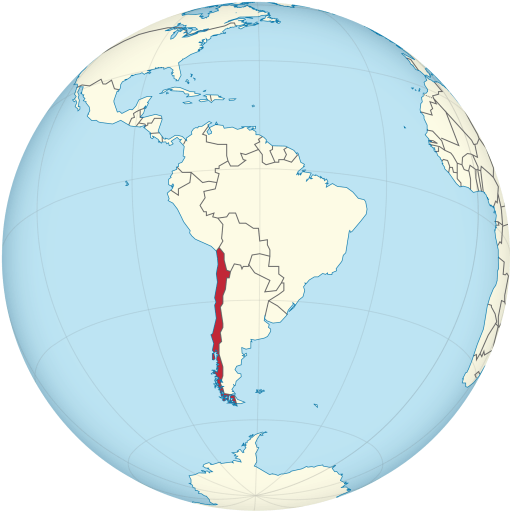
People in Chile are, again, voting on a new constitution
What happened:
Chile is buzzing with a major political event right now. Yesterday, there was a referendum that's kind of a big deal. It's all about whether to replace the old constitution from the time of General Augusto Pinochet. This whole thing started back in 2019 after some intense protests shook the country, leading to the deaths of at least 30 people, and thousands more were injured.
Why this matters:
This process in Chile is being watched worldwide as an example of how a country can make some huge changes to its rule book (the constitution) when people really want it to. Think of it as a test run for kind-of-peacefully changing big laws and systems through voting and legal steps. Some 20 million people live in Chile.
Backstory, please
Alright, here's the scoop: After the 2019 protests, mainly led by students wanting big changes in the country, Chile's then-conservative President Sebastián Piñera kicked off the process to redo the 1980 constitution. But the first draft, put together by a left-leaning group elected by voters, didn't go down well. It was pretty bold, suggesting things like scrapping the 200-year-old Senate for a new regional chamber and recognizing Chile as a "plurinational state" to honor Indigenous groups. But, in a twist, 62% of voters said "no thanks" to that draft in September 2022.
What's happening now?
Fast forward, and there's a new draft on the table, crafted by a mix of right-leaning folks picked by Congress and elected by the people. But, it's not looking too rosy for this one, either. Polls say more people might vote against it than for it. The new draft is seen as more conservative, and it's got the backing of the far-right Republican party.
What's the criticism of the second one?
Some folks, especially those fighting for women's and Indigenous rights, aren't happy. They feel it's a step back, especially on gender issues and Indigenous rights. The new draft is kinda vague on abortion rights, and it leans towards...
Please log in or subscribe for free to continue reading this issue.
We could use your help to make this issue better. Take a look at the requests below and consider contributing:
- Submit a piece of artwork for this issue
- Submit a news, academic or other type of link to offer additional context to this issue
- Suggest a related topic or source for future issues
- Fix a typo, grammatical mistake or inaccuracy
Below you'll find some of the sources used for this issue. Only sources that support "media embedding" are included.
-
Somalia is experiencing one of the world’s most challenging food crises that has lasted for over three decades. Now climate change, conflict and global ...
-
The number of people killed by floods from heavy rains in Somalia has risen to 96, state news agency SONNA said on Saturday.
-
President Hassan Sheikh Mohamud signed the Treaty of Accession in the presence South Sudan President Salva Kiir, the current chair of the East African Communty, and Uganda's President Yoweri Museveni at a ceremony held in Entebbe, Uganda
-
"We're very happy because we're going to see our economy improve. This will relieve us of a heavy burden'"Somalia will benefit from this major debt relief: Somalia can now issue its own currency, the country's economy will improve and we will be able to build infrastructures such as a new airport."
-
Somalia has reached its debt relief milestone. Now the real work begins | Dr Hassan Sheikh Mohamud, president of Somalia | The GuardianAs Somalia secures $4.5bn of debt relief from the IMF and the World Bank, the country’s president outlines the decade-long path it took to reach this goal – and looks towards a better, if still difficult, future
-
Conoce quiénes son las 155 personas elegidas para escribir la nueva Constitución de Chile.
-
On December 17, Chileans vote on a new constitutional draft. Learn about its contents and see polling.
-
Nuevas definiciones, como que Chile es un Estado social y democrático de derecho, son parte del proyecto que mantiene un sistema presidencial y un Congreso bicameral, y que busca corregir problemas del sistema político, como la fragmentación en el Parlamento.
-
‘They violated our rights’: Chile’s draft constitution fails women, say activists | Global development | The GuardianLast year, a liberal constitution to replace the Pinochet-era one was rejected. Now a referendum will be held on a new draft that curbs abortion rights and enshrines Catholic morality. Here, five women reflect on 2019’s protests and the struggle for equality
-
Boric: "Independiente de lo que suceda hoy, seguiremos trabajando firmes al pie del cañón" - Cooperativa.clDesde Magallanes, el Mandatario aseguró que este plebiscito es una votación que "fortalece nuestra democracia". "Estamos orgullosos de nuestro sistema electoral, eso es algo que también vale la pena destacar", puntualizó.
-
“La discusión constitucional se cierra en el día de hoy, en donde, en la tarde, todos van a poder dar una explicación de lo que pasó, llevando aguas para su molino como es natural, pero me parece que, en ese sentido, Chile tiene una tradición constitucional muy clara”, expresó el ex mandatario.
-
Congress leader Rahul Gandhi has slammed the Modi government over the manner in which special status to Jammu and Kashmir was proposed to bring to an end. But many other party leaders sang a different tune.
-
The verdict, many said, will have ramifications for federalism and deepen the ‘alienation’ of Jammu and Kashmir from India.
-
The political and economic exploitation of militarily occupied J & K.
-
Supreme Court verdict on Article 370 | It’s ‘politically motivated’, alleges Pakistan’s caretaker PM Haq Kakar - The HinduPakistan’s caretaker Prime Minister Anwaar-ul-Haq Kakar on December 14 alleged that India’s Supreme Court verdict upholding the abrogation of Article 370 was “politically motivated” as he reaffirmed his country’s moral, political and diplomatic support to the people of Kashmir.
-
China: Ladakh has "always belonged" to them; India's SC verdict on abrogation of Art. 370 won't change this. Pakistan, OIC criticised SC verdict; MEA rejected OIC's statement. MEA yet to comment on China's remarks.
-
All five are living abroad after Beijing imposed a sweeping national security law on the financial hub in 2020 to quash dissent after massive Hong Kongs.
-
Kishida has seen his popularity plummet as his tax rebate leaves residents with the impression that it’s just a cynical ploy to win votes.
-
Kuwait's crown prince, Sheikh Meshal al-Ahmad al-Jaber Al-Sabah, was named the oil-rich country's new emir after the death on Saturday of his predecessor Sheikh Nawaf, state television reported. "Kuwait's cabinet names crown prince, his highness Sheikh Meshal... emir of the state of Kuwait," the broadcaster said.
-
JAKARTA -- Defense Minister Prabowo Subianto faced a barrage of attacks regarding human rights issues and a controversial court ruling that allowed hi
-
Ugandan human rights activists, journalists, religious leaders, academics, and lawyers are currently challenging the Anti-Homosexuality Act, which came into force in May, in court. The case, which enters its final pretrial stage today, will soon proceed to trial.
-
A local NGO is leading the first campaign of its kind to expand women’s legal access to abortion in Iraqi Kurdistan.
-
A Thai senator linked to a Myanmar tycoon is indicted for drug trafficking and money laundering | AP NewsProsecutors in Thailand have indicted a member of the country’s Senate on six charges involving narcotics trafficking, money laundering and association with a transnational criminal organization.
-
Ghana is moving to the “elimination phase” in its battle with malaria after successful trials with groundbreaking vaccines, according to its top health official.
-
With general elections around the corner, Raqib Hameed Naik’s digital hate speech database Hindutva Watch has its work cut out.
-
Hindutva Watch is an independent research initiative to monitor the reports of attacks on the members of minority and marginalized communities for their faith by the radicalized Hindus and the Hindutva militia groups in India.
-
Sergey Ochigava, who had Russian and Israeli identification, allegedly said he did not remember how he got past Europe security
Each week, What Happened Last Week curates news and perspectives from Asia, Africa, and the Americas. The newsletter is written by Sham Jaff and focuses on stories that rarely receive sustained attention in Western media.
Read the free edition every week. VIP subscribers receive additional stories, recommendations on what to watch, read and listen, and more.