

This issue takes a close at battery recycling plants in Africa and what they do to our health and environments, the controversial Peruvian decision that released former President Fujimori from prison that set off a human rights dilemma in the Americas, and a drone strike that accidentally killed dozens of people in Nigeria, raising serious questions about the military's operations in general. Plus, a "ghost" village built from the sea in the United Arab Emirates is open for business, how we humans might be building ourselves a (AI) god, and some ruminations on anti-patriarchal exercise in India. Plus, so much more.
Indian companies are bringing the world's most polluting industry to Africa, and people are getting sick
What happened:
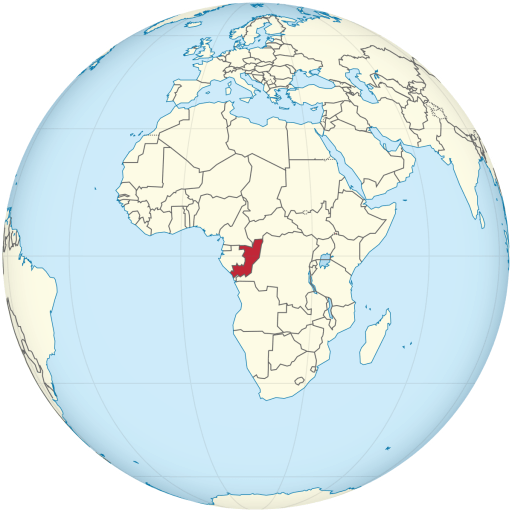
The Examination, a news outlet, uncovered that Indian companies running battery recycling operations in several African nations are seriously harming local families and the environment. They're releasing lead fumes and other dangerous waste, and I'm zooming in on one man's story from the Republic of the Congo.
Why this matters:
Battery recycling is known as one of the most polluting industries globally. It's not just about the immediate smoke, dust, and chemicals -- these emissions can harm the environment and human health for years to come. The industry is booming in Africa, expected to hit over US$6 billion soon. Interestingly, while India has been regulating this industry for over two decades, many African countries, including the Republic of the Congo, haven't followed suit.
Tell me more:
The report was published in partnership with The Museba Project, Ghana Business News, and Grist. The team talked to residents living near these factories in the Republic of the Congo, Cameroon and Ghana. It found that many are suffering from respiratory illnesses like pneumonia and bronchitis, with doctors linking it back to the pollution.
Tell me about one concrete example:
Meet Cyrille Traoré Ndembi from Vindoulou, Republic of the Congo. He's living in the shadow of a giant battery recycling plant run by Metssa Trading, a big name in Central Africa's recycling scene. This isn't just a little inconvenience -- we're talking serious air pollution and health risks. Ndembi and his neighbors are battling lung issues, and blood tests reveal high lead levels. This is super risky for kids, as lead exposure can lead to long-term health problems. His youngest daughter's test showed more than 53 micrograms of lead -- nine times higher than the World Health Organization's recommendations for intervention, putting her at risk of learning disabilities and brain damage. Ndembi said he doesn't have money for medical care. The treatment often recommended for severe lead poisoning, known as chelation, can be expensive.
- For comparion, at that level, according to the United States Centers for Disease Control and Prevention, a child should undergo an x-ray, a neurological exam and consider admission to a hospital. For anything above 45 micrograms per deciliter, the New York State Department of Health says, "Your child needs medical treatment right away."
What's the response of the government?
Well, it seems like the government isn't stepping up enough. There's clear proof that this pollution is harmful, but not much is being done about it. Looks like money talks louder than health concerns.
Are all battery recycling operations the same?
Depends. You've got over 29,000 battery recycling sites worldwide, where adults and children (!) work without government authorization or protective equipment. But in places like the U.S. and China, they've really upped their game. Pollution control technology makes all the difference. "We know this is feasible and doable. It can be expensive, but it's not rocket science," said Perry Gottesfeld, executive director of Occupational Knowledge International.
- Did you know that car batteries are actually super recyclable, like almost the whole thing can be reused? That's why recycling them can be cheaper than getting new lead from the ground. And that's why this industry is booming.
What's next?
The people of Vindoulou are fighting back in court. Over 150 residents filed a lawsuit to shut down the factory and get compensation. Their first try didn't go so well, but they're not giving up. They're back in court, saying this is a real emergency. These are local courts, however. "India --- unlike the United States, United Kingdom, Canada and other major corporate hubs --- has no specific legal tool for victims of corporate misbehavior overseas," writes the report. Yet.
After 16 years, Peru's top court ordered the release of ex-president Alberto Fujimori
What happened:
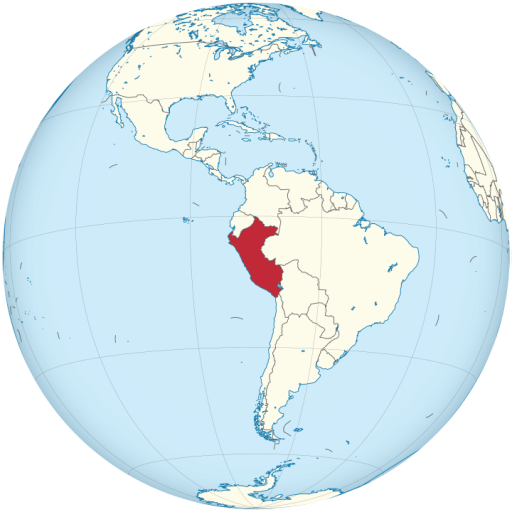
The country's top court, the Constitutional Court, has made a surprising move by ordering the release of their former president, Alberto Fujimori (watch his release here), going against international human rights law. Now 85 years old, Fujimori was serving a 25-year sentence for some pretty serious charges. The Court's reasoning? Fujimori has already done about two-thirds of his time, and he's really old and not in the best of health.
Why this matters:
This is a critical moment for human rights organizations and advocates worldwide. Fujimori's release sets a significant precedent in international human rights law, raising concerns about the accountability of former leaders and the protection of human rights globally. If countries can ignore international court rulings and release convicted leaders, it might weaken the global human rights framework. In simple terms: If one country can ignore international rules and nothing happens, other countries might think they can do the same.
Tell me more:
Fujimorii was the president of Peru from 1990 to 2000 and was later found guilty of some serious human rights violations during the early '90s. We're talking about things like ordering killings without a trial and abducting people. Earlier this year, Fujimori even had to be hospitalized due to heart issues. Back in 2017, he was given a pardon by another former president, but that pardon kept getting overturned due to pressure from human rights groups and victims' families. The Inter-American Court of Human Rights (IACHR), a major player in human rights issues in the Americas, has been particularly vocal against this pardon. But here's where it gets tricky: Peru's own Constitutional Court has decided to release Fujimori. And this wasn't just a straightforward decision. Judge Manuel Monteagudo, one of the members of the court, says the ruling wasn't even on their official schedule and was kind of done on the sly.
- Details: Fujimori was sentenced for human rights violations in 1991 and 1992, including his role in the extrajudicial execution of 15 people in the Barrios Altos district of Lima, the enforced disappearance and murder of nine students and a teacher from La Cantuta University, and two abductions.
Tell me more about his legacy
It's a mixed bag with Fujimori. Some people think he was a hero for saving Peru from economic collapse and a violent armed group called the Shining Path. Others, however, see him as a dictator who committed terrible crimes. He was impeached in 2000 for "moral incapacity" and fled to Japan, resigning by fax (yeah, fax!). He later went to Chile, from where he was...
Please log in or subscribe for free to continue reading this issue.
We could use your help to make this issue better. Take a look at the requests below and consider contributing:
- Submit a piece of artwork for this issue
- Submit a news, academic or other type of link to offer additional context to this issue
- Suggest a related topic or source for future issues
- Fix a typo, grammatical mistake or inaccuracy
Below you'll find some of the sources used for this issue. Only sources that support "media embedding" are included.
-
The MUSEBA PROJECT is an independent, non-profit news organization set up to provide original reporting, investigative stuff and analysis on Corruption....
-
We are dedicated to bringing to you high quality news and information to facilitate overall decision making in business in Ghana.
-
Independent news on climate change and the environment and their intersections with energy, policy, food, extreme weather, and more.
-
The president of the Inter-American Court of Human Rights had requested Peru not to carry out the order to release the 85-year-old, who was convicted of crimes against humanity
-
Alberto Fujimori: Familiares de víctimas de Barrios Altos y La Cantuta rechazan liberación del expresidente y la califican de ilegal | Tribunal Constitucional | TC | Últimas | POLITICA | EL COMERCIO PERÚLos familiares de las víctimas de las matanzas de Barrios Altos y La Cantuta, ocurridos durante el régimen del expresidente Alberto Fujimori (1990-2000), rechazaron este viernes su reciente libertad ordenada por el Tribunal Constitucional (TC).
-
Alberto Fujimori | Corte IDH vs. Tribunal Constitucional, por Federico Salazar | OPINION | EL COMERCIO PERÚLa Comisión Interamericana de Derechos Humanos (CIDH) ha rechazado la decisión del Tribunal Constitucional del Perú (TC). Este hizo cumplir un hábeas corpus en favor de Alberto Fujimori. El expresidente cumplía condena por asesinato, en los casos La Cantuta y Barrios Altos.
-
Además, el 73% de los peruanos rechaza la labor de la fiscal Patricia Benavides, reciéntemente suspendida por la Junta Nacional de Justicia.
-
Victims of mass forced sterilisations in the 1990s fear upcoming Peru presidential runoff could close door to justice.
-
Peru’s release of the former President Alberto Fujimori violates the country’s international obligations, Human Rights Watch said today. The Inter-American Court of Human Rights should refer the case to the General Assembly of the Organization of American States (OAS).
-
Residents in north-west of the country say many victims of strike during Muslim festival were women and children
-
Authorities say dengue fever is on the rise in Mali, posing a new threat to the West African nation struggling with extremist attacks and political turbulence.
-
In a news report by Xinhua, China has launched Egypt’s remote sensing satellite, MisrSat-2, from the Jiuquan Satellite Launch Center in Northwest China onboard the Long March-2C carrier rocket.
-
The G5 was created in 2014 but has secured only meagre results, even as insecurity remains high across the Sahel.
-
The two neighbours have been involved in a decades-long conflict over Nagorno-Karabakh.
-
Aerial footage shows a number of improvised mines being blown up in the jungle.
-
WELLINGTON: Conservationists in New Zealand celebrated on Tuesday after discovering that kiwi chicks had been born in the wilds around the capital Wellington for the first time in more than a century.
-
A rare fossil discovery marks the first time a tyrannosaur’s stomach contents have been found, a new study says. The young apex predator was a cousin of T. rex.
-
Researchers have identified new elements of whale vocalizations that they propose are analogous to human speech, including vowels and pitch.
-
The Burkinabè government adopted on Wednesday a bill revising the Constitution and henceforth enshrining national languages as official languages in place of French which is relegated to the rank of "working language".
-
The announcement comes as part of a broader trend across the African continent, where countries are progressively easing entry restrictions for fellow Africans.
-
Listen to Financial Times’s FT Tech Tonic podcast with John Thornhill on Apple Podcasts.
-
Listen to FT Tech Tonic on Spotify. We are in the midst of a digital revolution, where the line between our physical world and cyberspace is blurring. Tech Tonic is the show that investigates the promises and perils of this new technological age. Hosted on Acast. See acast.com/privacy for more information.
-
The abandoned fishing port of Al Jazeerah Al Hamra in Ras Al Khaimah has long attracted jinn-hunters and movie directors, and here's why
-
As NASA astronaut Frank Rubio finished a year in space this March, a tomato he harvested floated away from him. ISS astronauts retrieved the tomato's remains 8 months later.
Each week, What Happened Last Week curates news and perspectives from Asia, Africa, and the Americas. The newsletter is written by Sham Jaff and focuses on stories that rarely receive sustained attention in Western media.
Read the free edition every week. VIP subscribers receive additional stories, recommendations on what to watch, read and listen, and more.