

This issue delves into Thailand's potentially historic move towards marriage equality, a first in Southeast Asia; brings you the latest on the enduring Essequibo dispute between Venezuela and Guyana, which has spanned over 200 years; and covers Panama's closure of a huge copper mine -- a financial headache for the country but a win for environmentalists. And there's more: I'll share my latest podcast finds, an opinion piece by Liberia's ex-president about Sudanese women, a mini-doc on Asia's live stream shopping craze, the buzz around a TikTok Reggaeton sensation, and so much more.
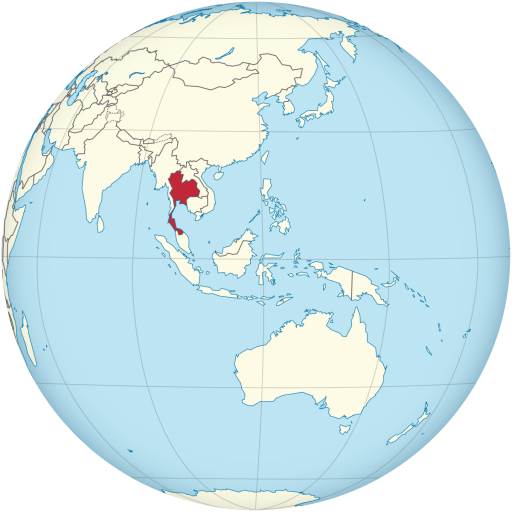
Thailand might legalize same-sex marriage as the first country in Southeast Asia
What happened:
On November 21, the government gave a big thumbs-up to a bill that could make same-sex marriage legal. The Parliament's set to vote on it next week, on December 12.
Why this matters:
If Parliament says "yes" and King Maha Vajiralongkorn signs off, Thailand's going to make a splash as the first nation in Southeast Asia to say "I do" to marriage equality.
Tell me more:
Under the amendment to marriage law, "men and women" and "husband and wife" would be replaced by "individuals" and "marriage partners" and same-sex partners would have the same rights as heterosexual couples, AP reported deputy government spokesman Karom Polpornklang as saying.
What's the status quo now?
As of today, the country has legalized same-sex unions. The proposed amendment marks a "significant shift from the existing Life Partnership Act, which only acknowledges the right of same-sex couples to live together but does not extend full marital rights to them," writes Thailand Business News. Moreover, the Cabinet has instructed the Council of State to review other laws to ensure equitable treatment of same-sex couples, particularly with regard to inheritance rights.
Is Thailand pro-LGBTQ?
Yes. Thailand's already got a rep for being LGBTQ+-friendly. Since he entered office this August, Prime Minister Srettha Thavisin has been pushing for Thailand to take things a step further and introduce marriage equality once and for all. Last month, the political leader said in a post to X (aka Twitter): "I believe that everyone should be entitled to equal rights, regardless of their gender." The stars are looking good this time around. There may be a bit of pushback from some religious groups, especially down south, but most people don't think it'll be enough to stop the bill in its tracks.
Zoom out:
The Asia Pacific region has witnessed significant progress in LGBTQ+ rights, especially in recent years, writes International IDEA's Democracy Tracker.
- Nepal: In June 2023, Nepal became the first South Asian country to order legal registration of same-sex marriages.
- Taiwan: Taiwan has been moving towards full marriage equality. In January 2023, it lifted restrictions on registering same-sex marriages between Taiwanese and foreign nationals. Additionally, Taiwan granted full adoption rights to same-sex couples in May.
- Vietnam: Vietnam's Health Ministry declared in August 2022 that homosexuality is "not an illness," instructing medical practitioners to stop treating it as such.
- Singapore: Singapore repealed a colonial-era law banning gay sex in November 2022. However, the government also introduced constitutional amendments to limit marriage to heterosexual couples, signaling mixed progress.
- Japan: Japan has experienced growing pressure to legalize same-sex marriage following court rulings declaring same-sex marriage bans unconstitutional.
- South Korea: A court recognized the rights of same-sex couples to receive health insurance for the first time.
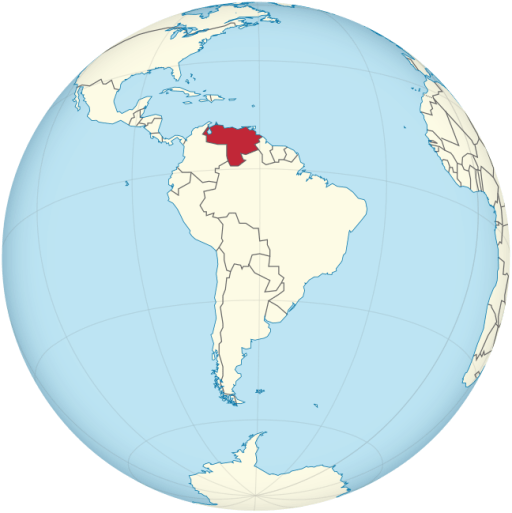
Guyana and Venezuela are still fighting over the Essequibo region -- there's a lot at stake
Refresher:
Guyana and Venezuela have been fighting over the Essequibo region (here's a better, closer map) for a long time. This dispute started in 1811. When Venezuela became independent of Spain (in 1811), it claimed this area. However, in 1899, an international decision gave the region to Guyana, which was then a British colony. Venezuela has never been happy with this decision. In 2018, Guyana asked a big international court, the International Court of Justice (ICJ), to settle this dispute once and for all. But Venezuela doesn't fully accept this court's authority, and the decision is still pending.
What happened:
It looks like there's been some movement around the dispute.
Why this matters:
It's not just any piece of land. Some 250,000 people live here. The Essequibo region is larger than Greece, and it's filled with valuable resources like gold, and copper. Plus, it gives access to the Atlantic Ocean where significant oil discoveries were made in 2015, and Venezuela, facing economic challenges, is very interested in these resources.
Tell me more:
Venezuela's current president, Nicolas Maduro, has been very vocal about it. He accuses Guyana and its allies, like the United States, of trying to steal Venezuelan land. He's also using this issue to stir up national pride, especially with a big election coming up. Plus, he might be looking at the huge oil reserves in the region as a bonus. In the meantime, Guyana points to the old 1899 ruling and wants any arguments settled peacefully in court. The ICJ recently told Venezuela to not do anything that would change the current situation in the Essequibo. Meanwhile, a lot of people in Venezuela voted in a controversial referendum, showing support for claiming the region, which adds more tension.
What referendum?
Recently, Venezuela held a referendum (a public vote) where people were asked if they wanted to claim the Essequibo region. Although not many people were seen voting, Venezuela's electoral authority reported a high turnout, with over 10.5 million votes cast. The voters were asked if they agree to establish a new state in Essequibo, give citizenship to people living there, and ignore the ICJ's decision on the matter. Guyana sees this referendum as a step toward Venezuela trying to take over the region. Maduro, of course, celebrated the vote as a success.
Fun fact: Maduro...
Please log in or subscribe for free to continue reading this issue.
We could use your help to make this issue better. Take a look at the requests below and consider contributing:
- Submit a piece of artwork for this issue
- Submit a news, academic or other type of link to offer additional context to this issue
- Suggest a related topic or source for future issues
- Fix a typo, grammatical mistake or inaccuracy
Below you'll find some of the sources used for this issue. Only sources that support "media embedding" are included.
-
Thailand’s Cabinet has approved an equality bill that would legalise same-sex marriage which will be debated in parliament next month.
-
Prime Minister Srettha Thavisin on Thursday promised full support for the LGBTQ-focused Marriage Equality Bill, which will be sent for Cabinet approval on Tuesday, a government spokesman said.
-
The Asia Pacific region has seen significant victories in the fight for LGBTQIA+ equality over the past decade, particularly in the past year. Recent milestones include same-sex marriage registration in Nepal, adoption rights for same-sex couples in Taiwan, and the decriminalization of gay sex in Singapore. A series of court wins reflects years of hard-fought efforts to promote LGBTQIA+ rights across the region, albeit much remains to be done. Where do LGBTQIA+ rights fit into democracy?
-
(Bangkok) – Vietnam’s Health Ministry officially confirmed on August 3, 2022, that same-sex attraction and being transgender are not mental health conditions, Human Rights Watch said today. The decision brings Vietnam’s health policy in line with global health and human rights standards.
-
A court rules in favour of a couple who were denied health insurance, saying that was discrimination.
-
-
Guyana rags to riches – If you knew your income would triple over the next four years, what would you do? That's the wonderful (and fascinating) problem facing the small South American nation of Guyana after the recent discovery there of one of the world's biggest offshore oil reserves. The country'...
-
For weeks, Panama was shaken by its largest protest movement in decades as residents decried a mining contract.
-
President Laurentino Cortizo said "the orderly and safe closure of the mine" would begin as soon as top court ruling became official.
-
Hollywood actor has joined the demands of Panamanian activists asking for the shutdown of First Quantum Mineral’s Cobre Panamá copper mine.
-
“This is a source of income for more than 40,000 households, and we don’t have a response as to what is going to happen to us,” union leader Michael Camacho told reporters.
-
Latin America holds half the world’s lithium. How will proposed Argentina-Chile-Bolivia alliance affect production?
-
Security officials say 11 people have been killed in an attack by a group armed with explosives and guns in eastern Iraq.
-
Lawyers for the woman argued the ban infringed her right to religious freedoms
-
The so-called Kaunda suit is not part of a proper dress code, the Speaker of Parliament says.
-
Economist Diana Mondino, who is set to be appointed foreign minister in Javier Milei’s government, has confirmed that Argentina will not join the BRICS on her new boss' watch.
-
-
Fund to help world’s poorest and most vulnerable countries hit by climate disaster is first decision agreed at conference
-
The videos showed the men in dimly lit conditions, their faces etched with hope and anxiety as they awaited rescue.
-
The move is part of a crackdown aimed at protecting children from becoming addicted to nicotine.
-
Seenotretter, eine Umweltorganisation und zwei afrikanische Aktivistinnen - sie alle wurden in Stockholm mit dem Right Livelihood Award geehrt. Der Preis war als Auszeichnung "für die Gestaltung einer besseren Welt" ins Leben gerufen worden.
-
Researchers in South Africa say they have rediscovered a mole species that has an iridescent golden coat and the ability to “swim” through sand dunes after it hadn't been seen for more than 80 years and was thought to be extinct.
-
Women are bearing the brunt of the vicious war in Sudan. The world should not look away.
-
Listen to Apple TV / Blanchard House's The Pirate of Prague podcast with Joe Nocera and Peter Elkind on Apple Podcasts.
-
Livestream shopping is a $500 billion industry in China. As the format spreads, streaming sellers grow in popularity, but are reliant on platforms like TikTok.
-
Arnaldo Chamorro replaced after he signed ‘proclamation’ with representatives of fugitive Indian guru’s fake country
-
Public Policy Polling also found that about 54% of the Republicans they polled support banning Muslims from entering the US, as Donald Trump has proposed
Each week, What Happened Last Week curates news and perspectives from Asia, Africa, and the Americas. The newsletter is written by Sham Jaff and focuses on stories that rarely receive sustained attention in Western media.
Read the free edition every week. VIP subscribers receive additional stories, recommendations on what to watch, read and listen, and more.