

This issue is looking at Madagascar's latest election results, a new Amnesty International report that accuses the Cambodian government of forcibly displacing its people from Angkor Wat, and a historic trial for trans women who testified on Argentina's secret prisons (and what Javier Milei's election victory might mean for LGBTQ+ people). Plus, why social media is the savior for Bhutan's local languages, the most expensive painting by an African born artist that was sold at Sotheby's in New York, a mediocre but pioneering Saudi Netflix series about --well-- love, and so much more.
Madagascar's election results are 99% in
What happened:
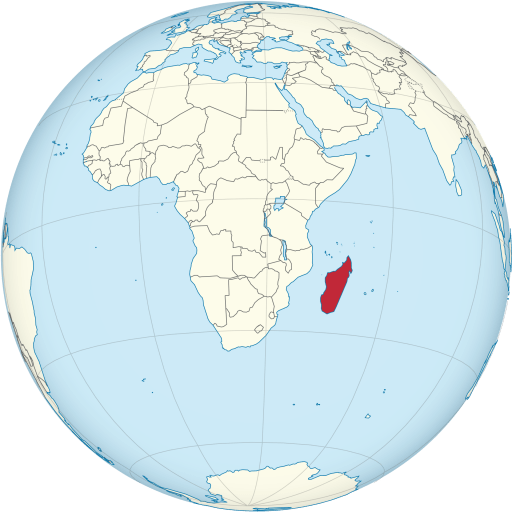
Andry Rajoelina just won another term as Madagascar's president, the national election commission said. The election was a bit unusual this time -- almost all the opposition candidates didn't participate.
Why this matters:
This election's a big deal for Madagascar. It's not just about who's in charge -- it's about keeping democracy on track. If this election is "peaceful", it would be the second time since that big coup in 2009 (135 people died then) that power's shifted without any fuss. Some experts call that democratic consolidation, aka they then know that 'yes, democracy works here.' Plus, Madagascar is really struggling economically and is ranked among the poorest countries in the world. Some 29 million people live here.
Tell me more:
Rajoelina got just under 60% of the votes in the November 16 election. These are the initial numbers, and they still need the official thumbs up from the constitutional court. Voter turnout wasn't great, only about 46%. The election folks say that's because of the whole political vibe and some behind-the-scenes influencing. With 11 million voters, Rajoelina faced off against 12 others, but ten of those guys basically called the election a joke and didn't even bother to campaign. Rajoelina's pretty chuffed about winning, saying it's a vote for staying the course.
Who's Andry Rajoelina?
Andry Nirina Rajoelina is a French-Malagasy businessman and politician, who's been President of Madagascar twice -- first from 2009 to 2014 (The Guardian called him 'Africa's youngest president' back then), and then again from 2019 to 2023. Rajoelina was born in 1974 into a pretty well-off family in Antsirabe. His dad, a retired colonel with French roots, fought in the Algerian War. Before all this president business, he was the big boss of Antananarivo (the country's capital) and even had a gig as a DJ. But it's not all smooth sailing -- he's got a bunch of critics who aren't too happy about how he's handling the country's resources, like those precious rosewood forests.
What does the opposition say?
Oh, they're not having any of it. They're basically saying, "What election? We don't recognize these results." They're pretty worried about what all this means for the country's stability. One of the candidates even went to the High Constitutional Court to try and get the whole thing canceled. In the run-up to the election, there were loads of protests, mostly without permission, and the police stepped in quite a bit. There's also this twist about Rajoelina having French nationality, which could technically disqualify him. But the election commission insists everything was above board.
What about the Malagasy people?
Well, it's a mixed bag. Some folks, like Voahirana Ravaoharisoa, a homeless woman, feel like it doesn't really matter who wins; life's going to be tough either way. But then you have people like Alphonse Raharindra Mirah, a courier, who's really happy about Rajoelina winning again. He thinks the president's done some good stuff and is looking forward to more positive changes. The constitutional court has nine days to confirm the results announced on Saturday by Madagascar's electoral body, Ceni.
"Fun" fact:
Remember when COVID-19 hit? Well, in 2020, Rajoelina made headlines with his launch of "Covid-Organics," this herbal tea touted as a cure. It was a big deal -- the army even helped distribute it, and schools made it a must-drink. But here's the catch: it wasn't scientifically proven, and health experts, including the World Health Organization (WHO), were pretty skeptical.
Amnesty International accuses Cambodia's government and UNESCO of forcibly displacing Angkor Wat's residents
Refresher:
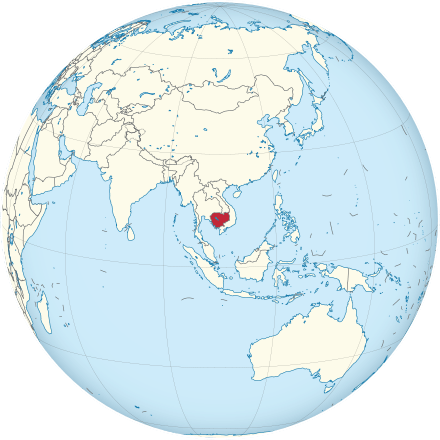
Have you ever been to Angkor Wat in Cambodia? It's this massive temple complex, covering over 400 acres; it's even on the map. Guinness World Records even says it's the biggest religious structure in the world. It started off in the 12th century as a Hindu temple for Vishnu, built by King Suryavarman II. But by the end of the century, it started shifting towards Buddhism, so now it's kind of a mix of both Hindu and Buddhist vibes. Western people, when they first discovered it, were so in love with it that they made a life-sized (!) replica of it at the Paris Colonial Exposition in 1931; also to show off the French empire's reach, of course.
What happened:
Amnesty International released a report on November 14, saying that since 2020, the Cambodia government has forcibly removed over 10,000 families from the Angkor Wat temple complex, an iconic tourist spot and a UNESCO World Heritage Site since 1992. The government says it's to protect the ancient place, but there's a lot of side-eye at UNESCO for not jumping in to help the locals.
Why this matters:
Tourist spots are not "born" naturally. They are made. Angkor Wat is not only a tourist spot. It is also "home to more than 100,000 people. Many have lived in the area for several generations, burying their deceased relatives in the surrounding forests, local cemeteries and on their farms," writes Amnesty International. The root of the problem is how land ownership works in Cambodia. Most people don't have official papers for their land (getting that piece of paper is incredibly difficult) but have been there for generations. This leaves residents vulnerable to repossession and displacement.
Tell me more:
Amnesty International's report accuses Cambodian officials of intimidating over 40,000 people into leaving, with threats of jail and worse. This goes against what the government's saying about everyone leaving happily and by choice. The new spots these families are sent to? Not great. They're missing basic stuff and there's hardly any help or cash. People who used to make a living at Angkor Wat (from tilling rice fields in the area or by selling goods and services to tourists) are now stuck far away (over an hour away), with jobs hard to find, leading to joblessness and hunger. Some have even left these new places because they're so...
Please log in or subscribe for free to continue reading this issue.
We could use your help to make this issue better. Take a look at the requests below and consider contributing:
- Submit a piece of artwork for this issue
- Submit a news, academic or other type of link to offer additional context to this issue
- Suggest a related topic or source for future issues
- Fix a typo, grammatical mistake or inaccuracy
Below you'll find some of the sources used for this issue. Only sources that support "media embedding" are included.
-
-
Carnival of sound to herald the inauguration of Andry Rajoelina in Madagascar
-
In Madagascar, rosewood traders are kingmakers, felling trees — and governments. Going undercover, reporters found how they make millions smuggling the rare bleeding timber to China.
-
Madagascar's President Andry Rajoelina secured re-election in the initial round of a contested ballot, marked by opposition boycotts, as confirmed by the election commission on Saturday. An opposition candidate has appealed to the High Constitutional Court, to demand the annulment of the ballot.
-
transversal texts is production site and platform at once, territory and stream of publication − the middle of a becoming that never wants to become a publishing company.
-
Land ownership in Cambodia is not as simple as paying for a deed. The strength of a person’s claim to land depends on the kind of land title they have and which government office granted it.
-
A protest drawing several thousand people from across Angkor Archaeological Park took an abrupt turn Friday, when the land management minister said there were no plans for a mass relocation from the park’s Preah Dak commune – days after residents said authorities had told them the opposite.
-
Cambodian non-profit organization LICADHO protects and promote civil, political, economic, cultural & social rights to support human rights defenders and people.
-
Javier Milei has provoked alarm and outrage by downplaying the number of victims of the country’s 1976-83 military rule
-
Argentina’s groundbreaking gender identity laws were won through longstanding activist traditions, diverse tactics and solidarity. The experience has lessons for us all, write Alessandra Viggiano and Siobhán McGuirk
-
Wilders wants to ban mosques and leave the EU. ‘Voters are fed up,’ he says.
-
The crackdown is part of a "systematic effort" to curb the practice of Islam, Human Rights Watch says.
-
Milad Zohrevand, 21, was put to death on Thursday at a prison in western Iran, sources tell the BBC.
-
Democratic Republic of Congo sees highest annual figure of mpox cases ever recorded at over 12,000. Read more at straitstimes.com.
-
Niger’s junta asks West Africa's court to compel neighbors to lift coup sanctions, citing hardship | AP NewsNiger’s junta on Tuesday asked West Africa’s regional court to order the lifting of sanctions imposed on the country by its neighbors following a July coup in which the democratically elected president was deposed.
-
The probe puts more legal pressure on Alpha Conde, already facing allegations of corruption, assassination and torture.
-
It is hoped that joining the East African Community will boost economic growth after years of war.
-
Ecologists from Mexico’s National Autonomous university on Friday relaunched a fundraising campaign to bolster conservation efforts for axolotls.
-
Regularising freer movement of people across African borders is one of the continent’s great developmental challenges.
-
Thailand’s Cabinet has approved an equality bill that would legalise same-sex marriage which will be debated in parliament next month.
-
A South Korean court has ordered Japan to compensate a group of women who were forced to work in wartime brothels.
-
COSATU calls for sex workers to unionise
-
Social media is giving a new lifeline to Bhutan’s native languages, which do not have written script and lack proper documentation.
Each week, What Happened Last Week curates news and perspectives from Asia, Africa, and the Americas. The newsletter is written by Sham Jaff and focuses on stories that rarely receive sustained attention in Western media.
Read the free edition every week. VIP subscribers receive additional stories, recommendations on what to watch, read and listen, and more.