

After this issue, you'll know the who's who of Liberian politics (and you will have listened to Hipco), you'll get a pretty detailed breakdown of the resistance and pro-democracy movement in Myanmar, and learn how to interpret the latest International Criminal Court ruling on Syria's torture tactics in its prisons. Plus, an Indian superhero movie to distract you from doomscrolling, an investigative podcast on the mysterious case of Grenada's revolutionary leader Maurice Bishop, an online database that saved countless lives in post-earthquake Morocco, a visually stunning but super sad documentary about what it means to live in Mauretania's Sahara region, and... AI girlfriends. And so much more.
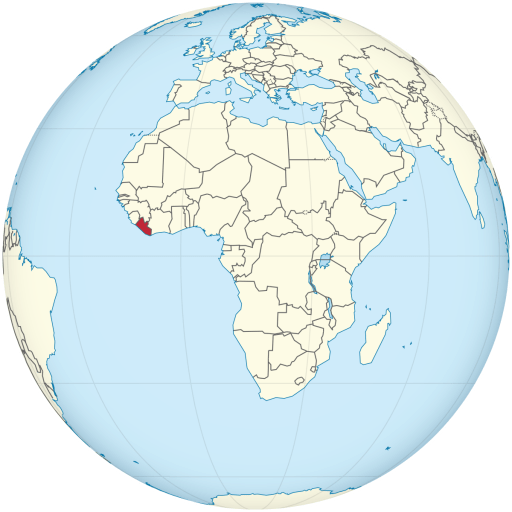
Liberia has a new president -- here's what you need to know
What happened:
Joseph Boakai is the new president of Liberia.
Why this matters:
Liberia's been through a lot; think two civil wars, Ebola. You may also know this region as the military coup region. "Not in Liberia, though," writes the European Union's Election Observation Mission. Here, this election was able to peacefully transfer power from one political leader to another. The election, first held on Oct. 10 with the runoff last Tuesday, was the first one managed solely by Liberian authorities without international funding or assistance since the civil war ended in 2003. On a more concrete level, this election may also decide whether the country is going to move forward with a controversial and very huge deal with a company from the United Arab Emirates. Some five million people live here, 60 percent of them are under the age of 25.
Tell me more:
Boakai is 75 years old, was vice president for 12 years, won the election with 50.9 percent of the vote to 49.1 percent of the sitting president George Weah (57, used to be an international football star). Yes, it was this narrow. "I urge you to follow my example and accept the result of the elections," he said, adding that "our time will come again" in 2029 when Boakai's six-year term in office ends. (Is former U.S. president Donald Trump subscribed to this newsletter?) The last time these two competed against one another was in 2017, Weah back then got 62 percent of the vote. Boakai will be sworn in two months.
How is Liberia doing?
The World Bank will tell you that Liberia's economy grew by 4.8 percent in 2022, mainly driven by mining and a relatively good agricultural harvest. The World Bank will also tell you that more than 80 percent of the population is food insecure, and prices of basic food products and fuel have gotten way too high this past year, with over half of Liberians living below the poverty line, on US$1.90 a day.
Did you know
that Liberia declared independence in the 19th century, a century ahead of most African countries? Their democratic political system was/is modeled on that of the United States.
Tell me more about that deal you mentioned
"A company established by a Dubai sheikh is finalizing agreements with African nations to manage vast tracts of their forests and sell the carbon credits. Critics are concerned the deals will not benefit Africans and will just help foreign governments perpetuate high emissions," Fred Pearce sums it up for Yale Environment 360. The sheikh is Sheikh Ahmed Dalmook Al Maktoum, a member of the royal family of Dubai. His company wants ten percent of Liberia's forests for 30 years. George Weah was in favor of it, Boakai is much more skeptical. I go into more detail for my German speakers in "Die Wochendämmerung".
Not politics:
Have you ever heard of Hipco? It's a genre of hip-hop from Liberia. I added some famous Hipco artists to this newsletter's Spotify playlist, Go Global Weekly, so you can check it out.
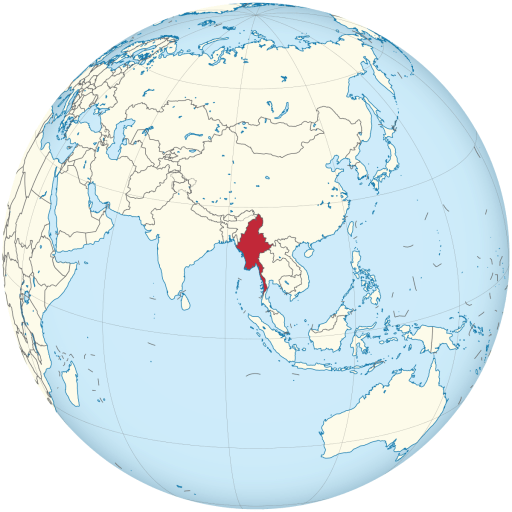
The military in Myanmar is slowly losing control
Refresher:
Remember back in February 2021 when the military took over in a coup, putting the democratically elected leaders behind bars? They claimed election fraud but didn't really show any proof. Since then, the people of Myanmar haven't exactly been sitting quietly. There's a mix of ethnic groups and pro-democracy fighters, all armed, trying to wrestle back control of their country.
What happened:
Fast forward to October 27, and things have heated up. Three armed ethnic groups, collectively known as the Brotherhood Alliance, launched an offensive in the northern Shan State. They've managed to snatch several key towns from the military regime. This operation, dubbed Operation 1027, has unfortunately led to over 150 civilian deaths, as reported by rights groups. The military, or the junta, is now teetering on the edge, potentially losing control over major border crossings crucial for their trade and tax revenue.
Why this matters:
The stakes are high. The Myanmar Assistance Association for Political Prisoners tells us about 25,000 people have been arrested, and over 4,100 killed by the military. The UN reports at least 1.7 million internally displaced, with another million having fled the country.
Tell me more:
These resistance groups aren't new; they've been around and fragmented across Myanmar. But now, they're gaining momentum, thanks to the Brotherhood Alliance's recent successes. Richard Horsey from the International Crisis Group suggests caution in declaring this a game-changer just yet. However, analysts agree that this is the biggest challenge the junta has faced since their 2021 power grab.
What about political opposition to the junta?
Absolutely. There's the National Unity Government of Myanmar (N.U.G.), formed post-coup. It's a mix of ousted government members, activists, and ethnic minorities. They haven't been formally recognized globally but are doing significant work, like providing health and education services in resistant areas. They're funded by a global diaspora -- from housekeepers in Bangladesh to tech entrepreneurs in Singapore. They have yet to produce a federal constitution to protect Myanmar's diverse ethnicities. The New York Times' Hannah Beech did an in-depth profile on the N.U.G. office in Washington D.C. that opened a year ago. Think virtual meetings, entire office is barely larger than a cubicle, etc. They dream of more support, akin to what Ukraine receives from the U.S., to bolster their cause.
Details:
The N.U.G. is diverse. It includes a Rohingya member and someone who previously wouldn't even acknowledge the Rohingya's existence. Talk about a complex political landscape.
Did you know:
the national football coach in Myanmar is...
Please log in or subscribe for free to continue reading this issue.
We could use your help to make this issue better. Take a look at the requests below and consider contributing:
- Submit a piece of artwork for this issue
- Submit a news, academic or other type of link to offer additional context to this issue
- Suggest a related topic or source for future issues
- Fix a typo, grammatical mistake or inaccuracy
Below you'll find some of the sources used for this issue. Only sources that support "media embedding" are included.
-
In a press conference held today in Monrovia to present the second Preliminary Statement of the European Union Election Observation Mission (EU EOM), Deputy Chief Observer Jarek Domański highlighted: “Election Day was calm and we noticed organisational improvements of the process since the first
-
Liberia Economic Update: Improved Rice Production Is Critical for Food Security and Poverty AlleviationThe World Bank today launched the Fourth Edition of its annual Liberia Economic Update, “Getting Rice Right for Productivity and Poverty Alleviation.” According to the report, growth in the agricultural sector accelerated to 5.9% in 2022 from 3.3% in 2021. Increased crop production, especially rice and cassava produced primarily for domestic consumption, was the main driver of growth in the agriculture sector.
-
A company established by a Dubai sheikh is finalizing agreements with African nations to manage vast tracts of their forests and sell the carbon credits. Critics are concerned the deals will not benefit Africans and will just help foreign governments perpetuate high emissions.
-
The Assistance Association for Political Prisoners , also known as AAPP, is a non-profit Burmese human rights organization based in Mae Sot, Thailand.
-
Mitten im Bürgerkriegt trat Michael Feichtenbeiner in Myanmar den Posten des Fußballnationaltrainers an. Ist er Kollaborateur oder Entwicklungshelfer?
-
The International Court of Justice (ICJ) order on November 16, 2023, directing Syria to take all measures within its power to prevent acts of torture and other abuses is a milestone toward protecting civilians in the country
-
President Rajoelina is seeking a third term in a poll that has been marred by an opposition boycott.
-
Authorities cite the popular video-sharing platform’s negative effects and ask internet service providers to close it.
-
Kinshasa. Representatives from four of DR Congo's five main oppossition parties held talks in South Africa this week to form a coalition ahead of elections next month, organisers said Saturday.
-
In run-up to the tightly contested presidential runoff, right-wing populist Javier Milei is following former President Donald Trump's playbook, alleging electoral fraud without evidence.
-
Rest of World News: Kenya's parliament has approved the deployment of its police to lead a UN-backed mission in Haiti to address the ongoing gang violence and restore pea
-
Violent protests by opposition parties have demanded premier’s resignation, transfer of power to caretaker government.
-
Russia has sent the first of its promised shipments of free grain to Africa, the country's agriculture minister said Friday.
-
AI models can’t understand African languages. Lelapa AI is trying to change that.
-
The United Arab Emirates has launched Al Dhafra solar farm – now the world's largest single-site solar farm – ahead of COP28.
-
The move was announced after the IMF approved a $175-million loan for the southern African nation.
-
The UK's highest court says the plan leaves people at risk of being sent back to unsafe countries.
-
The case at the UN’s top court accuses Yangon of committing genocide against people belonging to the Rohingya community.
-
An online platform transformed aid efforts in rural Morocco, where remote communities are tucked deep in the mountains.
-
Minnal Murali movie review: Basil Joseph's latest film, starring Tovino Thomas in the lead, has finally cracked the superhero formula for India.
-
Minnal Murali impresses with its originality and its ability to evade comparisons to superheroes from the West.
-
Media experts said acquisition prices for southern films, that were much lower than Hindi films to begin with, is only going to get higher in 2022, as they perform better than others
Each week, What Happened Last Week curates news and perspectives from Asia, Africa, and the Americas. The newsletter is written by Sham Jaff and focuses on stories that rarely receive sustained attention in Western media.
Read the free edition every week. VIP subscribers receive additional stories, recommendations on what to watch, read and listen, and more.