

This issue is a tough pill to swallow, and I apologize for this in advance. It's about what's happening to the Masalit and other African ethnic groups in Sudan's Darfur region (situation's really, really bad), Bangladesh's power-hungry prime minister who's arrested almost 10,000 opposition leaders, and Brazil's worst environmental disaster eight years ago (still nobody has been held accountable for the damage done to nature and more than 700,000 people). Plus, an Indonesian lovestory/entrepreneurship tale, a Nigerian history podcast, an alien invasion in Argentina, Bollywood and why it's so Hindu-centric (and what that does to other communities in the country), and female frogs that... know how to curb suitors without hurting their feelings. Plus, so much more.
At least 1,300 people have died within three days in Darfur, Sudan
Refresher:
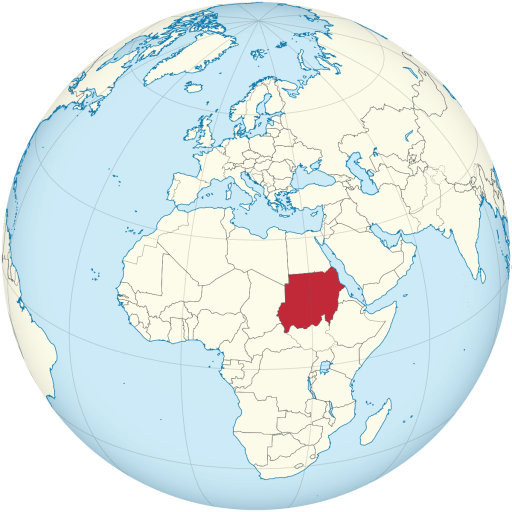
The war in Sudan has been going on for seven months now. Sudan's military has been at war with a paramilitary group (not part of the military) called the Rapid Support Forces, or short RSF, since April 2023. They mostly fight around Sudan's capital, Khartoum, and in the Darfur region. By October 2023, between up to 10,000 people have died due to the fighting, with thousands more injured. The conflict has also forced around five million people to leave their homes within Sudan, and over 1.3 million to flee the country.
What happened:
Last week, the RSF besieged a camp for displaced people in Ardamata, West Darfur on November 2. Over three days, they killed a lot of people, possibly the most since the civil war started in April. Local sources say about 1,300 people died, 2,000 got hurt, and 310 are missing. Sudan Tribune says, that death toll is higher, around 2,000 civilians were killed between November 4 and 9. Most of the victims were members of the Masalit and other African ethnic groups. People fear that "the horrors of Darfur 20 years ago are returning".
Details:
I realize that "1,300 people died" is a difficult number to grasp emotionally. On X (Twitter), Sarra Majdoub writes, "In this photo, Amm Ibrahim, aged 87, brutally killed in Ardamata in West #Darfur last week, they were not just numbers; they had names and faces."
Why this matters:
The humanitarian situation is getting worse and worse. According to Clementine Nkweta-Salami, the UN humanitarian coordinator for Sudan, some 25 million people need humanitarian help and most health facilities in the conflict zones are now out of service; which means that cholera, dengue, malaria and measles have broken out.
Tell me more:
Survivors are saying the RSF were literally going door to door, hunting down men to kill. 'Looks like the RSF wants to wipe out the Masalit tribe, who are not Arabs, in West Darfur,' they say. Just last week, they killed six tribal leaders and their families. "They want to kill [our leaders] so they can replace us with their own as well as Arabs from countries like Chad and Niger," says one survivor, referring to the Arab fighters who have joined the RSF from across the region. They even took out Khamis Abubbakr, the governor of West Darfur, in June after he described the killings as a "genocide" to the Saudi television network Al-Hadath. Mujeebelrahman Yagoub, Assistant Commissioner for Refugees in West Darfur, has already called the violence worse than the War in Darfur in 2003 and the Rwandan genocide in 1994.
Did you know:
Asia Abdelmajid, the country's first professional stage actress, got killed during this civil war? Singer Shaden Gardood, too. I added one of her songs to this newsletter's Spotify playlist, 'Go Global Weekly'. Check it out. The founders of the "Nuba Mountain Sound" band in Khartoum are adamant to keep the music going. Sudanese-American rapper Bas also has a new song out about the war in Sudan; it's on the playlist, too.
Wait, what happened in Darfur in 2003?
The background of this violence goes back to when Sudan's government didn't take care of the non-Arab farmers and Arab herders in Darfur, leading to fights over land and water. In 2003, people there, mostly non-Arab people, protested against Darfur's economic and political marginalization and as a response, the former president, Omar al-Bashir, armed Arab militias and tasked them to squash the rebellion there. Those militias got a bad rep, survivors call them the janjaweed, or "devils on horseback," and now they're part of the RSF. The fighting, starvation, and disease in '03 killed about 300,000 people.
Dig deeper:
Dirdeiry M Ahmed, a former foreign minister of Sudan, wrote an opinion piece for Al Jazeera, discussing the war and its deeper causes. Basically, he writes that the war in Sudan isn't just a random fight or a simple power struggle between two military leaders, as some have suggested. It's actually the result of a political change that went off track.
What now?
The UN has been trying to raise about US$921 million to help out the millions of displaced people in Sudan who really need it, but they've only got a fraction of that money with the year almost over. The UN Refugee Agency (UNHCR) said on Friday that more than 8,000 people have fled into neighboring Chad in the last week alone. The UNHCR said that they expect more refugees in the coming days.
There's a glimmer of hope with some peace talks happening in Jeddah, Saudi Arabia especially since the national army seems to be winning more battles lately, according to Ahmed. To be continued.
Zoom out:
Nanjala Nyabola, political analyst and the author of "Digital Democracy, Analogue Politics", wrote an opinion piece "In defence of international law" that, I think, very aptly describes the past month's debates worldwide. She writes, "History not learned from is bound to be repeated. International law, for all its limitations, is a prime example of human beings trying to learn from history," drawing parallels to the situation in Israel/Palestine, Syria and Afghanistan. She's also saying that "international law" isn't just a Western thing. Way back in the 7th century, there was this Pact of Umar that laid down some ground rules for warfare, and it's kinda like the Geneva Conventions that came way later.
Bangladesh's prime minister has taken an authoritarian turn -- it's election season soon
What happened:
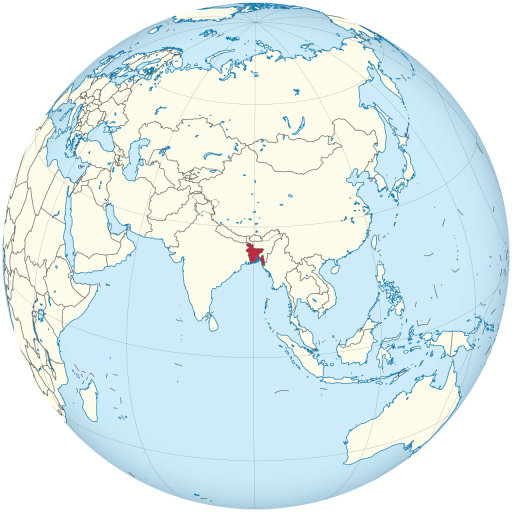
Bangladesh is gearing up for elections, and things are getting pretty tense. In the last two weeks alone, almost 10,000 opposition leaders, supporters and activists have been arrested after protests broke out against the ruling government, led by Prime Pinister Sheikh Hasina.
Why this matters:
Bangladesh's Prime Minister Sheikh Hasina has taken an "authoritarian turn". Few believe the election in January will be free, fair or remotely democratic. There are more than 13,600 political prisoners in jails in Bangladesh right now. Around 170 million people live here.
Tell me more:
Prime Minister Sheikh Hasina and her Awami League party are gunning for a fourth straight term, and it seems like they're not playing nice with the main opposition party, the Bangladesh Nationalist Party (BNP). Things got real heated at a BNP rally in Dhaka at the end of October, where people demanded that Hasina steps down. The government's response was to go hard. Internet got cut, and there was a clash at the rally with some serious hardware. At least three people died in the violence, including a BNP activist, a police officer and a journalist. Plus, one of the top BNP guys, Mirza Fakhrul Islam Alamgir, got picked up, and he's got a laundry list of charges on him. He and others are saying the charges are all made up. The few BNP leaders to have evaded arrest are now in hiding.
Tell me more about Sheikh Hasina:
Sheikh Hasina Wazed, born on September 28, 1947, is a household name in Bangladesh, not just because she has been the Prime Minister since 2009. Hasina is also the daughter of the country's first president, and was recognized as one of the most influential people by Time magazine in 2018. She was born into a politically active family in East Bengal and has ancestry tracing back to a prominent Muslim preacher from Baghdad, Iraq. Her father was frequently imprisoned for his political activities, which influenced her childhood. Oh, and she's graduated from Dhaka University with a degree in, well, Bengali literature. However, since she's been in charge, her time in office has seen a decline in democracy, with reports of human rights abuses, including disappearances and killings. Critics and journalists have been punished for opposing her. Her media policies have been criticized for limiting press freedom. Yes, Bangladesh's wallet has gotten fatter (Bangladesh has become one of the strongest economies in South Asia), but she's also tightened her grip on power a lot more, too.
How tight is this grip?
Mohammad Ashrafuzzaman of the Capital Punishment Justice Project, who has been documenting human rights abuses in Bangladesh for over a decade, said that "gross human right violations" had systematically been used against the opposition "including enforced disappearances, extrajudicial killings, maiming, torture, ill-treatment, and massive arbitrary detention of the opposition activists in fake criminal cases to crush the opposition whenever the elections ensued in Bangladesh."
What now?
The word on the street is that Hasina's got the courts and the cops in her pocket, and there's even a clip floating around of police hanging with some armed Awami League supporters talking about going after BNP folks. The government's brushing off the arrests as just taking down criminals, nothing political. But political analysts are saying Hasina's iron fist might just be making the BNP stronger, especially with the economy not doing so hot and inflation going through the roof. The BNP's last rally pulled in a big crowd, not just the political types but also the everyday workers, and that's got some people thinking the BNP could really shake...
Please log in or subscribe for free to continue reading this issue.
We could use your help to make this issue better. Take a look at the requests below and consider contributing:
- Submit a piece of artwork for this issue
- Submit a news, academic or other type of link to offer additional context to this issue
- Suggest a related topic or source for future issues
- Fix a typo, grammatical mistake or inaccuracy
Below you'll find some of the sources used for this issue. Only sources that support "media embedding" are included.
-
Updates with primary country: Sudan and with organization: UN Office for the Coordination of Humanitarian Affairs (OCHA)
-
The mass killing might be the largest in the civil war that erupted in April, based on reports from monitors.
-
More than half of Sudan’s population needs humanitarian aid after nearly seven months of war, says UN official.
-
-
Shaden Gardood, 37, died one day after Sudan's warring parties signed a deal to protect civilians.
-
This 77-page report documents how Sudanese government forces have overseen and directly participated in massacres, summary executions of civilians, burnings of towns and villages, and the forcible depopulation of wide swathes of land long-inhabited by the Fur, Masalit and Zaghawa ethnic groups.
-
Sudan’s transition should have focused on stabilising the economy and convening elections, not dismantling a regime.
-
The war between rival militaries in Sudan is growing in scope and brutality, having driven almost six million people from their homes since it erupted in April and worsening an already complex humanitarian emergency, the UN refugee agency (UNHCR) warned on Tuesday.
-
International law, for all its limitations, is a prime example of human beings trying to learn from history.
-
Bangladesh’s Prime Minister Sheikh Hasina has taken an authoritarian turn. Is it enough for the U.S. to abandon its support?
-
Six months ago, the collapse of a mining dam in the state of Minas Gerais became Brazil's worst environmental disaster. The BBC returns to the scene to hear some of the victims.
-
EXCLUSIVO: Não há comprovação dos R$ 36 bilhões que Renova, Vale, BHP e Samarco alegam pagar na reparação de Mariana, diz MPF - Observatório da MineraçãoA Fundação Renova, entidade mantida pelas mineradoras Vale, BHP e Samarco, alega que irá aportar, até o fim de 2023, R$ 36 bilhões para as indenizações de pessoas atingidas e a reparação socioambiental do rompimento da barragem de Mariana, em novembro de 2015, considerado o pior desastre ambiental da história do Brasil. De acordo com […]
-
-
Puerto Rico declares flu epidemic as cases spike. 42 dead and more than 900 hospitalized since July | AP NewsHealth officials in Puerto Rico have declared a flu epidemic. Health Secretary Carlos Mellado said Thursday that at least 25,900 cases have been reported since July, with 42 deaths and more than 900 hospitalizations on the island of 3.2 million people.
-
Draft, which some observers consider a step backwards, could threaten rights to abortion and collective strike action
-
Politicians have long sought to silence the genre, but previous clampdowns have only boosted its popularity
-
All nine justices were present in the meeting and Suhartoyo’s appointment was agreed without voting.
-
“The Climate Law is an attempt to secure the dirty profits obtained by exploiting nature and labor through carbon trade and legitimize the right to pollute implicitly granted to capital through the carbon market,” says the Climate Justice Coalition.
-
Tuvalu faces an existential threat from climate change, and rising sea levels are expected to swallow the nine-atoll South Pacific nation by 2100.
-
More than 700 migrants traveling on four different boats were rescued near the shores of Spain’s Canary Islands, Spanish officials said Saturday.
-
In einer verwüsteten und giftigen Zukunft leben Tausende Menschen in einem gewaltigen Silo tief unter der Erde. Nachdem der Sheriff eine zentrale Rege…
-
A murdered Argentinian writer’s comic finds a new audience – and far-right haters | Comics and graphic novels | The GuardianHéctor Oesterheld and his family were murdered under the military dictatorship. As Netflix adapts his beloved El Eternauta, his literary legacy is dragged into the culture wars
-
In some species of frogs, the females play dead to avoid mating with aggressive males. Dr. Carolin Dittrich, behavior ecologist at the University of Veterinary Medicine Vienna, tells us more.
Each week, What Happened Last Week curates news and perspectives from Asia, Africa, and the Americas. The newsletter is written by Sham Jaff and focuses on stories that rarely receive sustained attention in Western media.
Read the free edition every week. VIP subscribers receive additional stories, recommendations on what to watch, read and listen, and more.