

This issue took me much longer than expected. Mainly because the news from DRC is intimidatingly complex. I wanted to get it right and hope I made you proud. If not, let me know by replying to this mail. Other than that, I write about Taiwan and how it organized East Asia's largest Pride ever last week, an Afro-Peruvian legend, AI-generated songs with the Indian prime minister, an exceptional journalist achievement in Bolivia, Chinese bravery at a funeral, South African opera, the connection between an Armenian pianist and Led Zeppelin, the Mau Mau and King Charles, and... pomegranates. Plus, so much more.
DRC is facing one of the worst displacement and humanitarian crises in the world
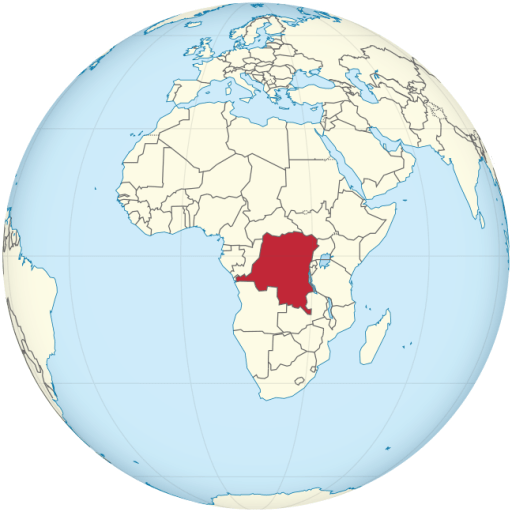
What happened:
All eyes on the eastern provinces of the Democratic Republic of Congo (DRC): North Kivu, South Kivu, Tanganyika and Ituri. 200+ armed groups are currently active there, all fighting for control over the land and its natural wealth. Since October, the fighting has intensified. As a result, a record 6.9 million people have had to leave their homes within the country (this is called 'internal displacement'). The United Nations (UN) has warned that this has become one of the world's biggest displacement and humanitarian crises.
Why this matters:
The DRC, especially in the east, is rich-rich in natural wealth, including minerals such as diamonds, gold, copper, cobalt, coltan, and many more. They're mostly used in renewable energy systems, electric cars and other applications (like my MacBook Pro), making the DRC's resources significant in the green energy transition many nations are undergoing. However, the Congolese people have 'enjoyed' little of it. Instead, the country's natural wealth and its exploitation have contributed to decades of conflict, mass displacement, numerous serious human rights abuses such as forced child labor and sexual violence as well as violations of international humanitarian law. The link between natural resource exploitation and human rights violations dates back to colonial times.
Tell me more:
The situation's pretty grave. In North Kivu alone, up to a million people have fled their homes this year due to the ongoing fighting. More than 100 schools in the Beni region (also in the east) have been closed for almost two weeks. The solution to this security crisis? The next president's job. Next month, the country is deciding on whom.
Tell me about the upcoming election and the candidates:
It's a very exciting presidential election, mostly because of who's running for the top position. On the one side, we have Denis Mukwege, a Nobel Peace Prize laureate known for his medical work with victims of sexual violence in the DRC's eastern regions (he's from there originally), who has announced his intention to run for president, challenging the sitting President Felix Tshisekedi. The other candidates? Former prime minister Matata Ponyo, successful soccer club owner Moise Katumbi and opposition leader, Martin Fayulu (he tried before in 2018). The country overall has seen quite the economic growth during President Tshisekedi's administration, especially in the mining sector. DRC is the largest producer of cobalt and copper (and doing well financially at the moment, as per IMF). His administration has increased the government budget significantly, which has allowed for the expansion of free education and the start of a national infrastructure program. But the violence in the east, he couldn't handle. Now, there's hope that Mukwege has the necessary insight to find a way out.
Did you know:
UN peacekeepers have been present in the DRC since 1999? Known as MONUSCO, the peacekeeping mission is one of the largest and costliest in the world, with an annual budget of around US$1 billion. A lot of people don't like this peacekeeping team because they don't think it's actually stopping the fighting, and the government wants MONUSCO to leave.
Give me some insight on the mining industry right now:
Right now, the minerals are not as expensive as they used to be because there's a lot of them available right now (countries like China, Indonesia, and the Democratic Republic of the Congo are getting a lot more of these metals out of the ground and selling them), and not as many people are buying electric cars. This could change the prices of goods, affect the companies that get these metals from the ground and, most of all, the countries that have them.
Fun fact:
On October 30, 1974, the Rumble in the Jungle, one of the most watched boxing matches at the time, between Muhammad Ali and George Foreman, took place in DRC (known as Zaire at the time).
Zoom out:
There's a lot of money going around in Central and East Africa right now. Small businesses in DRC, Kenya and Tanzania are getting more short and long-term financing (US$2.9 billion) so that they can focus on energy efficiency projects, renewable energy, climate smart projects and gender inclusion.
Taiwan just held East Asia's largest-ever Pride march
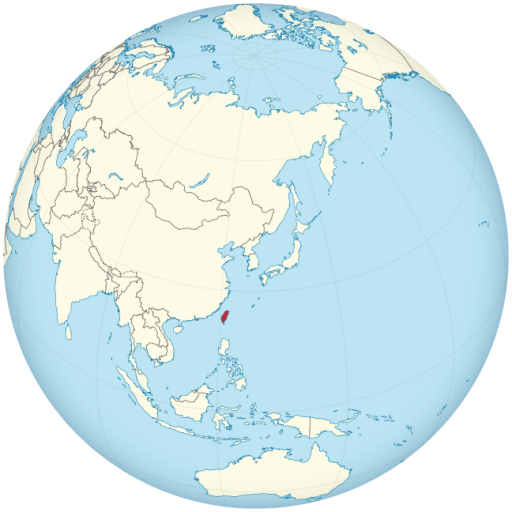
What happened:
Some 176,000 people attended Taiwan's 21st annual Pride march in Taipei on October 28, according to the Taipei Times.
Why this matters:
The parade in Taiwan has always been the biggest in East Asia, but this year it set a new record for how many people came. Last year, the march attracted some 120,000 people.
Tell me more:
The Pride march featured drag performances, a diversity-themed coloring book station, and a "Rainbow Market" with 120 vendors, the most in the event's history per the Times. The event organizer, Taiwan Rainbow Civil Action Association (TRCAA), said this year's theme was about "recognizing the diversity of every person, and respecting and accepting different gender identities. Taiwan is a diverse country, but sometimes our understanding can be limited by binary thinking, such as male and female. This dichotomy can marginalize or generate animosity between different groups." TRCAA spokesperson Brian Cragun told Taiwan News.
What's Taiwan's LGBTQ politics?
Taiwan is one of Asia's most pro-LGBTQ+ regions. Both male and female same-sex sexual activity are legal, and same-sex marriage was legalized in 2019, following a Constitutional Court ruling in 2017. Same-sex couples are able to jointly adopt children since 2023. Discrimination on the basis of sexual orientation, gender identity and gender characteristics in education has been banned nationwide since 2004. With regard to employment, discrimination on the basis of sexual orientation has also been prohibited by law since 2007. Some politicians had also attended the march (there are important elections coming up, that's most likely why). Lai Ching-te, Taiwan's Vice President, was there too, which was a big deal as he is the highest-ranking government official to ever attend Taiwan Pride and the only presidential candidate in attendance this year. "So far, only a few non-heterosexual candidates have been elected as representatives, which shows how hard it is for LGBTQ+ people to participate in the current political environment," writes an editorial at the Taipei Times.
Deep dive:
Not everything is rainbows and butterflies in Taiwan. Leonardo Pape for taz wrote a longread about what it's like for...
Please log in or subscribe for free to continue reading this issue.
We could use your help to make this issue better. Take a look at the requests below and consider contributing:
- Submit a piece of artwork for this issue
- Submit a news, academic or other type of link to offer additional context to this issue
- Suggest a related topic or source for future issues
- Fix a typo, grammatical mistake or inaccuracy
Below you'll find some of the sources used for this issue. Only sources that support "media embedding" are included.
-
Updates from across the African continent.
-
Time has not stood still since September 2019 when the Democratic Republic of Congo (DRC) began rolling out free primary schooling. Since then, while the world has forever changed due to the global pandemic, life went on for children like Joyce Sosongo, a plucky 2nd grader with a winning smile, interviewed back in 2020.
-
World Bank Approves $750 Million to Support Critical Governance Reforms, Transport Infrastructure, and Digital Connectivity in the Democratic Republic of CongoAs part of its deepened engagement in the Democratic Republic of Congo, the World Bank Board of Directors approved last week a $250 million development policy operation for foundational economic governance reforms and $500 million to strengthen transport and connectivity in the Democratic Republic of Congo (DRC). Both projects are financed by the International Development Association (IDA)*.
-
Bringing Taiwan to the World and the World to Taiwan
-
Bringing Taiwan to the World and the World to Taiwan
-
Taiwan ist Asiens Vorreiter für LGBTQ+-Rechte – aber Menschen aus China werden von der gleichgeschlechtlichen Ehe ausgeschlossen. Ein Paar klagt.
-
ChatGPT’s problems extend past copyright issues. It struggles with logic and translation errors in global languages that appear online less often than English.
-
To adapt to the threats developing countries are facing from climate change, the United Nations says they'll need at least 10 times more money than the public funding they received in 2021.
-
Authorities go ‘door to door’ to round up and return thousands – many who fled from the Taliban – on first day of nationwide crackdown
-
Season of smog begins with air quality index near worst possible level of 500 and little apparent progress in controlling annual poisonous blight on life
-
Indian internet is rife with AI versions of Narendra Modi singing a song. Using his voice for songs started as a meme, but is becoming a political tool.
-
Governor of Guerrero state says 45 confirmed dead and 47 others missing after ferocious storm hit Mexican city on Wednesday
-
Vice-President Mahamudu Bawumia will contest the presidency under the NPP's banner in elections.
-
Lawyers for the Gabonese authorities requested on Tuesday a stay of proceedings at the opening of a legal action brought in Alès (Gard) by a couple who had sold a Fang mask for 150 euros, then resold it for 4.2 million euros.
-
Remenbranzas Vol. I by Lucha Reyes, released 28 July 2023 1. Que me importa 2. Regresa 3. Siempre te amaré 4. Soy tu amante 5. Tu voz 6. Tuya es mi vida 7. Una carta al cielo 8. Aunque me odies 9. Así lo quieres tú 10. Como una rosa roja 11. Contigo y sin ti 12. Jamás impedirás 13. Mi última canción
-
Ministerio de Cultura otorgó distinción póstuma de Personalidad Meritoria de la Cultura a la recordada “Lucha Reyes” - Noticias - Ministerio de Cultura - Plataforma del Estado PeruanoEl Ministerio de Cultura otorgó la distinción póstuma de “Personalidad Meritoria de la Cultura” a Lucila Justina Sarcines Reyes, conocida como “Lucha Reyes”, en reconocimiento a su trayectoria musical y su legado como una de las máximas exponentes de la música criolla del...
-
Police line road amid strictly controlled public tributes to premier once seen as antidote to authoritarian Xi Jinping
-
The British Empire brutally suppressed an uprising in Kenya in the 1950s. Its victims cannot forget.
Each week, What Happened Last Week curates news and perspectives from Asia, Africa, and the Americas. The newsletter is written by Sham Jaff and focuses on stories that rarely receive sustained attention in Western media.
Read the free edition every week. VIP subscribers receive additional stories, recommendations on what to watch, read and listen, and more.