

In this issue, I do not write about what's happening in Israel and Palestine. Instead, I want to talk about news stories that you might have missed because everybody else is writing about what's happening in Israel and Palestine. In this issue, you'll read about a recent investigation that found out that top fashion brands in Europe are recruiting refugee models and exploiting some of them, leaving them in worse situations than they came from. You will also read about the latest win for LGBTQ+ rights in Hong Kong and everything you need to know about Argentina's elections yesterday. Plus, a podcast about a Mexican trans woman and a controversial British TV show, a new human evolution exhibition in South Africa, reimagining the story of humankind, and so much more.
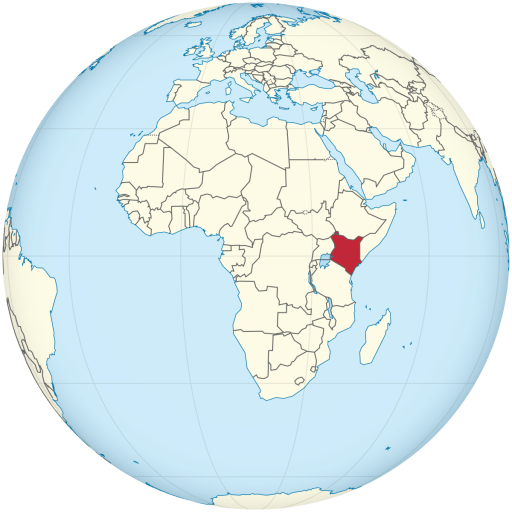
'Top fashion brands in Europe exploit models from a refugee camp in Kenya', report finds
What happened:
A Sunday Times investigation has found out that some African refugee models who had been recruited by prominent fashion brands for fashion weeks in Europe have returned to Africa in debt and without financial gain. A number of models The Sunday Times talked to from the Kakuma refugee camp in northwestern Turkana County, Kenya, are at the center of this investigation.
Why this matters:
Some 280,000 people live in the Kakuma Refugee Camp in Kenya. It is one of the world's largest refugee camps and managed by both the Kenyan government and the United Nations. Over half of its residents are from South Sudan, one of the world's poorest countries. The global fashion industry needs (stronger) rules and regulation to stop and fight against the exploitation of models by agencies and talent scouts who promise them a better future.
Tell me more:
A refugee model's journey looks like this: Scouts within the camp actively seek potential models, sending their photographs to European agencies thousands of miles away, sometimes even browsing through refugees' Instagram accounts. Sometimes, it's even like, "Hey, let's Zoom and see if you've got the vibe." If chosen, the selected model gets a pass from Kenyan government officials who manage the camp (no one can leave the camp without this pass). Then the model gets a passport and the required visas, travels to the capital Nairobi to either stay with relatives or in agency-funded digs before travelling to Europe. The model flies out just before fashion week, usually to Paris, and attends castings. They are put up in accommodation and are given pocket money for food and transport. It's a few weeks of living the 'Euro dream', but if the gigs aren't paying, or you're just not the right fit, it's back to Kakuma. Many young people in Kakuma view modeling as a way to make it out of the camp. Agencies claim this too, 'you'll get better life opportunities. Plus, you'll add much-needed diversity to the fashion industry!'. However, there are growing concerns about the well-being of the models. Many of them, coming from regions of East and Central Africa where they have had it bad, find themselves in even worse situations when they return, casting doubt on the integrity of the European recruiters and employers, and those who work with them. The investigation namely also revealed that Nigerian businesswoman Joan Okorodudu, also known as Mama or Auntie Joan, signed models to her agency, Isis Models, and then marketed them to larger agencies.
Give me details:
One young model recounts being flown to Paris from the camp, only to be sent back after six days due to malnutrition. Another model shares her experience of signing a barely comprehensible contract, has now debts of over €2,000. Achol Malual Jau, a 23-year-old South Sudanese model, ended up with a €3,000 debt after a six-month stint in Europe. The agency that signed Jau said client feedback had "not been the best" despite the fact they had "believed so much in Achol". Matteo Puglisi, the CEO of Select Model Management, expressed sincere regret over her situation, stating, "We lost thousands of euros on her. We have never asked for reimbursement. I am truly sorry she didn't succeed." It's worth noting that Select is a major player in the modeling world, with a history dating back to 1977 and a global presence. Speaking in Swahili, via a translator, her mother, Akuach Yol, 50, said: "Achol went abroad to try and change the life of the family, but the way she returned is very painful for me. Refugees go through a hard life. She never got what she went for, so we are still in the same state and suffering as they used to suffer before." Justin Anantawan is a model scout confirms what he calls the "systemic injustice in the fashion industry."
Who "made it"?
Mari Malek is one of the models that 'made it'. She now lives in New York, United States. Malek is setting up Runways to Freedom, a group to support refugees working in the industry. "South Sudanese refugee models are the It girls, and I believe it is due to the fact the diversity and inclusion movement in the fashion industry has skyrocketed demand from people asking for more representation," she said. "African models, dark-skin models, black models and especially South Sudanese models --- who are renowned for their striking beauty and powerful look." She added that having models from refugee camps was also a "good story" for the industry. "It is time for the fashion world to wake up and ask themselves at what cost to young African lives their diversity and inclusion policies are fulfilled," she said. One of the costs is also the educational impact of all this. Elizabeth Ndegwa, the head teacher at a local secondary school, said she knows of five girls recently chosen to go to Europe. Modelling has "brainwashed their minds", she said. "It makes them not concentrate on their studies".
What about the United Nations and the Kenyan government?
The investigation also brings attention to the conditions within Kakuma and the responsibilities of UNHCR and the Kenyan government. Despite having schools and shops, the camp's living conditions are harsh, with extreme poverty, health risks (the threat of malaria, cholera and typhoid is constant), and food shortages (many people there eat one meal a day).
A top Hong Kong court ruled that same-sex couples (still) deserve equal housing rights
What happened:
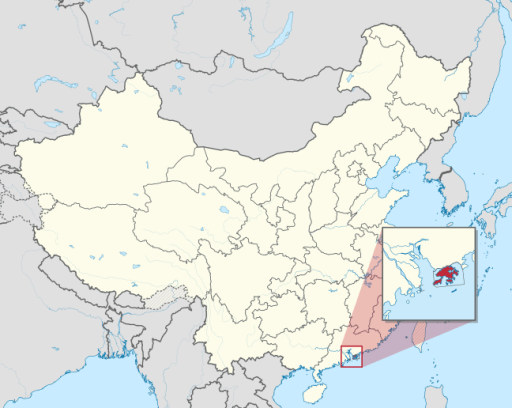
The Court of Appeal in Hong Kong (the second most senior court in the Hong Kong legal system) re-affirmed two lower court decisions that say, 'gay and lesbian couples deserve equal housing rights like their straight counterparts.'
Why this matters:
In Hong Kong, the law does not allow same-sex couples to get married. However, due to a series of legal battles and court challenges in the past few years, there has been some progress. This is 'Another one', as DJ Khaled would say.
Tell me more:
Before, the government had rules that made it difficult (meaning, longer waiting time and more expensive) for same-sex couples to live together in certain apartments or houses that are more affordable and provided by the government. Two people, Nick Infinger and Edgar Ng, who were/are in relationships with their same-sex partners, were told they couldn't live with their partners under these government housing programs. 'You are not real husband and wife,' authorities had said to Infinger. They thought this was not only untrue (they married in Canada in 2018), but it was also unfair ('you can't discriminate against us just because we are gay. This is against Hong Kong law!'), and in 2018, Infinger and his partner decided to challenge these rules in court... and won. The other judicial review was lodged in 2019 by Edgar Ng, who later committed suicide in 2020 after years of depression. The Housing Authority on Tuesday night said it was studying the judgement and would take follow-up actions as necessary.
Tell me more about Ng:
Edgar Ng had gotten married to Henry Li in the UK in 2017. After their wedding (look, so cute), they decided to live together in a public housing unit in Hong Kong. All went...
Please log in or subscribe for free to continue reading this issue.
We could use your help to make this issue better. Take a look at the requests below and consider contributing:
- Submit a piece of artwork for this issue
- Submit a news, academic or other type of link to offer additional context to this issue
- Suggest a related topic or source for future issues
- Fix a typo, grammatical mistake or inaccuracy
Below you'll find some of the sources used for this issue. Only sources that support "media embedding" are included.
-
Hong Kong court rejects gov't appeals over public housing rights for same-sex couples | Hong Kong Free Press HKFPA Hong Kong court has handed a victory to the LGBTQ community by rejecting two appeals from the Housing Authority relating to the public housing rights of same-sex couples. The Court of Appeal on Tuesday upheld two lower court decisions that the spousal policies of the city’s Public Rental Housing scheme and Home Ownership Scheme […]
-
Lack of legal same-sex relationship recognition in Hong Kong a rights violation, top court rules | Hong Kong Free Press HKFPHong Kong’s top court has handed a partial victory to LGBTQ advocates, ruling that the government has not fulfilled its constitutional duty to provide any legal framework for same-sex relationships to be recognised. The Court of Final Appeal delivered the judgement on Tuesday. As part of the judgement, the court made a declaration that it […]
-
A statement from the Observatory.
-
Am Sonntag wird in Argentinien gewählt, und das Rennen ist noch völlig offen. Es ist möglich, dass der Libertäre Javier Milei schon im ersten Wahlgang gewinnt, doch sicher ist auf jeden Fall: Argentinien stehen turbulente Zeiten bevor.
-
Argentinian voters head to the polls on Sunday amid skyrocketing inflation and as country struggles to pay its debts.
-
Already struggling under spiralling inflation, the South American country faces a decline in grain, its main export.
-
The family and doctors of Armita Garavand, an Iranian high school student who is in a coma after reportedly being assaulted by the morality police for not wearing the mandatory hijab, have rejected media reports that her condition has deteriorated and the 16-year-old is "likely brain dead."
-
The commander of France's forces in the Sahel said that 1,500 French soldiers would leave the West African country by December 31.
-
India’s top court has refused to legalize same-sex marriages passing the responsibility back to Parliament.
-
After China, Russia suspends Japanese seafood imports
-
Dutch King Willem-Alexander and Queen Máxima were forced to quickly get to their car after encountering an angry crowd of demonstrators on Friday during a visit to a museum for the history of slavery in Cape Town, South Africa. The atmosphere was grim, where the demonstrators left little room for the couple, and the security guards had to intervene forcefully. The couple managed to leave for their next appearance without injury.
-
Pakistan's self-exiled former Prime Minister Nawaz Sharif returns home ahead of a parliamentary vote | AP NewsPakistan’s former Prime Minister Nawaz Sharif has returned home on a chartered plane from Dubai, ending four years of self-imposed exile in London as he seeks to win the support of voters in parliamentary elections due in January.
-
MANAGUA: Twelve Catholic priests detained in Nicaragua have been released and sent to Rome after the government of Daniel Ortega struck a deal with the Vatican, government officials said on Wednesday.
-
SYDNEY: Australia's internet safety watchdog on Monday fined Elon Musk's X, saying the social media platform had failed to show how it is cracking down on child sexual abuse content.
-
PHOTOS: Airtel Rwanda unveils affordable 4G smartphones
-
For years, Africa's largest economy relied mainly on oil, but is now placing its bets on its mining industry. Nigeria wants to bank on the booming global lithium market.
-
Kenya Railways Corporation has been ordered to pay a woman over Sh45 million as compensation for demolishing her property in Nakuru.
-
The exhibit offers a close look at the problematic history of palaeoanthropology.
-
The exhibit offers a close look at the problematic history of palaeoanthropology.
-
The new podcast "Harsh Reality" tells the story of Miriam Rivera, who was objectified on TV.
-
"My adorable wife rest in peace darling until God lets us be together again," her husband wrote on Facebook
-
-
Saudi Arabia wants to host the 2035 Women's World Cup, says the technical director of the country's women's team.
Each week, What Happened Last Week curates news and perspectives from Asia, Africa, and the Americas. The newsletter is written by Sham Jaff and focuses on stories that rarely receive sustained attention in Western media.
Read the free edition every week. VIP subscribers receive additional stories, recommendations on what to watch, read and listen, and more.