

In this issue, I focus on Pakistan's most climate-change-disaster prone province and what it is (not) doing to save its citizens, the failed referendum on the Indigenous advisory board and how people feel about it now, and the cheapest passport-selling program in the world, that of Dominica's and why people are worried that it's too unregulated. Plus, Somali literature legend Nuruddin Farah, new Amapiano bangers, and a deep dive into who gets the Nobel Prize in Literature very often and if it's changing at all, and so much more.
Investigation found that Pakistan isn't spending much money on mitigating the effects of climate change
What happened:
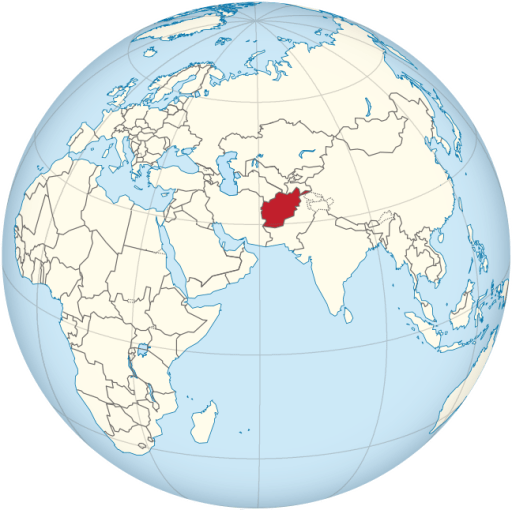
Last year, floods in Pakistan killed more than 1,500 people and affected more than 30 million people. The floods submerged one-third of the country; one of the places that got hit the hardest was Sindh in the southeast, the second-largest province by population after Punjab. News website The Citizenry looked at how much money the government spent on dealing with climate change in Sindh from 2007 to 2023. They found out that all the money the government used for fighting climate change during that time was less than what they spent on building just one really big highway.
Why this matters:
Sindh is the most climate-change-disaster prone province in Pakistan. Some 57 million people live here. With the 2023 United Nations Climate Change Conference, short COP 28, set to convene in November this year, Pakistan has put forth a case for climate disaster-related loss and damages funds. Where would this money go?
Tell me more:
The Pakistan People's Party, short PPP, has been in charge of Sindh for three straight times. During this period, Sindh faced very bad weather events. Despite these challenges, a recent report reveals that the provincial government has spent less than half of its allocated budget for climate change mitigation and adaptation. According to the journalists Sadya Siddiqui and Oonib Azam, the Sindh Government used more money to build a bridge and tunnel in a small area of Karachi called Gulshan town than they did on the budget for dealing with climate disasters in the province most at risk. You want numbers? Over 16 years, the Sindh government spent PKR 20.2 billion on climate issues. This is less than what they spent on the Malir Expressway, a big road project with environmental concerns, which cost PKR 27.5 billion. This has raised concerns among environmentalists and the general public, who believe that the province is not taking the climate crisis seriously.
Give me juicy details:
In some years, they only used up to 20 percent of the money they set aside. This has hit the folks in Sindh hard. With more bad weather events happening, using the money better could've made things less rough. Some experts say the low spending is because people don't really get how important climate change projects are. Others think it's because of red tape and maybe some shady dealings. Siddiqui and Azam point out that while the Sindh government talks big about climate money and the cool projects it could fund, they're also okay with building a huge road on River Malir, Karachi's last green spot. That doesn't really match up with caring about the environment and laws that protect it, they write.
What now?
According to The Citizenry, the past, present, and future Sindh governments have a right to ask for their share of the loss and damages funding (if Pakistan gets it after COP28), their past actions don't really show they've thought deeply about climate planning. The poor work of their climate departments, they write, has had real effects, with people suffering from floods and heatwaves. Some of these disasters might have been avoided if there was a better environmental authority, clearer budgeting, and solid planning. After all, the PPP-led Sindh government had plenty of time to get this right.
Australians voted against the Indigenous voice as an advisor to government and parliament
What happened:
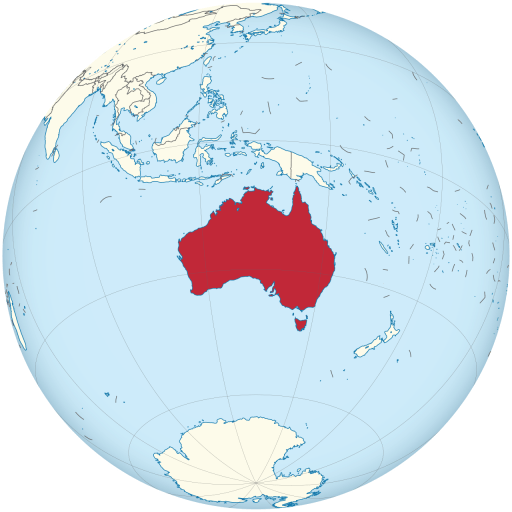
Australia has overwhelmingly voted against enshrining a federal advisory board into the country's constitution that would guide parliament and government on matters affecting Indigenous communities.
Refresher:
The 'Indigenous Voice to Parliament' as an advisory board was first proposed after hundreds of Indigenous Australians, who took part in the Uluru Dialogues, issued the Statement from the Heart in 2017. That statement called for a Voice as a way for Aboriginal and Islander people to directly advise all levels of government about laws and policies that affect their lives, with no power of veto but permanently enshrined in the constitution (meaning, it cannot be voted away in any referendum ever).
Why this matters:
Australia is made up of many different and distinct Aboriginal and Torres Strait Islander groups, each with their own culture, language, beliefs and practices. Aboriginal and Torres Strait Islander peoples are the first peoples of Australia, meaning they were here for thousands of years prior to colonization. Today, they make up around 3.8 percent of Australia's population. They have long called for better representation. However, modern discussion of recognition of Aboriginal and Torres Strait Islander peoples in the constitution did not begin until 1992. This discussion is still ongoing. 'It's a shame,' many say.
Tell me more:
The referendum for the Voice was held on October 14, 2023. A majority of voters both nationwide and in at least four states (New South Wales, Victoria, Queensland, South Australia, Western Australia and Tasmania, plus the Northern Territory) voted against the Voice. No campaigners said the Voice to Parliament racially divides the country and have questioned how it would operate.
How did Indigenous people feel about the result?
Leaders from the First Nations are really disappointed. Some Indigenous groups, like the Central Land Council and the Central Australian Aboriginal Congress, want everyone to take a 'week of silence' because of what happened. Many think that Australians voted 'No' because of the many untrue stories that were spreading around, like saying that Indigenous people would take away houses and property. Others blame the messaging from the 'Yes' campaign, 'They kept courting support from large corporate donors instead of building grassroots support. It was too inner city, upper income.' Others say, 'the messaging was just all over the place. One day, they said, 'this will make a material difference to Indigenous people's lives. 'On the next, they said, 'but also don't worry it won't actually change anything' to dissuade people from voting No. But what was the Voice really about? I still don't know for real.' This X user warns, "Really hope people don't perpetuate the myth the 'no' vote was because the Voice didn't go far enough, or there wasn't enough detail. Own it Australia, it's because not enough people give a toss about better outcomes for the Indigenous. And that really sucks."
Did you know:
Regions with a high proportion of Indigenous Australians overwhelmingly voted 'Yes' in the referendum?
'Fun' fact:
The referendum had already been defeated before Western Australian polls finished? This redditor writes, "Imagine living thousands of km from the other side of the country and find out the referendum has already been decided before you had a chance to vote." And you've still got to vote anyway.
Zoom out:
The Voice to Parliament proposal...
Please log in or subscribe for free to continue reading this issue.
We could use your help to make this issue better. Take a look at the requests below and consider contributing:
- Submit a piece of artwork for this issue
- Submit a news, academic or other type of link to offer additional context to this issue
- Suggest a related topic or source for future issues
- Fix a typo, grammatical mistake or inaccuracy
Below you'll find some of the sources used for this issue. Only sources that support "media embedding" are included.
-
-
Advocates for constitutional change in Australia said they were devastated by the defeat of a referendum that would have created a committee to offer advice on policies that affect Indigenous people.
-
Australians reject Indigenous recognition via Voice to Parliament, referendum set for defeat - ABC NewsAustralians have rejected recognising Aboriginal and Torres Strait Islander people as the nation's first people in the constitution through the establishment of a Voice to Parliament advisory body.
-
Women’s rights campaigners denounce ‘hugely regressive’ proposals from political and religious leaders to decriminalise practice
-
"The embargo must be lifted, and the Kurdish massacre must come to an end," said Tunceli MP Ayten Kordu, surrounded by the police in the protest in Dersim. 15 youth from European countries were taken into custody in the protest in Urfa.
-
A powerful 6.3 magnitude earthquake struck western Afghanistan on Sunday, just over a week after strong quakes killed thousands of people and flattened entire villages in the same region.
-
Rwandan authorities and their proxies are using violence, judicial mechanisms, and intimidation to try to silence criticism from Rwandans living around the world.
-
Armenian president approves parliament’s decision to join the International Criminal Court | The IndependentArmenian President Vahagn Khachaturyan has approved the parliament’s decision to join the International Criminal Court in a move that has further strained the country’s ties with its old ally Russia
-
Australian journalist Cheng Lei has been allowed to leave the country and is back home in Australia after being detained for more than three years on charges of espionage.
-
Uganda Airlines takes off as new Mumbai route adds to East Africa's air travel options | Business Insider AfricaThe long-awaited direct flights from Uganda Airlines to Mumbai have already begun, giving travelers more alternatives in the East Africa-India aviation corridor. | Business Insider Africa
-
The result could lead to a significant increase in the number of ancient texts that are available for scholars to study.
-
Nigerian Business tycoon, Abdul Samad Rabiu donates $2.5 Million for mosque reconstruction | Business Insider AfricaAbdul Samad Rabiu, Nigerias second-wealthiest person, and the Chairman of BUA Group has donated $2.5 million to rebuild the iconic Zaria Central Mosque at a fundraising event in Abuja on Saturday. | Business Insider Africa
-
-
Kenyan runner Kelvin Kiptum has shaved more than 30 seconds off the men's marathon world record in Chicago. He claims the accolade from his countryman Eliud Kipchoge, who set the previous record in Berlin.
-
Today at the 2023 Grand Challenges Annual Meeting, Bill Gates, co-chair of the Bill & Melinda Gates Foundation, announced new investments to advance access to mRNA research and vaccine manufacturing technology that will support low- and middle-income countries’ (LMICs) capacity to develop high-quality, lifesaving vaccines at scale.
-
In foreign media, African accents often don’t hit the mark – mangled, erased, or just undercooked. According to these experts, it’s not that simple.
-
An Arizona father stripped down to shorts and a crop top during a school board meeting to make a statement about the district’s new dress code.
Each week, What Happened Last Week curates news and perspectives from Asia, Africa, and the Americas. The newsletter is written by Sham Jaff and focuses on stories that rarely receive sustained attention in Western media.
Read the free edition every week. VIP subscribers receive additional stories, recommendations on what to watch, read and listen, and more.