
In this issue, I do not write about what's happening in Israel and Palestine, you've got plenty of other sources covering that already. This newsletter is meant to highlight underreported news from the region. Instead, I write about Mauritius (they just decriminalized homosexuality), the earthquake in Afghanistan (that killed more than 2,000 people) and Argentina's new UNESCO World Heritage Site (that is adding fuel to a heated debate on the country's past during the presidential elections). Plus, a new podcast about Vladimir Putin as a boy, a profile on M.S. Swaminathan (the guy who fed India), a South Korean girl group with a heart for Kurdistan, Turkey and Syria, and so much more.
Homosexuality is no longer a crime in Mauritius
What happened:
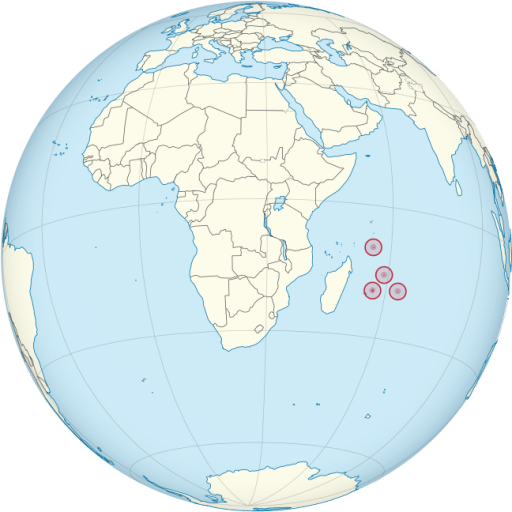
Mauritius' highest court has decriminalized gay sex, saying the ban reflected (British) colonial-era, rather than indigenous values.
Why this matters:
Mauritius is now joining countries like Angola, Botswana, and South Africa where being gay isn't a crime. It's a big step for LGBTQ+ rights in Africa. More than 1.3 million people live in Mauritius. There are still 64 countries where being gay is illegal, and almost half of them are in Africa.
Tell me more:
Five individuals brought two cases to the Supreme Court. The first one was filed by Abdool Ridwan Firaas Ah Seek, a gay man from Mauritius, basically saying 'I want to love whoever without fear.' He was supported by the LGBTQ+ group Collectif-Arc-en-Ciel as well as the advocacy group Human Dignity Trust. The court agreed and said that when the Constitution talks about not discriminating based on "sex", it should also mean "sexual orientation". On that basis, the court found that forbidding consensual same-sex relations was unconstitutional and discriminatory. The court also pointed out that the old law against gay relationships came from colonial times, and that the Constitution is a living thing and should be understood in a broad way. 'Mauritius is a democratic country that shouldn't interfere in the personal lives of its LGBTQ+ people,' it said.
In the second case, four gay men (some from a group called Young Queer Alliance) said that the law against gay relationships made them feel like criminals just because of who they loved. The Supreme Court again held that this was discriminatory and in breach of provisions in the Constitution. It found the prohibition "criminalizes the only natural way for the plaintiffs and other homosexual men to have sexual intercourse, whereas heterosexual men are permitted the right to have sexual intercourse in a way which is natural to them."
Details:
When making their decision, the court looked at what other countries like Belize, South Africa, India, and the USA (among others) had decided about similar issues. They also thought about a 1994 case called Toonen v. Australia. In that case, the United Nations said that making gay relationships a crime was against international rules.
What was the law in Mauritius before?
The law is from the time when British colonialists ruled over Mauritius. They first criminalized "sodomy" in Mauritius in 1898, which meant that, technically, you could go to prison for up to five years for gay sex, but the law "appears to be largely obsolete in practice", the Human Dignity Trust said on its website. This latest Supreme Court ruling doesn't really come as a surprise. Mauritius already has some laws from 2008 and 2019 that say you can't treat people unfairly because of who they love. Plus, two months ago, from July 31 to August 4, the Pan Africa ILGA conference took place in the country, a huge conference dedicated to advancing rights of LGBTIQ+ people in Africa. Upwards of 400 activists and organizations from around the world traveled to Mauritius that week for the Pan Africa ILGA conference.
Did you know:
Mauritius gained its independence in 1968, but kept the ban on gay sex? Some say religion and culture are reasons why it stayed.
What now?
Human Rights Watch writes, "The Mauritius government should now move to ensure that adequate laws and policies are adopted and implemented to protect the rights of LGBT people, and take proactive steps to combat discrimination, including through public education."
An earthquake in Afghanistan killed at least 2,000 people
What happened:
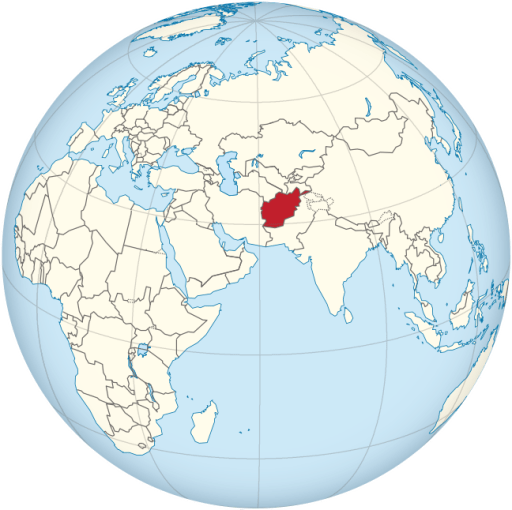
The death toll from strong earthquakes that shook western Afghanistan has risen to over 2,000, a Taliban government spokesman said Sunday. More than 9,000 people were injured. Some 1,320 houses are damaged or destroyed.
Why this matters:
It's one of the deadliest earthquakes to strike the country in two decades. Some 40 million people live in Afghanistan.
Tell me more:
On Saturday, a super strong earthquake, with a magnitude of 6.3, rocked western Afghanistan. The main earthquake and the aftershocks were centered about 35 km (20 miles) from Herat city. The worst affected were four villages in the Zenda Jan district in Herat province, according to disaster authority spokesperson Mohammad Abdullah Jan. After the quake, phones stopped working in Herat, so it's been tough getting all the info. Some videos online show people in Herat city out on the streets, probably scared to be inside. Food, drinking water, medicine, clothes and tents were urgently needed for rescue and relief, Suhail Shaheen, the head of the Taliban political office in Qatar, said in a message to the media.
Are earthquakes common in this region?
Yes, Afghanistan often gets hit by powerful earthquakes. The country is located in a region where several tectonic plates meet. Most earthquakes happen in the Hindukush region, which is right next to Pakistan and part of this big zone called the Alpide Belt, which is the second-shakiest place on Earth after the so-called Pacific Ring of Fire. This belt goes from places like the Mediterranean all the way to Southeast Asia. The last strong earthquake hit the country in an eastern region in June 2022, killing at least 1,000 people and injured about 1,500. Nonetheless, the country's not well-equipped to deal with this. Since the Taliban took charge in Afghanistan two years ago, the country's healthcare, which mostly depended on help from other countries,...
Please log in or subscribe for free to continue reading this issue.
We could use your help to make this issue better. Take a look at the requests below and consider contributing:
- Submit a piece of artwork for this issue
- Submit a news, academic or other type of link to offer additional context to this issue
- Suggest a related topic or source for future issues
- Fix a typo, grammatical mistake or inaccuracy
Below you'll find some of the sources used for this issue. Only sources that support "media embedding" are included.
-
-
The island nation's highest court says the ban on gay sex does not reflect "indigenous values".
-
Upwards of 400 activists and organizations from around the world traveled to Mauritius this week for the Pan Africa ILGA conference.
-
Two landmark judgments of the Supreme Court of Mauritius have struck down the provision in the Criminal Code that outlawed consensual sex between men, rejecting the law as a discriminatory colonial relic.
-
A Taliban government spokesperson says the death toll from strong earthquakes that shook western Afghanistan has jumped to more than 2,000.
-
An earthquake of magnitude 6.5 on the Richter scale struck northeast Afghanistan on Tuesday, 21st of March
-
Former clandestine detention, torture and extermination camp during era of state terrorism recognised as a World Heritage site by UNESCO.
-
-
The network of ceremonial mounds join the Acropolis, Machu Picchu, the Taj Mahal, Stonehenge and the Great Wall of China
-
The statement did not mention fuel, and it was not clear when aid would start flowing.
-
Turkey strikes suspected Kurdish militant targets in northern Iraq after suicide attack in Ankara | AP NewsThe Turkish defense ministry says its warplanes have carried out raids on suspected Kurdish rebel targets in northern Iraq following a suicide attack on a government building in the Turkish capital.
-
An arrest warrant has been issued for Venezuela's former opposition leader Juan Guaido. The prosecutor's office said it would ask for interpol's help in his apprehension.
-
The World Health Organization (WHO) has recommended a new vaccine, R21/Matrix-M, for the prevention of malaria in children. This was just one of the recommendations made at the meeting of WHO's Strategic Advisory Group of Experts (SAGE) on immunization held on 25-29 September 2023.
-
A new study of fossil footprints in White Sands National Park bolsters the argument that humans may have lived in North America longer than thought.
-
The women's rights campaigner, serving a lengthy sentence in a notorious Tehran prison, is awarded the prestigious prize.
-
The Senegalese duo’s A Soul of Small Places draws on Diallo’s experiences of gender-based violence, set against a backdrop of African cosmology in which spirits and humans coexist
-
Listen to Audacy Studios | Puck's About a Boy: The Story of Vladimir Putin podcast with Julia Ioffe on Apple Podcasts.
-
-
Turkey’s President Tayyip Erdogan complained this week that he was uncomfortable with the use of what he described as “LGBT colors” at the United Nations, which is decorated this week with bright colors promoting the Sustainable Development Goals.
Each week, What Happened Last Week curates news and perspectives from Asia, Africa, and the Americas. The newsletter is written by Sham Jaff and focuses on stories that rarely receive sustained attention in Western media.
Read the free edition every week. VIP subscribers receive additional stories, recommendations on what to watch, read and listen, and more.