

In this issue, I write about the wedding hall fire in Iraq, Kenya's affordable housing plans and what happened in Nagorno-Karabakh. Plus, a Bhojpuri cinema legend, how Lionel Messi probably helped reopen the Argentinian embassy in Bangladesh, a Sri Lankan immigrant makes the best baguettes for President Macron, a Nigerian crime thriller film that's trending at number one in South Korea and a unique love story involving the Chinese language and a very determined professor, and so much more.
Kenya's president is taking on affordable housing
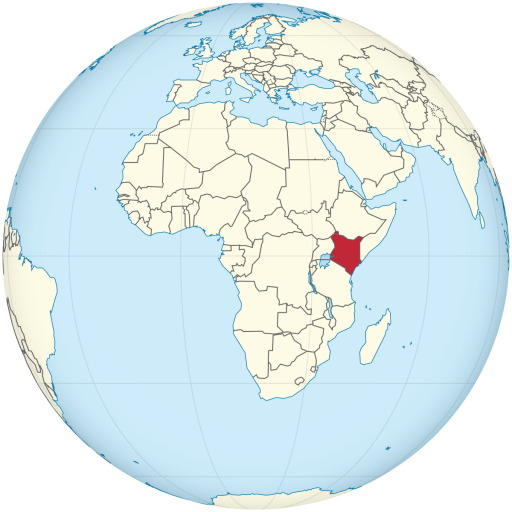
What happened:
President William Ruto wants to improve housing for a lot of people, and said very poor neighborhoods will not exist in the next decade because of the affordable housing project that is currently being rolled out.
Why this matters:
Currently, more than 6.5 million Kenyans live in very poor neighborhoods across the country.
Tell me more:
To pay for this, there's a new controversial law where workers give a small part of their pay (1.5 percent) to the government. Some people don't like this and are taking it to court. Ruto said, 'the fact that so many people still live in these places should be a huge concern to the country. Can you not see the long-term benefits?' He's already started building nearly 18,000 new homes in places like Mukuru, Rongai, and Kibera to help people with less money. "The number of people who have a mortgage in Kenya is less than 40,000. We should have around 1.5 million people paying a mortgage to become homeowners. But the problem is that we do not have houses that ordinary people can buy. The houses that are being built are highly priced," President Ruto said.
Details:
If you want to know how it looks like in such neighborhoods, take a look at Kibera. This African Arguments article shows a few photographs that I found very impressive. For example, look at this picture of a ten-year-old following a Facebook live of a ballet dance session at her house in Kibera.
Did you know:
There is a George Floyd mural at Kibera in Nairobi? I found it in this African Arguments interview with activist Gacheke Gachihi.
What's the bigger picture?
If you're a reader of this newsletter, you should know better than to trust anything a president says without looking at the bigger picture. April Zhu in Africa Is A Country wrote an article detailing the Kibera evictions of 2018 and the formal anti-people politics of housing for the poor that persists in Nairobi. "In many ways, Nairobi's anti-poor urban design today is a facsimile of colonial plans. Many low-income households are forced into the city's 'low-quality, high-cost trap,' where landlords are free to pursue economic incentives without administrative oversight or protection for tenants," Zhu writes.
A fire destroyed a wedding hall in Iraq, killing at least 119 people
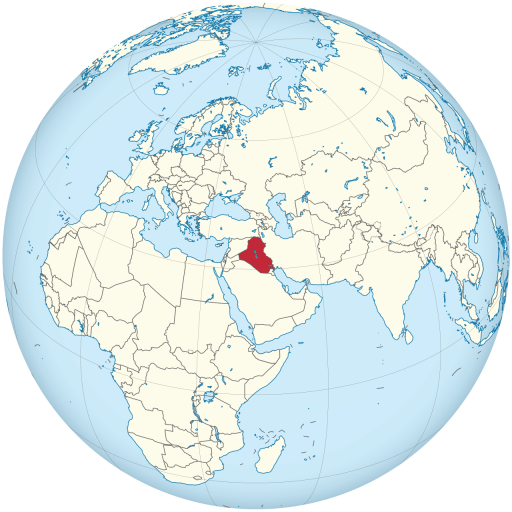
What happened:
A fire broke out at a wedding in Qaraqosh, Iraq, killing 119 people, including 27 children.
Why this matters:
To many in Qaraqosh, the fire was yet another example of corruption and safety issues in Iraq. Many believe that businesses and the government often risk people's lives to make money.
Tell me more:
The fire started when people lit flares during the bride and groom's dance. The flares set the ceiling decorations on fire, and the whole hall quickly caught fire. Videos of the incident are available online. Many guests are still missing, and about 80 are in hospitals. A first report has found what many witnesses had already said: The wedding hall violated basic safety requirements and lacked emergency exists and a sprinkler system. The building was also made out of highly inflammable material. Plus, the building had been built illegally on farmland. "How can a wedding hall like this be allowed to stay open when it did not meet any of the safety requirements?" asked Hanan Matti, who heads the Beth Nahrain Organization for Women in Qaraqosh, which advocates for the rights of women and children.
Details:
The material in the wedding hall was similar to that in the Grenfell Tower in London, which also caught fire in 2017, killing 72 people.
Did you know:
Iraq has an ancient Christian minority? They mostly live in smaller villages in northern Iraq, as well as in the large cities of Baghdad and Mosul, and in Erbil in Iraqi Kurdistan. Iraqi Christians have gone through a lot. When the Islamic State took over northern Iraq in 2014, the militant group expelled Christians in many places, including in Qaraqosh. Christians have only recently begun to return and raise families in the area again.
What now?
Prime Minister Mohammed Shia al-Sudani visited the Hamdaniya district, where the fire took place, and Mosul to meet with investigators and to visit the wounded in hospitals. Prayers were held for those whose lives were lost at the Syriac Catholic monastery of Mar Behnam and Mart Sarah in Hamdaniya. Sudani offered condolences and pledged to hold accountable those responsible, and promised that families who lost relatives would receive compensation. Since then, the owner of the hall has been detained by the authorities, and questions are being raised about the slow response of the Civil Defense Force.
The fight for Nagorno-Karabakh, one of the world's longest-running disputed, has likely come to an end
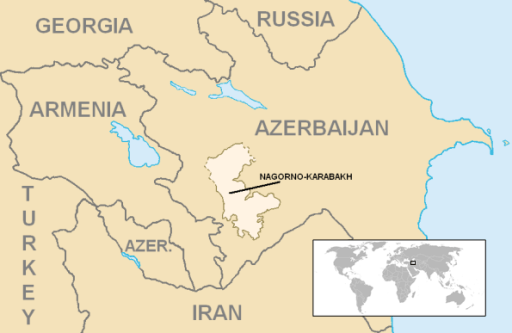
What happened:
On September 20, Azerbaijan took control of Nagorno-Karabakh/the Republic of Artsakh. The republic and its institutions will "cease to exist" from 1 January 2024.
Refresher:
Nagorno-Karabakh is a mountainous region in the South Caucasus. Armenia and Azerbaijan have long argued over who gets to live and rule over it. Internationally, the region has been recognized as part of Azerbaijan but Nagorno-Karabakh has been...
Please log in or subscribe for free to continue reading this issue.
We could use your help to make this issue better. Take a look at the requests below and consider contributing:
- Submit a piece of artwork for this issue
- Submit a news, academic or other type of link to offer additional context to this issue
- Suggest a related topic or source for future issues
- Fix a typo, grammatical mistake or inaccuracy
Below you'll find some of the sources used for this issue. Only sources that support "media embedding" are included.
-
-
Petitioners have urged a three judge bench to declare the Finance Act 2023 unconstitutional, null and void. They told the judges that the Finance bill was passed by Parliament without the concurrence of the senate as required by the law. In July, High Court Judge Mugure Thande directed the suit to Chief Justice Martha Koome to form a three-judge bench to hear the Finance Act 2023 case. President William Ruto signed into law the Finance Bill that was approved by the National Assembly to raise additional funds through new taxes. The controversial Bill was passed during a stormy session, largely boycotted by the opposition. Following the Bill's passage, the president said it would enable his administration to deliver on their manifesto pledge to Kenyans and cut on a huge dependence on external debt. Employers are required to remit 1.5% housing levy deducted from employees to the government in nine days to fund affordable housing scheme. If the bill is implemented, Kenyans face a high cost of living after the increase on Value Added Tax (VAT) on petroleum products from 8 to 16%. The Bill has set in motion a number of protests in Kenya. Ruto has said he had no problem with protests against the high cost of living, organised by opposition leader Raila Odinga, as long as they don't lead to the destruction of property.
-
The periodic evictions of poor families in Nairobi follows in a long tradition in Kenya, dating to colonialism, to keep the city as a space for the elite.
-
The region is at the heart of a long-running conflict between ethnic Armenians and Azerbaijanis.
-
Half-eaten food at abandoned positions reveals how fast Karabakh Armenians lost control to Azerbaijan.
-
Baku says the operation against its ethnic-Armenian enclave will stop only if it sees a white flag.
-
Fears are growing for the 100,000 ethnic Armenians in the enclave — with Baku expected to force a full integration into the Azerbaijani state
-
The conflict between Armenia and Azerbaijan over Nagorno-Karabakh escalated in 2020 into a six-week war in which an estimated 5700 people died. The war was not completely unexpected as deadly skirmishes have occurred regularly since the previous full-scale war between the two states ended in 1994.
-
Baku says the operation against its ethnic-Armenian enclave will stop only if it sees a white flag.
-
After more than a century of bitter clashes, the long-simmering conflict between Armenia and Azerbaijan over the contested territory of Nagorno-Karabakh came to a boil last week as Azerbaijan seized full control of the enclave.
-
The predatory tech giant is at the center of a heritage site land grab, pitting indigenous and environmental activists against city authorities.
-
A Nature survey finds that scientists are concerned, as well as excited, by the increasing use of artificial-intelligence tools in research.
-
Diversas organizaciones de sociedad civil marcharon este 15 de septiembre en contra de la reelección presidencial ilegal que busca Nayib Bukele, en la que también exigieron que se respeten los derechos humanos.
-
The Biden administration says it’s granting temporary legal status to hundreds of thousands of Venezuelans already in the country.
-
Editi Effiong is the founder of digital marketing company Anakle. The Black Book, which he co-wrote, marks his debut as a movie director. The movie has been an early global hit on Netflix.
-
When we think of China today, we think of a technological superpower. From Huawei and 5G to TikTok and viral social media, China is stride for stride with the U
-
El surasiático Jamal Bhuyan juega desde hace un mes en un ignoto equipo de la tercera división argentina en otro capítulo del romance de su país con el fútbol de los campeones del mundo
Each week, What Happened Last Week curates news and perspectives from Asia, Africa, and the Americas. The newsletter is written by Sham Jaff and focuses on stories that rarely receive sustained attention in Western media.
Read the free edition every week. VIP subscribers receive additional stories, recommendations on what to watch, read and listen, and more.