

I hope you have a good start to this busy week. Dominica (an island country in the Caribbean), Eswatini, Maldives and Slovakia are having elections.
In issue this issue, I write about Nigeria's military and some very serious allegations, blasphemy laws in Indonesia and how they are increasingly being used to prosecute non-Muslim civilians, and the latest huge push for Indigenous rights in Brazil. I also take you to a music festival in Lebanon and Colombia, we shake our booties to an Egyptian pop song, and celebrate a good deal of good news from Africa, and so much more.
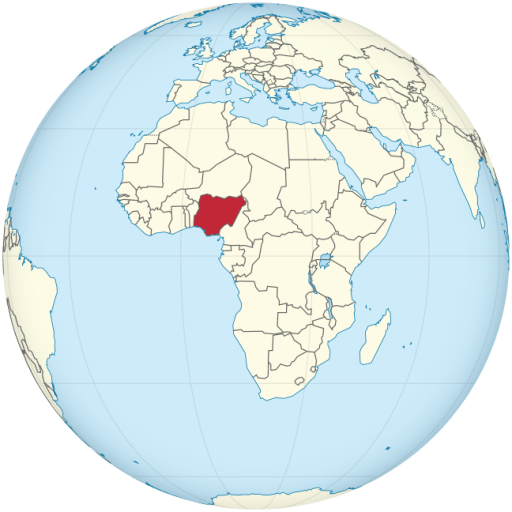
Nigeria accounts for more than half of Africa's missing. The military may know why
What's happening:
An investigation this month found that the Nigerian army, while fighting Boko Haram, may have killed and buried hundreds, if not thousands, of civilians without trial.
Why this matters:
Nigeria has ratified the International Convention for the Protection of All Persons From Enforced Disappearance, which tasks countries to do everything they can to find people who have gone missing and, if they have died, to find and honor their bodies. Another, the Minnesota Protocol, says that if someone dies in a way that might be against the law, the government has to look into it and prosecute those responsible. It also states that victims have a right to remedy and that family members of missing people have a right to information on what (may have) happened to them, and "the right to know extends to society as a whole."
Tell me more:
There are more than 25,000 missing people in Nigeria, more than in any other country on the African continent. Many of them disappeared during 2011 and 2016, as the Nigerian army fought the extremist group Boko Haram. During that time, thousands of civilians were arrested and detained at the Giwa barracks in the northern city of Maiduguri, suspected of being affiliated with the terrorists; few of them were ever released. The new report is saying that the Nigerian army had a part, and not a minor one, to play in this.
That's a grave accusation, wow.
Yes, and they've got proof. HumAngle created a database of nearly 3,650 missing people in the Chibok, Gwoza, Bama and Askira-Uba areas of northern Nigeria. Collaborating with Washington-based New Lines magazine, HumAngle's investigations editor Kúnlé Adebajo tracked stories of missing people by interviewing eyewitnesses, using geolocation data, reviewing leaked documents and visiting sites. Adebajo told The Continent that at least 200 missing people "were arrested by security agents, mostly soldiers". HumAngle also obtained figures that show the military took more than 3,320 bodies to a morgue in Borno State between 2013 and 2022. "This doesn't include the estimated hundreds of bodies taken to mass burial/dumping sites," Adebajo said.
Has the government responded yet?
No, the government has not officially responded to the report. Things do look a little suspicious as Nigeria doesn't seem to prioritize its pretty huge missing people issue. In 2015, Nigeria's National Human Rights Commission promised to set up a database of missing persons. It is still not operational today. And last Monday, the United Nations Committee on Enforced Disappearances said that Nigeria was nine years late in submitting a report to the UN on its progress in legislating against and preventing enforced disappearances. Mhm.
What now?
HumAngle's Kúnlé Adebajo has a list of suggestions for next steps in a video on X, "Speed up the prosecution of alleged terrorism suspects, grant them a fair trial, release those found to be innocent. Also, release the names of everyone arrested in connection with Boko Haram and acknowledge your wrongdoings in the prosecution of the war against Boko Haram. Additionally, the government should establish a compensation program for the affected families or at least apologize to them. Then, the government should launch a National Missing Persons Register."
A Muslim woman was sentenced to two years in prison for eating pork in Indonesia
What happened:
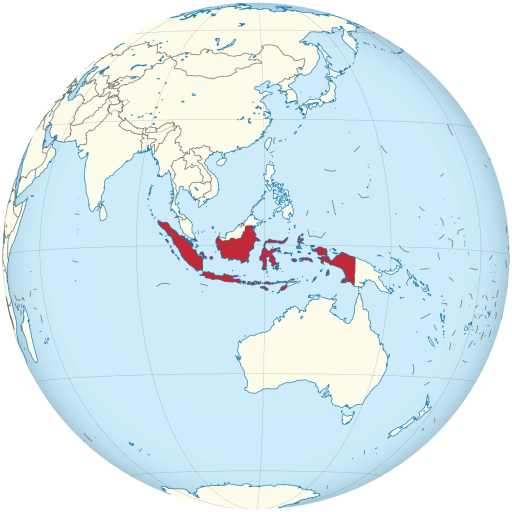
A Muslim woman in Indonesia was sentenced to two years in prison under the country's blasphemy law. The reason? While vacationing in Bali, she shared a video on TikTok on March 9, sitting in front of a plate of rice, vegetables, and a slab of crispy pork skin. Before tasting the pork, she said 'Bismillah', that translates into 'in the name of God (or Allah)' in Arabic.
Why this matters:
In Islam, eating pork is a no-no, but many non-Muslims in Indonesia, especially in places like Bali and among the Chinese community, eat it regularly. Indonesia's the biggest Muslim country in the world. Lately, there's been a shift towards more religious conservatism. Some folks are worried about how the blasphemy laws are being used, especially against religious minorities and those seen as disrespecting Islam. More than 230 million people live in Indonesia.
Tell me more:
Lina Lutfiawati, or Lina Mukherjee to her two million followers on social media, is all about lifestyle and food. For her latest video, where she's trying pork, she faced trial in the Palembang district court on Sumatra island. Even though she has since apologized for eating food of her choice and prefixing it with a common Arabic phrase, the court found the 33-year-old guilty of disseminating information that could incite hatred against religious groups. On top of her jail time, she's got to pay a fine of US$16,245, which is a lot given that the average yearly salary in Indonesia is about US$4,300. If she doesn't pay up, she could be in jail for another three months. After the verdict, she told CNN Indonesia, "I know I was wrong, but I really did not expect this punishment." It is possible that she will file an appeal.
Are blasphemy cases like Lina's common in Indonesia?
Blasphemy laws have been growing in Indonesia. Now, there are six parts of the criminal code about it. It's seen as a step back for religious freedom. Lina's case is not unique, unfortunately. More influencers on social media have been jailed for blasphemy against Islam in recent years. Even though Indonesia's laws say blasphemy against any of its six official religions is a no-go, most cases are about Islam and often involve non-Muslims....
Please log in or subscribe for free to continue reading this issue.
We could use your help to make this issue better. Take a look at the requests below and consider contributing:
- Submit a piece of artwork for this issue
- Submit a news, academic or other type of link to offer additional context to this issue
- Suggest a related topic or source for future issues
- Fix a typo, grammatical mistake or inaccuracy
Below you'll find some of the sources used for this issue. Only sources that support "media embedding" are included.
-
-
Vonis dua tahun bui terhadap terdakwa kasus makan babi sambil baca bismillah, Lina Mukherjee, sama dengan tuntutan jaksa penuntut umum.
-
Jakarta police arrest six for 'blasphemy' over bar promotion - Jakarta - The Jakarta Post
-
He received a two-year sentence after a case seen by many as a test for Indonesia's religious tolerance.
-
A female flogging squad has enraged Indonesian activists. Authorities in the province say more women are committing "moral" offenses, which are punishable in Islamic-conservative Aceh by whipping or caning.
-
What is blue tea and why should you start drinking it? - Food - The Jakarta Post
-
People seeking a golden visa often want a Plan B. Indonesia’s attitude to debt makes the country promising to investors, says Bloomberg Opinion’s Shuli Ren.
-
Welcome to The Azadi Briefing, an RFE/RL newsletter that unpacks the key issues in Afghanistan. I'm Abubakar Siddique, a senior correspondent at RFE/RL's Radio Azadi. Here's what I've been tracking and what I'm keeping an eye on in the days ahead.
-
The five-year plan would target 4.2 million people in the worst-hit provinces and covers rehousing and emergency aid.
-
His Excellency Félix-Antoine Tshisekedi Tshilombo spoke at the General Debate of the 78th Session of the General Assembly
-
Les relations entre Kigali et Kinshasa, la recrudescence des coups d’État en Afrique, l’élection présidentielle de 2024, l’Union africaine et le G20… Le président rwandais répond en exclusivité aux questions de Jeune Afrique.
-
The #OccupyJulorbiHouse protest in Accra, Ghana, captured attention as citizens rally for political change and economic reform. From Sep 21 to Sep. 23, demonstrators rallied for political change and economic reform.
-
The Sahel nations sign pact that will allow them to cooperate against threats of armed rebellion or external aggression.
-
Logs shaped with sharp tools on border of river predate rise of modern humans and may have formed walkway or platform
-
We are honoured to announce that Nhial Deng, a refugee from South Sudan, is the winner of the $100,000 Chegg.org Global Student Prize 2023! Selected from almost 4000 nominations and applications from 122 countries worldwide, Nhial accepted his award in New York during UN General Assembly week 2023.
-
Festival Cordillera 2023 will take place in the capital on September 23 and 24. Find out who’s playing and why we think the event is a new highlight in the city’s music calendar.
-
In war-scarred Iraqi city, food business gives women independence - Food - The Jakarta Post
Each week, What Happened Last Week curates news and perspectives from Asia, Africa, and the Americas. The newsletter is written by Sham Jaff and focuses on stories that rarely receive sustained attention in Western media.
Read the free edition every week. VIP subscribers receive additional stories, recommendations on what to watch, read and listen, and more.