

In this issue, I do not wish virgo man Narendra Modi 'Happy Birthday' but 'Happy new year' to people in Ethiopia and Eritrea. Instead, I focus on Libya, a lesbian couple in Hong Kong and Indigenous women in Brazil. This issue is dedicated to climate justice, rainbow families and fair global healthcare.
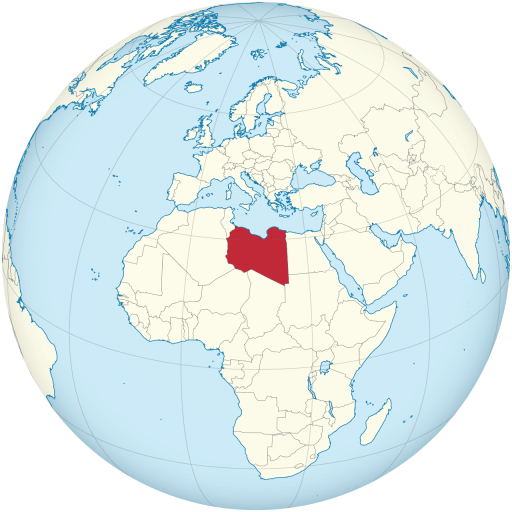
What's happening in Libya?
What's happening:
On September 10, heavy rains, caused by Storm Daniel, swept through Libya's northeastern region, causing flash floods, the collapse of two dams near the city of Derna and overflowing rivers in five provinces.
Why this matters:
At the time of writing (Sunday), the Red Cross had confirmed 11,000 deaths, with the mayor of Derna saying the toll could be 20,000 in the city alone. Plus, around 38,000 people have been made homeless.
Tell me more:
The UN's stepping in to help out the Libyan government with a quick three-month plan. Some of the cities that got the worst of it include Derna, Battah, Soussa and Al Marj. Schools and hotels are currently being used for shelter. Telecommunications and electricity outages combined with road collapses are making access to information extremely challenging. I keep seeing videos of journalists crying on live television when reporting on the scale of what's happened.
Why was it so bad?
While storms are natural, the damage can be reduced if people plan and prepare. The World Meteorological Association says the number of deaths would be much lower if people had been warned. "The leadership in Libya has been greedy, divisive and small-minded for decades," writes Tarek Megerisi for New Lines Magazine. The dams that collapsed last week were built by Muammar Gaddafi, Libya's leader (and dictator) from 1969 until 2011. Megerisi blames Gaddafi's leadership. "[A]lthough he was killed, the cultures he created remained."
What sort of cultures?
Those of corruption and negligence. Mergerisi writes that, in 2021, Libya's financial watchdog said that the country's Libya's Ministry of Water Resources had set aside about 2.3 million euros to fix the two dams. They even hired a company for the job, but the work was never done. Why? It remains unclear. Maybe corruption, where officials took money without doing the work, maybe because the current government didn't get a piece of the deal, or maybe the officials just didn't care to do their jobs. "Worse still, Libyan hydrologist Abdelwanees A.R Ashoor had warned in a research paper in November 2022 that "immediate measures must be taken for routine maintenance of the dams, because in the event of a big flood, the consequences will be disastrous for the residents of the valley and the city." Survivors told the BBC that they had raised the alarm about cracks in the top dam, too.
Zoom out:
Storm Daniel came from Greece and Turkey. "When it crossed the Mediterranean, hot water from the sea energized it. That meant a more violent storm, and more rain. Oceans and seas are hotter because human greenhouse gas emissions trap heat in the atmosphere. Most of that heat ends up being absorbed by oceans. Scientists have warned for decades that this will "supercharge" storms. Those warnings are no longer being written in the future tense," writes Sipho Kings for The Continent, issue 135. "There will be many, many more Dernas."
What now?
I don't know. Libya's top prosecutor announced a probe into the dam. In the meantime, you can consider donating to Islamic Relief, UN World Food Programme, International Federation of Red Cross and Red Crescent and International Medical Corps. If you know of any better ones, please let me know. Donating will not fix everything. It's the bare minimum.
A lesbian couple in Hong Kong won the right to both be recognized as their child's parents
What happened:
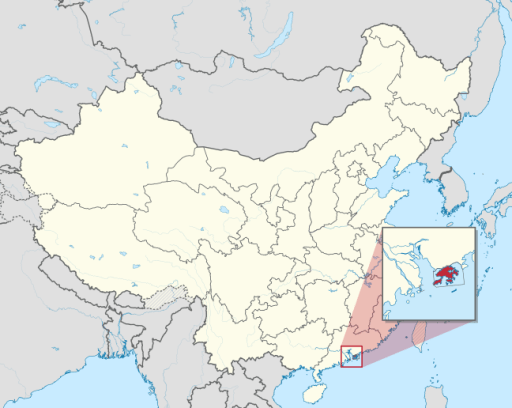
A lesbian couple in Hong Kong, who are married, have won the right to both be recognized as their child's parents. 'The government's non-recognition was a form of discrimination against the couple's son,' the court said.
Why this matters:
Right now, Hong Kong doesn't recognize same-sex marriages or partnerships, so gay couples don't have the same rights as straight couples. There's been some chatter about changing this, but nothing's happened yet.
Tell me more:
The two women got married in South Africa and had their child through a special process called reciprocal IVF (I'll explain that in a bit). But when they came back to Hong Kong, the government only recognized one of the moms as the child's legal parent. That didn't sit right with them, so they took it to court. The judge, Queeny Au-Yeung, basically said 'yes, there were right to be upset' and that it was wrong for their child not to have both moms recognized, especially since they both have a genetic connection to him. Lawyer Evelyn Tsao, who represented one of the women, called the ruling "one giant step for the rainbow families in our LGBTQ community".
Fun fact:
JudgeQueeny Au-Yeung's legal wig.
How does reciprocal IVF work?
Basically, reciprocal IVF is a way for lesbian couples to both be involved in having a baby. One woman provides the egg, which is then fertilized with donor sperm outside the body. That fertilized egg is then placed in the other woman, who carries the baby until it's born. This method has been around since the late 2000s.
What now?
The Department of Justice told AFP it was "studying the judgment in detail and considering the way forward". Plus, support for same-sex marriage is at an all-time high in Hong Kong, with 60 percent of people now believing the law should be changed. As I mentioned earlier, Hong Kong's top court, even though it effectively ruled against same-sex marriage in the beginning of this month, it also ordered the government to provide an "alternative framework", such as civil unions, to protect the rights of homosexual couples. Fingers crossed.
Zoom out:
Things don't look so good in South Korea and Italy. Two weeks ago, a lesbian couple in South Korea welcomed their first child via IVF this week, marking a significant milestone for the LGBTQ+ community...
Please log in or subscribe for free to continue reading this issue.
We could use your help to make this issue better. Take a look at the requests below and consider contributing:
- Submit a piece of artwork for this issue
- Submit a news, academic or other type of link to offer additional context to this issue
- Suggest a related topic or source for future issues
- Fix a typo, grammatical mistake or inaccuracy
Below you'll find some of the sources used for this issue. Only sources that support "media embedding" are included.
-
-
Pictures reveal washed-away streets and thousands of destroyed buildings in the city of Derna.
-
Over years of lawlessness, Libya has faded from a prosperous state to a vulnerable, fragile one.
-
A Hong Kong court has sided with a lesbian couple who argued that both women should have parental status over their child born via “reciprocal IVF”, a ruling hailed as a win for the LGBTQ community. The medical procedure of reciprocal in vitro fertilisation (RIVF) allows two women to share in the process of childbearing and […]
-
A Hong Kong court has sided with a married lesbian couple who fought to have parental status over their child born through reciprocal IVF.
-
A lesbian couple in South Korea welcomed their first child this week, marking a significant milestone for the LGBTQ+ community in the country. About the couple: Kim Kyu-jin and Kim Sae-yeon held their wedding in Seoul in 2019 and registered their marriage in New York City after city authorities declined to register her marriage. On Aug. 30, Kyu-jin became the first openly gay Korean woman to give birth when the couple welcomed their daughter, Rani, a week earlier than scheduled.
-
A lesbian mum removed from her baby’s birth certificate has called on the Italian government to 'think of the families'.
-
People were protesting in the streets.
-
The demonstration brought 5 thousand participants from all over Brazil and other nations to Brasília to call for the end to violence against women and to stand up for the protection of their territories, biodiversity, and indigenous traditions.
-
Brazilian Indigenous women use fashion to showcase their claim to rights and the demarcation of land | AP NewsIndigenous women in Brazil’s capital Brasilia showcased their creations during a fashion event as part of the Third March of Indigenous Women to claim women’s rights and the demarcation of Indigenous lands.
-
Protected Areas and Indigenous Territories
-
Fighting deforestation is itself big business From roundtables, to suspect sustainability certificates, to huge international conferences, billions of dollars have been spent trying to save our Earth’s arboreal lungs. But what if the easiest, cheapest, and most effective way to halt deforestation was right under our nose?
-
Climate change itself is neither fair nor unfair. But some people bear more responsibility for it than others, and some people will feel its impact more strongly than others. Who's to blame? Is there a fair path to climate justice?
-
In early September, a 6.8 magnitude earthquake shook communities all across Morocco’s mountainous center. WCK’s Relief Team was on the ground within hours of the temblor, using any means necessary to reach the hardest hit areas to provide immediate support.
-
Médecins Sans Frontières USA, Inc.'s campaign donation page.
-
Kuwait University is set to implement gender segregation in classrooms following an agreement between Kuwaiti MP Mohammed Haif al-Mutairi and the Minister of Education Adel al-Manea.
-
The Land and Environmental Defenders on the frontlines of the climate crisis
-
Jeune Afrique a consulté en exclusivité une note de l’Agence nationale de renseignement (ANR) qui retrace les circonstances du meurtre de ce proche de Moïse Katumbi.
-
Reporters Without Borders (RSF) calls for the release of a well-known journalist in the Democratic Republic of Congo who is being held arbitrarily on charges of “spreading false rumours” and “false information” in connection with a story about a former government minister’s murder.
-
The GLAAD Studio Responsibility Index (SRI) is intended to serve as a road map toward increasing fair, accurate and inclusive LGBTQ representation in film.
-
Afghanistan's leaders say it's a sign for other nations to establish relations with its government.
-
He should also pay a collective sum of BRL 30 mi along with the other defendants for their participation in the depredation of government buildings in Brasília. Two others defendants received 17- and 14-year sentences.
-
Federal judge says a jury should hear the case against TGS
-
National mourning is declared after jihadist attacks reportedly kill 49 civilians and 15 soldiers.
-
The anniversary will be "celebrated in sobriety and in the spirit of national revival", a statement after a council of ministers said. The government will allocate the funds planned for the festivities to help the victims of a series of recent attacks and their families.
-
Pope Francis has removed a priest from Borongan, Eastern Samar, due to allegations of child sexual abuse, according to the Catholic Bishops' Conference of the Philippines.
-
London Film Festival arrives this October, showcasing a rich variety of LGBTQ+ cinema from the biggest releases to stunning debuts.
-
Arabic media discourse on refugees and migrants frequently aligns too closely with the Western narrative, often spreading fear of migrants while emphasising the burdens of asylum
-
After wins at the Venice Film Festival, a vital take on the migration of West Africans to Europe seeks an audience on both continents.
-
Newly reelected Zimbabwean President Emmerson Mnangagwa has sworn in a new Cabinet that includes one of his sons and one of his nephews.
Each week, What Happened Last Week curates news and perspectives from Asia, Africa, and the Americas. The newsletter is written by Sham Jaff and focuses on stories that rarely receive sustained attention in Western media.
Read the free edition every week. VIP subscribers receive additional stories, recommendations on what to watch, read and listen, and more.