
In this issue, I am preparing you for this week's Africa's Climate Summit and all the big concerns/demands of the continent in regard to climate change, a huge legal win for transgender rights by a trans student in India and the complicated relationship status between the Panama Canal (I finally understand how it works) and global trade. Plus, a Moroccan podcast by a queer activist on masculinity, the trailers to Netflix's first African animation series and a Yemeni movie about abortion, what Gabon has to do with Michael Jackson and James Brown, a lot of good news, and so much more.
All eyes on Africa's Climate Summit in Kenya this week
What's happening:
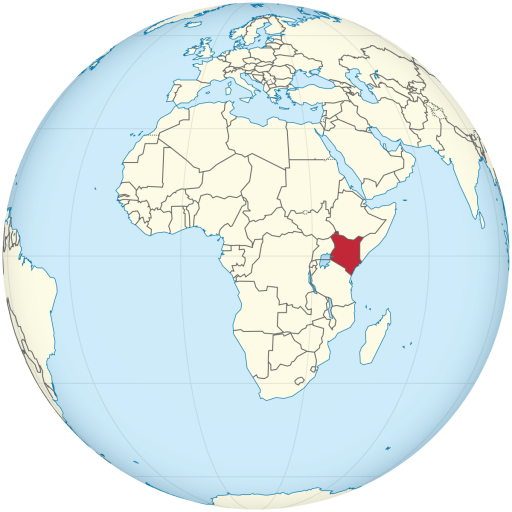
This week, African and global leaders will attend the African Climate Summit from September 4 to 6 in Nairobi, Kenya.
Why this matters:
Africa produces the smallest amount of carbon dioxide and greenhouse gases worldwide and has lots of clean energy potential. However, despite this, Africa is experiencing the worst effects of climate change; think droughts, rising temperatures, and rivers and lakes drying up. Plus, 600 million people in Africa don't have access to clean, modern energy.
Tell me more:
This summit, led by President Ruto, aims to deal with the growing impact of climate change, especially in Africa. It's a chance for African countries to come together and make plans before the big global climate meeting, COP28, in December. African governments are expected to sign a "Nairobi Declaration on Climate Change" with commitments for renewable energy, sustainable agriculture, and forest conservation, as per official website.
Good to know:
The president of COP28, Sultan Al Jaber, will attend, even though he's in charge of a big oil and gas company (ADNOC) in the United Arab Emirates. People are watching him to see if he can balance his job with taking action on climate change. Last month, the company said that it's now targeting net-zero by 2045 compared with 2050 earlier.
What are some of the biggest concerns in Africa?
There are many. Africa needs more money to adapt to climate change, but it's not getting enough, many Africans lack access to electricity, the continent's cities are growing fast, but they need to be eco-friendly, Africa has valuable minerals needed for clean energy, and keeping these resources in Africa and using them responsibly is one big concern, plus there are lots of talks about the need for protecting biodiversity and landscapes.
Dig deeper:
"Pushing for fossil fuels will continue to allow Global North countries to exploit our continent's resources and threaten our future," write Aneesa Khan, Salome Nduta and Samuel Mondlane in an opinion article for Al Jazeera.
Why Kenya?
Kenya is a "pioneer in climate and renewable energy", as per Germanwatch. The country already generates more than 90 percent of its electricity from green sources. 'In 2030, we'll hit 100 percent, promise. And everyone in Kenya will have access to energy. Just follow our lead.' Last Thursday, leading electric motorcycle manufacturers also set up bases in the country, like Uber's Electric Boda taxi service in Nairobi and pan-African EV startup Spiro deploying electric motorcycles and installing thousands of battery charging and swapping stations.
Zoom out:
The International Organization for Migration (IOM) last week was like, 'yeah, this summit is not just important for climate change. Without efficient and sustained climate action, up to 105 million people could become internal migrants by 2023 in Africa alone.'
A trans student in India won their legal case against the country's 'best law school' after being denied admission
What happened:
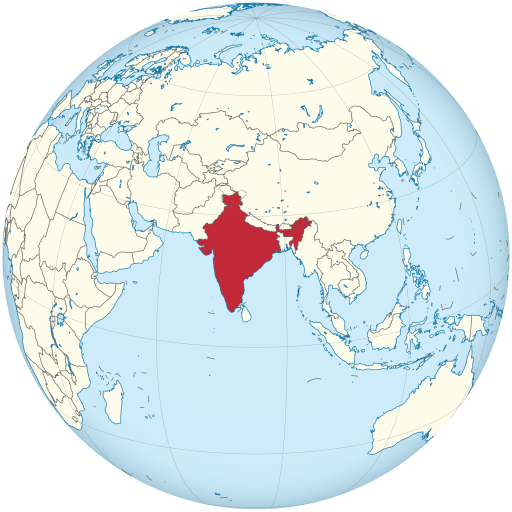
33-year-old Mugil Anbu Vasantha, a trans student in India, has won their legal case against the National Law School of India University, also known as NLSIU or 'India's best law school.'
Why this matters:
For over 4,000 years, India has acknowledged individuals who do not identify strictly as male or female, referring to them as 'hijras.' According to the 2011 census data, nearly half a million Indians identified as hijras. In India, despite legal progress and visibility in the country's pop culture, transgender people still face debates. Even though the law recognizes them as a 'third gender,' they still deal with rejection and discrimination.
Tell me more:
India's constitution has a rule that sets aside (reserves) spots in things like schools and jobs for minority groups who might struggle to get these opportunities. In 2014, the Supreme Court in India recognized transgender people as a minority and said they should also get these special spots. In the case of Vasantha, NLSIU said no to their admission because there wasn't a special quota for transgender students and argued that they were just following what other similar schools did. 'Meh, wrong. They were discriminated against based on their gender,' said the state of Karnataka's High Court.
Zoom out:
India is currently debating a new penal code with not-so-supportive sections of LGBTQ+ rights.
Related:
Diwash Gahatraj for Fair Planet met Ziya and Zahad, a transgender couple in India who are making waves in the fight for LGBTQ+ rights. They wanted to change their child's birth certificate to have 'parent' instead of 'father' or 'mother'. But the officials said no. So, they took the matter to court. This is a first-of-its-kind case in the country, and can set a strong precedent for other future parents. The next hearing in their case is scheduled for September of this year.
Climate change is disrupting the rhythms of global shipping at the Panama Canal
What happened:
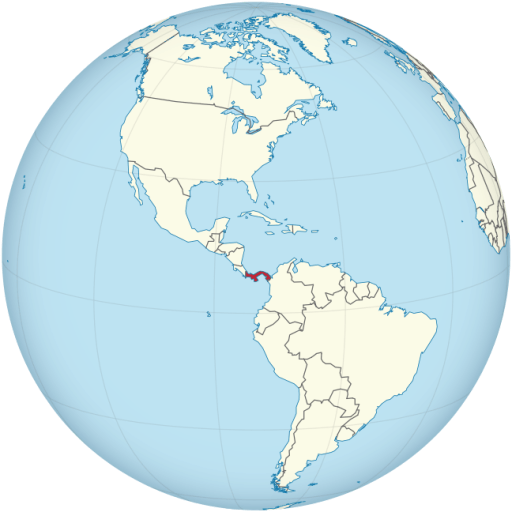
The Panama Canal is facing a big problem. The canal is an 80-kilometer artificial waterway across the Isthmus of Panama, connecting the Atlantic and Pacific Oceans for up to 14,000 ships each year.
Why this matters:
The Panama Canal is like a lifeline for global trade. It sees hundreds of billions worth of stuff pass through it every year. If it continues to struggle because of climate change (which is very likely; check the El Niño forecasts for 2024), it could have a big impact on how goods get around the world. This is yet another test for global supply chains.
Tell me more:
The Panama Canal relies on a loooot of fresh water from nearby lakes like Lago Gatún to move ships up and down. But this year, there's not enough rain, and the lakes have less water as they are drying up because the region's...
Please log in or subscribe for free to continue reading this issue.
We could use your help to make this issue better. Take a look at the requests below and consider contributing:
- Submit a piece of artwork for this issue
- Submit a news, academic or other type of link to offer additional context to this issue
- Suggest a related topic or source for future issues
- Fix a typo, grammatical mistake or inaccuracy
Below you'll find some of the sources used for this issue. Only sources that support "media embedding" are included.
-
At the first Africa Climate Summit, national leaders are expected to sign on to a “Nairobi Declaration on Climate Change,” detailing plans for renewable energy development, sustainable agriculture, forest conservation and more.
-
African leaders should use the gathering in Nairobi to chart the course for a renewable energy revolution.
-
Hinsehen, analysieren, einmischen: Wir engagieren uns für globale Gerechtigkeit und den Erhalt der Lebensgrundlagen.
-
Top Kenyan News, Gossip, Entertainment, Sports, Business and Health Blog
-
The petitioner had appeared for the all-India entrance exam. Petitioner claims that NLSIU had neither published the rank list nor the admission list of the candidates who appeared for the exam. The only message that petitioner got through the individual login portal provided by the NLSIU was “not offered admission”.
-
Manipal Academy of Higher Education secured the 16th spot with NIT Karnataka in Surathkal grabbing the 38th rank in the best university category.
-
What is meant by reservation or affirmative action? In simple terms, reservation in India is all about reserving access to seats in the government jobs, educational institutions, and even legisl...
-
How Ziya and Zahad are shaping a new narrative of love and family in India.
-
The chance that El Niño will continue through the winter is greater than 95%. What's behind the forecast? And what could El Niño mean for global temperatures?
-
Approximately two-thirds of the canal's traffic is either destined for or departing from the United States.
-
Panama Canal Authority holds queue-jumping auctions.
-
A longer dry season and a less rainy wet season have led to a shortage of freshwater to feed the Panama Canal.
-
The Panama Canal is closely monitoring the development of weather events affecting water availability in the canal watershed, which according to forecasts, could worsen with the arrival of the El Niño phenomenon. In response, the canal will proceed with water saving measures during the rainy months to aid water recovery throughout the surrounding lakes and, … Continue reading "Panama Canal prepares for the impact of climate events"
-
A total of 104 government and private higher education institutions in Sudan, as well as research centres and the National Fund for Student Welfare ha...
-
Airstrikes and artillery and rocket fire reported as clashes between armed forces and paramilitaries shows no sign of abating
-
Fukuoka school punished for locking up Vietnamese man | The Asahi Shimbun: Breaking News, Japan News and AnalysisImmigration authorities on Sept. 7 banned a Japanese language school in Fukuoka from accepting new foreign enrollees after a Vietnamese student who wanted to quit was locked in room and monitored to prevent his escape.
-
More than 70 people were killed overnight when fire raged through a five-storey apartment block in a poor area of Johannesburg, officials said on Thursday.
-
Haikui predicted to make landfall in Taitung on Sunday evening | Sep. 2, 2023 12:31
-
The 2022 Peace Prize is awarded to human rights advocate Ales Bialiatski from Belarus, the Russian human rights organisation Memorial and the Ukrainian human rights organisation Center for Civil Liberties. The Peace Prize laureates represent civil society in their home countries. They have for many years promoted the right to criticise power and protect the fundamental rights of citizens. They have made an outstanding effort to document war crimes, human right abuses and the abuse of power. Together they demonstrate the significance of civil society for peace and democracy.
-
The 2022 Peace Prize is awarded to human rights advocate Ales Bialiatski from Belarus, the Russian human rights organisation Memorial and the Ukrainian human rights organisation Center for Civil Liberties. The Peace Prize laureates represent civil society in their home countries. They have for many years promoted the right to criticise power and protect the fundamental rights of citizens. They have made an outstanding effort to document war crimes, human right abuses and the abuse of power. Together they demonstrate the significance of civil society for peace and democracy.
-
The 2022 Peace Prize is awarded to human rights advocate Ales Bialiatski from Belarus, the Russian human rights organisation Memorial and the Ukrainian human rights organisation Center for Civil Liberties. The Peace Prize laureates represent civil society in their home countries. They have for many years promoted the right to criticise power and protect the fundamental rights of citizens. They have made an outstanding effort to document war crimes, human right abuses and the abuse of power. Together they demonstrate the significance of civil society for peace and democracy.
-
The Nobel Prize rewards science, humanism and peace efforts. This is one of the central concepts in the will of Alfred Nobel, and it also permeates the outreach activities that have been developed for the purpose of engaging, inspiring and spreading knowledge about the Nobel Prize as well as the discoveries and achievements of the laureates.
-
Former president Jair Bolsonaro (PL), his wife, former first lady Michelle Bolsonaro, and allies used an opinion issued by the PGR (Office of the Prosecutor General) to remain silent in the simultaneous testimony to the Federal Police
-
Australians will cast their first referendum vote in more than two decades in October, deciding the fate of a constitutionally-enshrined Aboriginal and Torres Strait Islander Voice to Parliament.
-
Beaches on the Black Sea that closed after Russia's invasion have reopened. People say swimming and sunbathing are ways to find a taste of normal life, even while under threat from Moscow.
-
Spain’s first openly trans senator has pledged to defend the country’s trans self-ID law amid backlash from right-wing parties.
-
Greek firefighters have rescued a group of 25 migrants trapped in a forest in northeastern Greece as flames from a massive wildfire burning for two weeks approached.
-
Greek authorities say they have rescued more than 150 people, including several children, who were heading in small boats from Turkey to the nearby eastern Aegean Sea islands.
-
When Isra’a discovers she is expecting another baby amid the civil war in Yemen, she and her husband decide she should have an abortion. But this creates enormous difficulties – in their relationship and elsewhere.
-
In the upcoming drama “The Burdened” (“Al Murhaqoon”), about a family of five faced with a difficult decision, director Amr Gamal readies to tackle the subject that continues to ruffle feathers, and not just in his native Yemen: abortion. The film, set to be finished in August and based on a true story, was recently […]
-
The Bongo family that controlled Gabon for 56 years, until the coup a few days ago, loved music so much that they likely spent millions of the oil-rich country’s dollars on courting international artists.
-
A source close to the deposed president says those celebrating the coup should not expect much change.
Each week, What Happened Last Week curates news and perspectives from Asia, Africa, and the Americas. The newsletter is written by Sham Jaff and focuses on stories that rarely receive sustained attention in Western media.
Read the free edition every week. VIP subscribers receive additional stories, recommendations on what to watch, read and listen, and more.