

In this issue, I talk about the latest Human Rights Watch report on the situation of Ethiopian migrants at the border between Saudi Arabia and Yemen, the new BRICS plan and why the U.S. might be feeling a little hmmm about it, and Chile's 9/11. Plus, African rock music from Zambia, an Indian series to binge, Ottoman shade, some good news from Guatemala and Ecuador, Guyana's reparations talk, French and Afghan misogyny, and so much more.
Hundreds of Ethiopian migrants were killed by Saudi border guards while trying to cross the Yemen-Saudi border
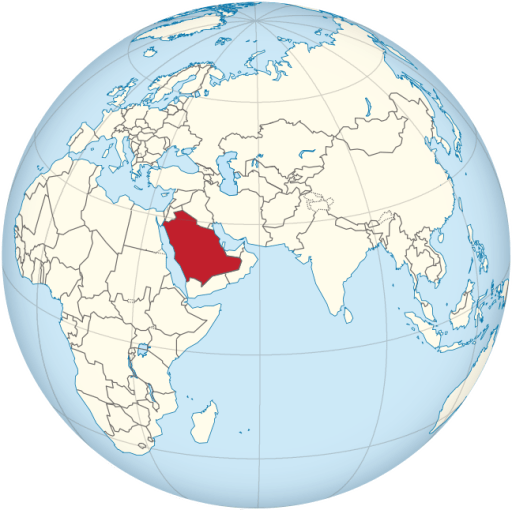
What happened:
Hundreds of migrants from Ethiopia were killed by Saudi border guards while trying to cross the Yemen-Saudi borderbetween March 2022 and June 2023, according to Human Rights Watch. The 73-page report suggests these killings are still happening.
Why this matters:
Saudi Arabia has been investing in global sports and entertainment, possibly to divert attention from its human rights issues. From hosting Formula 1 races to buying English Premier League teams, the kingdom is investing heavily in its global image.
Tell me more:
Human Rights Watch has interviewed migrants, analyzed videos, and studied satellite images. The Saudi Foreign Ministry did not respond to a request for comment. In the report published last Monday, Human Rights Watch shows evidence of mass graves and increased Saudi border security. The rights group also said Saudi border guards aren't just shooting, they're using explosive weapons. Sometimes they're asking survivors which limb they'd prefer to be shot in before pulling the trigger. "If committed as part of a Saudi government policy to murder migrants, these killings would be a crime against humanity," they said. Roughly 750,000 Ethiopians live in Saudi Arabia. Many are looking for work, but others are escaping human rights abuses back home. They often take the dangerous "Eastern Route" through Yemen to get there, where they also face abuse from smugglers and traffickers.
What's next?
Human Rights Watch has a few suggestions at hand, 'Saudi Arabia must stop any policy targeting migrants. We urgently need an independent investigation into these abuses. Plus, international governments should consider sanctions and stop selling weapons to Saudi Arabia, and global entities should think twice about participating in Saudi-sponsored events.'
Did Ethiopia or Saudi Arabia reply?
Yes. After the report came out, Ethiopia's Foreign Affairs Ministry quickly announced plans to investigate the findings alongside Saudi officials (meaning, not independently). They urged everyone to avoid jumping to conclusions and to wait for the investigation's results. The ministry's statement, shared on X (previously known as Twitter), also highlighted the strong, long-standing relationship between Ethiopia and Saudi Arabia, despite the recent tragic events. Human Rights Watch is already skeptical, 'Saudi Arabia won't address this, we just know.'
The global financial order might be reshuffling soon
What happened:
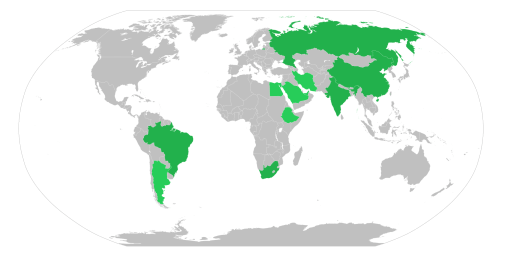
The BRICS economic group is getting bigger. Brazil, Russia, India, China, and South Africa, have invited Argentina, Egypt, Ethiopia, Iran, Saudi Arabia, and the United Arab Emirates to join early next year.
Why this matters:
The BRICS nations already account for 40 percent of the world's population (some 2.88 billion people live here) and about 25 percent of the global aggregate GDP. If the invitation is accepted, this will be the first expansion since it became a formal group with annual meetings in 2009. And the 'let's de-throne the U.S. dollar in international trade' movement might be picking up speed.
Tell me more:
The BRICS nations are on a mission to amplify their global clout, aiming to balance the scales against the US's heavyweight status in global trade. They're even considering creating a new currency for their trade, but they haven't agreed on the 'should we really?' and 'if yes, how would we do that?'. To give you a little bit of an insight into the ongoing debate, Brazil and Russia for example are super hype about it, India is a bit more 'realist' and China is strategically silent. For countries like Egypt, Saudi Arabia, and the UAE (long-standing strategic partners of the U.S.), this isn't just a geopolitical chess move. They want to focus on their economic interests, which are increasingly with China, rather than take sides in the great geopolitical standoff between the U.S. and China and Russia. As the UAE's Economy Minister, Abdulla bin Touq Al Marri, put it, "We're all about peace, prosperity, economy, and trade."
So, is the U.S. taking the L?
It's not that simple. Yes, the ties between nations like Saudi Arabia and the UAE with China and India are thickening by the day, and more than 40 countries have expressed interest in joining the economic group. But that doesn't mean very much... Yet. Most countries' currencies are still very much pegged to the U.S. dollar and most of their imports are in the U.S. currency, which has made it easy for them to make/send money to each other. Sure, some analysts believe that China is pulling the strings behind BRICS' latest move. But with such a diverse mix of countries, each with its own agenda, BRICS is more like a melting pot of global ambitions. As Janan Ganesh of the Financial Times notes, their shared history of challenging Western dominance might just be the glue holding them together.
Did you know that the BRICs acronym was all marketing? A Goldman Sachs economist named Jim O'Neill coined the term in 2001.
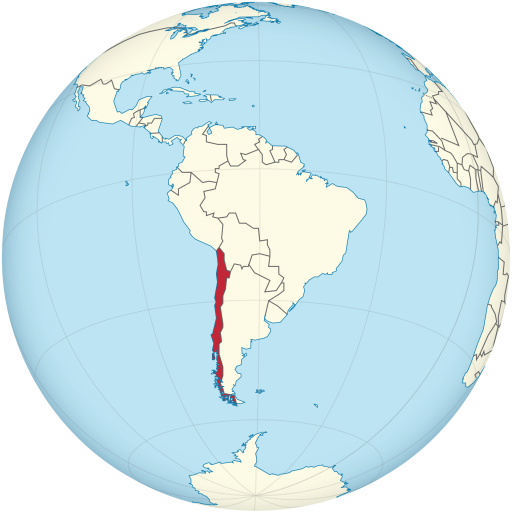
Chile marks the 50th anniversary of the September 11, 1973 coup
What happened:
On...
Please log in or subscribe for free to continue reading this issue.
We could use your help to make this issue better. Take a look at the requests below and consider contributing:
- Submit a piece of artwork for this issue
- Submit a news, academic or other type of link to offer additional context to this issue
- Suggest a related topic or source for future issues
- Fix a typo, grammatical mistake or inaccuracy
Below you'll find some of the sources used for this issue. Only sources that support "media embedding" are included.
-
Saudi border guards have killed at least hundreds of Ethiopian migrants and asylum seekers who tried to cross the Yemen-Saudi border between March 2022 and June 2023, Human Rights Watch said in a report released today. If committed as part of a Saudi government policy to murder migrants, these killings, which appear to continue, would be a crime against humanity.
-
“They Fired on Us Like Rain”: Saudi Arabian Mass Killings of Ethiopian Migrants at the Yemen-Saudi Border | HRWThe 73-page report, “‘They Fired on Us Like Rain’: Saudi Arabian Mass Killings of Ethiopian Migrants at the Yemen-Saudi Border,” found that Saudi border guards have used explosive weapons to kill many migrants and shot other migrants at close range, including many women and children, in a widespread and systematic pattern of attacks. In some instances, Saudi border guards asked migrants what limb to shoot, and then shot them at close range. Saudi border guards also fired explosive weapons at migrants who were attempting to flee back to Yemen.
-
De-dollarization’s moment might finally be here.
-
Despite trades in the oil markets done in the yuan and rupee, the U.S. dollar will still remain the mainstay of oil trades.
-
Take the L: Stands for "Take the loss". Frequently used to describe flunking a test, being dumped, being stood up, being beaten up or robbed, or losing one's...
-
The BRICS transformation into a Beijing-led alliance poses a challenge for Brazil and Argentina.
-
Brics : What is meant by Brics? Learn about Brics in detail, including its explanation, and significance in Economy on The Economic Times.
-
A Chilean court confirms findings that President Salvador Allende killed himself, as demonstrators mark the anniversary of the 1973 coup that toppled him.
-
As Chile marks 50 years since Augusto Pinochet’s military coup, Luis Cordero Vega discusses its dark legacy.
-
As Chile marks the anniversary of the September 11, 1973 coup, Augusto Pinochet’s ghost still hovers over contemporary Chilean politics in unexpected ways.
-
President hosted rightwing mogul Agustín Edwards in September 1970 and discussed plans to foil socialist election-winner
-
Progressives championed a rewrite. Now right-wing parties are in control.
-
The Salvadoran president’s strategy for dealing with gangs has eroded democratic freedoms and rights, but is also tantalizing for many politicians
-
This is a podcast about a continent that dared to dream big - and challenge the power of Big Tech before Big Tech was a thing.
-
Nigerian startups typically raise funds in dollars and earn revenue in naira; they say the currency depreciation has led to sharp increases in costs.
-
Ban on loose-fitting dresses worn by some Muslim women provokes row over secularism
-
Minister says women visiting the lakes of Band-e-Amir have not been wearing their hijabs properly
-
Move comes as thousands gather at a stadium in the capital Niamey in support of the coup-makers.
-
Demonstrations have grown steadily throughout the south, centring around the province of Suwayda
-
Descendants of William Gladstone urge British government to discuss reparations in the Caribbean
-
Analysts describe challenges ahead after a momentous victory for an anti-corruption candidate promising change.
-
The Vikram lander touches down to become the first spacecraft to land near the Moon's south pole.
-
Ecocide movement: Several countries move to criminalise actions that damage environment - World NewsWION (World Is One News) brings latest & breaking news from South Asia, India, Pakistan, Bangladesh, Nepal, Sri Lanka and rest of the World in politics, business, economy, sports, lifestyle, science & technology with opinions & analysis.
-
Simone Biles won her eighth U.S. title, the most ever after previously sharing the record with Alfred Jochim, who competed in the 1920s and '30s.
-
Almost 60% of voters favored closing the oil field run by Petroecuador, the state-owned oil company.
-
Editorial: If it weren’t for humanity’s passion for cryptography, one of the world’s most famous artefacts would just be a broken slab of stone
-
Artefacts looted in 19th century by UK soldiers and sold on, with many more still held by the British Museum
-
Institution’s chair of trustees admits its reputation has been damaged by suspected thefts
-
Made in Heaven: Created by Zoya Akhtar, Reema Kagti. With Sobhita Dhulipala, Arjun Mathur, Jim Sarbh, Kalki Koechlin. It is the story of two wedding planners in Delhi, where tradition jostles with modern aspirations against the backdrop of big fat Indian weddings revealing many secrets and lies.
-
Made in Heaven (TV Series 2019– ) - This page focuses on one review for Made in Heaven from andeeshmehdi
-
It is time Arab scholars challenge and reverse the decades-old erasure of Ottoman history in the Arab world.
-
In a new directive, the head of the notoriously invasive NSA ordered employees to spy on the world with “with dignity and respect”
Each week, What Happened Last Week curates news and perspectives from Asia, Africa, and the Americas. The newsletter is written by Sham Jaff and focuses on stories that rarely receive sustained attention in Western media.
Read the free edition every week. VIP subscribers receive additional stories, recommendations on what to watch, read and listen, and more.