

In this issue, meet Nigeria's ex-poachers-turned-rangers, read the latest Human Rights Watch report on anti-Black racism in Chinese media and get to know Argentina's 'maybe Donald Trump' for the upcoming general election. Also, a potentially very important fossil was discovered in Brazil, the WHO's first summit on traditional medicine took place, ISIS is still 'alive', mass graves were found in Sudan, a documentary on child sexual abuse in Pakistan, a podcast episode about the Black Panthers in Algeria, an article about rock climbing as a new popular sport in India, an Indonesian hit song, naughty carvings in English churches, and so much more.
Some poachers in Nigeria quit killing animals for a living and became rangers instead
What happened:
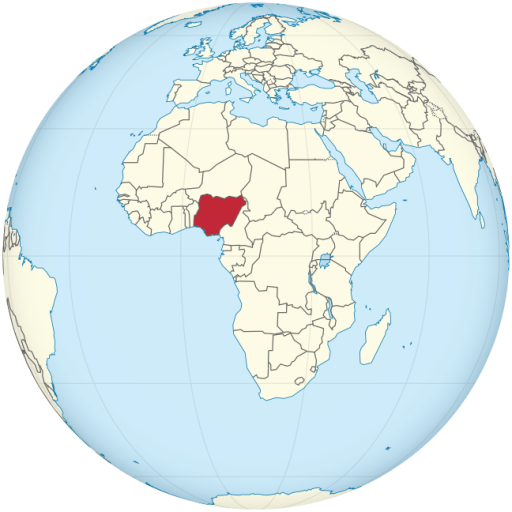
Former poachers in Nigeria have become forest rangers to protect a rainforest called Omo Forest Reserve. (Yes, you read that right.)
What is a poacher?
Poachers are individuals who illegally hunt, capture, or collect wildlife or plants, for money, meat, traditional medicine, as pets or collectibles, trophy hunting, or sometimes also as retaliation. Poaching poses a significant threat to biodiversity and can lead to the decline or even extinction of many species.
Why this matters:
The Omo Forest in southwest Nigeria is pretty special. It is a tropical rainforest and home to threatened species including African elephants, pangolins, white-throated monkeys (how can you not protect them, look) and chimpanzees. Plus, it's been protected by UNESCO since 1977. But, there's a problem: people have been hunting too much, cutting down too many trees, and farming where they shouldn't.
Tell me more:
In short, an organization protecting the forest changed its approach. Journalist Taiwo Adebayo for AP talked to project manager Emmanuel Olabode of the non-profit NGO Nigerian Conservation Foundation. "We had made efforts over the years to push poachers back through anti-poaching campaigns." When those campaigns didn't quite work, the organization began an experiment in 2017 that involved integrating poachers who had decided to quit killing animals for a living. That was a game changer. Now, said Olabode, three former poachers make up a team of about ten rangers. However, the operation is super-small, as the organization needs more money to recruit more rangers.
Why did the poachers quit?
Sunday Abiodun, one of the ex-poachers in the team of rangers, told AP why he gave up killing animals for a living. "I said to myself: 'If I continue to kill these animals for money to eat now, my own children will not see them if they also want to learn about them in the future.'" Plus, being a ranger is a steadier job. Before, they might hunt for days and get nothing. Now, they can provide for their families better.
Does it work?
Yes. Since they started this, they see way fewer poachers. It used to be three or four every day, and now it's about one a week. There's still some work to do, but things are looking up. They say the main challenges are now illegal settlements of cocoa farmers and loggers that are growing in the conservation areas.
New report shows that anti-Black racism is all over the place in Chinese media
What happened:
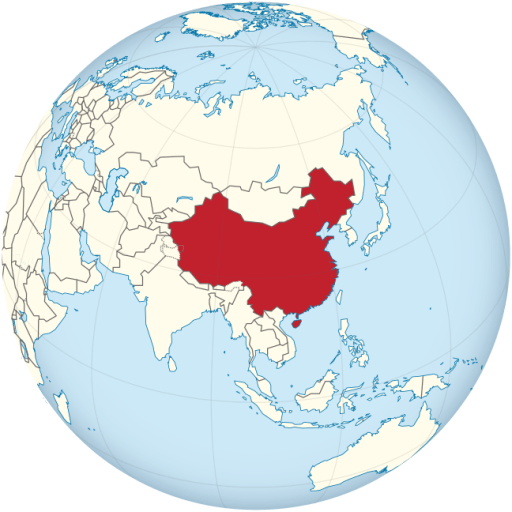
Human Rights Watch has found that there is a lot of anti-Black racism on China's social media platforms, where it is being used to get more clicks and make money.
Why this matters:
China's known for keeping a tight grip on its internet. They've got a ton of people checking and controlling what's posted online. Yet, the amount and extremity of racist content on the Chinese internet "suggest that the platforms either are not meeting their own standards banning racist content, or that their policies are inadequate when addressing racist content." Many are worried, 'what if online hate becomes real-world violence?'
Tell me more:
The rights group reviewed hundreds of videos and posts from 2021 on platforms including Weibo (kinda like Twitter), and Douyin (China's TikTok), and said it found that content often portrayed Black people through "offensive racial stereotypes". Other platforms like video-sharing platform Bilibili, Livestream and video app Kuaishou, and social media and e-commerce site Xiaohongshu had the same issue, the report said, noting that it seems like the companies aren't doing much about it.
Give me some examples:
Some videos were negative about relationships between Black and Chinese people, with some online users claiming Black people were "tainting" the Chinese community. Some suggested that the Chinese authorities ban Black people from becoming permanent residents in China or from marrying Chinese people. Some also adopted racist symbols and language often used in the United States in their online posts attacking Black people. (Black) U.S. singer 6lack even had this happen to him. Chinese people in support of victims of racism also get targeted by hate speech online.
How is this not against community guidelines?
It is. The Chinese social media platforms Bilibili, Douyin, Kuaishou, and Weibo all have published community standards and guidelines banning content promoting racial or ethnic hatred and discrimination, but many do not consistently enforce these standards.
What about the Chinese government?
The Chinese government has at times (not all the time) condemned online racism, especially when it faces international backlash. However, in 2018, 2021 and 2022, blackface was all over the place on state media. "The Chinese government likes to tout China-Africa anti-colonial solidarity and unity, but at the same time, ignores pervasive hate speech against Black people on the Chinese internet," Yaqiu Wang, senior China researcher at Human Rights Watch said in a statement, adding that just doing business with Africa doesn't make up for letting racism slide.
The far-right is knocking on Argentina's doors
What happened:
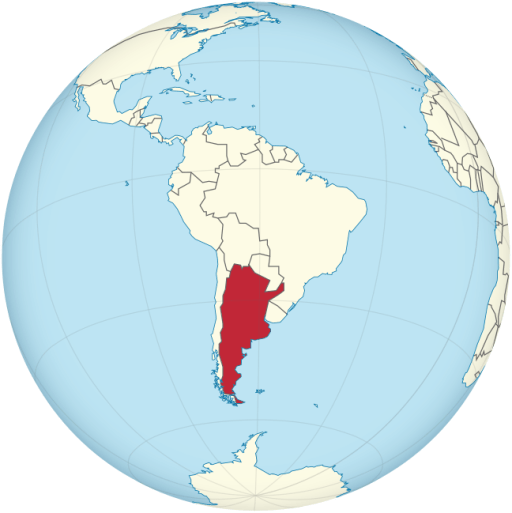
In Argentina, a politician named Javier Milei, who has far-right libertarian views, won the country's preliminary election for president. This primary result has turned Argentina's political world upside down.
What are preliminary elections?
Think of it like a mini-election before the main one. It's where people vote for their favorite candidate from their party. So, by the end, each party has one main person to run in the big election. Sometimes anyone can vote, and sometimes only party members can.
Why this matters:
Argentina's going through a rough patch. Their money's losing value, prices are going up like crazy (highest inflation level since 1991), a...
Please log in or subscribe for free to continue reading this issue.
We could use your help to make this issue better. Take a look at the requests below and consider contributing:
- Submit a piece of artwork for this issue
- Submit a news, academic or other type of link to offer additional context to this issue
- Suggest a related topic or source for future issues
- Fix a typo, grammatical mistake or inaccuracy
Below you'll find some of the sources used for this issue. Only sources that support "media embedding" are included.
-
Human Rights Watch says racist tropes ‘common’ across Chinese social media, and that platforms and government must act.
-
Chinese social media, like Xiaohongshu, Kuaishou, and Douyin, are full of hundreds of users with American cop profile photos with the aim of taunting Black users.
-
Every Lunar New Year’s Eve, hundreds of millions of people across China gather around their televisions to watch the Spring Festive Gala on CCTV, the state broadcaster. In recent years people have criticized the show for its sexism: in the 2015 gala, for instance, a sketch depicted unmarried women over 30 as unwanted second-hand goods. And a sketch in the 2017 gala extolled the virtues of women who embrace “traditional roles.”
-
Chinese state TV included dancers in blackface portraying Africans during a national broadcast Friday as Asia celebrated the lunar Year of the Ox.
-
Argentina's race for the presidency now down to three leading candidates – an anti-establishment libertarian outsider and two politicians from the main coalitions.
-
There could be another 1.2 million voters heading to the ballots on October 22 from increased participation. Assuming Bullrich and Massa absorb all of their primary rivals’ voters, will they be able to capture enough of those ‘new’ voters?
-
Former tantric sex coach and Donald Trump admirer Javier Milei has said he thinks the climate crisis is ‘a socialist lie’
-
Analysts react to primary elections, which saw a surge for the libertarian outsider and a victory for Patricia Bullrich over Horacio Rodríguez Larreta.
-
A political analyst on the meaning of the outsider libertarian's success in the primaries
-
Community leaders in West Darfur have uncovered 30 hidden mass graves containing roughly 1,000 bodies...
-
Political leader in Ecuador is killed less than a week after presidential candidate's assassination | AP NewsThe unprecedented violence affecting Ecuador has claimed the life of another political leader, bringing the number of politics-related slayings within the last four weeks to three, including that of a presidential candidate.
-
Islamic State group still has thousands in Syria and Iraq and poses Afghan threat, UN experts say | AP NewsU.N. experts say the Islamic State group still commands between 5,000 and 7,000 members across its former stronghold in Syria and Iraq and its fighters pose the most serious terrorist threat in Afghanistan today.
-
BANGKOK: Thailand's Constitutional Court on Wednesday refused to hear a case on election winner Pita Limjaroenrat's thwarted bid to become prime minister, clearing the way for a new leadership vote in the country's parliament.The ruling means the new vote to choose a premier could come as early as Friday, potentially ending the deadlock that has gripped the Southeast Asian kingdom since the general election in May.
-
Former Malaysian Prime Minister Muhyiddin Yassin has been acquitted by the high court of four corruption charges, days after his opposition bloc expanded its influence in local elections.
-
Several Black Americans are paving the way for members of the diaspora to find their way back to their ancestral home of Sierra Leone.
-
Greek authorities say they've rescued dozens of migrants in inflatable dinghies trying to cross from Turkey to the nearby eastern Aegean Sea islands in four separate incidents.
-
Greek authorities say 90 migrants have been rescued from a stranded sailboat in the Aegean Sea, amid an increase in arrivals in recent weeks.
-
Japanese government panel finds rampant coverups, mishandling of harassment cases in military | AP NewsA panel of experts that investigated harassment cases in Japan’s military and Defense Ministry says it found widespread coverups and reluctance among supervisors to deal with cases, and recommended fundamental improvements.
-
News on Japan, Business News, Opinion, Sports, Entertainment and More article expired
-
Singapore authorities have seized assets worth nearly US$750 million in sweeping raids against a suspected international money laundering ring, police said Wednesday.
-
Mokhtefi (née Klein), a Jewish American from Long Island, has had an exhilarating life. In the 1960s, she served as a press adviser to the National Liberation Front in postwar Algiers, before going to work with Eldridge Cleaver, who was wanted in the US for his role in a deadly shoot-out with Oakland police. Half a cen
-
A selection of podcasts from around the world, from the Middle East to Mallorca
-
and exactly what happened to the Glen Beck podcast - including the email
-
We kick off your journey into the wild and wonderful world of dangdut.
Each week, What Happened Last Week curates news and perspectives from Asia, Africa, and the Americas. The newsletter is written by Sham Jaff and focuses on stories that rarely receive sustained attention in Western media.
Read the free edition every week. VIP subscribers receive additional stories, recommendations on what to watch, read and listen, and more.