

As I'm writing this issue, Argentinians are on their way to a nearby polling station. If you don't know any of Argentina's leading presidential candidates and how they might govern, listen to this Americas Quarterly episode with María Esperanza Casullo.
In this issue, DRC's traditional healers take center stage (they make dental care affordable for a lot of people), a controversial memorial in Taiwan brings up an uncomfortable and almost hidden truth about World War II, and Ecuador's in a very messy situation right now politics-wise. Also, a Bangladeshi fintech firm reached the valuation of US$1 billion, a Nigerian startup and its quest to digitize every edition of all newspapers published in the country since January 1, 1960, an interview with the DJ behind one of my most favorite Boiler Room sets (she plays alongside her dad on an oud!), a Tunisian rap classic to listen to while reading abolitionist literature, Rohingya language preservation and Franz Kafka if he was Barbie, and so much more.
Traditional dentistry is making a successful comeback in DRC
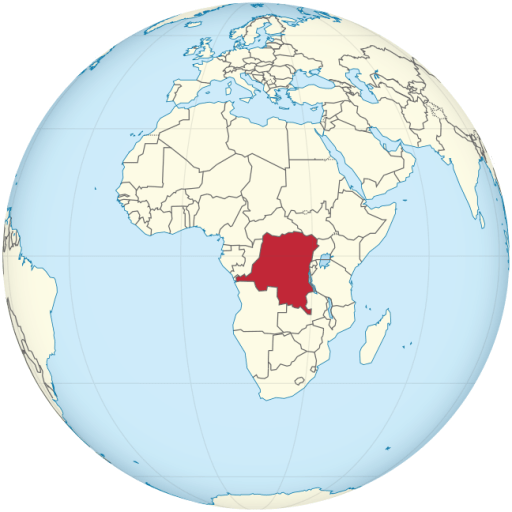
What happened:
Modern dental care is expensive. In the Democratic Republic of Congo (DRC), traditional healers are stepping up to close the gap between those who can afford it and those who cannot.
Why this matters:
Medical costs are no joke. As a result, there are very few available and affordable dental services in the city of Kisangani and the wider Tshopo province. Tshopo is a large province in the country (there are 21), but only has five dentists. Two of those dentists are in Kisangani, the capital of the province, where some 1.4 million people live. Some 100 million people live in the entire country.
Tell me more:
Traditional healers are using a surprising ingredient to treat cavities in people's teeth, writes reporter Françoise Mbuyi Mutombo for Global Press Journal. She talked to a healer named Jean Claude Lipaso, who is using a mixture of ground snail shells and traditional salts to treat cavities. Lipaso mostly collects his shells on the banks of the Congo River. "He learned this skill from his grandfather and has been practicing it for many years. The treatment is much cheaper than going to a modern dentist, making it a more accessible option for many people in the community." The numbers? A single tooth extraction for a child costs the equivalent of US$20 or more if you go to a dentist. Traditional healers like Lipaso charge at about 8,000 Congolese francs (US$3 dollars).
Context:
Snail is back. In DRC, and most importantly in Tshopo province, more and more people have added snail to their everyday diet. It's cheaper and has a lot of proteins.
Did you know:
that in the Lingala language, snail is known as mbembe? Why am I telling you this? Some 60-65 million people speak Lingala, this is how it sounds. Also, this is where the ndombolo music genre comes from, I've added some favorites, like Fally Ipupa's 'Allô téléphone' (I just wanna dance to this music video) to this newsletter's Spotify playlist, 'Go Global Weekly' (GGW) while writing this issue. Plus, one of my new favorite artist is from DRC, Jey Brownie; you'll find my favorite track on GGW, too. His dad was a very popular ndombolo artist.
Does snail-shell dental treatment work? And, is it safe?
Yes, studies show that using ground snail shells can be effective in dental treatments. However, there's a debate between traditional healers and modern dentists about the safety and effectiveness of these traditional treatments. 'It's too dangerous because you don't know the amount or the dose to give to the patients,' they say. 'I've been doing this for generations,' say healers like Lipaso. If untrained, that's where the danger lies. I'm guessing both sides can agree on that.
Fun fact:
Even Nostradamus believed in using snail-shell dental treatment. He's written recipes for toothpaste using ground cuttlefish bone and sea-snail shells or blue clay. Yes, Nostradamus published a cookbook, 'Treatise on Cosmetics and Conserves.'
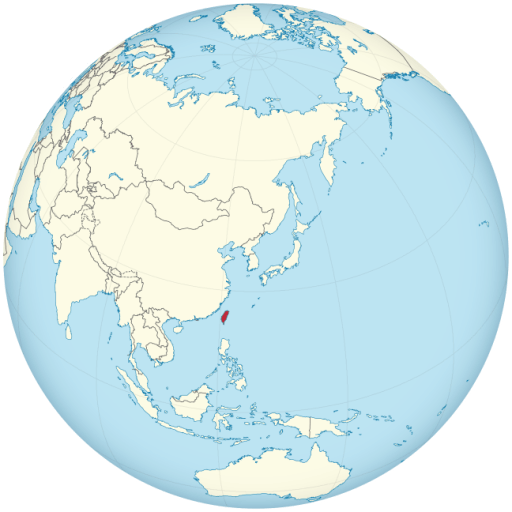
A new memorial in Taiwan is bringing up controversial, nearly forgotten history
What happened:
A controversial memorial in Taiwan has been unveiled to remember over 8,000 Taiwanese teenagers who "volunteered" to help Japan during so-called World War II, who fought against the Allies.
Why this matters:
The Japanese military was responsible for numerous atrocities across Asia during World War II, and that legacy continues to cloud relations between Japan and China or South Korea. Many (not all) in Taiwan, however, are not so anti-Japanese.
Tell me more:
The memorial stands in the city of Kaohsiung, and there's some controversy around it. For example, someone on Twitter (hopefully formerly X) said, 'y'all gonna build one for the german youth that helped the nazi war effort too??'.
I don't get it. Please explain.
During World War II, many Taiwanese were drafted to fight on behalf of the Japanese Empire, as Taiwan was a former colony of Japan at the time. Those being remembered at the memorial last week were not soldiers, but kids; many were no older than 13 at the time. Enticed by high salaries and promises of qualification after the war, they were recruited to help repair aircraft for the Japanese Navy. Ultimately, some 207,183 Taiwanese served in the Japanese Army between 1937 and 1945, with a total of 30,304 casualties, mostly in support roles like the Taiwanese youth, but some 80,000 did see acts of combat. For decades, they received neither recognition nor compensation, and their stories were largely forgotten as Taiwan is claimed by the Republic of China (who fought with the Allies). The issue remains largely unresolved. If you want to read more details, Han Cheung for Taipei Times profiles one Taiwanese man named Teng Sheng who had lost an eye, an arm, and his hearing in the war, and he wanted compensation.
Did you know that Taiwan's President...
Please log in or subscribe for free to continue reading this issue.
We could use your help to make this issue better. Take a look at the requests below and consider contributing:
- Submit a piece of artwork for this issue
- Submit a news, academic or other type of link to offer additional context to this issue
- Suggest a related topic or source for future issues
- Fix a typo, grammatical mistake or inaccuracy
Below you'll find some of the sources used for this issue. Only sources that support "media embedding" are included.
-
Traditional healers harness generations-old treatments to provide relief for cavities and toothaches.
-
Explore a few little-known facts about this wildly popular seer.
-
Welcome to the Defense section of TaiwanPlus, your source for comprehensive coverage and analysis of Taiwan's national defense and security policies. As a small island democracy facing a variety of security challenges, Taiwan's defense capabilities are crucial for its sovereignty and stability. Our team of experienced journalists and analysts provide in-depth reporting and analysis on the latest developments, including Taiwan's defense strategy, military modernization, regional security dynamics, and international cooperation. Join us for updates and insights into Taiwan's evolving defense landscape, and its implications for regional and global security.
-
Bringing Taiwan to the World and the World to Taiwan
-
Visitor guide for Yasukuni Shrine in Tokyo.
-
The body of the assassinated Ecuadorian presidential candidate Fernando Villavicencio was buried in a private ceremony in the country’s capital on Friday night.
-
Thousands of unexploded munitions were discovered buried in the grounds of a high school.
-
The death toll in Hawaii due to wildfires is continuing to climb, with Gov. Josh Green (D-HI) saying that search and recovery operations are likely to
-
As many as 30 others are missing after the boat foundered and was abandoned by crew on Sunday.
-
«Некаторыя людзі знаходзяцца ў вертыкальным становішчы». У Дзяржынску знайшлі боль�� за сотню загадкавых чалавечых парэшткаўУ Дзяржынскай раённай бальніцы гэтым летам пачалі будаваць новую кацельню. Працы вяла брыгада Дзяржынскага домабудаўнічага ўпраўлення, аднак раптам іх прыйшлося прыпыніць: сярод раскопак будаўнікі пачалі знаходзіць чалавечыя парэшткі, паведамляе Mlyn.by
-
Four survivors told rescuers the boat set off from Tunisia carrying 45 people, including three children.
-
Malaysia’s government said all Swatch products that contain LGBTQ elements were banned, warning that anyone found with one could be jailed for up to 3 years.
-
An ancient skull dating back 300,000 years is unlike any other premodern human fossil ever found, potentially pointing to a new branch in the human family tree, according to new research.
-
Pakistan's Senator Anwar-ul-Haq Kakar has been picked as caretaker Prime Minister.
-
ABUJA: Leaders from West African bloc Ecowas will meet on Thursday for an emergency summit on the coup in Niger, after the country's military chiefs defied an ultimatum to restore the elected president.
-
A coalition led by the African Party for the Independence of Guinea and Cape Verde (PAIGC) won 54 out of 102 seats in the June vote, ahead of Embalo's Madem G15 party
-
Philippine president suspends 22 land reclamation projects in Manila Bay after US airs concerns | AP NewsPhilippine President Ferdinand Marcos Jr. has ordered an indefinite suspension of 22 major land reclamation projects in Manila Bay to allow a study of their environmental impact and legal compliance.
-
Tou Thao: Ex-Minneapolis officer gets nearly 5 years in prison for role in George Floyd’s killing | AP NewsTou Thao, the last former Minneapolis police officer convicted in state court for his role in the killing of George Floyd, didn't show any repentance or admit any wrongdoing as he was sentenced to nearly five years.
-
Zuma, 81, was given a 15-month sentence in June 2021 for refusing to testify in corruption probe during his tenure.
-
Nagad Becomes Fastest Unicorn Startup In Bangladesh. Dhaka : Nagad, one of the leading mobile financial service (MFS) provider in Bangladesh, has turned into a unicorn startup only in four years of its launch -- the fastest in Bangladesh to reach this
-
Brazilian police arrest man considered the greatest destroyer of the Amazon
-
'I can send messages in my native language. I know we have far more problems to overcome, but this has given us more representation and legitimisation.'
-
The company says staff living near offices should work in person at least twice a week.
Each week, What Happened Last Week curates news and perspectives from Asia, Africa, and the Americas. The newsletter is written by Sham Jaff and focuses on stories that rarely receive sustained attention in Western media.
Read the free edition every week. VIP subscribers receive additional stories, recommendations on what to watch, read and listen, and more.