

In this issue, I applaud Ghana for abolishing the death penalty for almost all crimes, and Taiwan's women leading the #MeToo moment. I do not, however, applaud Argentina's government for the way it is (not) keeping count of its missing children. Plus: a coup in Niger, officially no more speaking French in Mali, a South African comedy series that might push too many boundaries all at the same time, Egypt pardoning two government critics, a relatively new archaeology tool to discover forgotten Mayan cities, a meme video about Japan's most stupid work rules, and two (yes, two) funny news, and so much more.
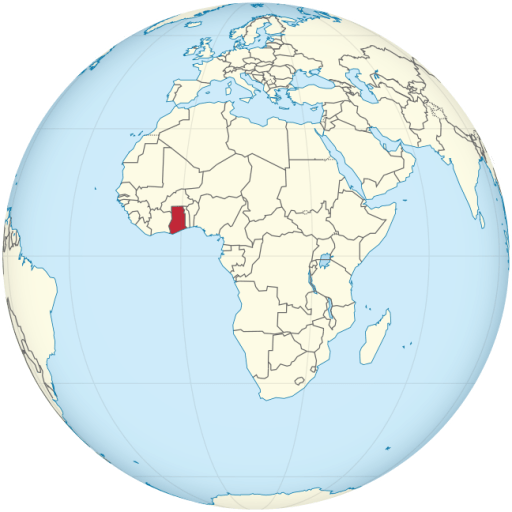
Ghana officially abolished the death penalty for almost all crimes
What happened:
The Parliament of Ghana voted to formally abolish the death penalty.
Why this matters:
Ghana is the 124th country to abolish the death penalty; 41 other countries are considered to have de facto bans, as they have not carried out an execution for more than 10 years. However, at least 883 executions across 20 countries were recorded last year -- a 53% rise since 2021. There is no conclusive evidence that the death penalty deters crime more effectively than other punishments. Plus, no judicial system is perfect, and there is always a risk of wrongful conviction.
Tell me more:
Ghana's parliament voted to amend the criminal offenses act, removing capital punishment for crimes including murder, genocide, piracy, and smuggling. However, the death sentence can still be given for acts of high treason. The 176 prisoners currently on death row will now have their sentences changed to life imprisonment. The country's president, Nana Akufo-Addo, needs to sign the bill into law for it to take effect.
Did you know that Ghana has not carried out an execution since 1993? Courts, however, have continued to issue death sentences.
Why now?
"There has long been evidence that Ghana might be ready to abolish the death penalty," says Francis-Xavier Sosu in this interview with The Death Penalty Project. Sosu is the Ghanaian member of parliament whose private member's Bills abolished the death penalty. There were attempts in 1992, 2010, 2012. "I was sworn in as an MP in January 2021, and for me, once I had been given this chance, trying to abolish the death penalty was an overriding priority. I came into politics because I wanted to be an agent of change, and this was the change I wanted to achieve most of all. I sensed I was pushing at an open door." At the end, he was able to build consensus and majority support through consistent lobbying and engagement with colleagues, civil society organizations, and international bodies such as Amnesty International Ghana and The Death Penalty Project.
What's it like being sentenced to death?
Sosu explains, "On death row, prisoners woke up thinking this could be their last day on earth. They were like the living dead: psychologically, they had ceased to be humans. Overcrowding was endemic: a space meant for about 23 inmates could host over 150 prisoners. Most mornings, the inmates would sing religious or gospel songs, a ritual that helped them cope with the fear that this was the day that would mark the end of their lives. They were then made to perform various tasks in deplorable conditions, and served with meals which most of us would find inedible. They were isolated from their loved ones, and convinced that even if they were not executed, they would die in prison. I would say that overall, their lives amounted to torture. Condemned cells had poor sanitary facilities, and they lacked adequate access to medical care. Many died from avoidable and treatable illnesses before their death sentences were commuted."
What are people in Ghana saying?
Human rights activists have hailed the decision, but they caution that the death penalty has not been entirely abolished and that the country's constitution would need to change for a complete removal of the penalty.
Taiwan is going through a #MeToo moment right now -- thanks to Netflix
What happened:
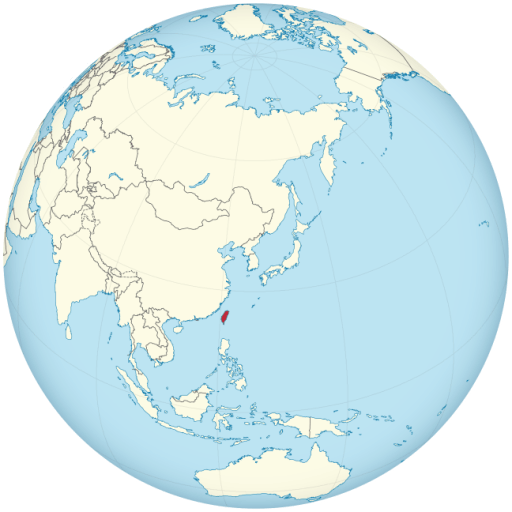 In the past two months, Taiwan has seen a sudden increase in sexual abuse accusations, with over 100 cases in the last two months. The catalyst? A Netflix drama, Wave Makers.
Why this matters:
Taiwan is often considered as Asia's most gender-equal country (don't hate, China). However, sexual harassment is very common in Taiwan, and covering it up and blaming victims is too. The recent #MeToo moment is exposing Taiwan's highly patriarchal culture. For many women, the moment is long overdue.
Tell me more:
The Netflix drama Wave Makers plays a big role in starting the recent #MeToo movement in Taiwan. Drawing inspiration from real-life political events in Taiwan, the series revolves around a team of campaign staffers during a presidential election and delves into the issue of problematic handling of sexual harassment cases. After the show's release in May, the first real-world accusation came from a former employee of Taiwan's ruling party, the Democratic Progressive Party (DPP), who said her boss ignored her complaints of workplace harassment. Weeks later, more accusations followed, many people in the DPP resigned, Taiwan's President (the island's first female one) Tsai Ing-wen even apologized publically (don't overstate this because Taiwan is also gearing up for a presidential election next January). In the meantime, the #MeToo wave circulated to other sectors, with prominent activists, writers and TV stars being called out. Some of the most high-profile men accused include Tiananmen protest leader Wang Dan, exiled poet Bei Ling and Polish diplomat Bartosz Ryś.
Did you know that Chien Li-ying, one of the writers behind Wave Makers, said she was assaulted by the poet Bei Ling when she was at university?
Is it really that bad in Taiwan?
The Reporter, a Taiwanese investigative news media, looked at data from the Ministry of Labour and found that last year, 80 percent of people who faced sexual misconduct at work chose not to speak up. Experts attribute this to Taiwan's historical habit of covering up sexual harassment complaints, which they believe is due to victim-blaming and chauvinism (male dominance) in both politics and workplaces. The #MeToo movement in Taiwan is now exposing a long-standing culture where victims are...
Please log in or subscribe for free to continue reading this issue.
We could use your help to make this issue better. Take a look at the requests below and consider contributing:
- Submit a piece of artwork for this issue
- Submit a news, academic or other type of link to offer additional context to this issue
- Suggest a related topic or source for future issues
- Fix a typo, grammatical mistake or inaccuracy
Below you'll find some of the sources used for this issue. Only sources that support "media embedding" are included.
-
Five years after #MeToo took the world by storm, Taiwan, a liberal democracy that has prided itself on gender equality, is facing its own reckoning over sexual harassment – brought about by a hit Netflix series.
-
The island has seen a wave of sexual harassment allegations against high-profile men.
-
In the past two months, Taiwan has witnessed a surge of over 100 sexual abuse accusations, with new ones surfacing almost daily.
-
President Tsai Ing-wen’s government moved to strengthen Taiwan’s equality laws after a series of sexual harassment scandals rocked the island’s political elite ahead of a critical election.
-
Taiwan's Legislature on Friday passed amendments to a gender equality law that aims to protect the rights and interests of victims of sexual harassment in educational settings.
-
Tenía 5 años cuando desapareció el 14 de junio de 2021 en la ciudad capital de San Luis. La última vez que la vieron estaba jugando afuera de la casa de su tía, junto a otros niños. Su mamá, Yamila, tiene la certeza de que está viva y podría estar en otra provincia u otro país. Tiene un lunar grande, alargado y oscuro, debajo de la patilla y muy cerca de su oreja izquierda. - LA NACION
-
Tenía 3 años cuando el 28 de septiembre de 2008 desapareció en un camping de Río Grande, en Tierra del Fuego. Un niño de seis años que estaba con ella ese día describió a un hombre como “el que se llevó a Sofía”. Hay un pedido de captura internacional de un jornalero chileno que coincide con el aspecto del que habló ese chico. - LA NACION
-
La historia de Susi, la adolescente de 14 años que desapareció en 1990 y su familia sigue buscando - LA NACIONEl 17 de marzo de 1990, Blanca Susana Sola volvía de la casa de su hermana y desapareció; fue en las afueras de Gualeguaychú; sus hermanos siguen luchando por encontrarla con vida; en la Justicia, su búsqueda se reactivó en 2019, después de décadas de inacción y de que el expediente se descartara por error - LA NACION
-
¿Dónde están? Qué les pasó a las 5000 mujeres perdidas que el Estado no sabe cómo buscar - LA NACION
-
More than 20 people were wounded in the attack which the interior ministry said was caused when a motorcycle exploded near a taxi. | World News
-
Saridewi Djamani, 45, was found guilty of trafficking 30g of heroin in 2018.
-
It plans to deploy 1,000 police officers to the strife-torn Caribbean nation
-
Malaysians are split on generational lines when it comes to voting, GE15 scoresheet data shows.
-
Business Insider tells the global tech, finance, stock market, media, economy, lifestyle, real estate, AI and innovative stories you want to know.
-
It comes after the US declared its "unflagging support" for ousted president Mohamed Bazoum.
-
Under the new constitution passed overwhelmingly with 96.91% of the vote in a June 18 referendum, French is no longer the official language.
-
Six of the 10 suspects are convicted of terrorist murder for the twin bombings that killed 32 people.
-
Casey Phair of New Jersey, 16, came in late in the second half for South Korea in its match against Colombia to make her World Cup debut.
-
New Zealand’s justice minister has resigned after police filed charges against her and said she was over the legal alcohol limit when she crashed into a parked car.
-
The once-forgotten city in the jungles of Campeche on Mexico’s Yucatan Peninsula was detected from the skies by LiDAR and contains pyramids, a ball court and spaces marked out by unusual stone columns.
-
The ‘inappropriate’ question at a press conference was slammed on social media
-
The domain X.com had previously been used by sites running afoul of the country’s rules on “negative” content.
Each week, What Happened Last Week curates news and perspectives from Asia, Africa, and the Americas. The newsletter is written by Sham Jaff and focuses on stories that rarely receive sustained attention in Western media.
Read the free edition every week. VIP subscribers receive additional stories, recommendations on what to watch, read and listen, and more.