

In this issue, I give an update on the situation in Sudan, specifically Darfur (it's not looking good), Afghanistan's taxi industry (because it's highly political) and the debate on facial recognition technology in Brazil (São Paulo really wants to install 40,000 AI-assisted cameras). Plus, more and more wives in Singapore make more money than their husbands (and research is showing this is f*cking with traditional gender roles), Marshall Islands is confidently asking for more money from the United States for all the nuclear weapons testing in their country, Barbie is banned in Vietnam, the 50 best book covers of 2022, Argentina's election and its presidential candidates, a late Indian rapper's deepfake song gets viral, and so much more.
'History is repeating itself in Darfur' -- a mass grave of at least 87 bodies has been found
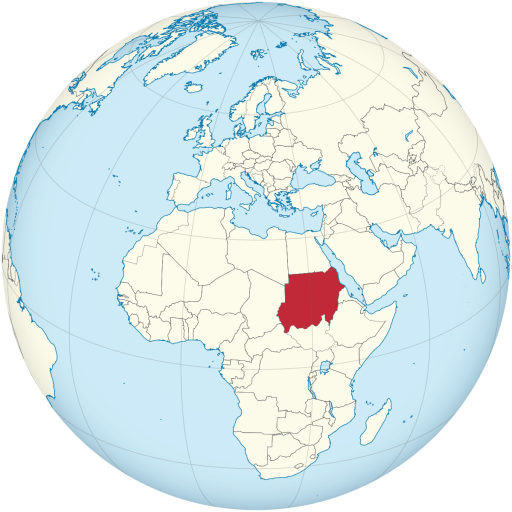
What happened:
The United Nations (UN) is calling for an investigation over a mass grave in Sudan's West Darfur which contained at least 87 bodies. The UN's human rights chief said there is credible information that the paramilitary Rapid Support Forces are responsible; a claim they deny.
Refresher:
Since April 15, the Sudanese army has been fighting against the paramilitary Rapid Support Forces, short RSF. At least 3,000 civilians have died in Khartoum, Darfur and beyond. Outside Khartoum, the worst fighting has taken place in the western region of Darfur, where a quarter of Sudan's 48 million people live. Many more have died due to lack of access to food, water and medical care. More than three million people have been displaced. "Grass-roots organizations such as the neighborhood resistance committees have provided the most consistent humanitarian responses to this war," writes Bayan Abubakr in a guest essay for The New York Times.
Why this matters:
Sudan is Africa's third-largest country by land area, with some 48 million people living here.
Tell me more:
The UN said the mass grave includes the bodies of Masalit people (who are non-Arab), raising concers that this might have been ethnically motivated. People were forced to bury the bodies near el-Geneina, West Darfur's capital, between June 20 and June 21, a UN statement said. Rights groups have reported attacks by the RSF and Arab militias against the Masalit people in the region. 'Why is the International Criminal Court so silent on Sudan?' asks Sarah Nouwen, professor of Public International Law at the European University Institute in Florence, Italy on Al Jazeera.
This has happened in Darfur before...
Yes. In fact, many pundits say that "history is repeating itself in Darfur" when describing the current situation. By this, they refer to the war crimes, crimes against humanity, if not genocide, that were committed in Darfur after 2003. More than 300,000 people, belonging mostly to the Masalit and other African ethnic groups, were killed in what amounted to ethnic cleansing. The former president (and ex-dictator) Omar al-Bashir was afraid of a rebellion in Darfur, as non-Arab people living there wanted more political say as well as social and economic equality, so he sent troops to suppress it. Back then, another militia, the Janjaweed, was behind all of it. Today, the RSF is supposedly behind the latest attacks in Darfur, specifically against the Masalit community, and the RSF is the 'son' of the Janjaweed; many of its soldiers have been drawn from the former militia. The two general now fighting for power -- Gen. Abdel Fattah al-Burhan of the army and Lt. Gen. Mohamed Hamdan of the Rapid Support Forces --- were accused of being deeply involved in what happened in Darfur.
How is the war in Sudan affecting the neighboring countries?
The UN has said 740,000 people from all over the country have fled across borders to Sudan's neighbors, who themselves are not the most economically or politically stable. For example, in South Sudan, the already fragile humanitarian situation has become even more fragile, according to the International Committee of the Red Cross. In the Central African Republic, people have begun engaging in "small arms smuggling" across the border.
What now?
Last week, representatives of the Sudanese army and the RSF have returned to Jeddah, Saudi Arabia for talks. Another mediation attempt began on Thursday, launched by Egypt. Aid groups and health workers continue to demand safe humanitarian corridors, so that people can at least receive the medical care they need and access some food to survive while peace is being negotiated. "If the international community really wants to help, it needs to stop playing God. It must stop counting on military leaders to solve our problems and start directing support to the grassroots organizations that have been our only salvation," writes Bayan Abubakr in a guest essay for The New York Times.
Afghanistan's taxis are changing color -- this says a lot about how the Taliban govern
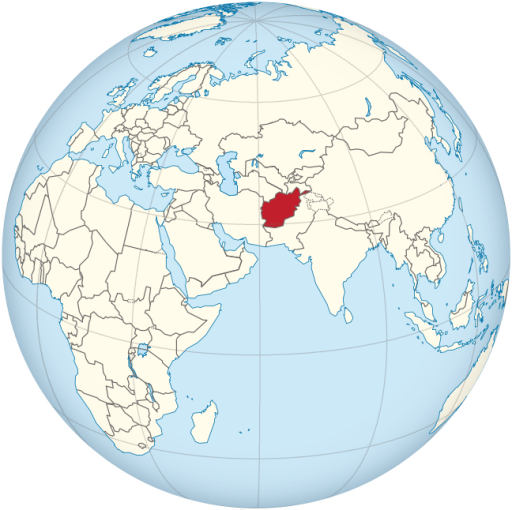
What happened:
In May, Kabul's General Directorate of Traffic Police and the Ministry of Interior announced a color change for taxis in the city: fromyellow and white toblue and white (they look like this). Some are happy about the new taxi rule, others say it is distracting from the real problems at hand.
Why this matters:
The Taliban took over Afghanistan in August 2021, and have been working on (re-)building the country, introducing new rules, scratching old ones. People living in Kabul and other large cities in Afghanistan deserve to experience improved civil public transport infrastructure, including taxi services. Some 40 million people live in Afghanistan.
Tell me more:
This new rule affects some 67,000 registered taxis in Kabul. Afghanistan's capital, however, doesn't have standardized taxis. As a result, there is a lot of crime happening, think drivers seeking to extort or kidnap their passengers, and so on. The plan with the new taxi rule is "to reduce the criminal activities that have plagued urban taxis and develop a safer and more uniform transportation system for the country," writes Fazelminallah Qazizai for New Lines Magazine. The color change comes in accordance with the International Convention on Road Traffic, according to the Kabul traffic officials.
What do people in Afghanistan think about this new rule?
Mixed feelings. The Taliban did change some superficial (but not irrelevant) stuff in Kabul. For example, it's cleaner, there's order on the streets, roads are painted with light atmospheric colors and minarets are shiny. There's also fewer suicide attacks (to be fair, the Taliban were mainly behind them) and fewer airstrikes. But some residents say that it would be better if the Taliban put their energy into resolving the issue of the education of women and girls (they cannot go to school beyond sixth grade in Afghanistan, with the education ban extending to universities) or gave more people jobs. One interviewee says, "The Taliban need to bring order with the same yellow and white color; there's no need to change it."
Context:
The Taliban are not the only (but main) reason girls do not...
Please log in or subscribe for free to continue reading this issue.
We could use your help to make this issue better. Take a look at the requests below and consider contributing:
- Submit a piece of artwork for this issue
- Submit a news, academic or other type of link to offer additional context to this issue
- Suggest a related topic or source for future issues
- Fix a typo, grammatical mistake or inaccuracy
Below you'll find some of the sources used for this issue. Only sources that support "media embedding" are included.
-
International Criminal Court’s jurisdiction in Sudan is limited to Darfur under 2005 UN Security Council resolution.
-
The ICC cannot continue to ignore the obvious international crimes being committed by the army and the RSF in Sudan.
-
Army representatives return to Saudi Arabia for talks with paramilitary rivals, according to reports.
-
Afghan religious scholars say the government's ban on girls' education is un-Islamic. But a key government minister has warned clerics not to speak against the government on the issue, saying it doesn’t benefit Muslims and weakens the system. The Taliban have barred girls from school beyond sixth grade, including university. They present the restrictions as temporary suspensions, but there is no sign of a U-turn as schools and universities reopened in March without their female students. Religious scholars said Saturday authorities should reconsider their decision, saying it has no basis in Islam.
-
Photo essay
-
The facial recognition technology will be able to identify individuals accurately, even in scenarios where they have distinctive features such as beards or glasses.
-
Author Tarcízio Silva on how algorithmic racism exposes the myth of “racial democracy.”
-
Judge declares Buenos Aires’ Fugitive Facial Recognition System Unconstitutional - Future of Privacy ForumOn September 7, a trial judge declared the implementation of the Fugitive Facial Recognition System (SRFP, for its name in Spanish) by the Government of the City of Buenos Aires unconstitutional. The decision set an important precedent for risks associated with privacy and intimacy in public spaces in the context of public surveillance for law enforcement purposes...
-
Experts fear sales of the technology also export authoritarian ideas about biometric surveillance. The second largest exporter is the US.
-
The country’s use of biometric data against activists and “hooligans” paints a grim picture of how the technology is threatening human rights.
-
Female students reportedly given sham disciplinary ‘hearings’, suspended from classes and threatened with ‘zero grades’ for defying head covering law
-
9 bodies pulled from a flooded road tunnel in South Korea as rains cause flash floods and landslides | AP NewsSouth Korean rescuers have pulled nine bodies from a flooded tunnel where around 15 vehicles were trapped in muddy water, as days of heavy rain triggered flash floods and landslides and destroyed homes across the country.
-
Si les forces de l’ordre françaises figurent parmi les plus mortelles en Europe, elles demeurent néanmoins loin derrière l’Amérique latine ou les Etats-Unis. De manière générale, plus un pays est violent, plus sa police est meurtrière
-
South Africa's graft-tainted ex-leader Jacob Zuma is receiving medical treatment in Russia, his spokesman said Friday, a day after the country's highest court upheld a ruling that he should return to prison.
-
Philippine censors said they were convinced the "cartoonish" map did not depict the nine-dash line.
-
PARIS: From subtly shifting the position of Ramses 2nd's scepter to touch-ups on a necklace or headdress, ancient Egyptian artists were more creative than previously thought, according to a study published on Wednesday.
-
UNESCO accepts the US back into the fold after a five-year absence
-
Japan’s Supreme Court ruled that restricting a transgender woman’s use of toilets at her workplace was “unacceptable,” a decision that may promote LGBT rights.
-
From popular releases by A24 and Standards Manual to paperback poetry, AIGA offers a snapshot of book design excellence across 27 countries.
-
An overview of major candidates and how they might govern, with María Esperanza Casullo
-
John Mauceri explains exactly how absurd it is for a self-styled Russian "anti-Nazi" army—Yevgeny Prigozhin’s Wagner Group—to take the name of Hitler's favorite composer.
-
Sidhu Moose Wala was shot dead by gunmen on May 29, 2022. A year later, songs in his voice are being generated with AI. His family, other musicians and lawyers are worried.
-
Focusing on HIV prevention and sexual health care has helped BlueCity navigate a precarious environment for LGBTQI organizations.
Each week, What Happened Last Week curates news and perspectives from Asia, Africa, and the Americas. The newsletter is written by Sham Jaff and focuses on stories that rarely receive sustained attention in Western media.
Read the free edition every week. VIP subscribers receive additional stories, recommendations on what to watch, read and listen, and more.