

In this issue, I talk about the illegal stuff the British government wanted to do to deal with refugees it doesn't want, Chinese tech innovations in AI (because ChatGPT is not everything), and Guatemalan politics (a lot is at stake). Plus, a South African steamy thriller on Netflix has kept me busy during my free time, a long read about a Ugandan couple that's reclaiming the African road trip (it's so white still), Lebanese comics, an all-female rock band from Kurdistan in the 1980s, and so much more.
A UK court ruled that the British government cannot send asylum seekers to Rwanda
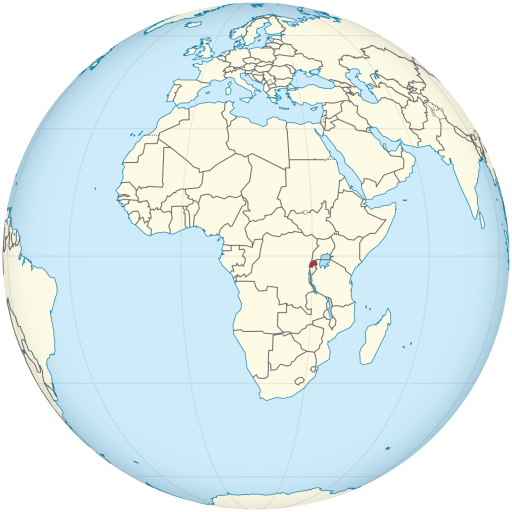
What happened:
Recently, the Court of Appeal in the United Kingdom ruled that the government's plan to send asylum seekers to Rwanda is unlawful. 'It would violate the European Convention on Human Rights, which the UK is party to.' The charity Asylum Aid brought this case against the government.
Good to know:
What is an asylum seeker? What is a refugee? According to the UN's refugee agency, an asylum seeker is someone who has applied for shelter and protection in another country. A refugee is a person who has fled conflict or persecution in their own country. The legal rights of refugees are protected by international law. However, it is up to host countries to decide whether an asylum seeker is granted refugee status.
Why this matters:
The rights of migrants, refugees and asylum seekers are protected by international law, regardless of how and why they arrive in a country. UNHCR most recently estimated that, by end of 2022, for the first time in recorded history, the number of people forcibly displaced is now 108.4 million, and over 35.3 million refugees.
Tell me more:
Judges said (interestingly, it was not a unanimous decision) that the East African country had not provided enough safeguards to prove it is a "safe third country", meaning there is "a real risk" that people sent to Rwanda will be returned to the home countries they fled. Rwanda, however, vows it is 'exemplary' in the way it treats refugees. However, Rwanda itself creates thousands of refugees every year and its government is yet to guarantee a safe environment for Rwandan refugees settled across the world to return home. The UK has already given Rwanda US$177-million for this plan (and it was going to get even more expensive; according to government assessment US$215,035 per person). No asylum seeker has actually been sent to Rwanda so far. The first flight was scheduled to go in June 2022, but was cancelled after legal challenges.
'Fun' fact:
The airline which was scheduled to take asylum seekers from the UK to Rwanda was called 'Privilege Style'.
Tell me more about Rwanda's refugees:
According to the most recent figures by the UNHCR, there are still more than 200,000 Rwandan refugees in the DRC, close to 24,000 in Uganda, 10,000 in the Republic of Congo, close to 6,000 in Zambia, more than 4,000 in Mozambique, close to 4,000 in Malawi and more than 2,000 in Kenya. There are compelling reasons why so many Rwandan refugees do not want to -- or do not feel safe enough to -- return to their motherland. Memories of war, genocide and conflict, inequality, poverty and a 'not free' human rights record, writes Victoire Ingabire Umuhoza, a Rwandan political figure, in an opinion piece for Al Jazeera.
Did you know:
that in 2022, the UK received more than 89,000 asylum applications, the highest number for 20 years? Of these, more than 23,800 people and their dependents were granted a form of protection.
What now?
The UN's refugee agency, which advised the court on matters of international refugee law during the appeal, was like, 'yes, this is a good ruling. UK government, try other measures'. Home Secretary Suella Braverman called the judgment "disappointing", and Prime Minister Rishi Sunak said they will appeal last week's verdict in the Supreme Court.
On a related note, meanwhile, Rwanda wants to become the 'Singapore of Africa' and has successfully attracted two huge fintech companies, as Alexander Onukwue reports for Semafor. Two of Africa's biggest fintech players are expanding their operations in Rwanda, Chipper Cash (pan-African money transfer company) and Flutterwave (Africa's largest payment network).
There is a lot of AI innovation in China right now
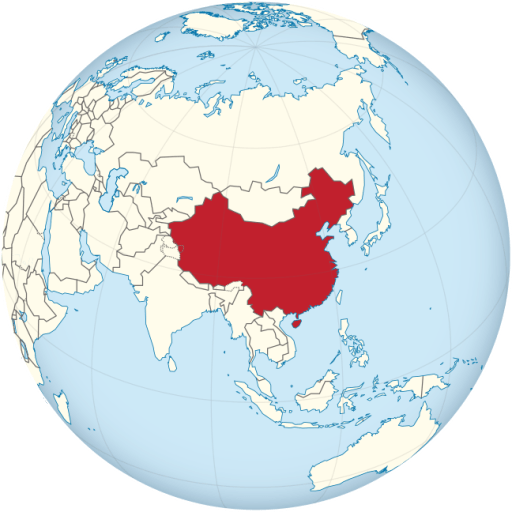
What happened:
Since ChatGPT took the world by storm late last year, Chinese tech giants and startups have been rushing to join the AI race by launching similar AI chatbots one after another.
Why this matters:
All over the world, generative AI startups are popping up. To really stay in the loop (and to decenter Western-centric knowledge production), keep an eye out for more tech updates everywhere.
Tell me more:
Caiwei Chen for rest of world writes about these four Chinese startups that everyone in tech in China is talking about:
-
DeepLang AI: Two natural language processing researchers at Tsinghua University, Qi Fanchao and Li Xiaoxiang, trained this large language model on Chinese-language content, and created a dictionary that suggests a list of words based on users' descriptions and a classical Chinese poetry generator. Tencent is one of the bigger funders.
-
Zhipu AI: Founded by Tang Jie, another talent from Tsinghua University (yes, this is where a lot of tech magic happens in China in general) created a large language model that can be integrated into Qihoo's search engine (a big competitor to Baidu).
-
Baichuan Intelligence: Tsinghua graduates and search company Sogou executives...
Please log in or subscribe for free to continue reading this issue.
We could use your help to make this issue better. Take a look at the requests below and consider contributing:
- Submit a piece of artwork for this issue
- Submit a news, academic or other type of link to offer additional context to this issue
- Suggest a related topic or source for future issues
- Fix a typo, grammatical mistake or inaccuracy
Below you'll find some of the sources used for this issue. Only sources that support "media embedding" are included.
-
A United Kingdom court ruled that the British government's plan to send migrants seeking asylum in Britain to Rwanda is unlawful.
-
Priti Patel says preparation for the next flight "begins now" after the last-minute grounding.
-
Plans to send some asylum seekers to Rwanda were passed by Parliament, but still face legal challenge.
-
Before welcoming those seeking refuge in the UK, Rwanda should tackle the issues that lead its own citizens to flee.
-
Two of Africa’s biggest fintech players are expanding operations in Rwanda, which is positioning itself as a strategically important hub for the fintech sector.
-
As AI and ChatGPT fever hits China, A new wave of AI startups like DeepLang AI and Lightyear AI compete for funding and vie for influence.
-
According to Chinese officials, Elon Musk said he's opposed to China and the US weakening economic ties.
-
Xinhua Headlines: AI revolution reshaping China's economy-
-
Newspaper director José Rubén Zamora’s jailing reflects the international community’s failures.
-
The son of a trailblazing president will face a powerful political establishment in a runoff election.
-
The Nation Magazine
-
Macron races to quell anger after a second night of riots over the shooting of a teenager of North African descent.
-
Sierra Leone’s President Maada Bio was sworn into a second term on Tuesday, just hours after the country’s electoral authority certified his victory at the polls over the protests of rivals.
-
BANGKOK: A court in Thailand on Wednesday acquitted a student activist and four other people of impeding the motorcade of the country's queen during pro-democracy demonstrations in 2020, an offense that could have seen them sentenced to 16 years in prison or even the death penalty.
-
BANGKOK: Thailand’s caretaker Prime Minister Prayut Chan-o-cha announced on Tuesday (Jul 11) he will quit politics and leave the United Thai Nation Party, ahead of a parliamentary vote to select the next prime minister. The retired general shared the message on his party’s Facebook page, while thanking
-
Vietnam has allowed 73-year-old pro-democracy campaigner Chau Van Kham to return home to Sydney after Australian Prime Minister Anthony Albanese urged that the retired baker be released from prison during a visit to Hanoi last month.
-
Raz Xaidan is a Kurdish multidisciplinary artist, known most for her archival and multi-media approach to highlighting poetical resistance and matriarchal figures in her layered creations.
-
Comics artist Rawand Issa joins us to talk about her book Inside the Giant Fish (trans. Amy Chiniara, Maamoul Press); her path from journalism to graphic art; a
-
Kenya’s decision to remove visa restrictions sparks discussions about a borderless Africa · Global VoicesThe Africa Visa Openness Index Report 2022 from the African Development Bank, highlights that only three countries — Benin, The Gambia, and Seychelles — currently offer visa-free access to all African nationals.
-
The comments came days after Meta launched a rival platform, Threads.
Each week, What Happened Last Week curates news and perspectives from Asia, Africa, and the Americas. The newsletter is written by Sham Jaff and focuses on stories that rarely receive sustained attention in Western media.
Read the free edition every week. VIP subscribers receive additional stories, recommendations on what to watch, read and listen, and more.