

In this issue, I talk about the recent trade agreement between Kenya and the European Union (and whether it's truly a good thing for Africa or not) and forced sterilization programs in Japan, the United States and Europe. Also, a photo montage on the Cuba by Agnès Varda, a grieving article for the 'anniversary' of 'Bye, Bye Roe v Wade', a trailer for a new Disney show that upset a lot of people (mostly in South America), your next 'cleaning' playlist with a lot of Brazilian Samba, and so much more.
Kenya and the European Union updated their relationship status to 'closer business partners'
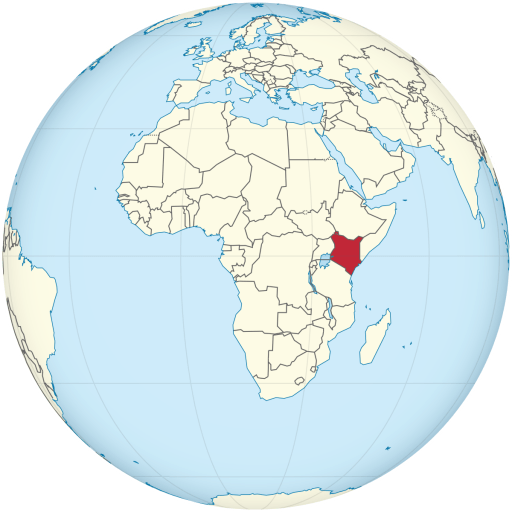
What happened:
Kenya and the European Union have signed a trade deal, the EU-Kenya Economic Partnership Agreement.
Why this matters:
This latest deal is the first broad trade deal between the EU and an African nation since 2016, and the most comprehensive agreement that Kenya has ever negotiated with the EU. Kenya currently sends roughly one-fifth of all its exports to the EU, its biggest market.
Tell me more:
Once ratified and entered into force, Kenya will receive duty-free and quota-free access to the EU; meaning, they can send all of their products to the EU. In turn, the EU will receive more and more trade benefits such as tariff reductions over a period of 25 years, meaning, the EU cannot send all of its products to Kenya all at the same time but gradually. NTV Kenya livestreamed the entire event; you can watch them sign the trade teal at State House here. There are a few comments on that YouTube video; and none of them seem to be on the same page about it. But Kenyan Trade Minister Moses Kuria is pretty happy about it, saying "Today is a very proud moment for Kenya, and I believe a very proud moment for the European Union." European Union Trade Commissioner Valdis Dombrovskis said Africa was a "priority region" for the EU, and he hoped the Kenya deal would "be a boost" to future trade links with Africa.
Did you know that Kenya mainly exports agricultural products to the EU? More than 70 percent of Kenya's cut flowers are destined for Europe.
What's the criticism?
Critics say that the actual purpose of such deals is to create a Free Trade Area between two economically unequal regions, i.e. Africa and Europe. Some are saying this could lead to European products flooding Kenya, with local industries losing out because they cannot compete with the low European prices. "The Ruto administration should use this window to bolster homegrown industries to make local products competitive," writes an editorial by Daily Nation, one of Kenya's most popular independent newspapers.
Plus, there's criticism that, for example, the (tons and tons of) water used for cut flowers that Kenya exports to the EU could be used much more sustainably and more Kenya- or neighbor-oriented. After all, a single rose that is grown in Kenya takes around 10 liters of water to produce.
The deal has also raised questions about East African unity in general, writes Waihiga Mwaura for BBC. The only reason Kenya had to strike its own agreement is because the rest of the East African Community refused to sign the 2016 one that was brokered with the EU (they didn't really need it because only Kenya from the East African Community falls in the category of "emerging country", meaning only Kenya needed a deal for exports to enter the EU market).
Historical context:
One of Kenya's main imports to the EU is tea.There's a very violent history behind this product. Basically, when British colonialists ruled in Kenya from 1895 until 1963, half a million Indigenous Kenyans were violently evicted during British colonization in order to make room for tea plantations. Tens of thousands of people died during that time. To this day, an estimated 200,000 acres of ancestral land is still owned by several British tea companies, including Lipton (formerly owned by Unilever), Finlay's, and Williamson Tea. A month ago, AJ+ did this insightful mini-documentary on "The Violent History of Britain's Cup of Tea".
Fun fact:
If you love having flowers in your home, but are looking for more environmentally sustainable ways to do this, there are a few simple things you can do instead of buying that bouquet: potted plants, wooden or paper flowers, cacti and succulents, or seasons flowers grown closer to your home are good alternatives.
Report: 'Over 25,000 Japanese citizens have been forcibly sterilized'
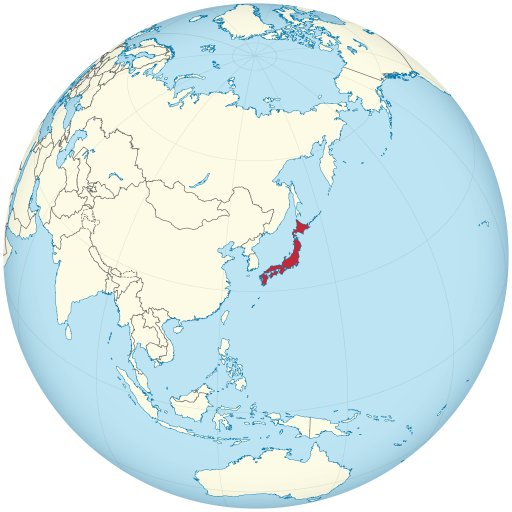
What happened:
A report to the Japanese National Diet revealed that more than 16,000 Japanese citizens were sterilized without consent under a eugenics law between 1948 until 1996, including two nine-year-olds.
Why this matters:
Sterilization is a safe and effective form of permanent birth control used by more than 220 million couples around the world today. When it's performed...
Please log in or subscribe for free to continue reading this issue.
We could use your help to make this issue better. Take a look at the requests below and consider contributing:
- Submit a piece of artwork for this issue
- Submit a news, academic or other type of link to offer additional context to this issue
- Suggest a related topic or source for future issues
- Fix a typo, grammatical mistake or inaccuracy
Below you'll find some of the sources used for this issue. Only sources that support "media embedding" are included.
-
On 19 June 2023, the EU and Kenya concluded negotiations on a trade agreement through which they aim to implement the provisions of the regional Economic Partnership Agreement (EPA) between the EU and the Eastern African Community (EAC).
-
Kenya currently sends roughly one-fifth of all its exports to the EU, its biggest market.
-
Kenya felt it was best to sign a bilateral trade deal, despite claims that it undermined regional unity.
-
Forced to watch their loved ones die and endure forced labour and abuse from colonisers who removed them from their land, a group of Kenyans is seeking reparations from Britain.
-
Parliament discloses for the first time children as young as nine were victims of an eugenics law.
-
What is voluntary sterilization? A health communication expert unpacks how a legacy of forced sterilization shapes doctor-patient conversations todayThe term voluntary sterilization, referring to the choice to receive permanent birth control, arose as a contrast to the involuntary, or forced, sterilization that stems from the eugenics movement.
-
Between 1948 and 1996, about 16,500 people were operated on without their consent under a eugenics law, triggering long campaign for redress
-
News on Japan, Business News, Opinion, Sports, Entertainment and More search
-
Top court to rule again on forced sterilization to change gender | The Asahi Shimbun: Breaking News, Japan News and AnalysisFor the first time, a transgender person will give direct arguments at the Supreme Court concerning the constitutionality of a law that requires sterilization to change one’s gender on the family register.
-
Deaths believed to have occurred in mid-May but were only reported this week
-
At least 14 people have died in Iran after after drinking bootleg alcohol in the northern Iranian province of Alborz.
-
Israel's PM says "all options are open" after one of the deadliest attacks on Israelis this year.
-
The rampage in the occupied West Bank comes a day after Palestinian gunmen shot dead four Israelis.
-
Strike is first aerial attack in occupied West Bank in nearly 20 years
-
The summit has been shelved indefinitely as violence flares in the occupied West Bank
-
A grisly riot at a women’s prison in Honduras has left at least 41 women dead, most burned to death, in violence the country’s president blames on “mara” street gangs that often wield broad power inside penitentiaries.
-
Kathmandu mayor bans screening of Indian films after movie inspired by Hindu epic Ramayana sparks controversy.
-
Countries agree to restore diplomatic representation after 2017 boycott and blockade of Qatar.
-
News on Japan, Business News, Opinion, Sports, Entertainment and More article expired
-
Tasmanian senator Jacqui Lambie has referred senior Australian Defence Force leaders to the International Criminal Court over alleged...
-
After appearing in court on Wednesday Andrew Tate said: "I look forward to being found innocent."
-
Estonia’s parliament passed on Tuesday a law legalizing same-sex marriage, becoming the first ex-Soviet country to do so.
-
Cuba, 1963. Four years after Fidel Castro has come into power, Agnès Varda arrives in the country—with a camera in hand—and documents its buzzing post-revolution culture and society. Back in Paris, Varda assembles over 1,800 photographs into a rhythmic photo montage—narrating it with Michel Piccoli.
-
The supreme court’s decision has created a two-tiered class of US citizenship: one for men and one for women. It is a generational tragedy
-
When Disney released the trailer for 'Primos,' a new animated series set in L.A., it sparked a firestorm online between Latin Americans and Latinos in the U.S. Death threats were made against Mexican-American creator Natasha Kline, and Disney was forced to pull much of its promotion.
Each week, What Happened Last Week curates news and perspectives from Asia, Africa, and the Americas. The newsletter is written by Sham Jaff and focuses on stories that rarely receive sustained attention in Western media.
Read the free edition every week. VIP subscribers receive additional stories, recommendations on what to watch, read and listen, and more.