

In this issue, I focus on the recent humid heat wave in Asia (it's so scary), what civil society organizations in Madagascar are doing to protect land rights for the Malagasy people, and the sentencing of Guatemala's most critical journalists, Zamora, to prison. Of course, the capsized boats in Nigeria and Greece take up some (emotional) space, there was another ceasefire in Sudan, the Great Museum of Africa is in Algeria (for now), Japan raised the age of consent from 13 (!) to 16, an amazing long read on Kenya's Ngũgĩ wa Thiong'o, an Indian crime drama series (that I'm going to binge this week), and the most bewildering news from North Korea, the new member on the executive board of the World Health Organization (yes, I know). Plus, so much more.
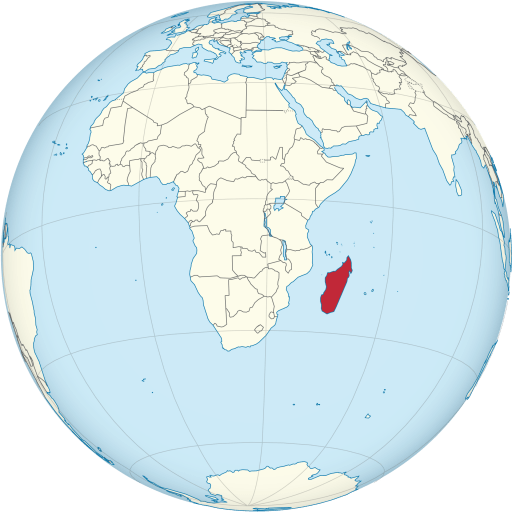
Civil society organizations in Madagascar are fighting to protect land rights
What happened:
Madagascar just passed a law allowing foreign investors to lease land for 99 years, sparking concerns among civil society organizations in the country.
Why this matters:
There is a lot of conflict over land in Madagascar, preventing the country from creating a fair society that cares about everyone's well-being. Land conflicts there are a complex mix of colonialism, corruption within the country's justice system, and community struggles. According to a 2022 report from OBS Mada, land disputes account for a quarter of social conflicts in the country.
Tell me more:
"Currently undergoing a constitutional review, if approved by the High Constitutional Court, it enables foreign investors and companies to lease land for 99 years and renew such agreements through emphyteusis, effectively granting them ownership of the land, write Velomahanina Razakamaharavo and Lalatiana Rakotondranaivo for African Arguments. "With such a law, 80% of the Malagasy are at risk of eviction from their land." Some observers say, 'this is perpetuating the colonial dispossession of the Malagasy people.' The government supports the law, stating it aligns Madagascar with international standards and attracts investments, benefitting all investors.
Did you know that when Madagascar was ruled by France as a colony, France set up a land registration system that allowed them to claim one-fifth of the arable land? That system is still in place today, and is the reason why this land is now being claimed by the descendants of colonizers, while locals who've worked the lands for generations face displacement and conflict. Madagascar gained full independence from France in 1960.
What about the other land conflicts?
It is not only descendants of colonizers or corporations that are vying for the land in Madagascar. In a recent case, the Karana community (descendants of Indo-Pakistani immigrants) forcibly removed a local community from their land. And then there's the sh*t ton of corruption within the Malagasy justice system (this is why the former Minister of Justice resigned) that denies locals access to land titles, even with legitimate documents. In short: It's super messy, and very difficult for Malagasy people to claim their own land. Many feel powerless in the face of all of this.
What now?
The World Bank has put a lot of money into helping Madagascar manage land titles better. The Malagasy government plans to give out around two million land titles this year. But, some people are worried about these efforts. The World Bank has been criticized because it only gave out 570,000 land titles in six years, even though it planned to give out 2.5 million. It's also surprising that they only set aside US$47 million for this.
Civil society organizations like SIF, CRAAD-OI, and Collectif Tany continue to advocate for the rights of local communities, focusing on the law's implementation phase. They are demanding regular reviews of the 99-year-long leases and that there is a checkup every 30 years to decide if the lease should be continued or stopped.
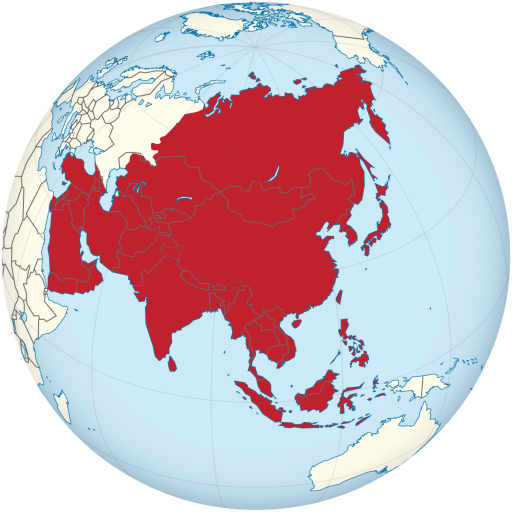
There's a deadly heat wave in Asia right now -- 'climate change made this 30 times more likely'
What happened:
April and May are typically the hottest months of the year in Southeast Asia, as temperatures rise before monsoon rains bring some relief. But this year, they reached levels never experienced before in most countries of the region. It's unclear how many people died (a lot), but many have been hospitalized, roads have been damaged, fires sparked and schools closed.
Why this matters:
In a recent report from the World Weather Attribution (WWA), an international coalition of scientists said the April heat wave in Southeast Asia was a once-in-200-years event that would have been "virtually impossible" without human-caused climate change.
Tell me more:
There are many news reports. Here are some details that stood out to me and that make this 'heat wave' headline a little bit more palpable. Basically,
- Bangladesh: It's so hot in Dhaka that the roads are melting.
- India: In Kuno National Park, India, three cheetah cubs died on May 23 and 25. The cubs were the first to be born in India in over seven decades. As of yesterday, 54 people in Uttar Pradesh and 44 people in Bihar died due to the heat over the past three days.
- Pakistan: On 21 May, Jacobabad reached 49 °C.
- Cambodia: There is a water shortage in the entire country (Thailand needs a lot of it right now), and temperatures of 41.6 °C were recorded in Kratié and the Ponhea Kraek district, setting a new national May record.
- Laos: In the beginning of May, Vientiane reached 42.5 °C, breaking the city's all-time record.
- Malaysia: No more outdoor activities in schools.
- Philippines: Schools here are also adjusting. Think distance learning and shortened hours.
- Singapore: In general, May 2023 was the warmest May on record for Singapore.
- Thailand: Power outages have become common due to the high use of air conditioners and refrigeration. Thailand saw its hottest day in history at 45.4 °C on April 15.
- Vietnam: Authorities in Hanoi are shutting down public lighting sooner to keep the power system running. Parts of Thailand and Vietnam have been affected by thick smog during the heat wave. Expect more respiratory, cardiovascular and kidney diseases. Vietnam's all-time record was broken in early May with 44.2 °C.
- China: According to climatologist Jim Yang, over 100 weather stations broke their temperature record on April 17. On June 7, temperatures over 45 °C were recorded in the country.
- Japan: In June, the...
Please log in or subscribe for free to continue reading this issue.
We could use your help to make this issue better. Take a look at the requests below and consider contributing:
- Submit a piece of artwork for this issue
- Submit a news, academic or other type of link to offer additional context to this issue
- Suggest a related topic or source for future issues
- Fix a typo, grammatical mistake or inaccuracy
Below you'll find some of the sources used for this issue. Only sources that support "media embedding" are included.
-
-
Le projet de loi sur les investissements a été adopté par l’Assemblée nationale et le Sénat respectivement en leurs séances plénières du 22 mai et du 25 mai. Selon l’Economic Development Board of Madagascar (EDBM), qui n’a pas caché sa satisfaction, c’est l’aboutissement d’un long processus de réforme menée avec le ministère en charge de l’Industrialisation, du commerce et de la consommation (MICC).
-
Herilaza Imbiki quitte le navire. Le ministre de la Justice, Garde des Sceaux de la République a démissionné de son poste le vendredi 11 février, (…)
-
À Madagascar, l'obtention d'un titre foncier était si longue et coûteuse qu'elle était souvent hors de portée des habitants des zones rurales. Combiné à la croissance démographique et à la demande croissante de terres, cela a contribué à une insécurité foncière généralisée. En 2005, Madagascar s'est lancé dans une réforme foncière majeure et innovante afin de rendre accessible à tous, en particulier les populations rurales, la reconnaissance légale de leurs droits fonciers. Les droits sur les terres mises en valeur par les agriculteurs peuvent être enregistrés assez rapidement et à moindre coût par un nouveau document officiel - le certificat foncier - délivré non plus par l’Etat central, mais par la commune, suivant une procédure réalisée localement par les guichets fonciers ouverts au niveau des communes. Cette réforme a permis de garantir les droits de propriété d’un plus grand nombre, ce qui a pour effet de rassurer les agriculteurs qui investissent dans leurs terres, de réduire les conflits fonciers et de générer des revenus agricoles plus importants.
-
Mitaky drafitrasa mahomby sy maharitra ny fanatrarana ny tanjona apetraky ny fitondram-panjakana amin’ny hizarana karatany 2 tapitrisa...
-
Nous contacter L’association CRAAD-OI est une association pan-Africaine basée à Madagascar pour les alternatives de développement dans l’Ocean Indien. Adresse: Lot VF 60 Mahamasina...
-
Temperature records are being shattered in countries across Asia as a brutal April heat wave continues to grip large portions of the continent, with little relief in sight.
-
Three cheetah cubs born to a big cat brought to India from Africa last year died in the past week in central India’s Kuno National Park. Officials didn't say what caused the deaths, but a sweltering heat wave in India is believed to have weakened the cubs. They were the first to be born in India in more than seven decades. Once widespread in India, cheetahs became extinct in 1952 from hunting and habitat loss. Their mother was among the 20 that India flew in from Namibia and South Africa as a part of an ambitious and hotly contested plan to reintroduce them to Indian grasslands.
-
At least 98 people have died due to severe heat in Uttar Pradesh and Bihar. Many parts of north India continue to swelter under extreme heatwave conditions.
-
Temperature records tumbled across Southeast Asia over the weekend as the region swelters under a weekslong heat wave that has brought misery to millions.
-
Measures come after warning of electricity shortages due to high demand and decreased hydropower production
-
Several schools in the country have implemented temporary distance learning due to the extreme heat.
-
Singapore, 1 June 2023 – Low-level winds over Singapore and the surrounding region are forecast to strengthen and blow from the southeast or southwest in early June 2023, as the Southwest Monsoon progressively sets in over the region. The Southwest Monsoon season typically extends into September and is generally a drier season compared to other […]
-
Informal economy workers make up the backbone of many societies but are disproportionately affected by extreme weather events, with dangerously high temperatures greatly impacting their health and the already precarious nature of their professions.
-
A brutal heat wave has hit Southeast Asia at the same time that parts of the region are choking on worryingly high levels of air pollution — a one-two punch that experts say could make an already dangerous situation deadlier.
-
Temperature records are being shattered in countries across Asia as a brutal April heat wave continues to grip large portions of the continent, with little relief in sight.
-
Dozens of heat records have fallen in Siberia, as temperatures climbed above 100 degrees Fahrenheit (37.7 Celsius).
-
The costs of climate change are often estimated in monetary terms, but this raises ethical issues. Here we express them in terms of numbers of people left outside the ‘human climate niche’—defined as the historically highly conserved distribution of relative human population density with respect to mean annual temperature. We show that climate change has already put ~9% of people (>600 million) outside this niche. By end-of-century (2080–2100), current policies leading to around 2.7 °C global warming could leave one-third (22–39%) of people outside the niche. Reducing global warming from 2.7 to 1.5 °C results in a ~5-fold decrease in the population exposed to unprecedented heat (mean annual temperature ≥29 °C). The lifetime emissions of ~3.5 global average citizens today (or ~1.2 average US citizens) expose one future person to unprecedented heat by end-of-century. That person comes from a place where emissions today are around half of the global average. These results highlight the need for more decisive policy action to limit the human costs and inequities of climate change. As an alternative to monetary estimates, this study expresses the costs of climate change in terms of numbers of people left outside the ‘human climate niche’, which reflects the historically highly conserved distribution of human population density relative to mean annual temperature.
-
As intense heat becomes more frequent, the Middle East will see a rise in heat-related deaths. Despite public health planning gaps, experts say the region can teach us a lot about extreme heat.
-
Women and men in the informal economy: A statistical picture. Third edition | International Labour OrganizationThis publication provides for the first time comparable estimates on the size of the informal economy and a statistical profile of informality in all its diversity at the global and regional levels.
-
Tras un proceso viciado en el que tuvo que cambiar de abogado nueve veces, el fundador de elPeriódico, José Rubén Zamora, fue condenado este miércoles por lavado de dinero. El periodista, que ha anunciado que apelará la sentencia, aún enfrenta tres procesos más en su contra. Con él detenido, presiones políticas aislaron financieramente a elPeriódico, que se vio forzado a cerrar hace un mes.
-
The government must put an end to legal and judicial harassment, used as an instrument against the media and journalists to intimidate and discourage journalistic investigations and generate self-censorship.
-
-
-
Newspaper director José Rubén Zamora’s jailing reflects the international community’s failures.
-
Attackers linked to the Islamic State group used machetes and burned a dormitory during the attack.
-
Many more feared missing after shipwreck in international waters in the Ionian Sea; rescue operation under way.
-
Journalism in the public interest.
-
Twenty-five homes were destroyed in the densely populated area of Yarmouk, where civilians are trapped.
-
Mayor Claudia Sheinbaum and Foreign Relations Secretary Marcelo Ebrard will compete to be the MORENA party nominee.
-
Paris: The United States plans to rejoin UNESCO from July this year, ending a lengthy dispute that saw Washington end its membership in 2018, the UN cultural agency announced on Monday.
-
Changes include the criminalisation of voyeurism and follow a string of acquittals in rape cases that triggered protests nationwide
-
Scoop review: Karishma Tanna gives career-best performance as crime reporter Jagruti Pathak, who is accused of murder in Hansal Mehta's gripping drama series. | Web Series
-
The long read: The Kenyan novelist’s life and work has intersected with many of the biggest events of the past century. At 85, he reflects on his long, uncompromising life in writing
-
In a secret ballot, 123 members of the World Health Organisation voted for North Korea despite the lack of transparency in the way it handled the COVID-19 pandemic, which may still be raging in the country. This is a further sign of the influence North Korea’s Chinese ally wields within the United Nations health agency.
Each week, What Happened Last Week curates news and perspectives from Asia, Africa, and the Americas. The newsletter is written by Sham Jaff and focuses on stories that rarely receive sustained attention in Western media.
Read the free edition every week. VIP subscribers receive additional stories, recommendations on what to watch, read and listen, and more.